

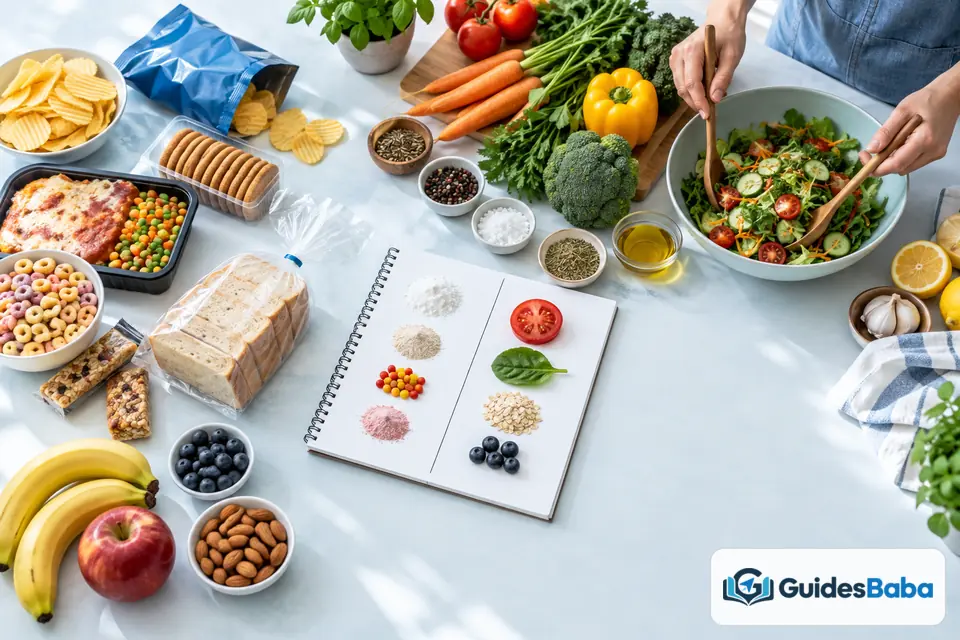
Open any packet and the label tells a story. Some words are familiar, and many are not. So what are food additives, and should you worry? The answer is calmer than the label looks.
Rather than fearing every long word, learn the basics. Additives do real jobs in your food. Some keep it fresh, and some add colour. A few improve texture or taste. They shape how you read refined carbohydrates and more.
Here is the honest answer. Food additives are substances added to food for a purpose. They preserve, colour, flavour, or improve texture. Some are natural, and some are made. Approved ones pass safety review first. This is not medical advice. See a professional.
This guide covers food additives in plain language. You will learn what they are and what they do. We will compare natural and synthetic types fairly. Many tips link back to a simple, balanced plate.
So what are food additives?
The honest answer starts with purpose. Food additives are ingredients added on purpose. They help food last, look, or taste better. Many appear in tiny amounts.
Think of them as tools in a kitchen. Each one does a specific job. Some fight spoilage, and some fix texture. On your plate, they usually work quietly.
Do you need to fear every additive? Not at all, and that is reassuring. Many are simple and familiar. Salt, vinegar, and vitamin C are additives. Your pantry already holds several.
Why food makers use additives
Makers use additives for clear reasons. Preservatives keep food safe for longer. That cuts waste and spoilage.
Other additives protect colour and flavour. Some stop oil and water from separating. A few keep texture smooth and stable. These jobs matter for large-scale food.
Additives also help food travel far. They survive long trips and storage. That keeps shelves stocked year round. Without them, more food would spoil. Convenience and safety both play a role.
Did you know?
Many common additives come from natural sources. Vitamin C is a widely used natural preservative.
The main categories of additives
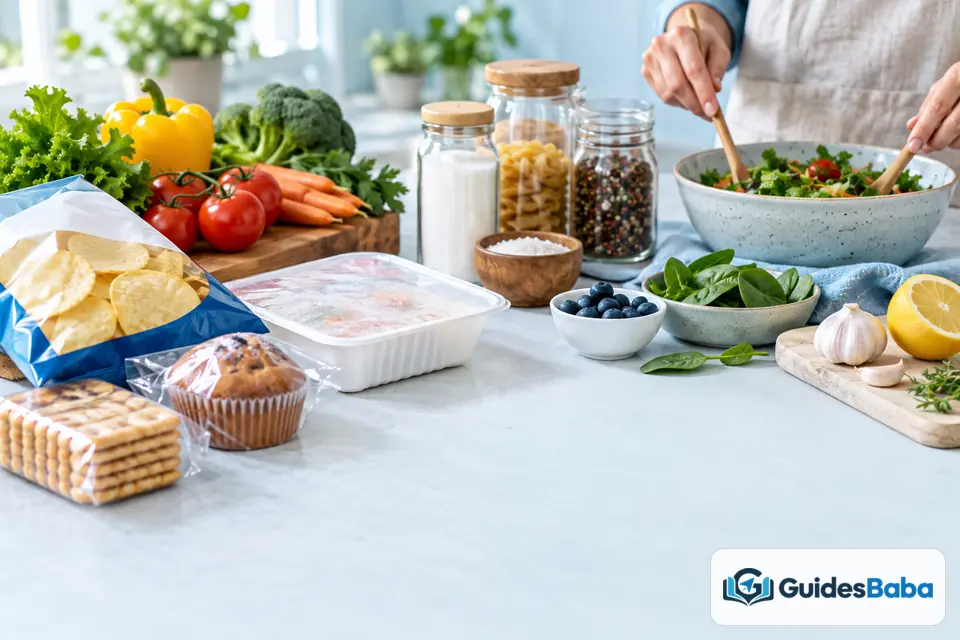
Additives fall into several broad groups. Preservatives form one major category. Colours and flavours make up others.
Emulsifiers and thickeners handle texture. Sweeteners add taste without much sugar. Acids and antioxidants protect freshness. Each group serves a distinct need.
You do not need to memorise every type. Knowing the main groups is enough. The label often states the job. Words like preservative or colour appear. A quick read reveals the purpose.
Preservatives and shelf life
Preservatives are among the oldest additives. They slow spoilage and microbial growth. That keeps food safe to eat longer.
Salt and sugar are classic preservatives. Vinegar and vitamin C work too. Modern versions do the same core job. They protect against harmful bacteria. This has kept food safe for a long time.
Longer shelf life reduces food waste. It also helps food reach distant shops. Without preservatives, many foods spoil fast. Safe storage depends on them. They quietly protect your health.
Colours, flavours, and sweeteners
Some additives shape how food looks and tastes. Colours make products bright and appealing. Flavours restore taste lost in processing.
Sweeteners add sweetness with less sugar. Some come from plants like stevia. Others are made in a lab. They help cut added sugars in products.
These additives face careful review. Approved options stay within safe limits. Still, some people prefer to limit them. Reading labels helps you choose. Personal taste guides the rest.
Emulsifiers, thickeners, and stabilisers
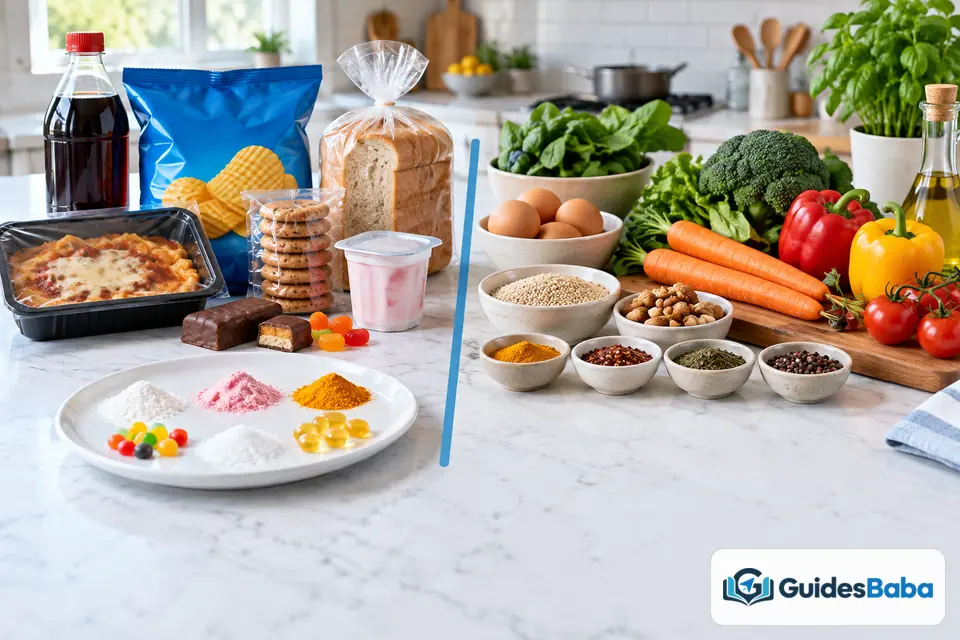
Texture additives do quiet but vital work. Emulsifiers blend oil and water smoothly. Thickeners give sauces a rich body.
Stabilisers keep mixtures from separating. Lecithin from soy is a common emulsifier. Pectin from fruit thickens many jams. These come from familiar sources.
Without them, many foods would split. Ice cream would turn icy and rough. Dressings would separate on the shelf. Texture shapes how we enjoy food. Small amounts make a big difference.

What E numbers really mean
E numbers puzzle many shoppers. They are simply codes for approved additives. Each number stands for one substance.
An E number means the additive passed review. It does not mean the additive is harmful. Some E numbers are plain vitamins. Others are natural plant extracts.
The code is just shorthand on a label. It saves space and avoids long names. Learning a few common ones helps. Fear of numbers is often misplaced. Context matters more than the code. The same additive keeps its number everywhere.
How additives are tested for safety
Safety review sits behind every approved additive. Scientists study each one carefully. Agencies then set safe intake limits.
These limits include a large safety margin. Normal eating stays well below them. Approvals are reviewed as new evidence appears. This keeps the whole system up to date.
No approval is a promise of zero risk. Very high intake can still matter. Balance and moderation remain wise. Trust rests on ongoing science. This is not medical advice. See a professional.
Natural additives versus synthetic additives

People often ask which type is better. The honest comparison weighs several traits. Each type brings its own strengths.
| Natural additives | Synthetic additives |
|---|---|
| Come from plants or minerals | Made through careful chemistry |
| Often carry a clean label | Very consistent and reliable |
| Can vary batch to batch | Backed by long safety testing |
| Loved by clean-label shoppers | Often cheaper at large scale |
Neither type is simply better here. Both must pass the same safety review. Natural does not always mean safer. Judge each additive on its evidence.
Additives in ultra-processed foods
Ultra-processed foods often carry many additives. That fact worries a lot of shoppers. The additives are usually not the main issue.
These foods tend to be high in sugar. They often pack salt and refined fat. The overall recipe drives most concern. Additives are one small part of the picture.
Focus on the whole food, not one code. A long list can signal heavy processing. Use it as a gentle clue. Whole foods still deserve most of your plate. Balance beats fear every time.
Reading a food label
A food label holds a lot of value. The ingredient list runs by weight. The first items make up the most.
Additives usually sit near the end. That means they appear in small amounts. Look for the job words beside them. Preservative or colour tells the story.
Compare two products side by side. Choose the one that fits your goals. Labels turn guesswork into simple choices. See how to make your everyday diet healthier too.
Additives and children

Parents often worry about additives and kids. This concern is fair and common. Children eat many packaged snacks.
Some studies have looked at certain colours. Results are mixed and still debated. Many families choose to limit bright colours. That is a reasonable personal choice.
Whole foods suit children very well. Fruit, milk, and plain snacks work great. Keep treats as an occasional extra. Balance shapes a healthy young diet. Talk to a doctor with any worry. Simple home meals rarely cause concern.
Additives that occur in nature
Many additives are not strange lab creations. Plenty come straight from nature. You likely use some at home.
Vinegar preserves pickles and sauces. Salt has cured food for centuries. Vitamin C protects colour and freshness. Lecithin from eggs binds many mixtures.
Pectin from fruit sets jams and jellies. Citric acid comes from citrus fruit. These humble helpers do real work. Nature has long offered food solutions. Familiar names can calm needless worry. People have used many of these for generations.
Simple ways to eat fewer additives
Cutting additives is simpler than it sounds. Cook more meals from scratch. Whole ingredients carry very few.
Choose fresh fruit over packaged snacks. Pick plain yogurt and add your own fruit. Each small swap trims your intake. Home cooking gives you full control. You decide exactly what goes in the pot.
Change one habit at a time. A slow build keeps meals enjoyable. New routines stick when they feel easy. Keep simple staples in your kitchen. Batch cooking makes fresh food quick. A stocked pantry supports better choices.
Common myths about additives
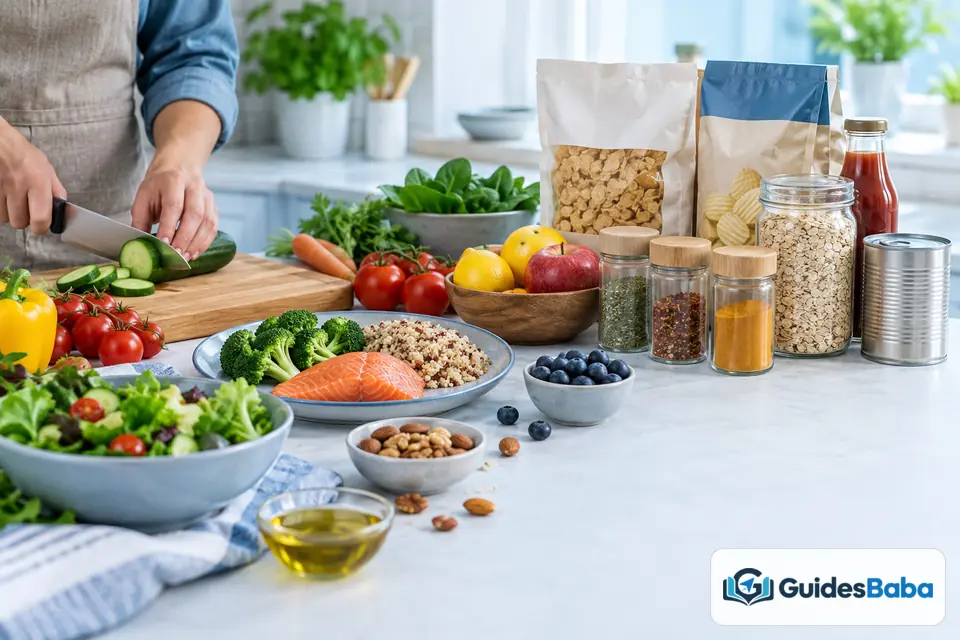
One myth says all additives are dangerous. Approved options pass careful review. Many are simple natural substances.
Another myth claims natural always means safe. Some natural compounds can still harm in excess. The source alone does not decide safety.
Some believe additives have no purpose. In truth, they keep food safe and stable. They cut waste and spoilage. Every approved additive earns its place.
Common mistakes people make
One common mistake is judging food by fear. A long label does not always mean junk. Context and portion matter more.
Another mistake is ignoring sugar and salt. People fixate on additive names instead. The bigger issues often sit elsewhere. Learn what a balanced diet looks like.
Some people also trust every health claim. Front-of-pack words can mislead. Turn the pack over and read. The ingredient list tells the truth. Habits matter more than any single word.
Who might need tailored advice
General guidance suits many healthy adults. Still, some people have special needs. Allergies change the picture sharply.
Some react to specific additives. Others follow strict medical diets. Reading labels then becomes essential. Small details can matter a lot.
Your doctor or dietitian knows you best. Ask before making big diet changes. Use these ideas as a friendly guide. A short chat can prevent confusion.
Food additives and a balanced diet
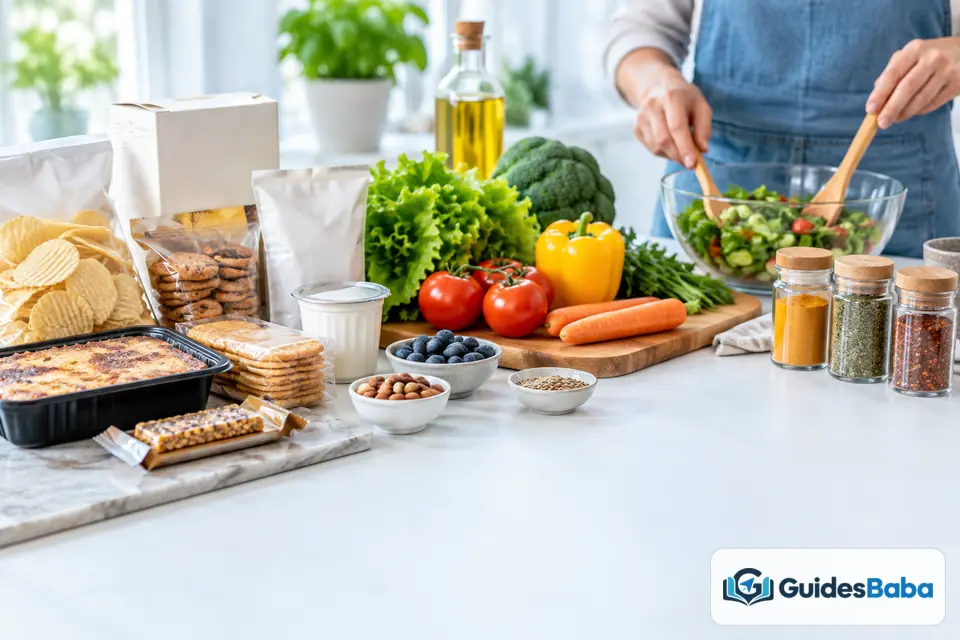
Food additives fit inside a wider pattern. They join fibre, protein, and healthy fats. Together these build a strong plate.
No single ingredient defines your whole diet. Balance across many foods matters most. Explore the foods to eat every day for ideas. Variety remains the guiding rule.
Treat additives as one small factor. Pair packaged items with whole foods. This mix keeps your meals rounded. A simple plate does the heavy lifting. Good habits compound quietly across the weeks.
Frequently asked questions
What are food additives in simple terms?
They are substances added to food on purpose. They preserve, colour, flavour, or improve texture.
Are food additives bad for you?
Approved additives are safe in normal amounts. Very high intake is not advised.
What do E numbers mean?
They are codes for approved additives. The code does not mean harmful.
Are natural additives safer than synthetic ones?
Not always, since both pass the same review. Judge each one on evidence.
Why do foods contain preservatives?
Preservatives slow spoilage and keep food safe. They also cut food waste.
Do additives cause hyperactivity in children?
The evidence is mixed and still debated. Many families limit certain colours.
Are additives in fresh food?
Fresh whole foods usually contain very few. Packaged foods carry more of them.
How can I avoid additives?
Choose whole foods and cook at home. Read labels on packaged items.
Are all additives listed on labels?
Approved additives must appear on the label. Look near the end of the list.
Is a long ingredient list bad?
Not always, but it can signal processing. Check the whole label and portion.
The bottom line
So what are food additives? They are substances added to food on purpose. They preserve, colour, flavour, and improve texture. Some are natural, and some are made. Approved ones pass careful safety review.
Additives are not the villain many fear. Focus on whole foods and balanced meals first. Read labels to guide your choices. Small daily habits truly add up over time.
For more background, read this overview of food additives. You can also explore the E number system in detail. Use trusted sources to guide your plate.
This is not medical advice. See a professional for your personal needs. Read one label today. Then build slowly from there. Your choices will improve.