
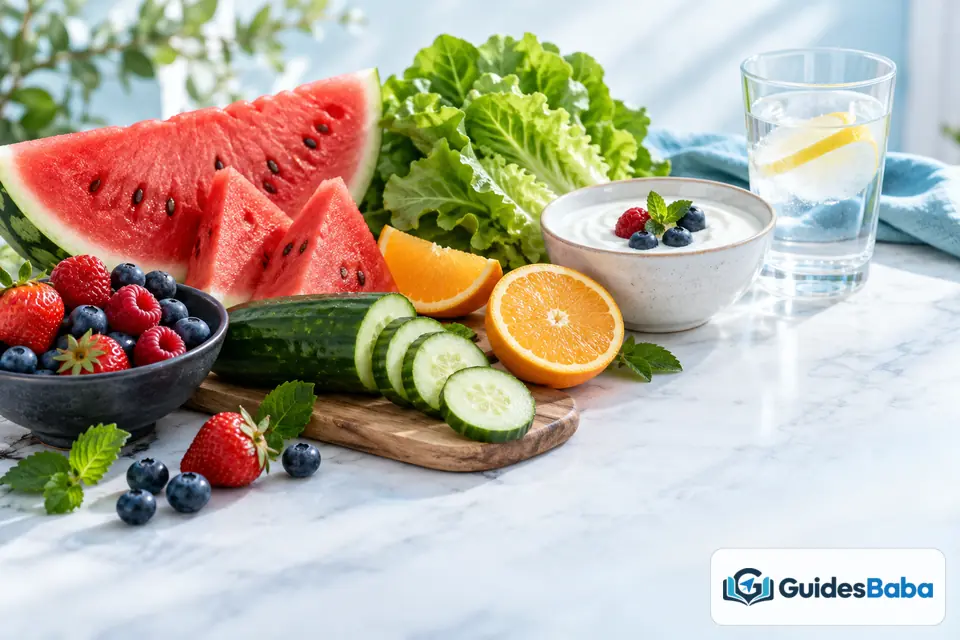
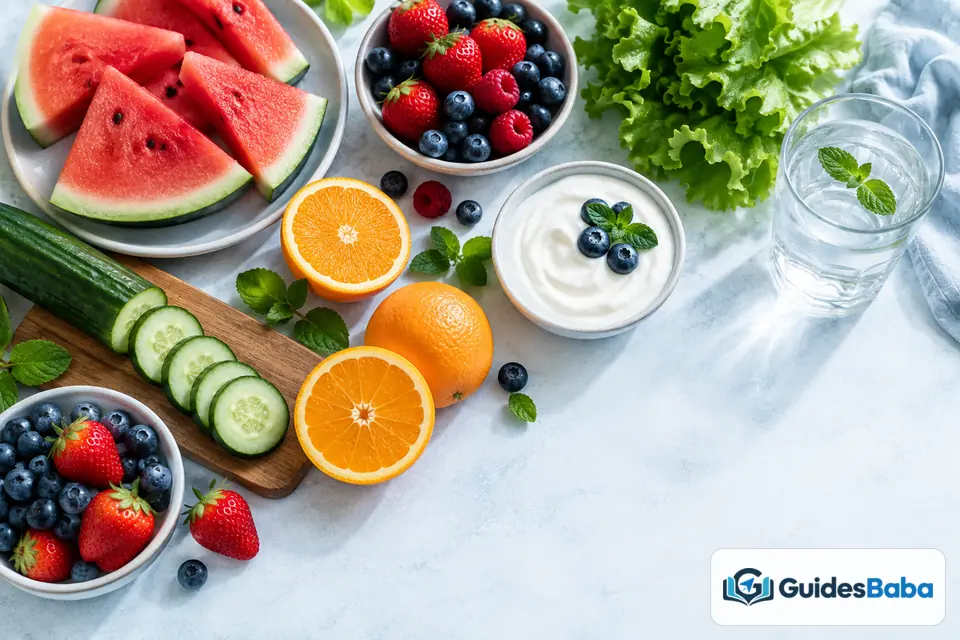
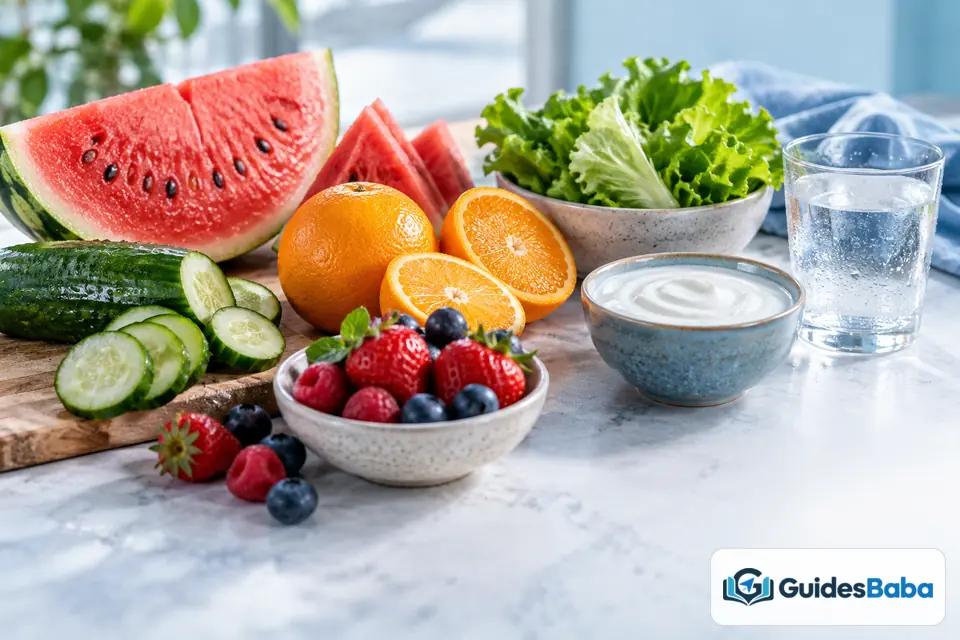
Hydration does not only come from a glass. Your plate quietly helps as well. So what foods help keep you hydrated? The answer is tastier than you might expect.
Rather than relying on water alone, look at your meals. Many foods hold plenty of fluid. Fruits and vegetables lead the pack. They top up your body while they feed it. They shape how well your fruits and vegetables support you.
Here is the honest answer. Water rich foods add real fluid to your day. Cucumber, melon, and oranges are top picks. Soups, yogurt, and lettuce help too. They carry water plus useful nutrients. This is not medical advice. See a professional.
This guide covers hydrating foods in plain language. You will learn which foods hold the most water. We will compare food and drink as sources. Many tips link back to a simple, colourful plate.
So what foods help keep you hydrated?
The honest answer starts with fresh produce. Many fruits and vegetables are mostly water. They give fluid along with flavour. Your plate becomes a hydration tool.
Think of these foods as edible water. Each bite carries a little drink. They feed and refresh at the same time. That double role makes them handy. Crisp textures often signal a watery food.
Do you need rare exotic foods for this? Not at all, and that is good news. Common produce holds plenty of water. Your grocery basket already carries them. A simple salad is a great example. Even everyday tomatoes hold plenty of fluid.
Why hydrating foods matter
Hydrating foods add fluid you might forget. Not everyone drinks enough plain water. Food helps close that gap quietly.
These foods bring more than water alone. They carry vitamins, minerals, and fibre. That full package supports your whole body. Water arrives with real nutrition attached. Fibre also slows digestion in a helpful way.
Leaning on these foods feels effortless. You eat and hydrate in one step. No counting or forcing is needed. Every meal becomes a chance. A colourful plate does quiet work. Snacks and sides can hydrate you too.
Did you know?
Some fruits and vegetables are over ninety percent water. They hydrate you while they feed you.
Water rich fruits to enjoy
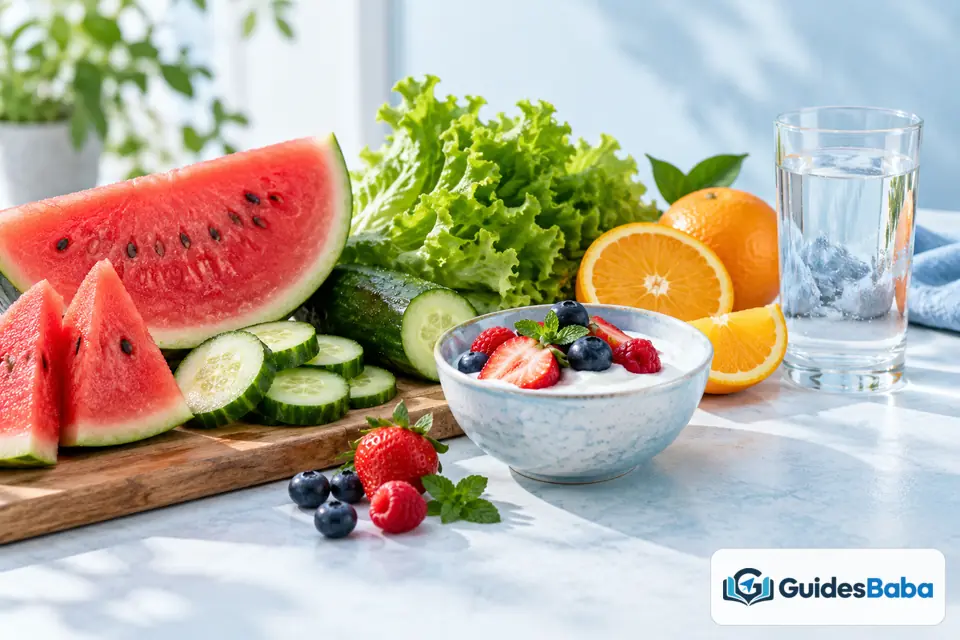
Many fruits hold a huge amount of water. Watermelon leads the way here. Its name gives the secret away.
Oranges, strawberries, and grapes carry plenty too. Peaches and melons join the group. They refresh you on a warm day. Their sweetness makes hydration easy. Pineapple and berries add even more variety.
Keep a bowl of fruit within reach. Reach for it instead of a snack. Frozen fruit works well in smoothies. A juicy fruit beats a dry biscuit. Variety keeps the habit interesting. Citrus fruits add fluid and bright flavour.
Hydrating vegetables to add
Vegetables can be just as watery. Cucumber sits near the top. It is crisp, cool, and refreshing.
Lettuce, celery, and tomatoes hold plenty. Courgette and spinach add more. These vegetables stretch your fluid intake. They also bring fibre and vitamins. Learn the best vegetables to eat for value.
Toss them into a fresh salad. Blend them into a light soup. Snack on cucumber and celery sticks. A raw platter refreshes fast. Colour and crunch make hydration fun. Grated courgette slips easily into many dishes.
Soups and broths for fluid
Soups are a quiet hydration hero. They are mostly water by volume. A warm bowl adds real fluid.
Broth based soups work especially well. They carry water plus gentle flavour. Vegetables in the pot add more. A light soup suits any season. Even a simple stock hydrates nicely.
Make a big pot for the week. Add plenty of vegetables to boost value. Keep the salt sensible and mild. A warm bowl comforts and hydrates. Batch cooking makes this simple.
Dairy and yogurt as sources
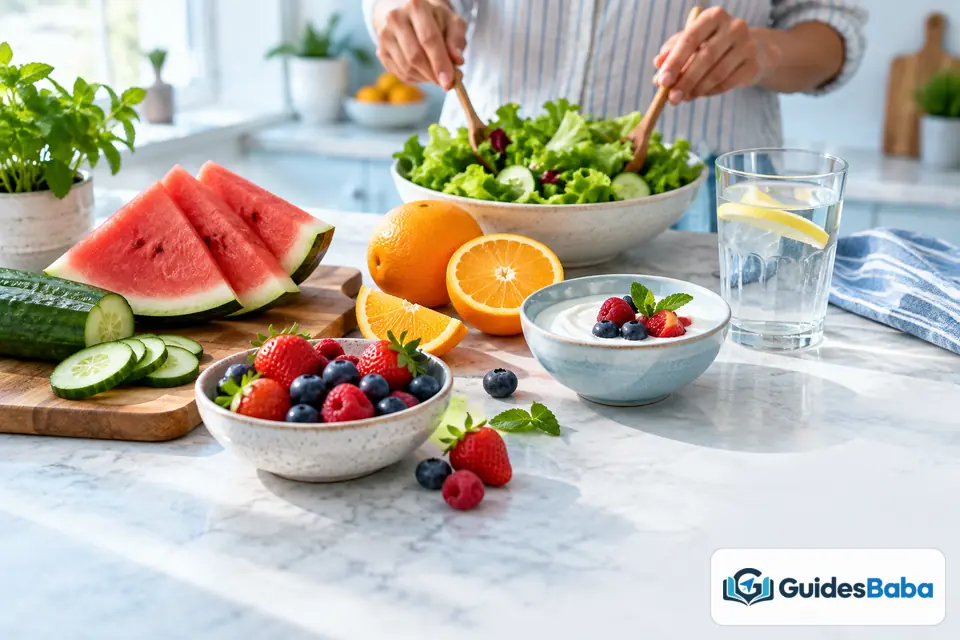
Plain yogurt holds a good deal of water. Milk does the same thing. Both add fluid along with protein.
These foods bring calcium and other nutrients. They round out a balanced plate. A simple bowl of yogurt refreshes. Fruit on top adds even more water. Cottage cheese offers a similar boost.
Choose plain versions where you can. Add your own fruit for sweetness. Skip heavy sugary flavoured tubs. A plain base keeps it healthy. See the minerals your body needs in dairy.
Do hydrating foods replace water?
Hydrating foods help, but they are partners. They do not fully replace plain water. Both work best together.
Food gives a steady trickle of fluid. Drinks give a bigger, faster top up. You need both across a day. Neither one does the whole job alone.
Lean on food to boost your total. Still keep a glass or bottle handy. The two sources support each other. Balance is the simple rule. A rounded routine keeps you steady. Rely on drinks more during heavy sweat.

Hydrating foods for hot days
Hot weather raises your fluid needs. Water rich foods help you cope. They cool and refresh at once.
Chilled melon makes a perfect snack. Cucumber slices feel cool and crisp. A fresh fruit salad hits the spot. These picks suit a warm afternoon. Frozen grapes make a fun cold treat.
Keep produce chilled in the fridge. Reach for it when the heat climbs. Blend fruit into an icy smoothie. Cold and juicy foods refresh best. Stay ahead of the heat with them.
Foods that quietly work against hydration
Some foods pull fluid the other way. Very salty snacks are one example. They can leave you feeling thirsty.
Heavily processed foods often carry lots of salt. Sugary treats add little water at all. They do not help your hydration much. Balance them with fresh produce. Alcohol can also pull fluid from you.
You do not need to ban them fully. Just pair them with water rich foods. Keep salty snacks as a small share. A glass of water helps too. Balance keeps your day steady. A little salt is fine in balance.
Comparing hydrating foods and plain drinks
People often ask which to rely on. The honest comparison is food versus drink. Each has a place, and both help.
| Water rich foods | Plain drinks |
|---|---|
| Add fluid plus vitamins and fibre | Add fluid on their own |
| Give a slow, steady top up | Give a fast, larger top up |
| Fill you up as well | Leave you feeling less full |
| Best paired with meals | Best sipped through the day |
You do not have to choose one. Both work well side by side. Food adds fluid and nutrients together. Drinks keep your total on track.
Easy ways to eat more hydrating foods
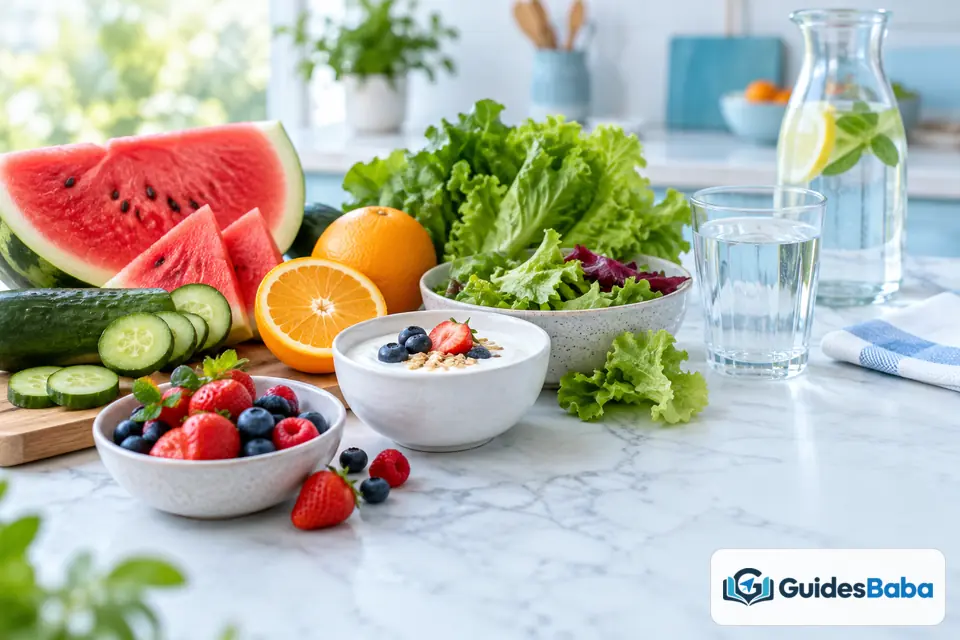
Adding these foods is simpler than it sounds. Toss cucumber into your salad. Add melon to your breakfast bowl.
Swap a dry snack for juicy fruit. Blend produce into a light smoothie. Each small step lifts your fluid. Keep prepped produce ready in the fridge.
Add one new water rich food weekly. A slow build keeps meals interesting. Habits stick when they feel easy. Small swaps beat sudden overhauls. Keep a fruit bowl on the counter.
Building a hydrating plate
A hydrating plate follows a simple pattern. Fill half with fruit and vegetables. Choose several water rich picks.
Give a quarter to whole grains. Save the rest for beans or lean protein. This mix hydrates and nourishes together. Explore the foods to eat every day for ideas.
You do not need to weigh anything. A glance and simple habits work fine. Balance beats strict counting for most people. Adjust the plate to fit your appetite.
Hydrating foods on a budget
Hydrating foods do not have to cost much. Seasonal produce often costs the least. Frozen fruit stretches a budget well.
Cucumber, cabbage, and tomatoes are cheap. They still hold plenty of water. Buy simple staples in larger bags. Canned tomatoes work well in soups too.
Homemade soup stretches value even further. It hydrates and fills you cheaply. Smart shopping keeps produce affordable. Batch cooking makes every meal count. Local markets offer fair prices. Buying in season keeps costs low.
Common myths about hydrating foods
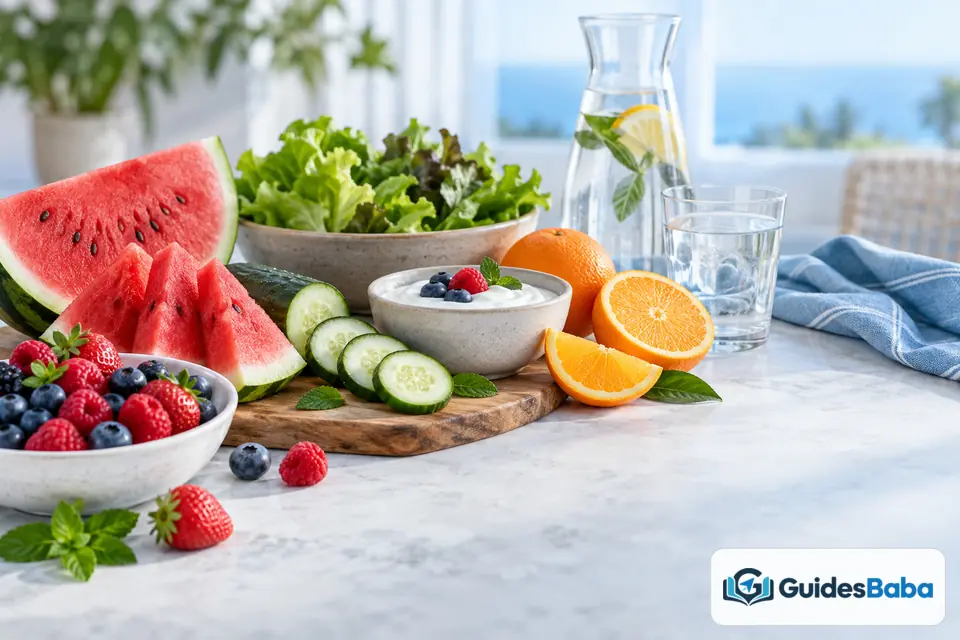
One myth says only water hydrates you. In truth, food adds real fluid. Produce quietly tops you up.
Another myth claims fruit is too sugary to help. Whole fruit brings water and fibre together. Its sugar comes wrapped in good things. Whole fruit beats a sugary juice here.
Some people think soup does not count. A watery soup adds real fluid. It hydrates while it warms you. A varied plate wins over time. Broth counts just as much as water.
Common mistakes people make
One common mistake is skipping fresh produce. That misses an easy fluid source. Add some to every meal.
Another mistake is drowning food in salt. Heavy salt can work against hydration. Season with a lighter hand. Herbs and lemon add flavour without salt.
Some people also peel away watery skins. Many skins hold fluid and fibre. Keep them on where you safely can. A little care protects real value. Wash produce well and keep the peel on.
Who might need tailored advice
General food lists suit many healthy adults. Still, some people have special needs. Certain conditions change the picture.
Some plans limit fluid or potassium closely. Certain foods may need care then. Your doctor knows your situation best. Digestive issues can change which foods suit you.
This is not medical advice. See a professional for your personal needs. Use these food ideas as a friendly guide. A short chat can prevent bigger problems.
Hydrating foods and a balanced diet
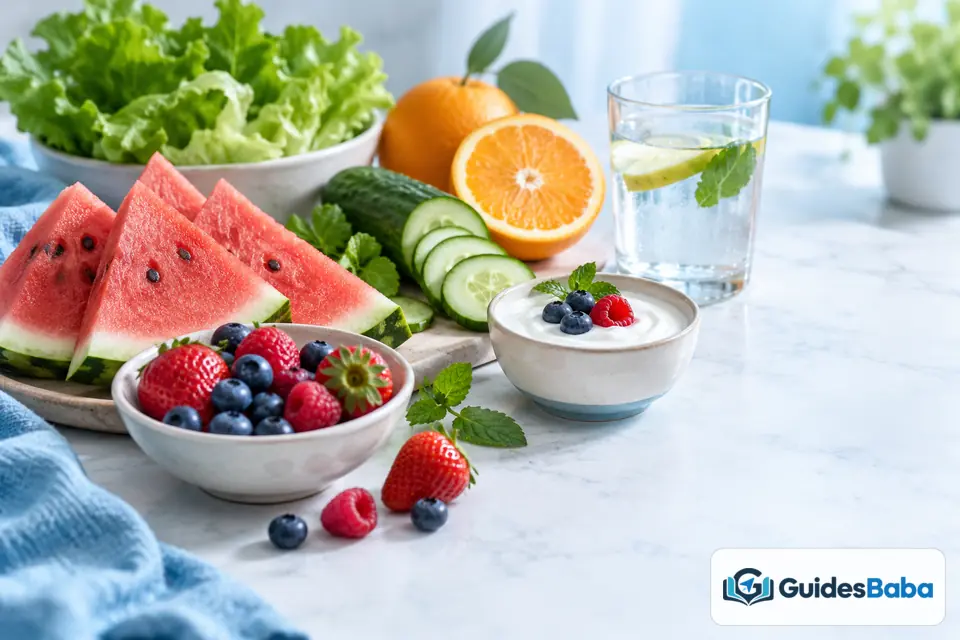
Hydrating foods fit inside a wider pattern. They join fibre, vitamins, and minerals. Together they build a strong plate.
No single food carries your whole diet. Balance across many foods matters most. Pair water rich picks with whole grains. Variety remains the guiding rule.
Treat colour and juiciness as helpful signals. Pair produce with protein and grains. This mix keeps your meals rounded. A simple plate does the heavy lifting. Good habits compound quietly across the weeks.
Frequently asked questions
What foods help keep you hydrated?
Water rich fruits and vegetables lead. Cucumber, melon, and oranges are top picks.
Which fruit has the most water?
Watermelon is famously high in water. Strawberries and melon rank high too.
Do vegetables help with hydration?
Yes, cucumber, lettuce, and celery are watery. They add fluid plus fibre.
Does soup count toward hydration?
Yes, soup is mostly water. A warm bowl adds real fluid.
Can food replace drinking water?
No, food helps but does not replace it. Keep drinking water too.
Is fruit too sugary to hydrate?
No, whole fruit brings water and fibre. Its sugar comes wrapped in nutrients.
Does yogurt help hydration?
Yes, plain yogurt holds water and protein. Add fruit for more fluid.
What foods work against hydration?
Very salty and sugary snacks help least. Pair them with water rich foods.
Are hydrating foods good in hot weather?
Yes, chilled melon and cucumber refresh well. They cool and hydrate at once.
How do I eat more hydrating foods?
Add produce to every meal. Start with a salad or fruit.
The bottom line
So what foods help keep you hydrated? Water rich fruits and vegetables lead the way. Cucumber, melon, and oranges are top picks. Soups, yogurt, and lettuce help too. A colourful plate does quiet work.
Hydrating foods add fluid plus real nutrition. Reach for produce alongside your glass. Food and drink work best together. Small daily habits truly add up over time.
For more background, read this overview of water in the body. You can also explore the humble watermelon as an example. Use trusted sources to guide your plate.
This is not medical advice. See a professional for your personal needs. Add one juicy food today. Then build slowly from there. Your plate will thank you.