
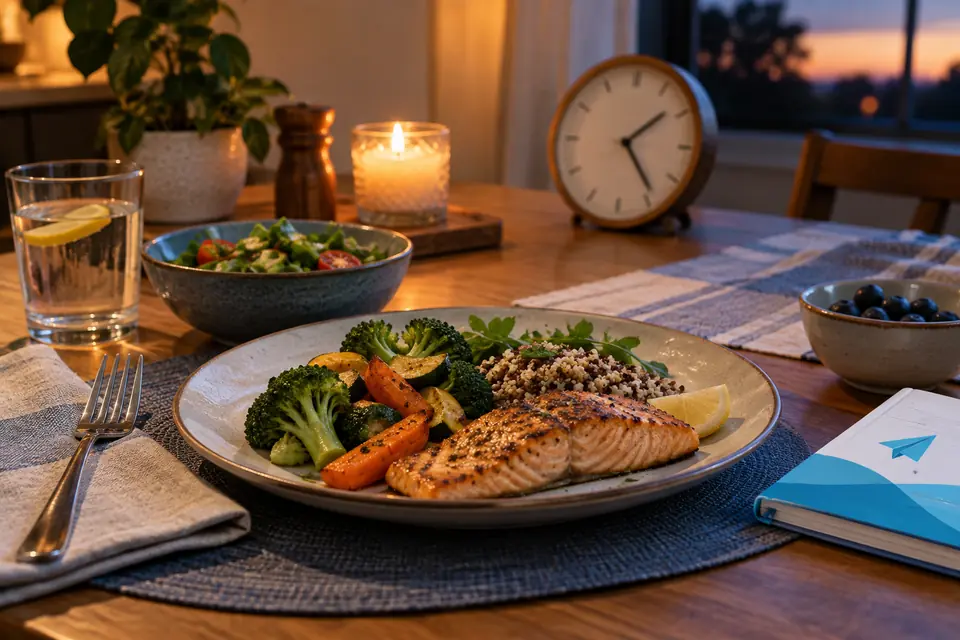

Late night snacking is a familiar temptation. The fridge seems to call after dark. So does eating late at night matter? Or is the clock less important than we think?
Rather than blaming the hour alone, look wider. What and how much you eat counts. Your total daily intake matters most. Late meals are only one piece. They connect to your time-restricted eating habits.
Here is the honest answer. The timing of food matters a little. It matters less than your overall diet. Big, heavy late meals can disturb sleep. They may nudge weight up over time. Yet a small sensible snack is usually fine. This is not medical advice. See a professional.
This guide covers late night eating in plain language. You will learn what really drives the effects. We compare late snacking with earlier eating. Many tips point back to steady, simple habits.

So does eating late at night matter?
The honest answer is a gentle yes and no. The hour has some effect. Your total intake matters far more.
Think of your day like a budget. Calories count wherever they land. A late splurge still adds up. The clock does not erase them. Balance across the day matters most.
Does one late snack ruin everything? Not at all, and that is reassuring. A small bite rarely causes harm. Habits over weeks shape the result. One evening does not define you. The bigger pattern always wins in the end.
Why the question comes up so often
This question pops up everywhere online. Late eating carries a heavy reputation. Many people fear the evening fridge.
Some of that fear holds real truth. Heavy late meals can affect sleep. Big portions may sit uncomfortably. Yet much of the worry is overblown. Context changes the whole picture.
People often eat mindlessly at night. Screens and boredom drive extra bites. Those calories add up quietly. The hour gets the blame unfairly. The habit matters more than the clock. A calm evening makes better choices easier.
Did you know?
Your body follows a daily internal clock. It can influence how you handle food at night.
What happens to your body at night
Your body slows down in the evening. Activity usually drops after dark. Energy needs fall a little.
An internal clock guides many processes. It shapes hormones and digestion. Late food meets a resting body. That timing can feel less efficient. Your system prefers daytime fuel.
Still, the effect is fairly mild. One late meal will not derail you. Your body adapts across the day. Overall patterns matter far more. A single night rarely changes the picture.

Late eating and weight
Many people link late eating to weight. The truth is more nuanced. Total calories still lead the story.
Late meals can push your total higher. Extra evening snacks add up fast. That surplus can nudge weight up. The hour itself is a minor factor. Portion size carries more weight.
Watch your whole day, not just night. A balanced total keeps things steady. Mindful evenings help a great deal. Small habits shape the outcome. The scale reflects your weekly balance.
Late eating and sleep
Sleep is where timing really shows. Heavy late meals can disturb rest. A full stomach fights good sleep.
Rich, spicy food may cause discomfort. Large portions can bring heartburn. Poor sleep then affects next day hunger. The cycle can quietly build. Lighter evenings often help you rest.
Leave a gap before bed where you can. A calm stomach supports deeper sleep. Keep late food light and simple. Good rest pays off the next day. Better sleep also curbs next day cravings.
Late eating and digestion
Digestion works best when you are upright. Lying down soon after eating causes trouble. Reflux can creep in at night.
A big late meal sits heavily. Your body would rather be resting. Discomfort can follow you to bed. Smaller portions ease this problem. Gentle food digests more kindly.
Give your body time to settle. A short walk can help digestion. Avoid heavy fried food late on. Comfort guides a good choice. A gentle evening keeps your gut happy.

It is often about total intake
The real driver is your total intake. Calories matter wherever they arrive. The clock plays a smaller part.
An early feast still adds up. A late snack fits a balanced day. Context decides the true effect. Your whole plate tells the story. One meal rarely stands alone.
Focus on the full day first. Then fine tune your timing. This order keeps things simple. Balance beats clock watching. Your habits matter more than any hour.
Late night cravings explained
Late cravings feel powerful and real. Tiredness often fuels the urge. Your willpower runs low by night.
Poor sleep raises hunger hormones. Boredom and stress add more pull. Sugary snacks promise quick comfort. Refined choices spike and crash you. Learn about refined carbohydrates and cravings.
Understanding the trigger helps you cope. Address the cause, not just the snack. Rest and routine calm the urge. Awareness is half the battle. A good night of sleep quiets the fridge.

Late snacking versus earlier eating
People often compare these two habits. The honest comparison is late snacking versus earlier eating. Each has its own effects.
| Late night snacking | Earlier eating |
|---|---|
| Can disturb your sleep | Leaves time to digest |
| Often driven by boredom | Usually planned with meals |
| Easy to overeat mindlessly | Easier to control portions |
| May cause reflux lying down | Gentler on digestion |
Neither habit is purely good or bad. Total intake still matters most. A light late snack can fit fine. Balance guides the smart choice.
Better choices for a late snack
Sometimes you truly need a late bite. The right choice makes a difference. Light and simple wins here.
A small bowl of yogurt satisfies. Fruit brings fibre and gentle sweetness. A few nuts add lasting fullness. Whole foods calm the stomach. Reach for foods that keep you full longer.
Skip heavy fried snacks at night. Avoid big sugary desserts late on. They disturb sleep and pile up. A gentle snack serves you better. A warm herbal tea can round off the meal.

Late eating and shift workers
Shift workers face a special challenge. Their body clock runs against the norm. Late eating is often unavoidable.
Night shifts flip the usual schedule. Meals may land at odd hours. Planning helps keep choices steady. Simple whole foods travel well. Preparation beats vending machine snacks.
Try to keep some routine anyway. Regular meal spacing supports the body. Light night meals feel kinder. Rest and hydration matter too. A packed snack beats a rushed vending choice.
Late eating and blood sugar
Late meals can affect blood sugar. The body handles fuel less smoothly at night. Big sugary snacks make this worse.
Refined foods spike your levels fast. A crash can follow soon after. That swing can disturb your sleep. Balanced snacks steady the response. Fibre and protein help a lot.
This matters more for some people. Certain conditions need close care. This is not medical advice. See a professional for tailored guidance.
Habits that make late eating worse
Some habits turn late eating harmful. Mindless screen snacking is one. You barely notice what you eat.
Large portions late on cause trouble. Sugary and fried foods add strain. Eating right before bed hurts sleep. These habits stack up quietly. Small changes ease the load.
Watch your evening environment closely. Keep tempting snacks out of sight. Plan a calm wind down routine. Awareness helps you eat less. A tidy kitchen removes easy temptation.

Common myths about late eating
Myths cloud this topic often. One myth says food after eight always gains weight. The clock alone does not do that.
Another myth claims late calories count double. Calories work the same at any hour. Total intake still leads the story. Context shapes the real effect. Balance beats fear of the clock.
Some think a late snack ruins progress. A small sensible bite is fine. Habits over time matter most. One evening changes little. Consistency matters more than any single meal.
Common mistakes people make
One common mistake is skipping meals earlier. That leaves you starving by night. Huge late meals then follow.
Another mistake is eating out of boredom. Screens invite endless nibbling. You lose track of the amount. Mindful eating protects your total. Attention beats autopilot snacking.
Some people also choose heavy foods late. Fried and sugary snacks disturb sleep. Lighter choices treat you better. Simple swaps make a difference.
How to eat earlier without stress
Shifting meals earlier can feel hard. Small steps make it easier. You do not need a sudden overhaul.
Eat a fuller lunch to curb evening hunger. Move dinner a little earlier weekly. Keep light snacks for real hunger. A steady routine builds itself. Gentle change sticks the best.
Plan your evenings with intention. A warm drink can end the day. Busy hands reduce idle snacking. Simple habits carry you forward.

When late eating is fine
Late eating is not always a problem. Context decides the real effect. Sometimes a night snack makes sense.
Active people may need evening fuel. A light bite can aid recovery. Hungry children need feeding too. Real hunger deserves a response. Sensible choices keep it healthy.
Listen to genuine hunger signals. Ignore snacking driven by boredom. A mindful bite is perfectly fine. Balance remains the guiding rule. Real hunger and boredom feel quite different.
Late eating and a balanced diet
Late eating fits inside a wider pattern. What you eat all day matters most. Balance carries the real weight.
Fill your day with varied whole foods. Include protein, fibre, and colour. No single meal defines success. Variety builds a strong base. Good habits compound quietly.
Treat timing as one small lever. Pair it with sensible daily choices. The mix keeps your health rounded. A simple plate does heavy lifting. Good routines matter more than the clock.
Frequently asked questions
Does eating late at night matter?
It matters a little for sleep and comfort. Your total daily intake matters more.
Does eating late cause weight gain?
Extra late calories can add up over time. The hour itself is a minor factor.
Is a late snack always bad?
No, a small light snack is usually fine. Keep it simple and sensible.
Why do I crave food at night?
Tiredness, boredom, and stress often drive cravings. Poor sleep raises hunger hormones too.
What is a good late night snack?
Yogurt, fruit, or a few nuts work well. Keep the portion small.
Does late eating affect sleep?
Heavy late meals can disturb your sleep. Lighter evenings often help you rest.
Should I stop eating after a set time?
No fixed hour suits everyone. Focus on your total daily intake.
Is late eating bad for digestion?
Large meals late can cause reflux. Lying down soon after makes it worse.
What about shift workers?
Late eating is often unavoidable for them. Light, planned meals help most.
How can I eat earlier?
Eat a fuller lunch and earlier dinner. Move the times slowly over weeks.
The bottom line
So does eating late at night matter? It matters a little, but not hugely. Heavy late meals can affect sleep and comfort. Your total daily intake matters far more. A light late snack is usually fine.
Focus on your whole day first. Keep late food light and simple. Balance and consistency shape your results. Small steady habits truly add up. For a treat, choose the healthiest junk food options.
For more background, read this overview of the circadian rhythm. You can also explore how metabolism works. Use trusted sources to guide your plate.
This is not medical advice. See a professional for your personal needs. Watch your whole day today. Then adjust your evenings gently.