
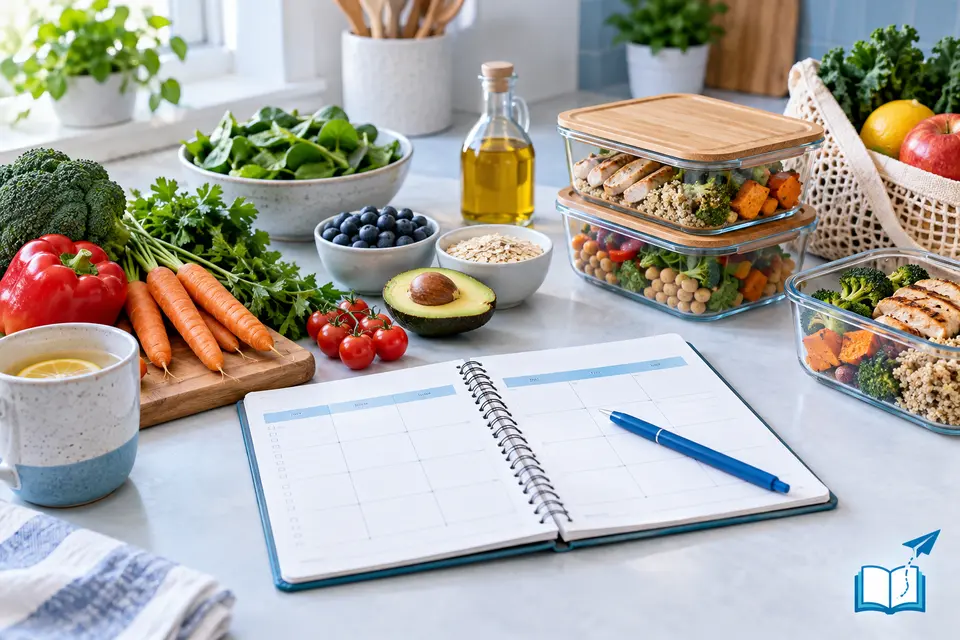
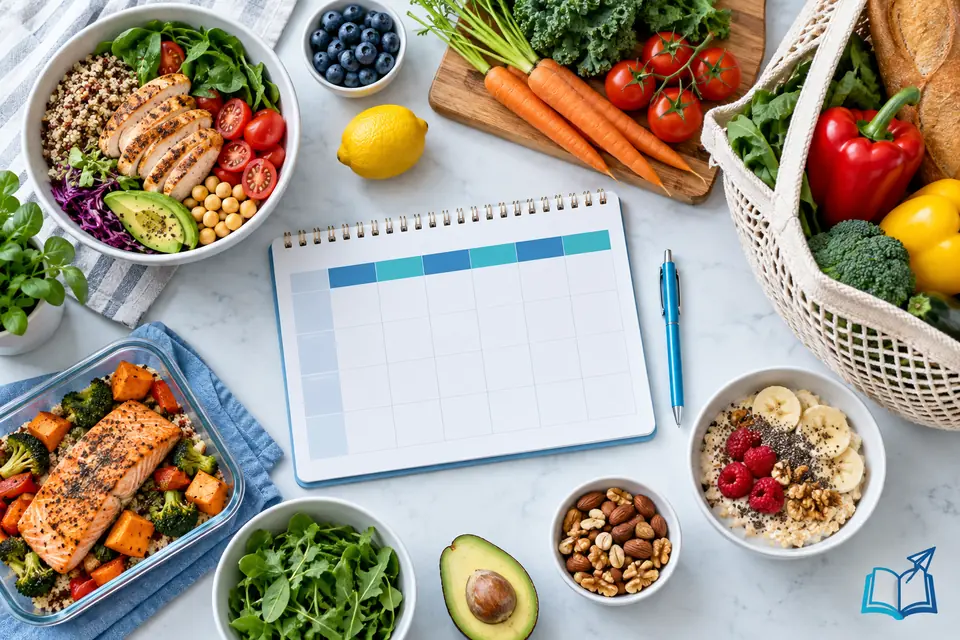
A blank week can feel overwhelming at first. Where do you even begin? So how can beginners start meal planning? The answer is gentler than it looks.
Rather than planning every meal perfectly, start small. A few easy dinners are enough. You build the habit slowly. Meal planning works like learning to walk. It steadies what a balanced diet looks like.
Here is the honest answer. Pick one planning day each week. Choose a few simple meals you know. Check your kitchen, then write a short list. Shop once and cook with your plan. Start small and grow from there. This is not medical advice. See a professional.
This guide covers meal planning for beginners in plain steps. You will learn how to start without stress. We will compare a full start and a gradual start. Many tips link back to a simple, steady routine.
So how can beginners start meal planning?
The honest answer starts with one small step. You do not plan everything at once. You choose a few meals first. Your confidence grows week by week.
Think of planning like planting a garden. You start with a few seeds. Then you tend them patiently. A tiny plan still beats no plan. Small starts grow into steady habits.
Do you need any special skills here? Not at all, and that is a relief. Beans on toast counts fine. Your kitchen already holds the tools. A simple meal is a great start.
Why meal planning helps beginners
Planning removes the nightly what-to-cook panic. You decide once, then simply follow. That daily question fades away.
Planning brings more than saved time. It trims waste and cuts extra trips. Your grocery bill often shrinks too. A plan supports steadier eating habits. Fewer last minute takeaways sneak in.
Leaning on a plan feels calming. You free your mind from decisions. No nightly stress or rushed choices. Every week gains a gentle rhythm. A written plan does quiet work. Your future self thanks the effort.
Did you know?
Planning just a few dinners can ease a whole week. Small habits often stick far better than big overhauls.
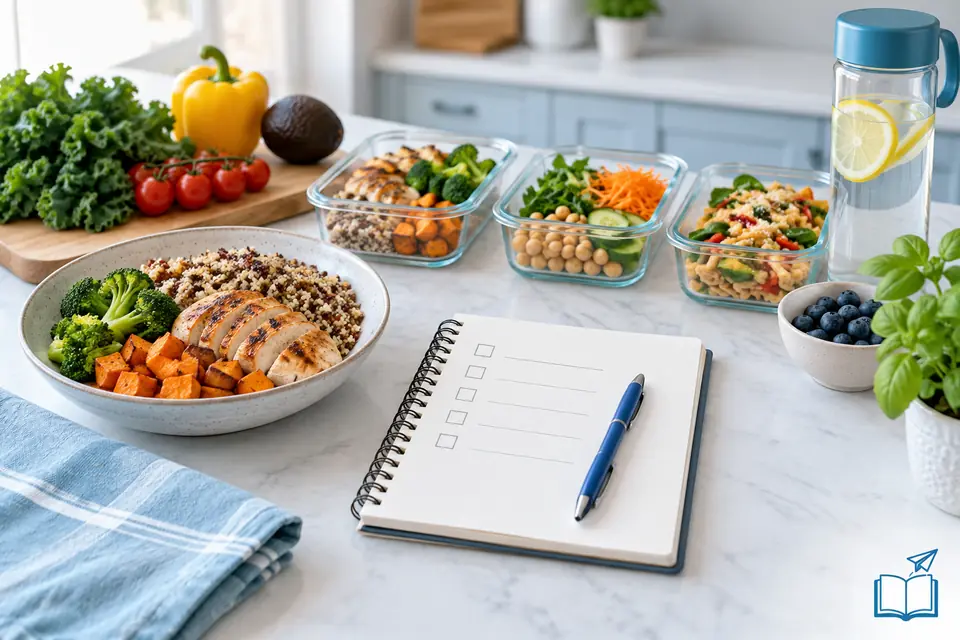
Start small and simple
Beginners do best with tiny steps. Plan just three dinners this week. Leave the other nights open.
A small plan feels easy to follow. You avoid burnout and overwhelm. Success builds real confidence fast. Then you add more slowly. Little wins keep you going.
Do not aim for a perfect week. Aim for a plan you finish. Three planned meals beat ten skipped ones. See the basic steps of meal planning for guidance. Simple starts create lasting habits.
Pick a regular planning day
A set planning day builds the habit. Choose a quiet time each week. Then planning becomes routine.
Look for a calm slot in your schedule. Sunday suits many beginners well. Spend just fifteen minutes at first. A short session is plenty. A regular day anchors the whole habit.
Pair planning with something you enjoy. Sip a coffee while you plan. Play some music in the background. This makes the habit pleasant. Small joys keep it going. Consistency matters more than length.
Choose a few easy meals
Start with meals you already love. Familiar dishes feel safe and simple. You cook them without stress.
List five or six reliable meals. Rotate them across your weeks. Repeat favourites without any guilt. Ease matters more than variety now. A short list of go-to meals helps.
Add one new recipe if you like. Keep the rest familiar and easy. Try the foods to eat every day for ideas. Simple meals build early confidence.
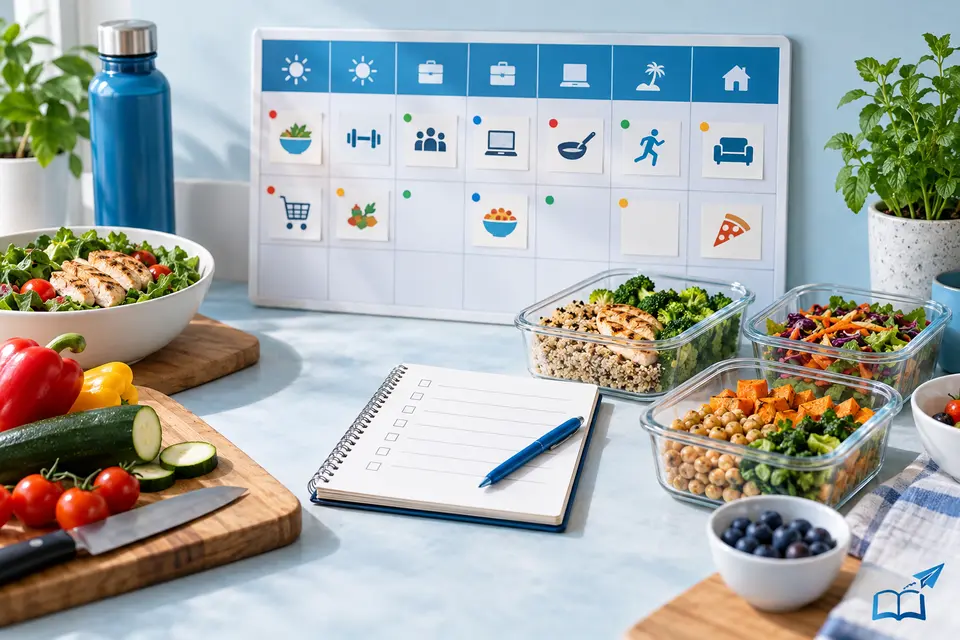
Check your kitchen first
Before shopping, see what you own. Open the fridge and the cupboards. Note what needs using soon.
Many pantries hold forgotten staples. Rice, pasta, and beans wait quietly. Build a meal around them. This trims waste and saves money. A quick scan reveals hidden meals.
Note items close to their date. Plan those into early meals. Fresh produce should go first. A little stock check pays off. You cook what you already have.
Build your first grocery list
Your meals now shape your shopping. Read each recipe and note what you need. Group items by aisle.
Check the kitchen before adding anything. Cross off what you already own. A tidy list speeds up shopping. It also curbs impulse buys. One good list means one clean trip.
Keep the list on your phone or fridge. Add items as you run low. Then shop once for the week. Fewer trips save time and money. A clear list keeps you focused.

Keep your first plans flexible
Early plans should bend easily. Life rarely follows a script. A flexible plan survives surprises.
Leave a few nights open each week. Use them for leftovers or takeaways. Swap meals around as needed. This keeps the plan realistic. Flexibility helps beginners stay consistent.
Do not treat the plan as strict rules. See it as a helpful guide. Miss a night without any guilt. Just pick it up again. Gentle plans last much longer.

Use meals you already know
Your existing recipes are a great base. You already cook them with ease. Lean on that comfort early.
Write down every meal you make often. This becomes your starter menu. Rotate it across the weeks. New recipes can wait a while. Familiar meals build steady momentum.
Cooking known meals lowers the pressure. You focus on the habit, not skills. Confidence grows with each week. Then you branch out slowly. Comfort meals carry beginners far.
Comparing a full start and a gradual start
Beginners often ask how fast to begin. The honest comparison is full versus gradual. Each path has trade offs.
| Full start | Gradual start |
|---|---|
| Plans every meal right away | Plans a few meals first |
| Fast results but easy burnout | Slower but far more sustainable |
| Needs more time and energy | Fits into a busy life |
| Best for eager, free schedules | Best for cautious first timers |
Most beginners do better going gradual. A slow start builds a lasting habit. You avoid early overwhelm. Then you scale up with confidence.
Plan around your real week
A plan must fit your actual life. Look honestly at your busy days. Then plan meals to match.
Some nights you arrive home late. Others you have time to spare. Match quick meals to rushed evenings. Save slow cooking for free days. A realistic plan actually gets followed.
Do not plan hard recipes on busy nights. That sets you up to fail. Keep hectic evenings simple and fast. Ambition should match your time. Honesty beats optimism here.
Add balance step by step
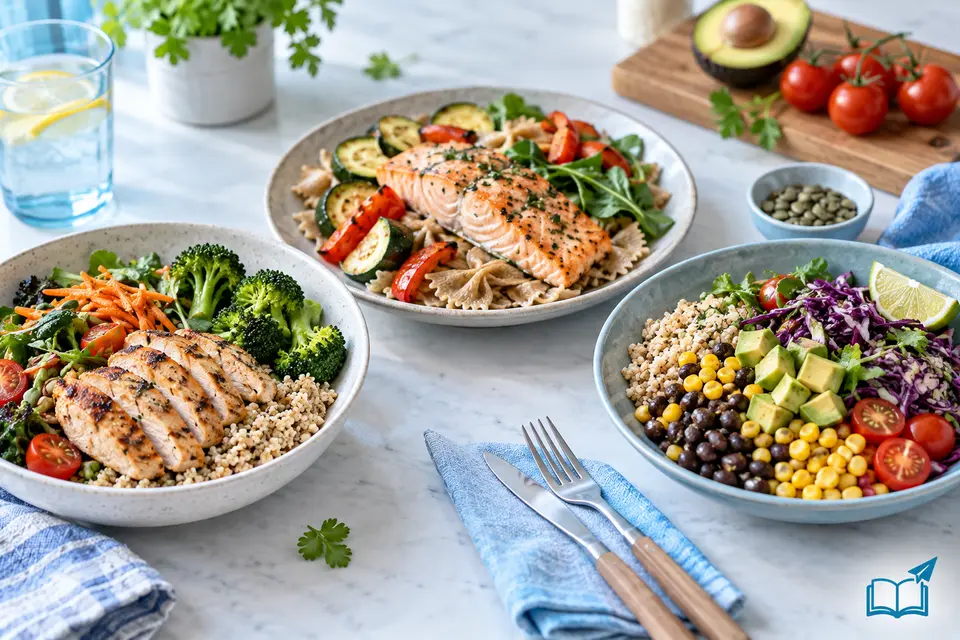
Balance can grow slowly over time. You do not need perfect meals now. Small improvements add up.
Aim for vegetables at most meals. Add lean protein and whole grains too. See the weekly meal plan steps for structure. Colour on the plate signals balance. Little swaps improve each week.
Start where you are today. Add one vegetable to a meal. Swap white bread for whole grain. These tiny steps compound nicely. Balance builds one habit at a time.
Prep a little ahead
A small amount of prep helps hugely. You do not need hours. Even ten minutes counts.
Wash and chop some vegetables early. Cook a pot of grains ahead. Store portions for busy nights. A little prep saves real minutes. Small steps make weeknights lighter.
Try prepping right after your shop. Your ingredients are already out. A quick session sets the week. Then cooking feels much easier. Gentle prep supports the plan. A calm start builds real momentum.
Track what works for you
Notice which meals you actually enjoy. Keep the ones that work. Drop the ones that flop.
Jot a quick note each week. Mark the meals worth repeating. Your starter menu slowly improves. This keeps planning personal. Small notes sharpen future plans.
Over time you learn your rhythm. You know your busy nights. You know your favourite meals. Planning then feels effortless. Experience turns beginners into pros. Your plan grows with you.
Common myths for beginners
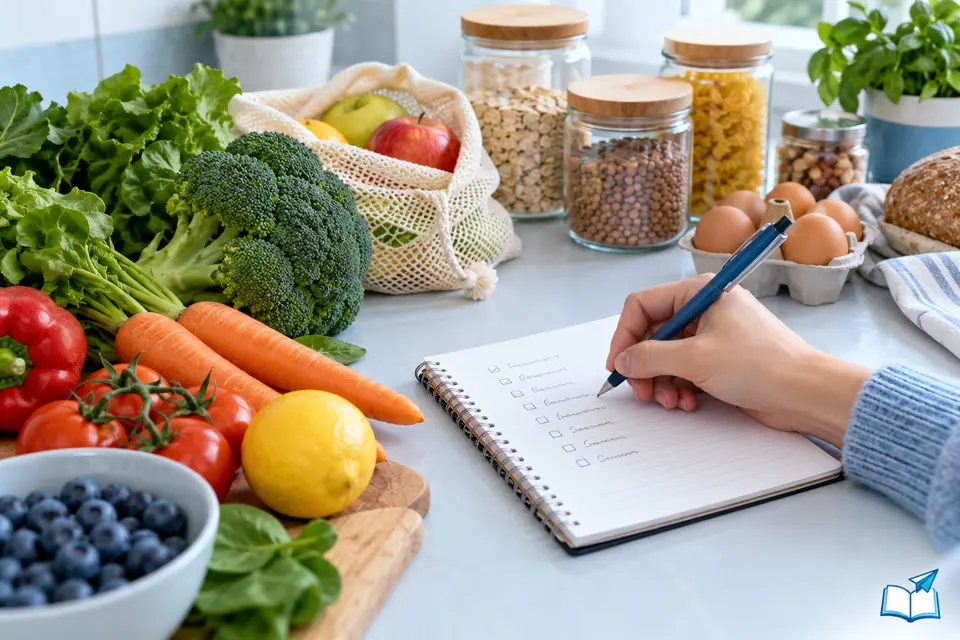
One myth says planning kills all spontaneity. In truth, a plan can flex. You still swap meals freely.
Another myth claims it takes hours. A short weekly session is plenty. Many people finish within an hour. Practice makes the process faster. The habit soon feels light.
Some think you need chef-level skills. Simple meals plan just as well. Beans on toast counts fine. A plan suits every skill level. Start small and grow slowly.
Common mistakes beginners make
One common mistake is planning too much. An overloaded week collapses fast. Keep the plan realistic instead.
Another mistake is ignoring your schedule. Fancy meals on busy nights fail. Match effort to your free time. Quick swaps ease the pressure. Honesty keeps the plan alive.
Some beginners skip the grocery list. Then they shop without a guide. Impulse buys and gaps follow. Always shop from your plan. A list keeps the trip tight.
Who might need tailored advice
General planning suits many healthy adults. Still, some people have special needs. Certain conditions change the picture.
Some diets limit salt or sugar closely. Certain foods may need care then. Your doctor knows your situation best. Allergies also shape your safe choices.
This is not medical advice. See a professional for your personal needs. Use these planning ideas as a friendly guide. A short chat can prevent bigger problems.
Meal planning and a balanced diet
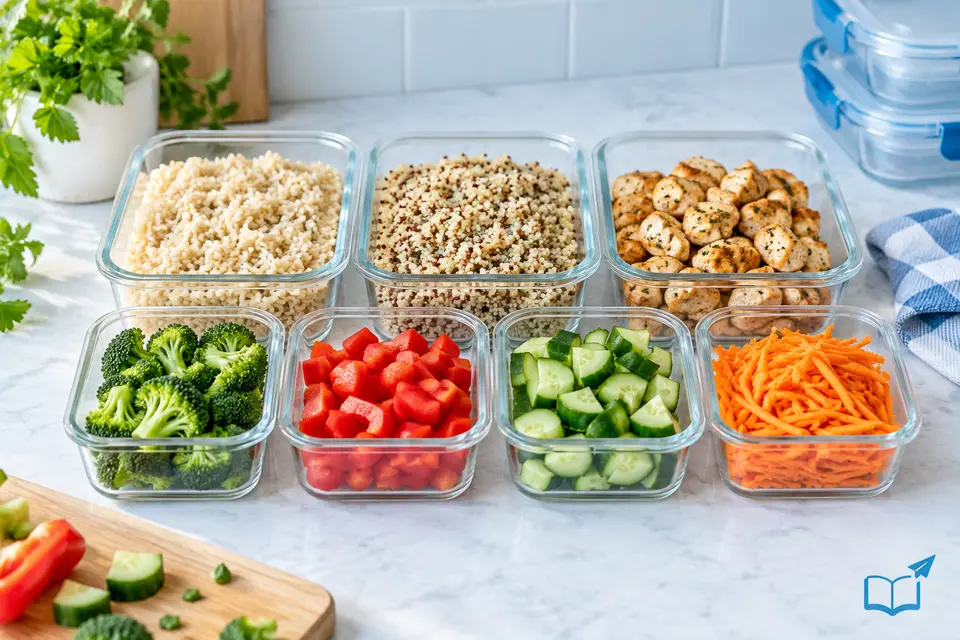
A simple plan supports steady eating. It helps you spread nutrients out. Balance grows easier to see.
Include vegetables, protein, and whole grains often. No single meal carries the week. Variety across days matters most. A plan makes that variety simple.
Treat the plan as a gentle framework. Adjust it as your life shifts. Pair produce with protein and grains. This mix keeps meals rounded. A simple plan does the heavy lifting. Good habits compound quietly over weeks.
Frequently asked questions
How can beginners start meal planning?
Pick a planning day and choose a few easy meals. Then write a short list and shop once.
How many meals should I plan first?
Start with just three dinners a week. Add more once the habit feels natural.
What day is best for planning?
Pick a quiet day before you shop. Sunday suits many beginners well.
Do I need to plan every meal?
No, start with dinners if you prefer. Add breakfast and lunch later.
What if I miss a planned meal?
Just swap it or use leftovers. Miss a night without any guilt.
Do I need cooking skills?
No, simple meals plan just as well. Beans on toast counts fine.
How long does planning take?
A short weekly session is enough. Fifteen minutes works well at first.
Do I need special apps?
No, a notepad or phone works fine. Keep the tools simple and handy.
How do I stay consistent?
Plan on the same day each week. Pair it with something you enjoy.
How do I keep meals balanced?
Add vegetables and protein across the week. Improve balance one small step at a time.
The bottom line
Let us gather the simple steps together. Pick a planning day and choose easy meals. Check your kitchen and write a short list. Shop once and cook with your plan. Start small and grow from there.
A gentle start saves time and money. It trims waste and eases daily stress. Small plans build lasting habits. Small weekly steps truly add up over time.
For more background, read this overview of meal preparation as a habit. You can also explore the idea of a healthy diet in general. Use trusted sources to guide your routine.
This is not medical advice. See a professional for your personal needs. Plan three meals today. Then build slowly from there. Your future self will thank you.