

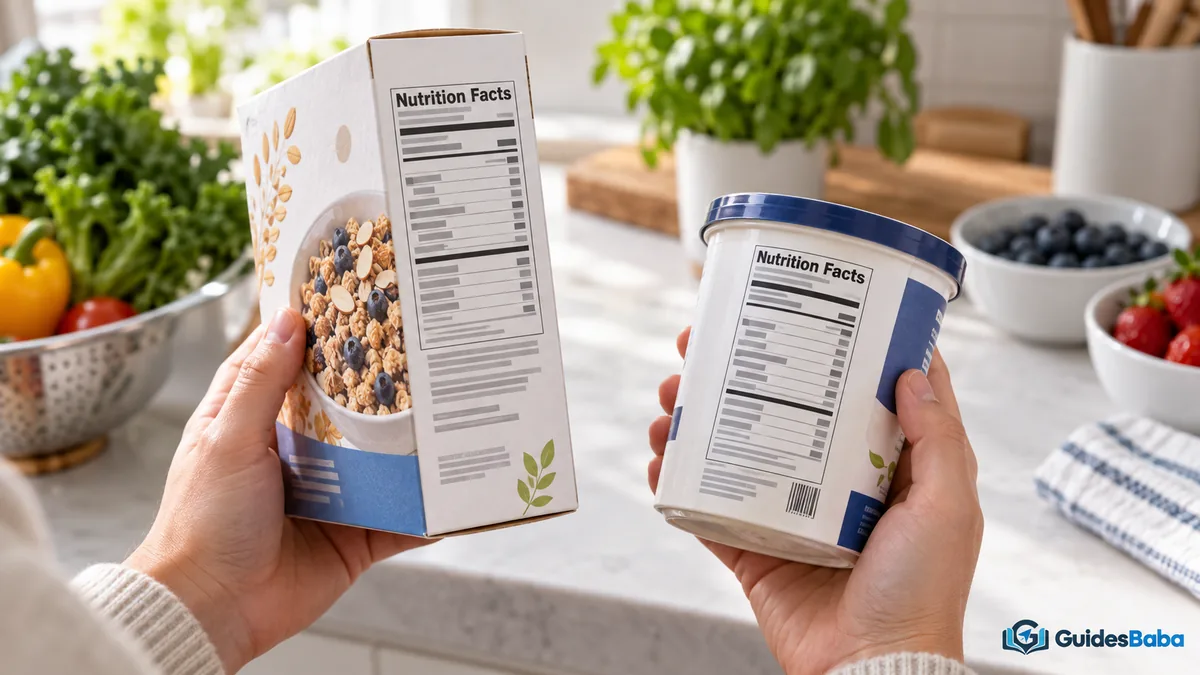
A food label can look like a wall of numbers. Many shoppers skip it and hope for the best. So how do you read a Nutrition Facts label? The skill is easier than it looks.
Rather than guessing at the front claims, read the panel. A few lines tell the real story. You learn what a food truly holds. A good label works like a clear map. It guides a balanced diet with confidence.
Here is the honest answer. Start with the serving size at the top. Check the servings per container next. Then read calories and key nutrients. Use the percent daily value to judge. This is not medical advice. See a professional.
This guide covers the label in plain steps. You will learn each line in order. We will compare nutrients to limit and boost. Many tips point back to simple, steady habits.
So how do you read a Nutrition Facts label?
The honest answer starts at the very top. You check the serving size first. Every number below relates to it.
Think of the label as a food report card. It grades the serving, not the pack. You read it from top to bottom. Each line adds to the picture.
Do you need a science degree for this? Not at all, and that is a relief. A few key lines matter most. The label follows a set order. Once learned, it reads fast.
Why the label matters
The label reveals what marketing hides. Front-of-pack words can mislead you. The panel shows the real content.
It lists calories, fats, sugar, and salt. It also shows helpful nutrients. You can compare two products fairly. You spot hidden extras with ease. The label puts you in control.
Not every claim on the front holds up. Low-fat can still mean high sugar. Natural does not always mean healthy. The panel settles these questions. Reading it protects your choices.
Did you know?
All numbers on the panel refer to one serving. A pack can hold several servings at once.
Start with the serving size
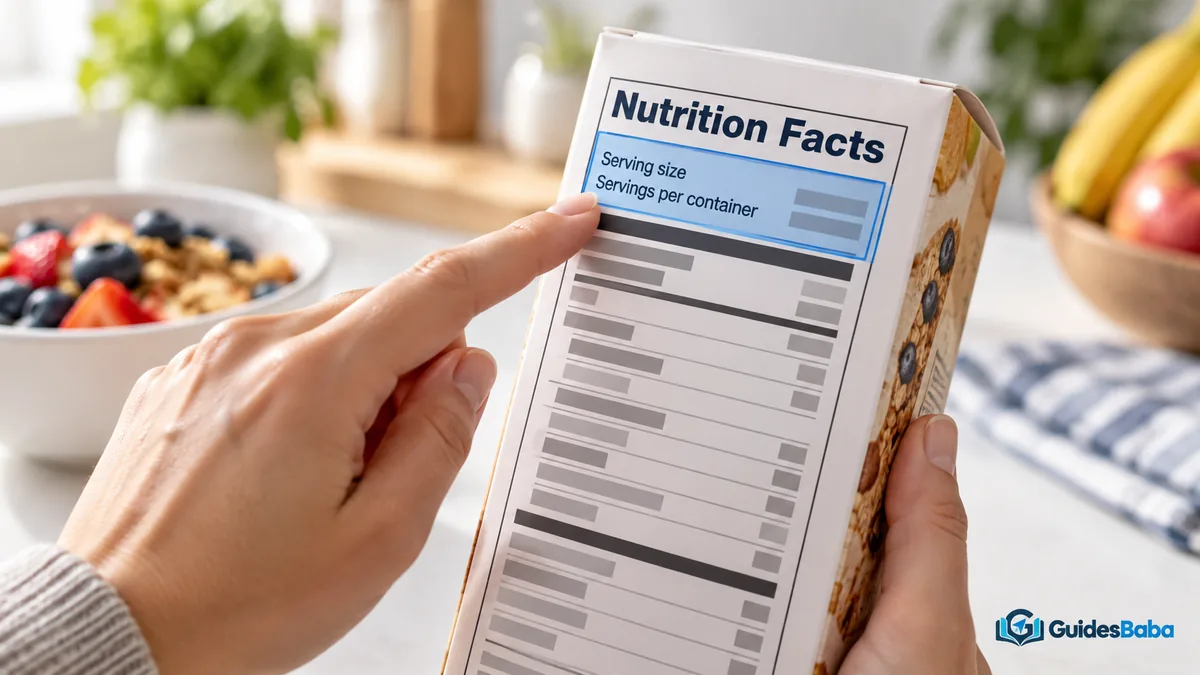
The serving size sits right at the top. It anchors every other number. Read it before anything else.
The serving size is a set amount. It may differ from what you eat. All values below match that serving. Eat double, and you double the numbers. This first line frames the whole label.
Do not ignore the serving size. A small serving can hide big numbers. Compare it to your real portion. Adjust the figures in your head.
Servings per container
Just above the serving size sits another line. It shows servings per container. This number surprises many people.
A small snack pack may hold two servings. Then you double every number shown. A big bottle can hold many. People often eat several at once. This line prevents an easy mistake.
Do not assume one pack is one serving. Check this line before you snack. Multiply the numbers if needed. A quick glance saves confusion.
Checking the calories
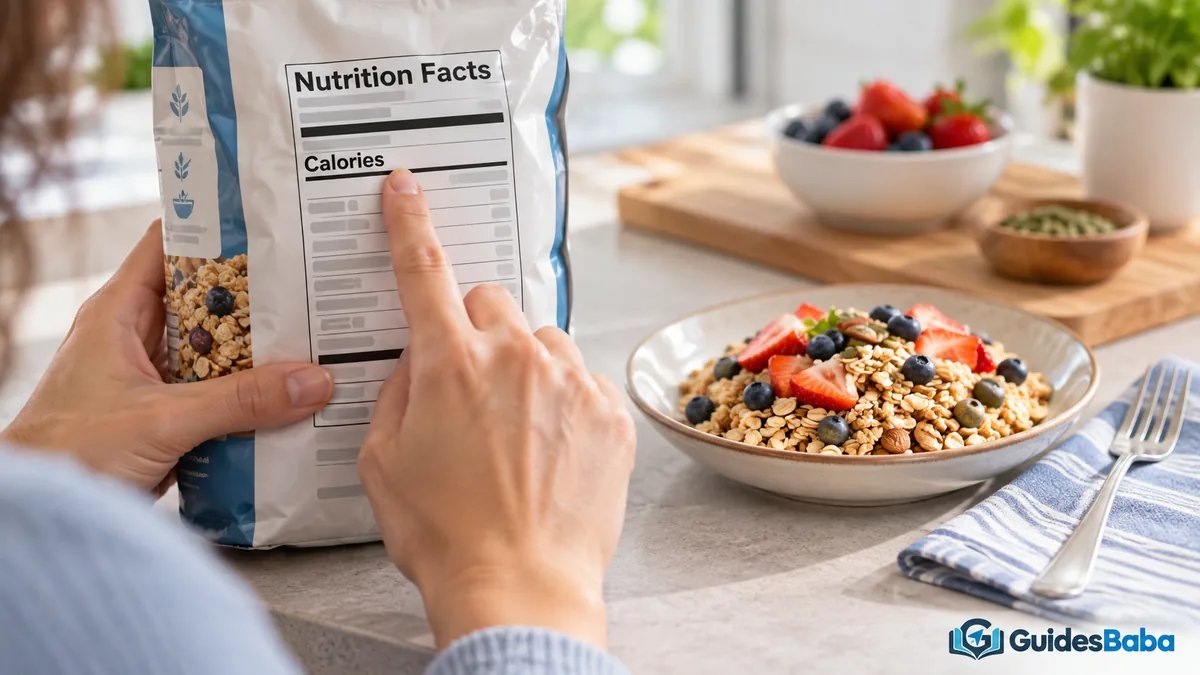
Calories sit in bold near the top. They measure the energy per serving. This line draws the most eyes.
Calories show energy, not overall quality. A high number is not always bad. Nuts pack calories yet offer nutrients. Context matters more than the figure alone. Read calories beside the other lines.
Do not judge a food by calories alone. Check the nutrients that come with them. Empty calories offer little value. Nutrient-rich calories serve you better.

Nutrients to limit
Some nutrients belong lower on your day. The label groups several together. Most people get plenty already.
Saturated fat, sodium, and added sugars lead here. Many diets hold too much of these. Keeping them lower supports steady health. The label flags each one clearly. These lines reward a careful eye.
Do not fear these nutrients entirely. Small amounts fit a balanced day. Aim to keep the totals modest. Compare products to find lower options.

Nutrients to get more of
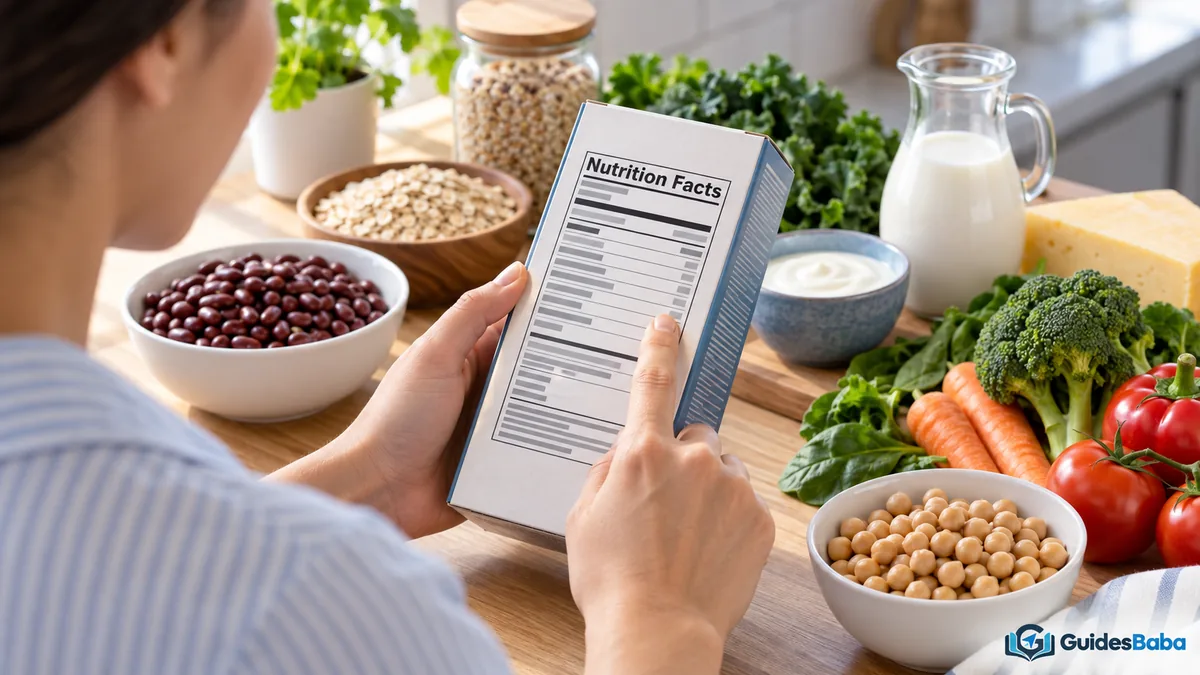
Other nutrients deserve more room in your day. The label lists these too. Many people fall short here.
Fibre, calcium, potassium, and vitamin D lead this group. These essential nutrients support daily health. Higher amounts are usually welcome. The label helps you find them. These lines guide better picks.
Do not overlook these helpful nutrients. Compare products to find richer options. A higher fibre choice often wins. Small upgrades add real value. Aim to lift these numbers gently.
Understanding percent daily value
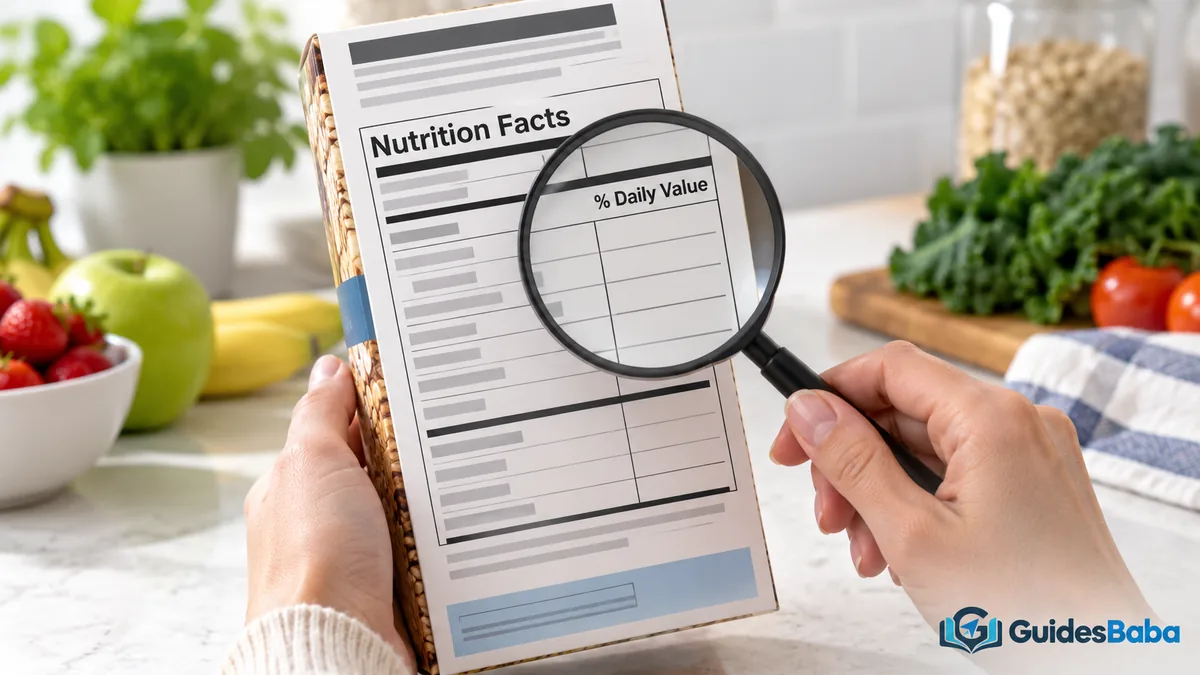
The percent daily value sits beside each nutrient. It shows how one serving fits a day. This column speeds up your reading.
It is based on a general daily diet. Around five percent counts as low. Around twenty percent counts as high. Use it to judge fast. The percentage turns numbers into meaning.
Do not treat the percentage as exact for you. Your own needs may differ. Use it as a rough guide. Aim low for nutrients to limit. Aim higher for helpful nutrients.
Reading the added sugars line
Added sugars now sit under total sugars. This line is genuinely useful. It separates added from natural sugar.
Natural sugars occur in fruit and milk. Added sugars go in during processing. The label counts added sugars separately. Lower added sugar is usually better. This line rewards a quick check.
Do not confuse total and added sugars. Whole fruit brings natural sugar plus fibre. Processed foods often hide added sugar. Check this line on sweet products. Small checks protect your intake.
Comparing nutrients to limit and nutrients to get more
People often ask what to watch first. The honest split is limit versus boost. Both groups sit on every label.
| Nutrients to limit | Nutrients to get more of |
|---|---|
| Saturated fat, sodium, added sugars | Fibre, calcium, potassium, vitamin D |
| Aim for a lower percent value | Aim for a higher percent value |
| Often high in processed foods | Often high in whole foods |
| Keep the daily total modest | Welcome across the day |
You do not have to master both at once. Start by watching one group. Many people begin with added sugars. Then add the helpful nutrients later.
The ingredient list
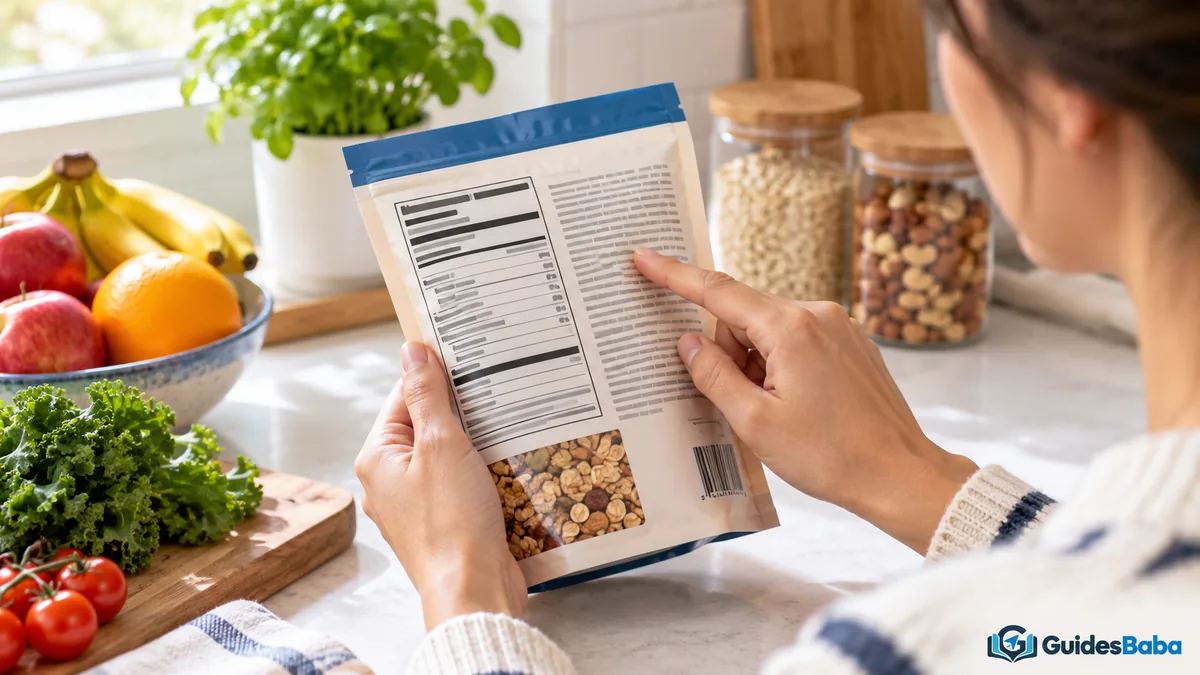
The ingredient list sits below the panel. It ranks items by weight. The first few matter most.
Ingredients appear in descending order. The first ones fill most of the food. Sugar near the top raises a flag. Many refined carbohydrates hide here. A short list often means simpler food.
Do not stop at the panel alone. The ingredient list adds real detail. Scan the first three items. Watch for sugar under many names. This habit reveals hidden truths.
Spotting hidden sugars and salt
Sugar and salt wear many disguises. They hide across the ingredient list. A trained eye finds them fast.
Sugar appears as syrup, nectar, or -ose words. Salt hides as sodium in many forms. Several small amounts can add up. Reading names reveals the total. Hidden extras lose their cover.
Do not trust a low-sugar claim alone. Check the ingredients for sweet names. Sodium can climb in savoury foods. Compare labels to find lower options. A careful read protects you.
Comparing two products
The label shines when you compare. Two similar foods sit side by side. The panel breaks the tie.
Match the serving sizes before you compare. Then check calories and key nutrients. Look at added sugars and sodium. Prefer more fibre and less salt. A fair compare guides better buys.
Do not compare across different servings. Uneven servings skew the numbers. Adjust them to the same amount. Then the better choice appears. Small maths makes a big difference.
Front-of-pack claims
Front-of-pack words aim to sell. They can be true yet incomplete. The panel checks their honesty.
Light, natural, and low-fat sound healthy. Yet a food can still hold sugar. These words follow loose rules. Always turn the pack over. The panel confirms or denies the claim.
Do not buy on the front alone. Read the panel and ingredients. Let the numbers decide for you. Marketing fades beside real data. A quick flip reveals the truth.
Common myths about labels
One myth says labels are too complex. In truth, a few lines matter. You need not read every number.
Another myth claims calories tell all. Calories miss the nutrient picture. A food offers more than energy. Read the whole panel instead. Numbers gain meaning together.
Some think healthy claims need no checking. Marketing words follow loose rules. The panel holds the real answer. Always verify with the numbers. Trust data over slogans.
Common mistakes people make
One common mistake is skipping the serving size. Then every number gets misread. Always check that line first.
Another mistake is trusting the front claims. Bold words can hide the truth. Turn the pack over instead. The panel settles the question. Evidence beats packaging.
Some people read only the calories. They miss sugar, salt, and fibre. Scan the full panel briefly. Note the nutrients that matter. A wider view guides better.
Who might need tailored advice
General label reading suits many healthy adults. Still, some people have special needs. Certain conditions change the picture.
Some diets track sodium or sugar closely. Certain nutrients may need care then. Your doctor knows your situation best. Allergies also shape your safe choices.
This is not medical advice. See a professional for your personal needs. Use these label ideas as a friendly guide. A short chat can prevent bigger problems.
Labels and a balanced diet
Label reading is one helpful skill. The whole plate matters more. Balance guides your daily choices.
Use labels to compare and choose wisely. Favour whole foods with short lists. Follow simple nutritional guidelines alongside. Variety across the week matters most.
Treat the label as a gentle tool. Let it guide, not rule, your choices. Pair it with whole, fresh foods. This mix keeps meals rounded. A quick read does quiet work. Good habits compound over many weeks.
Frequently asked questions
How do you read a Nutrition Facts label?
Start with the serving size and servings per container. Then read calories, key nutrients, and percentages.
Why is serving size so important?
Every number on the panel refers to one serving. Eat more, and the numbers rise.
What does percent daily value mean?
It shows how a serving fits a general day. Five percent is low and twenty is high.
Which nutrients should I limit?
Watch saturated fat, sodium, and added sugars. Many diets already hold plenty of these.
Which nutrients should I get more of?
Aim for more fibre, calcium, potassium, and vitamin D. Many people fall short on these.
What are added sugars?
Added sugars go in during processing. The label lists them below total sugars.
How do I read the ingredient list?
Ingredients appear in order of weight. The first few make up most of it.
Are front-of-pack claims reliable?
They can be true yet incomplete. Always check the panel and ingredients.
How do I compare two products?
Match the serving sizes first. Then compare calories, sugar, sodium, and fibre.
Do I need to read every number?
No, a few key lines matter most. Start with serving size and added sugars.
The bottom line
So how do you read a Nutrition Facts label? Start with the serving size at the top. Check servings per container next. Then read calories and key nutrients. Use the percent daily value to judge.
Watch nutrients to limit and boost. Read the ingredient list too. Compare products on equal servings. Small label habits truly add up.
For more background, read this overview of the Nutrition Facts label and its layout. You can also learn about the reference daily intake idea. Use trusted sources to guide your shopping.
This is not medical advice. See a professional for your personal needs. Read one label today. Then build slowly from there. Your future choices will thank you.