
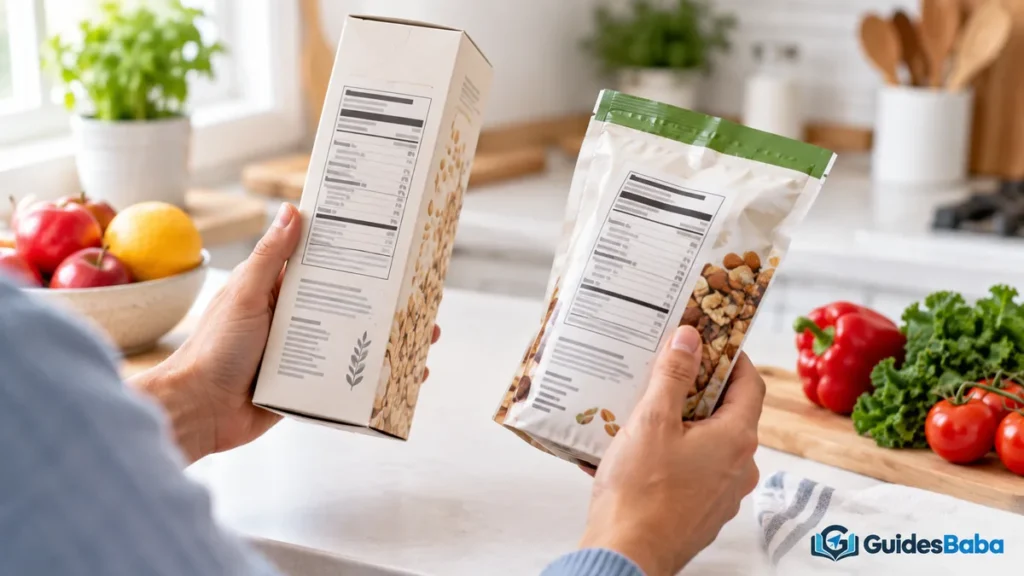

A nutrition label can feel overwhelming at first. So many numbers compete for attention. So what should you check first on a nutrition label? Starting in the right place changes everything.
Rather than reading top to bottom blindly, start smart. One line unlocks all the others. The serving size sets your whole reading. Learning to read a nutrition facts label begins right there. First things first always wins.
Here is the honest answer. Check the serving size before anything else. Then look at servings per container. Next glance at calories and the percent daily value. Finally scan nutrients to limit and boost. This is not medical advice. See a professional.
This guide covers label reading in plain steps. You will learn the best order to follow. We will compare two reading styles. Many tips link back to steady, balanced habits.
So what should you check first on a nutrition label?
The honest answer is the serving size. It sits right at the top. Every other number depends on it.
Think of it as a starting gate. The whole label opens from that line. Read it before you judge anything. One serving frames every figure below. A missed serving size skews everything. This one line unlocks the rest.
Should you rush to the calories first? Not quite, and here is why. Calories only make sense per serving. Read the serving size to anchor them. Order turns confusion into clarity.
Why the order of reading matters
Reading a label in order saves time. A good sequence builds understanding step by step. Skipping around invites mistakes.
Start with the base, then add detail. Serving size comes first for a reason. Calories and nutrients follow naturally. Each line makes sense in turn. A clear order keeps you grounded.
A steady routine also speeds you up. You stop hunting across the panel. Your eyes learn the path quickly. Soon the whole check takes seconds. Practice makes the habit effortless. A good order rewards you daily.
Did you know?
The serving size sits at the very top for a reason. Every number below refers back to it.
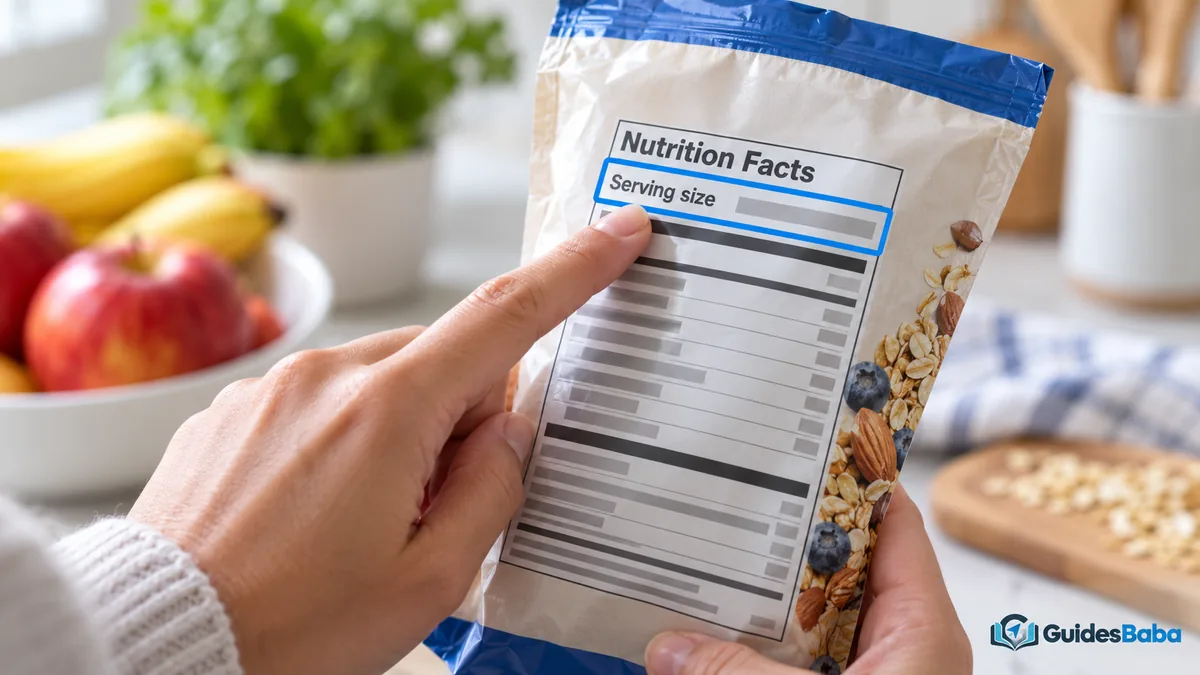
Start with the serving size
The serving size is your first stop. It names the amount the numbers describe. Read it before anything else.
The line shows a household measure and grams. One cup or two pieces feels familiar. The gram weight adds precise detail. Both point to the same amount. Reading them together removes guesswork. The two figures work as one.
Everything below refers to this serving. Calories, sugar, and sodium all follow. Keep the serving size in mind. It anchors your entire reading. Everything flows from this first line.
Check servings per container next
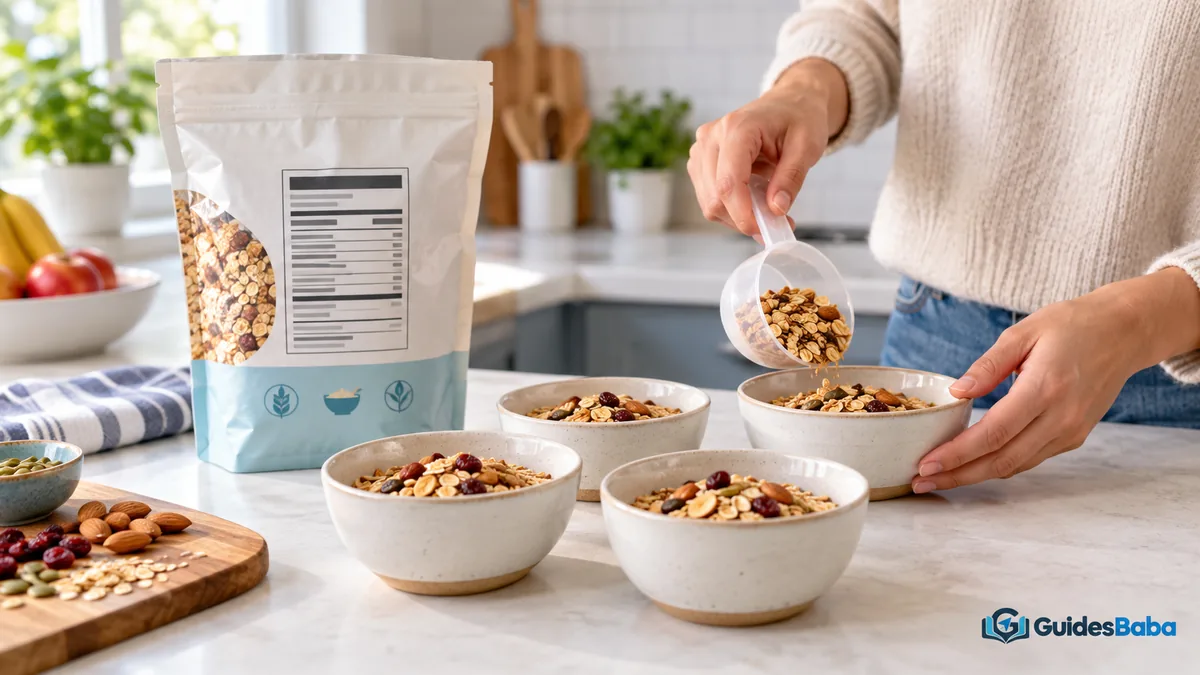
Right below sits another key line. It counts the servings in the pack. This number often gets missed.
A small bag may hold three servings. Eat it all and triple the numbers. The calories and sugar rise with you. Multiply the figures by servings eaten. That math reveals the true total. The small print carries big meaning.
Some packs show a second column. It lists numbers for the whole container. Check which column you are reading. A quick look prevents a misread. The pack size hides real totals.
Look at the calories
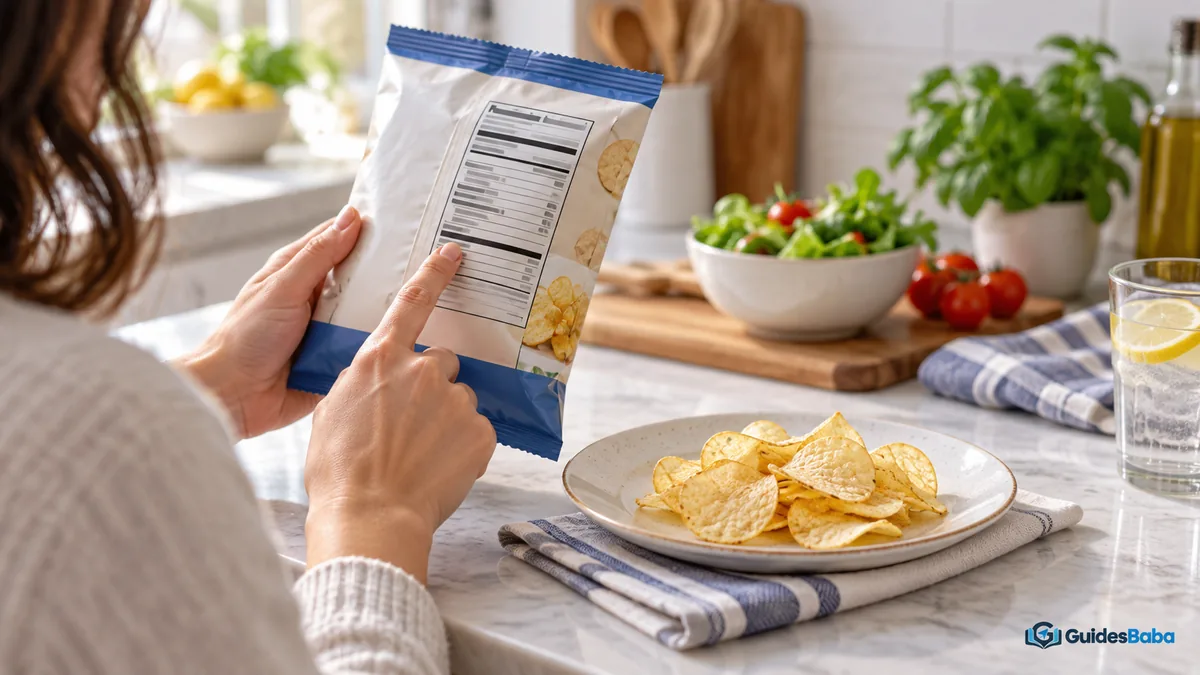
After the servings, glance at calories. The number shows energy per serving. It helps you gauge the food.
Read the calories as a per serving figure. Two servings mean double the calories. Scale the number to your portion. That keeps your calorie math honest. Context makes the number useful.
Calories are not the whole story though. A food can be low calorie yet poor. Nutrients matter just as much. Use calories as one clue among many. Quality counts beyond the number.
Scan the percent daily value
Beside many nutrients sits a percent. It shows the percent daily value. This frames each amount quickly.
The percent compares one serving to a daily reference. A high percent means a lot of that nutrient. A low percent means only a little. Use it to judge fast. Five percent or less counts as low.
The percent daily value speeds decisions. You skip mental math with grams. Just read the percent instead. Learn about essential nutrients to use it well.

Check the nutrients to limit
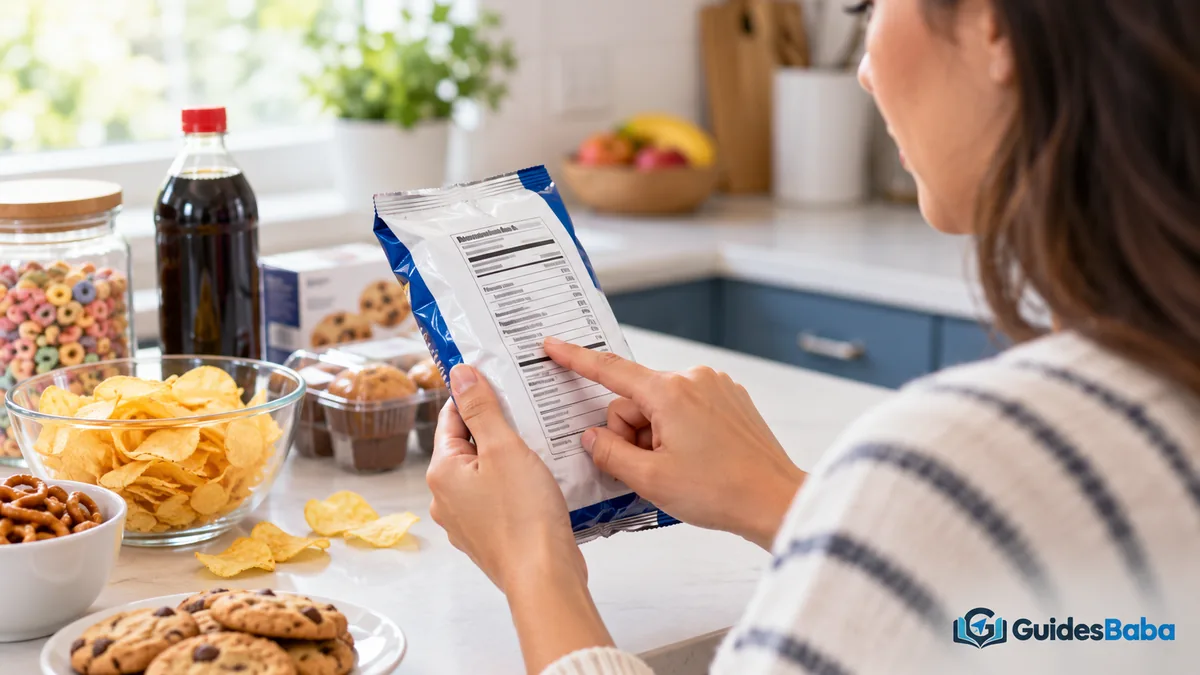
Some nutrients are worth watching closely. Labels group these near the top. They deserve an early glance.
Saturated fat, sodium, and added sugar fit here. Many people get more than they need. A lower percent daily value helps. Check these lines after the calories. Small habits keep them in check.
You need not fear these nutrients entirely. Balance across the day matters most. Aim for lower percentages where you can. Use the label as a gentle guide. Small daily choices add up.
Check the nutrients to get more of
Other nutrients are worth seeking out. Labels list these a little lower. Aim for higher amounts here.
Fibre, protein, and key vitamins fit here. Many people fall short on fibre. A higher percent daily value helps. Look for these after the limits. They point toward more nourishing foods.
Follow simple nutritional guidelines to steer these choices. Whole foods often score well here. Read the label to confirm. Good nutrients lift a food. Seek these lines with intent.
Read the ingredients list
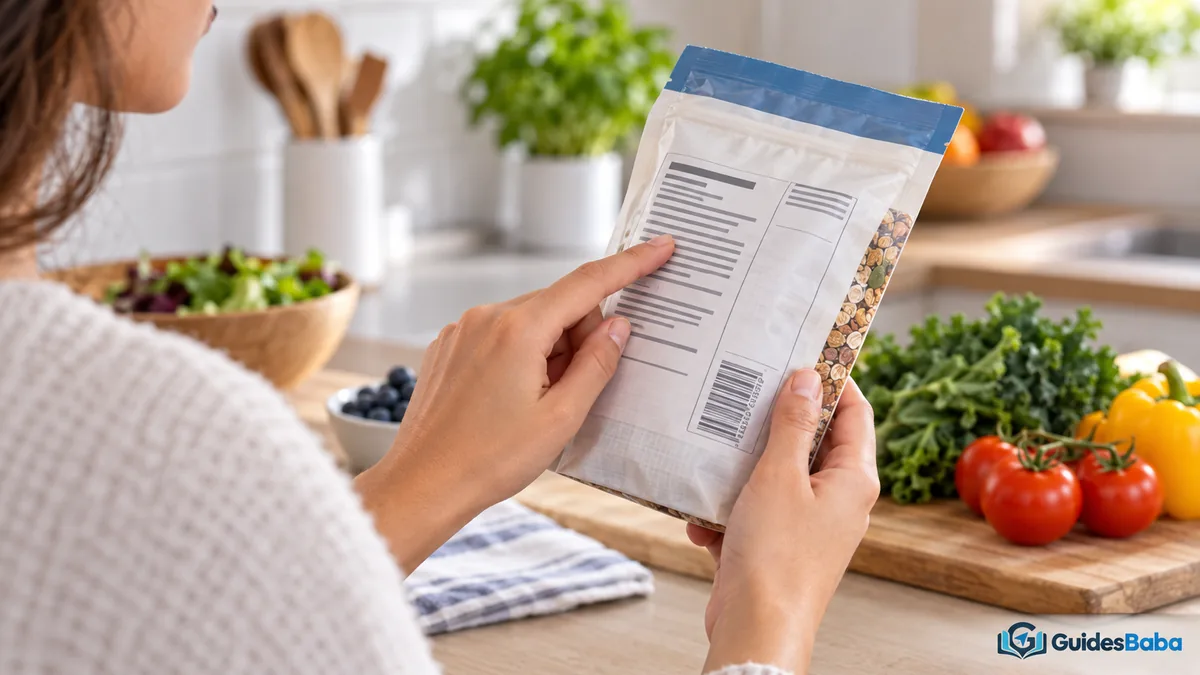
The ingredients list adds valuable context. It names everything inside the food. The panel numbers cannot show this.
Ingredients sit in order of weight. The first few make up the most. Watch for many sweeteners or additives. A short, simple list often signals quality. Reading it takes only a moment.
Pair the list with the numbers above. Together they tell the full story. One without the other misleads. Read both for a clear picture. The list rounds out the numbers.
Comparing top-down and goal-first reading
People read labels in different ways. The honest comparison is top-down versus goal-first. Each style has a place.
| Top-down reading | Goal-first reading |
|---|---|
| Reads every line in order | Jumps to one target nutrient |
| Builds a full picture | Answers one question fast |
| Best for careful shopping | Best for a quick check |
| Takes a little more time | Can miss other details |
You do not have to pick one forever. Many people blend the two styles. Start with serving size either way. Then follow your goal or the order. A flexible habit still works well.
Using the label to compare products
Labels make fair comparison possible. Two foods may look alike at first. The panel reveals the truth.
Check the serving sizes on both first. Different servings can hide the gap. Then compare calories and key nutrients. Pick the option that fits your goal. A fair check guides better buys.
Compare per serving to stay fair. Watch for clever packaging tricks. The numbers cut through the marketing. Small math brings real clarity. Facts beat bold front claims.
Reading labels quickly on a busy day
You will not always have much time. A fast routine still works well. Focus on a few key lines.
Glance at serving size and servings first. Then check calories and one target nutrient. That quick pass catches the basics. You can dig deeper later. Speed and care can coexist. A short look still guides you well.
Build a habit you can repeat anywhere. The same order works every time. Your eyes soon move on autopilot. A quick check beats no check. Speed grows with each try.
Common label reading mistakes
One common mistake skips the serving size. People read calories and stop there. The base then slips past them.
Another mistake assumes one pack equals one serving. Many packs hold several servings instead. This doubles the numbers unexpectedly. Always check the container count. That habit prevents a misread.
Some shoppers trust the front of the pack. Bold claims can mislead the eye. The panel tells the honest story. Always turn the package over. The back holds the real facts.
Label myths worth dropping
One myth says the front claims are enough. Marketing words often oversell a food. The panel gives the real facts.
Another myth trusts calories above all. A low calorie food can still lack nutrients. Read the whole panel instead. Numbers work together, not alone.
Some think label reading takes ages. A short routine finishes in seconds. Practice makes the process quick. Start small and grow your speed.
Who might need tailored advice
General label reading suits many healthy adults. Still, some people have special needs. Certain conditions change the picture.
Some diets limit sodium or sugar closely. Certain nutrients then need more care. Your doctor knows your situation best. Allergies also shape your safe choices.
This is not medical advice. See a professional for your personal needs. Use these label tips as a friendly guide. A short chat can prevent bigger problems.
Labels and a balanced diet
Reading labels supports steady, balanced eating. It helps you judge foods honestly. Balance grows easier to see.
Use labels across many foods each day. This spreads your nutrients more evenly. See what a balanced diet looks like in practice. No single label decides your health. Variety across meals matters most.
Treat the label as a gentle tool. It informs choices without ruling them. Pair it with whole, simple foods. Good habits compound quietly over weeks.
A simple label reading routine
A short routine ties everything together. The same order works every time. It turns reading into a habit.
Start with serving size and servings. Then check calories and the percent values. Scan nutrients to limit and boost. Finish with the ingredients list. Five steps cover the whole panel. Each step builds on the last.
Repeat this routine on every package. Soon it feels natural and quick. Your eyes learn the path. A steady habit builds real skill. The routine soon runs itself. You gain control at a glance.
Frequently asked questions
What should you check first on a nutrition label?
Check the serving size before anything else. Every number on the panel refers to it.
Why is serving size first?
It sets the amount the numbers describe. Reading it anchors your whole check.
Should I check calories or nutrients first?
Check calories after the serving size. Then move on to the key nutrients.
What is the five and twenty rule?
Five percent daily value is low. Twenty percent or more is high.
Which nutrients should I limit?
Watch saturated fat, sodium, and added sugar. Aim for lower percent daily values.
Which nutrients should I seek?
Look for fibre, protein, and key vitamins. Aim for higher percent daily values.
Do I need to read the ingredients list?
Yes, it names everything in the food. It adds context the numbers cannot.
Does one pack equal one serving?
Often not, so check the container count. Many packs hold several servings.
Can I read a label quickly?
Yes, focus on serving size and calories. Then check one target nutrient fast.
Should I trust front of pack claims?
No, turn the package over instead. The panel gives the honest facts.
The bottom line
So what should you check first on a nutrition label? Start with the serving size every time. Then look at servings per container. Next glance at calories and the percent daily value. Finally scan the nutrients and ingredients.
A clear order turns confusion into clarity. You read faster and judge better. The same routine works on every package. Small habits like this truly add up over weeks.
For more background, read this overview of the nutrition facts label and its layout. You can also explore the idea of a reference daily intake. Use trusted sources to guide your habits.
This is not medical advice. See a professional for your personal needs. Read one serving size today. Then build slowly from there. Your future self will thank you.