
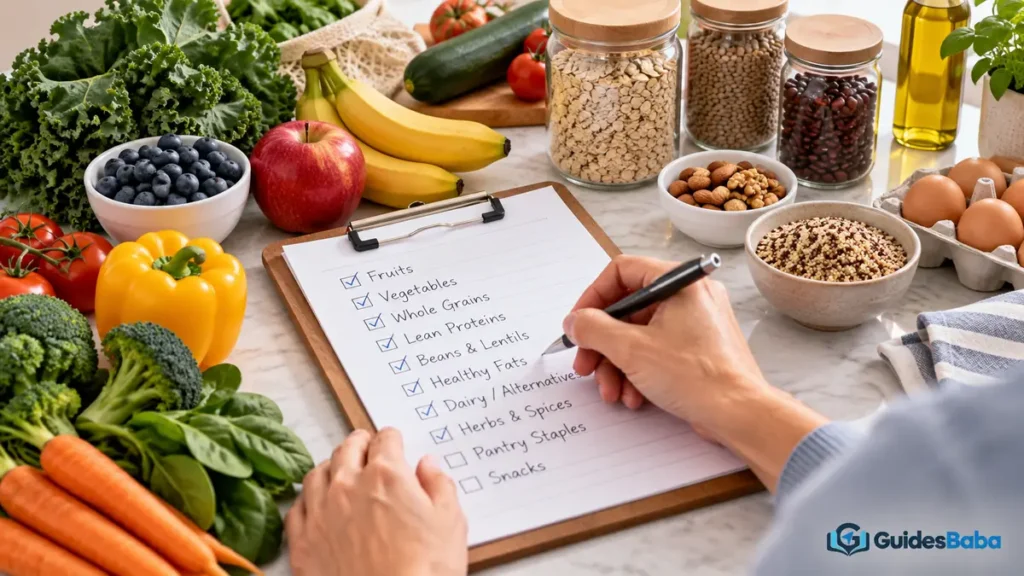

An empty cart can lead you astray. Hunger and habit take the wheel. So how do you create a healthy grocery list? A little planning puts you back in control.
Rather than wandering the aisles on impulse, plan first. A written list keeps you on track. It steers you toward better choices. Pairing it with a weekly meal plan works wonders. Failing to plan is planning to fail.
Here is the honest answer. Check your kitchen and plan your meals. Build the list around whole foods. Include vegetables, fruit, lean protein, and smart carbs. Organise it by aisle before you shop. This is not medical advice. See a professional.
This guide covers healthy grocery lists in plain steps. You will learn how to plan and organise. We will compare list and no-list shopping. Many tips link back to steady, balanced habits.
So how do you create a healthy grocery list?
The honest answer starts before the store. You check your kitchen and plan meals. Then you build a focused list.
Think of the list as your shopping compass. It points you toward the right foods. You skip the tempting detours. A clear list saves time and money. One good plan shapes the whole trip. You shop with real purpose.
Do you need fancy tools for this? Not at all, and that helps. A notepad or phone works fine. Your kitchen already holds the clues. A simple list is a strong start.
Why a healthy grocery list helps
A written list removes daily guesswork. You stop grabbing food on impulse. That habit fades into the background.
Planning brings more than saved money. It trims waste and cuts extra trips. Your cart fills with better choices. Fewer impulse snacks sneak in. A list supports steadier eating habits.
Leaning on a list feels calming. You decide once, then simply shop. No aisle by aisle temptation wins. Every trip gains a gentle focus. A written plan does quiet work. Your future self thanks the effort.
Did you know?
Shopping with a written list often curbs impulse buys. A little planning can shrink both waste and spending.

Start with a quick pantry check
Good lists begin at home. Open the fridge and the cupboards. See what you already own.
Many pantries hold forgotten staples. Rice, pasta, and beans wait quietly. Note what needs using soon. This trims waste and saves money. A quick scan reveals hidden meals.
Write down only what you truly need. Cross off items already in stock. A tidy list speeds the trip. It also curbs double buying. Small checks pay off later. A little effort saves money.
Plan your meals first
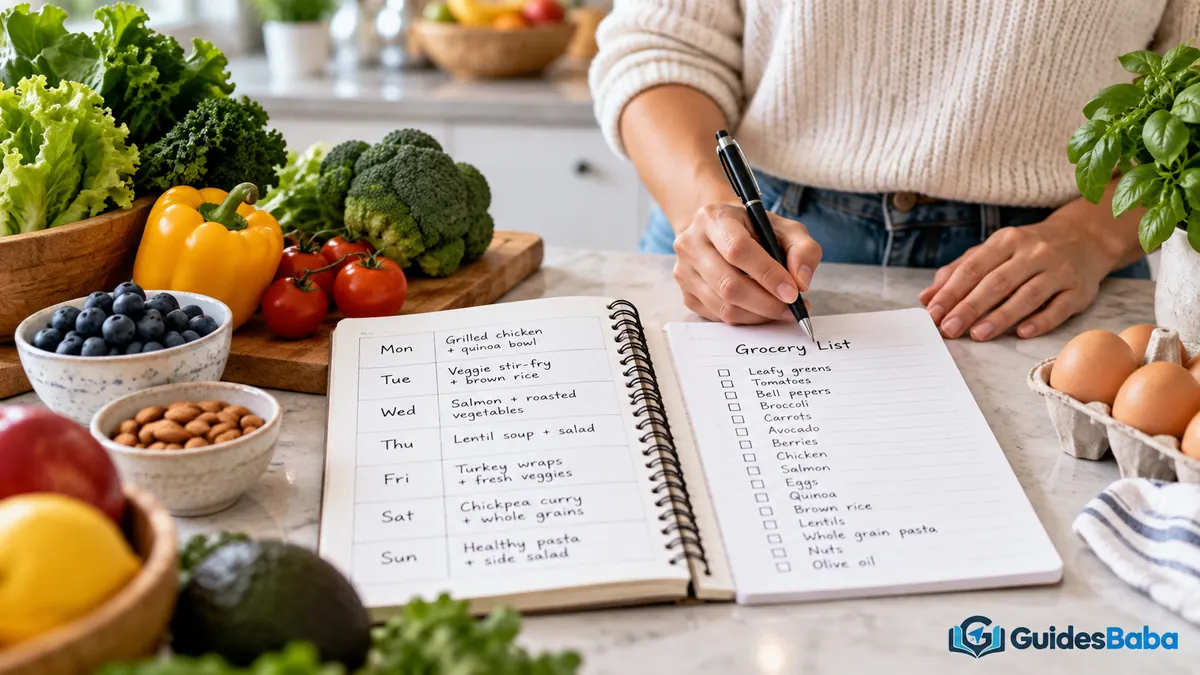
Your meals should shape the list. Decide a few dinners for the week. Then note what each needs.
Lean on recipes you already know. Add one new dish if you like. List the ingredients for each meal. Group them as you go. A meal led list stays focused.
Planning meals also saves real money. You buy only what recipes require. Learn how meal planning saves money over time. Fewer random buys reach your cart. A plan protects your budget.
Build the list around whole foods
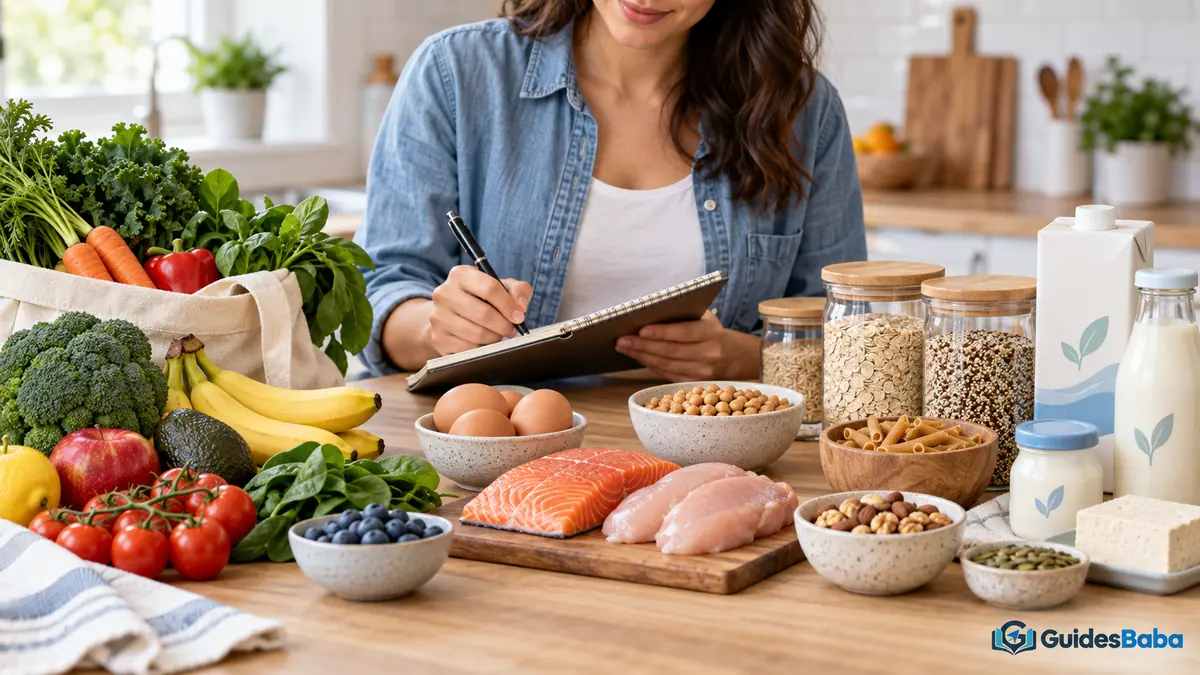
Whole foods make a strong base. They fill your cart with real nutrition. Build the list around them first.
Think vegetables, fruit, grains, and lean protein. These foods need little processing. They bring fibre, vitamins, and minerals. Fill most of your list here. Whole foods anchor a healthy trip. Real food carries real value.
Explore the foods to eat every day for ideas. Keep packaged extras to a minimum. Let real food lead the list. Simple choices carry the cart.
Fill your cart with vegetables and fruit
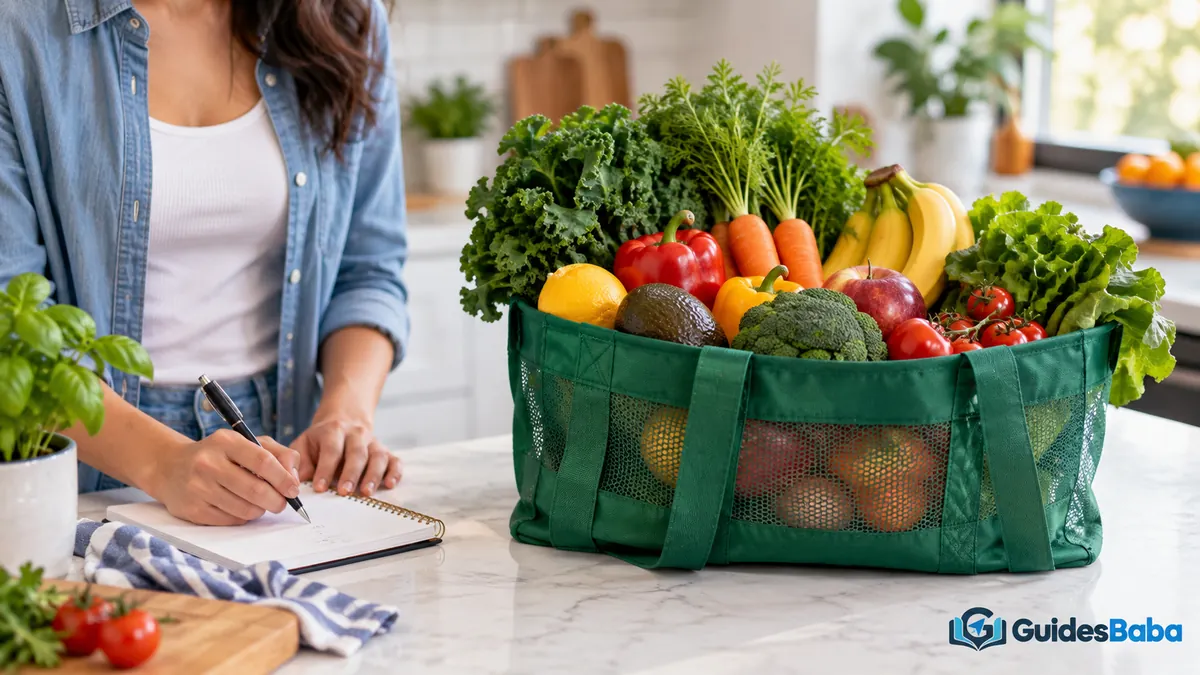
Vegetables and fruit deserve top billing. They add colour, fibre, and vitamins. Aim to fill a big share.
Pick a rainbow of colours each week. Fresh, frozen, and canned all count. Frozen produce lasts and cuts waste. Seasonal picks often cost less. Variety keeps meals interesting.
Plan produce around your real meals. Buy only what you will use. Wilted veg helps no one. A short produce list works best. Fresh picks reward smart planning.

Choose lean proteins wisely
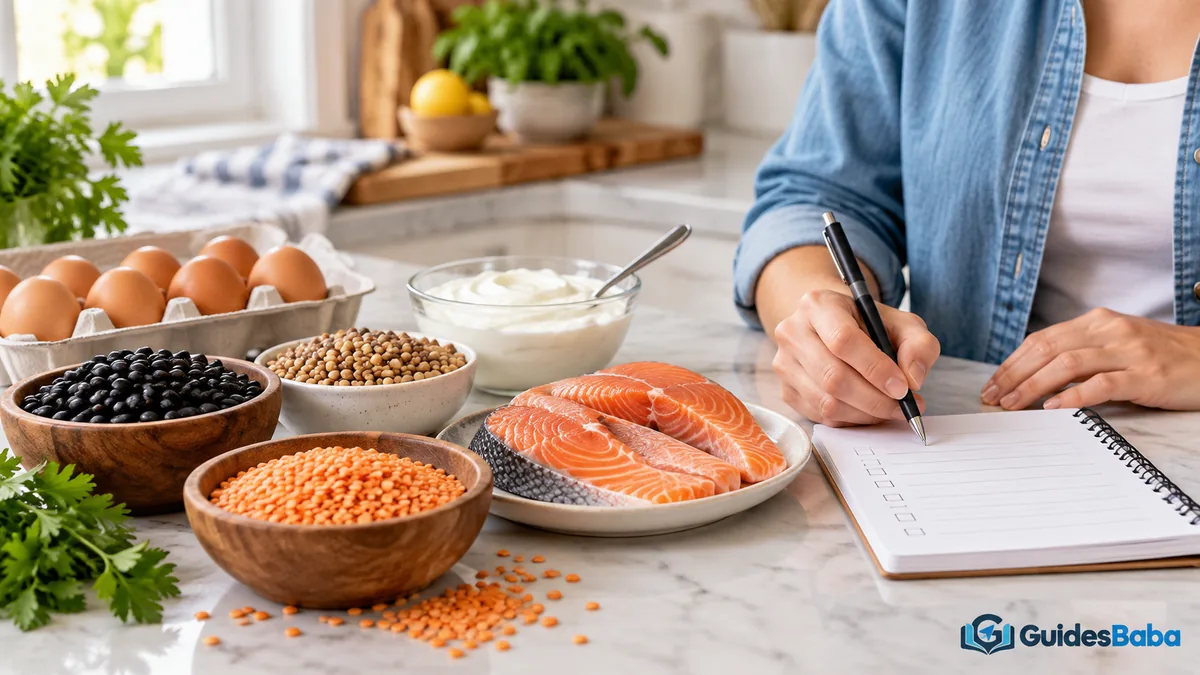
Protein keeps you full and steady. Choose lean sources for your list. Variety serves you well here.
Chicken, fish, eggs, and beans all work. Plant proteins add fibre too. Canned beans store for ages. Mix animal and plant sources freely. A range keeps meals fresh. Protein anchors a filling plate.
Plan protein around your weekly meals. Buy only what you will cook. Freeze extra portions for later. This trims waste and saves money. A little prep helps a lot.
Pick smart carbohydrates
Carbohydrates fuel your busy days. Choose whole options where you can. They bring fibre and staying power.
Think oats, brown rice, and whole grain bread. Whole grains digest more slowly. They keep you full longer. See the healthiest carbohydrate sources for ideas. Smart carbs steady your energy.
Keep refined snacks to a minimum. White bread and sweets add little. Let whole grains lead the list. Small swaps improve the cart.
Add healthy fats to the list
Healthy fats support a balanced diet. They add flavour and keep you full. Include a few good sources.
Think olive oil, nuts, seeds, and avocado. Oily fish brings healthy fats too. A little goes a long way. Add modest amounts to your list. Quality matters more than quantity.
Skip loading up on fried extras. Choose whole sources of fat instead. Nuts beat crisps every time. Simple choices lift the list. Good fats round out meals.
Comparing list shopping and no-list shopping
People shop in two broad ways. The honest comparison is list versus no list. Each leads to different carts.
| List shopping | No-list shopping |
|---|---|
| Follows a planned set of foods | Relies on aisle decisions |
| Curbs impulse buys | Invites extra treats |
| Saves time and money | Often costs more overall |
| Builds steadier eating habits | Leaves choices to the moment |
You need not follow a list rigidly. Leave a little room for flexibility. Fix the healthy staples firmly. Let one or two picks stay open.
Organise the list by aisle
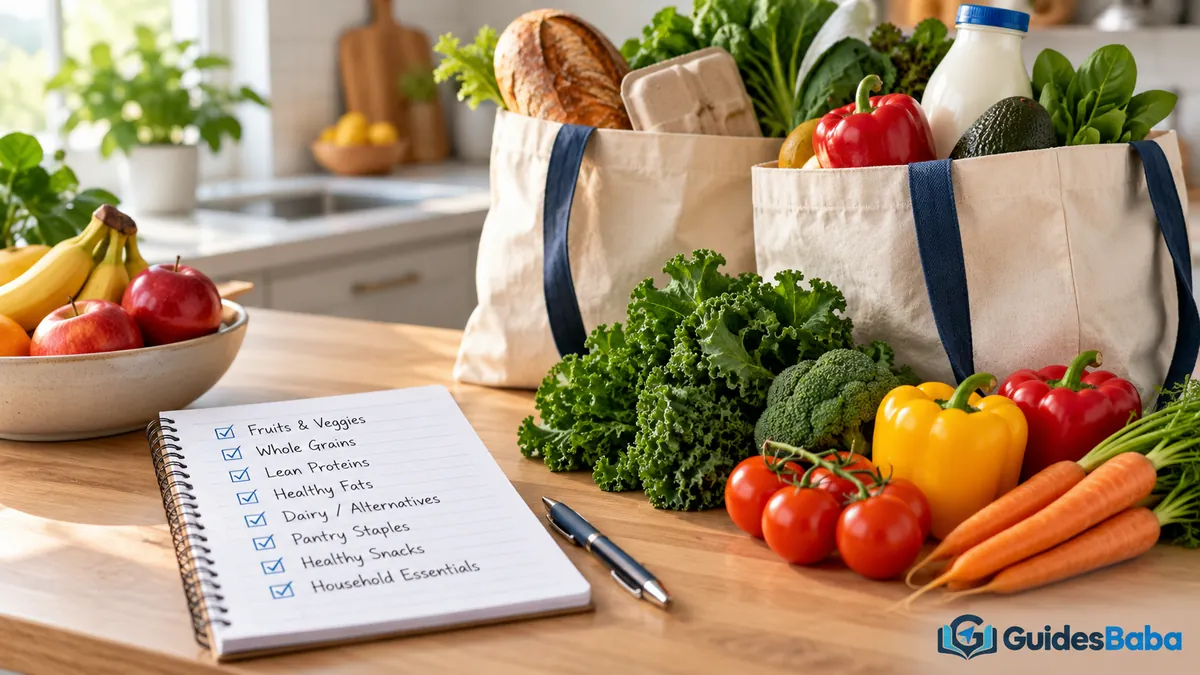
A tidy list speeds your trip. Group items by store section. You then move through smoothly.
Cluster produce, then dairy, then grains. Keep frozen items in one group. This saves backtracking across the store. A grouped list feels effortless. Order turns chaos into calm. Time saved adds up fast.
Match the groups to your store layout. Learn the aisles you visit most. Then arrange the list to fit. One smooth pass covers everything.
Shopping the store edges first
The store edges hold fresh foods. Produce, dairy, and protein sit there. Start your trip around the outside.
Fresh whole foods line the perimeter. The middle aisles hold packaged goods. Filling up on the edges first helps. Your cart leans healthy from the start. A simple path shapes better buys.
You still need some middle aisle items. Grains, beans, and oils live there. Visit them with your list ready. Focus keeps extras out of reach. A quick pass covers them.
Reading labels while you shop
Labels help you compare as you go. A quick glance guides better picks. Keep it simple and fast.
Check the serving size and key nutrients. Watch added sugar and sodium levels. Choose lower numbers where you can. A short label check pays off. Reading builds smarter habits over time.
You need not study every package. Compare two options and move on. The panel cuts through the marketing. Labels reward a quick look. Numbers guide honest choices.
Sticking to a budget
A healthy list can stay affordable. Smart choices stretch your money. Planning keeps the bill in check.
Build meals around cheap staples. Beans, rice, and eggs stretch far. Frozen produce cuts waste and cost. Buy larger bags of basics wisely. Smart picks keep spending low.
Compare unit prices as you shop. Bigger packs often cost less per serving. Skip pricey packaged extras. A tight list protects your wallet. Planning turns pennies into savings.
Common grocery list mistakes
One common mistake is shopping hungry. An empty stomach fills the cart fast. Impulse buys quickly pile up.
Another mistake skips the pantry check. You then buy what you already own. Duplicates waste money and space. Always check the kitchen first. That habit trims the bill.
Some people write a vague list. Loose notes invite random buys. Keep the list clear and specific. Name each item you need. A precise list keeps you focused. Detail guards against slips.
Grocery list myths worth dropping
One myth says healthy food costs more. Simple staples can be very cheap. Beans and oats prove the point.
Another myth claims lists kill all freedom. A list can still flex freely. You leave room for a treat. Structure and choice can coexist. A flexible list still guides you.
Some think planning takes too long. A short list session is plenty. Many people finish within minutes. The habit soon feels light.
Who might need tailored advice
General list tips suit many healthy adults. Still, some people have special needs. Certain conditions change the picture.
Some diets limit salt or sugar closely. Certain foods may need care then. Your doctor knows your situation best. Allergies also shape your safe choices.
This is not medical advice. See a professional for your personal needs. Use these list ideas as a friendly guide. A short chat can prevent bigger problems.
A healthy list and a balanced diet
A good list supports steady eating. It helps you spread nutrients out. Balance grows easier to reach.
Include vegetables, protein, grains, and healthy fats. No single trip carries your health. Variety across weeks matters most. A rounded cart builds rounded meals. Balance grows across the whole week.
Treat the list as a gentle framework. Adjust it as your life shifts. Pair produce with protein and grains. Good habits compound quietly over weeks.
Frequently asked questions
How do you create a healthy grocery list?
Check your kitchen and plan your meals. Then build a list around whole foods.
What should a healthy list include?
Include vegetables, fruit, lean protein, and smart carbs. Add a few healthy fats too.
Should I plan meals before the list?
Yes, meals shape what you need. A meal led list stays focused.
How do I avoid impulse buys?
Shop with a list and never hungry. Stick to the items you planned.
Is healthy food always expensive?
No, staples like beans and oats are cheap. Smart choices keep the bill low.
Should I shop the store edges first?
Yes, fresh whole foods line the perimeter. Start there before the middle aisles.
Do I need to read labels?
A quick check helps you compare. Watch added sugar and sodium levels.
How do I cut food waste?
Check your kitchen before shopping. Buy only what your meals need.
Can I still buy treats?
Yes, leave a little room for flexibility. A list can flex without guilt.
How long does a list take?
A short session is usually enough. Many people finish within minutes.
The bottom line
So how do you create a healthy grocery list? Check your kitchen and plan your meals. Build the list around whole foods. Include vegetables, fruit, lean protein, and smart carbs. Then organise it by aisle before shopping.
A written list saves time and money. It trims waste and curbs impulse buys. Flexible or strict, the habit helps. Small weekly steps truly add up over time.
For more background, read this overview of a shopping list as a habit. You can also explore the idea of a grocery store trip. Use trusted sources to guide your routine.
This is not medical advice. See a professional for your personal needs. Write one healthy list today. Then build slowly from there. Your future self will thank you.