
Table of Contents
Flavor bridging connects two ingredients through a third ingredient that works with both. It helps unusual combinations feel more connected. Think of that third ingredient as a friendly introduction at dinner. It gives unfamiliar flavors something in common.
For example, roasted beef may connect garlic with strawberries in a savory dish. Honey can also bring salty cheese and fruit closer together. These examples involve different kinds of connections, though. One comes from research about flavor networks. The other relies on sweetness and contrast.
You don’t need a chemistry lab to try this cooking technique. Start with two ingredients, then test one possible bridge. The trick is making each bite taste better, not collecting complicated food rules.
A simple pattern: Ingredient A → bridging ingredient → Ingredient B.
The benefits of flavor bridging in recipes are practical. It offers fresh combinations without hiding each ingredient’s character. It can also create flavor harmony in three-ingredient dishes. Keep the idea simple: the bridge should make both sides easier to enjoy.
Why do unexpected food combinations taste good? Sometimes aromas connect them. Sometimes contrasting tastes create balance. Your cooking method, memory, and personal preferences matter too. There’s more than one road to a good bite.
How It Works (The Science)
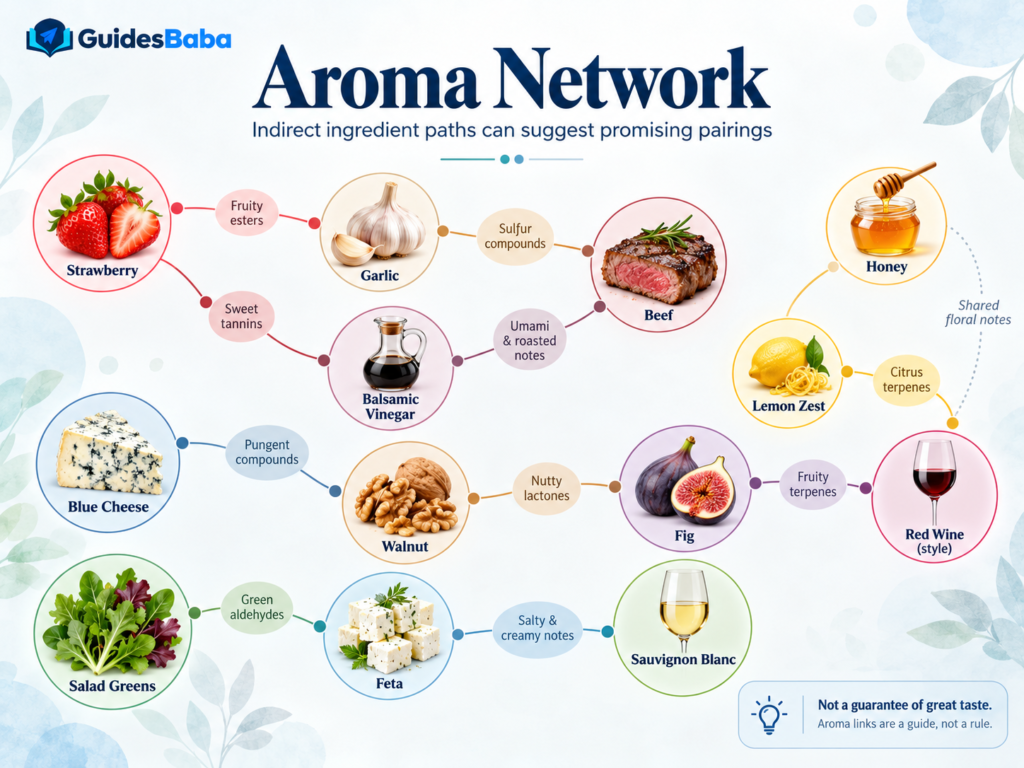
The science behind flavor bridging studies how ingredients connect in networks. Researchers map foods using shared aroma compounds and their recorded relationships. A network can reveal indirect paths between ingredients that lack strong direct links.
But a network connection is not a tasting verdict. Food has smell, taste, temperature, texture, and context. Those features change what you notice while eating.
The Problem
Two ingredients may have little obvious overlap. One might taste sharp while another feels sweet or earthy. Put them together carelessly, and the result can seem disjointed.
Aroma is part of the puzzle. Volatile compounds travel from food to your nose. Basic tastes include sweet, salty, sour, bitter, and umami. They combine with smell to create the full flavor experience.
The shared aroma compounds in food pairing can suggest possible links. Yet ingredient compatibility involves more than counting molecules. A compound’s amount and smell strength also matter. Cooking can change both.
The Bridge
A bridging ingredient creates an indirect route between two foods. In ingredient affinity networks, researchers describe these routes as chains of connections. Some contain one extra ingredient. Others need several intermediates.
The 2017 food-bridging study examines this network idea directly. It treats food bridging as a hypothesis about recipe patterns. It does not promise that every predicted dish will taste good.
The study builds on earlier research about shared compounds and culinary traditions. Its findings help explain molecular gastronomy and flavor bridging. Still, home cooks can use simpler clues: aroma, acidity, fat, sweetness, and salt.
Flavor Bridging vs. Direct Flavor Pairing
Direct food pairing links two ingredients without needing a middle ingredient. Bridging adds a connection when the original pair feels distant. Both approaches can work, and neither always wins.
Direct Pairing vs. Third-Ingredient Bridging
Direct pairing looks for a useful relationship between A and B. Third-ingredient bridging introduces C because C connects with both. This differs from flavor balancing, which adjusts sweetness, acid, salt, or bitterness.
| Approach | How it works | Everyday example | Best use |
| Direct flavor pairing | Two ingredients already suit each other | Strawberries with balsamic vinegar | A simple, clear combination |
| Third-ingredient bridging | A third ingredient connects two others | Garlic and strawberries with roasted beef | An unusual combination needing a link |
| Flavor balancing | Adjusts strong or weak taste elements | Lemon juice brightens a rich sauce | A dish tastes too heavy or flat |
Complementary flavors share or support similar qualities. Contrasting flavors bring different qualities into balance. A bridge can do either job. That’s why flavor bridging versus flavor balancing isn’t always a strict choice.
When Is Flavor Bridging Useful?
Try bridging when a recipe feels split into separate flavors. It also helps when you want to introduce an unusual ingredient gently. For beginners, start with familiar foods instead of wild combinations.
A bridge works well in salads, sauces, grain bowls, and cheese boards. You can use fruit, herbs, nuts, or a mild dressing. Choose a small amount first. Better safe than sorry when an ingredient has a powerful flavor.
Common Examples
These flavor bridging examples for beginners use ingredients many kitchens already have. Each works through a slightly different sensory route. Taste before adding more, especially with sweeteners and acids.
Honey on a Charcuterie Board
Honey as a flavor bridge in sweet and savory dishes is a familiar example. Its sweetness can soften the impression of salty cheese or cured meat. It also sits comfortably beside pears, figs, and some nuts.
Try a little honey beside blue cheese and sliced pear. Taste each item alone, then taste them together. The honey may connect the salty cheese with the fruit’s sweetness. Too much honey can hide everything else.
Honey does not need to share special molecules with every food. This is mostly a practical example of contrast and balance. The proof is in the pudding, so taste the finished bite.
Balsamic Vinegar
Balsamic vinegar can link sweet fruit with savory foods. Its acidity brings brightness. Its darker, sweet-tart character can also suit roasted vegetables and cheese.
Try strawberries with mozzarella and a few drops of balsamic. The vinegar already pairs with the fruit. It also suits the mild, creamy cheese. That makes it a useful connector on the plate.
How balsamic vinegar connects contrasting flavors depends on the product and serving size. Some glazes contain substantial added sugar. Start lightly, then adjust. A splash should support the food, not take over.
Lemon Zest
Lemon zest in food pairing brings fragrant citrus oils without much sourness. It can connect fresh herbs with rich foods. Think lemon zest, olive oil, parsley, and roasted vegetables.
Zest and juice are not interchangeable. Zest adds mostly aroma. Juice adds acidity and liquid. This difference matters when you use acidity to connect flavors.
For a quick test, add zest to a small serving first. Smell the dish before taking a bite. If the citrus lifts both ingredients, you’ve found a useful bridge.
Culinary Examples in Practice
Some combinations come from scientific network models. Others come from ordinary cooking experience. Keep that distinction clear before calling any example a proven pairing.
Garlic and Strawberries (Bridged by Beef)
A published food-bridging analysis describes garlic and strawberries bridged by roasted beef. The model identifies an indirect affinity path. It does not establish that diners will love the combination.
To test it, start with thin slices of cooked beef. Add a small strawberry relish and a hint of roasted garlic. Keep the fruit tart, not dessert-sweet. Compare the bite against beef with garlic alone.
How to pair strawberries with savory meat is mostly about restraint. Roasting changes garlic’s sharpness. Browning also changes the meat’s aroma. Those cooking effects can make an experimental pairing easier to judge.
Salad and Sauvignon Blanc (Bridged by Feta)
A green salad can taste bitter or sharp beside certain wines. Sauvignon Blanc often brings lively acidity and herbal notes. Feta adds salt and richness to a simple salad.
Try greens, cucumber, feta, and a modest citrus dressing. The salty cheese can shift how the wine tastes. It also makes the salad feel fuller. Your wine and dressing still need to work together.
The Wine & Spirit Education Trust’s pairing guidance explains these sensory effects. Salt, fat, acid, and sweetness can change wine perception. This example is a tasting idea, not a universal wine rule.
Cheese and Aged Red Wine (Bridged by Walnuts & Fruit)
Aged cheese and red wine can feel intense together. Walnuts add a toasted, earthy note. Dried figs or fresh pears add sweetness and moisture.
Taste the cheese and wine alone first. Then add a walnut, followed by a little fruit. Notice whether the wine seems softer or the cheese tastes less sharp. Changes depend on the exact wine and cheese.
This is how walnuts may bridge cheese and aged red wine. But nuts also add crunch, and fruit changes sweetness. Texture and contrast matter alongside aroma. There is no one-size-fits-all pairing.
Cultural Preferences
How culture influences food pairing preferences goes beyond chemistry. Familiar recipes shape what we expect at the table. Seasoning, cooking methods, and shared meals shape those expectations too.
Research from 2011 found different compound-sharing patterns across recipe collections. A 2017 analysis explored food bridging across several culinary regions. In that model, Southeast Asian cuisines showed more indirect bridging. Latin American datasets showed both direct pairing and bridging.
These are patterns in selected recipes, not fixed national tastes. A cuisine contains many regions, cooks, and changing traditions. One size never fits all when culture enters the kitchen.
Sweet and savory combinations also cross borders. Fruit can appear with meat, cheese, grains, or spicy sauces. Familiarity often makes a surprising combination feel normal. Explore traditions with curiosity, not rigid labels.
Readers planning varied meals can explore the nutrition guide. It offers a wider view of everyday ingredients and choices.
How to Choose the Right Bridging Ingredient?
Start with the strongest feature of each food. Is one sweet, rich, sharp, smoky, or herbal? Then pick an ingredient that can speak to both sides. Slow and steady wins the race here.
Look for these useful connections:
- Acidity: Lemon juice or vinegar can freshen rich foods and support fruit notes.
- Aroma: Citrus zest and fresh herbs can echo fragrant notes in both ingredients.
- Fat: Yogurt or olive oil can soften sharp contrasts and change texture.
- Umami: Mushrooms or aged cheese can deepen a savory base without adding much sweetness.
- Sweetness: Honey and fruit spreads can contrast with salt or bitterness.
- Texture: Toasted nuts can tie creamy and crisp elements together.
Which herbs work as flavor bridges? Start with parsley, basil, mint, or thyme. Match their aroma to the main ingredients. Basil can connect tomatoes and strawberries in a fresh salad.
For richer dishes, using fats to blend contrasting flavors can help. A spoonful of yogurt can soften a spicy sauce. Olive oil can round out tart vegetables. These changes describe sensory balance, not necessarily molecular bridging.
To identify common flavor notes, smell each ingredient separately. Name one clear note, such as citrus, grass, toast, or spice. Then choose a candidate bridge with a related quality.
Browse the food guide for more everyday cooking ideas. A short list of familiar ingredients is often enough. You don’t need expensive flavor pairing software to begin.
How to Test Flavor Bridging in Your Cooking?
You can run a simple three-ingredient flavor bridging experiment at home. Use tiny portions so you can compare fairly. Don’t change five things at once. Keep the test focused.
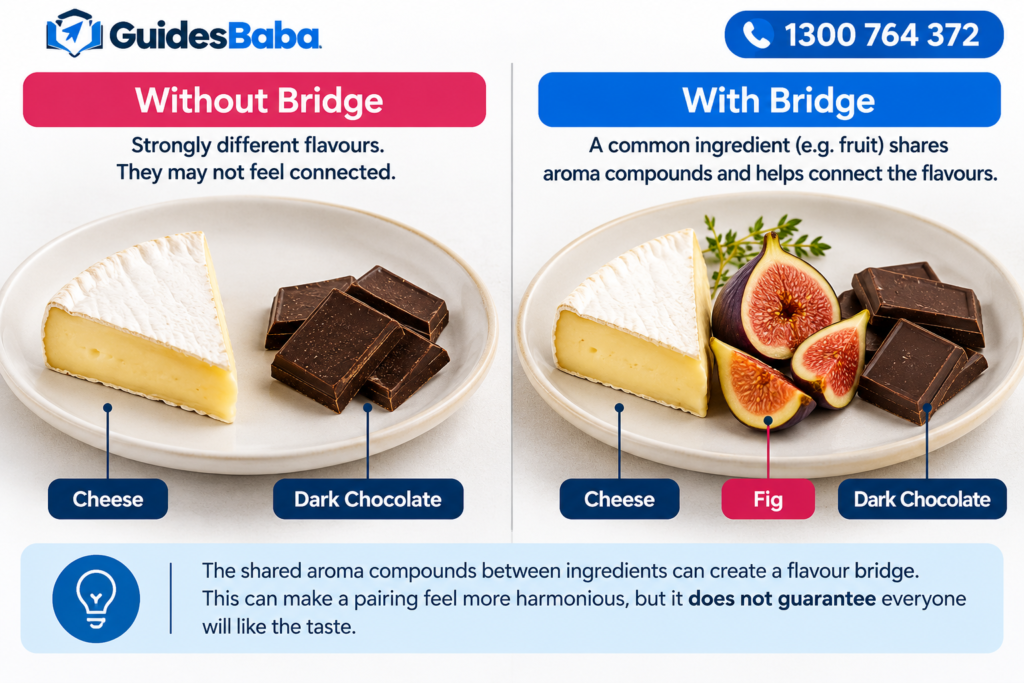
- Choose A and B. Pick two ingredients that feel awkward together. Record their main tastes and aromas.
- Taste the pair. Try a small bite without a bridge. Rate harmony from one to five.
- Add C. Test a small amount of one bridging ingredient. Keep all other elements the same.
- Compare again. Ask whether each flavor becomes clearer or more pleasant. Check aroma, texture, and aftertaste.
- Adjust once. Change the bridge’s amount, then taste again. Write down the better version.
This is how to compare dishes with and without a bridging ingredient. A side-by-side test gives better feedback than memory alone. It’s also a practical way to adjust ingredient ratios for better flavor harmony.
Keep notes using three quick questions. Does the dish smell inviting? Does one ingredient overpower the others? Would you serve that bite again?
Try one successful pairing in your next weekly meal plan. Repeating it helps you learn what works in your own kitchen.
Why Flavor Bridging Sometimes Fails?
Flavor bridging sometimes fails because the third ingredient creates new problems. It may be too strong, too sweet, or oddly textured. Two good links on paper can still create a poor meal.
Common mistakes in three-ingredient food pairing include overloading the dish. Too much balsamic makes everything sharp. Too much honey hides delicate herbs. A strong blue cheese can bury mild fruit.
Cooking methods also change ingredient pairings. Raw garlic tastes different from roasted garlic. Fresh strawberries behave differently from cooked berries. A bridge selected for one version may fail with another.
Shared flavor compounds do not guarantee good pairings. Models describe possible relationships, not guaranteed enjoyment. Your nose, tongue, and expectations still make the final call.
If a dish feels muddy, remove an ingredient before adding another. Reduce the strongest flavor and retest. Sometimes the simplest fix is the best one.
The Bottom Line
Flavor bridging gives unusual ingredients a way to meet in the middle. Start with one clear connection, then taste the actual dish. Science can inspire a pairing, but your palate makes the decision.
At GuidesBaba, we keep food advice practical and easy to test. Save this guide before your next kitchen experiment. Then share one combination that surprised you.
Get smarter about everyday cooking
Enjoy clear food guides without complicated rules. Sign up for the GuidesBaba newsletter for useful cooking ideas and new guides.

FAQs
Can one ingredient connect two different flavors?
Yes. A third food may share useful notes with both ingredients. It can also connect them through acidity, fat, or sweetness.
Is food bridging the same as food pairing?
No. Direct pairing focuses on a relationship between two ingredients. Food bridging considers an indirect route through another ingredient.
How does flavor bridging work in cooking?
Try one ingredient that suits both sides of a dish. Adjust its amount until the combined bite feels more connected.
Can foods pair without sharing flavor compounds?
Yes. Taste contrast, texture, and familiarity also shape enjoyment. Shared aromas are only one possible explanation.
Is flavor bridging better than direct pairing?
Not always. Use direct pairing when two ingredients already work well. Add a bridge only when it improves the result.
How much of a bridging ingredient should you add?
Start with a small taste. Increase slowly because ingredient strength varies. Compare each change before adding more.
What makes a good bridging ingredient?
It supports both ingredients without drowning either one. A helpful bridge usually has one clear job.
Are honey and balsamic true molecular bridges?
Not necessarily. They often work through sweet, salty, and acidic contrast. Molecular bridging is a narrower research idea.
Why do green salads sometimes clash with wine?
Bitter greens and sharp dressings can alter wine perception. Cheese and a balanced dressing may improve the pairing.
How does texture influence flavor compatibility?
Crunch, creaminess, and temperature change the eating experience. A crunchy walnut can improve an otherwise soft combination.
Does culture influence food pairing preferences?
Yes. Familiarity and culinary traditions shape expectations. Research also finds differing ingredient patterns among regional recipe collections.
Why do shared flavor compounds not guarantee a good pairing?
Compound lists miss amounts, preparation, and personal preference. Taste the real dish before trusting a matching chart.