
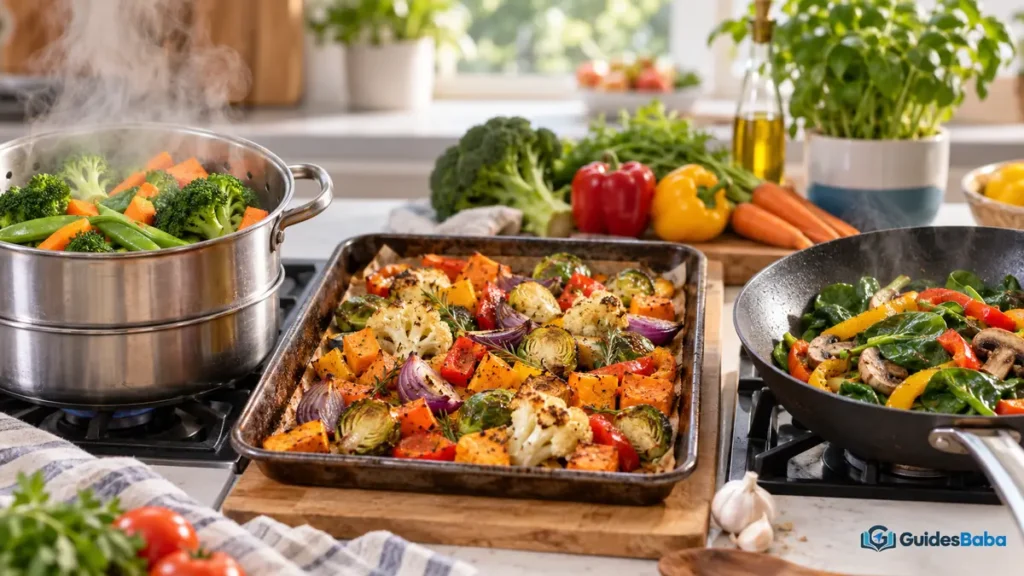
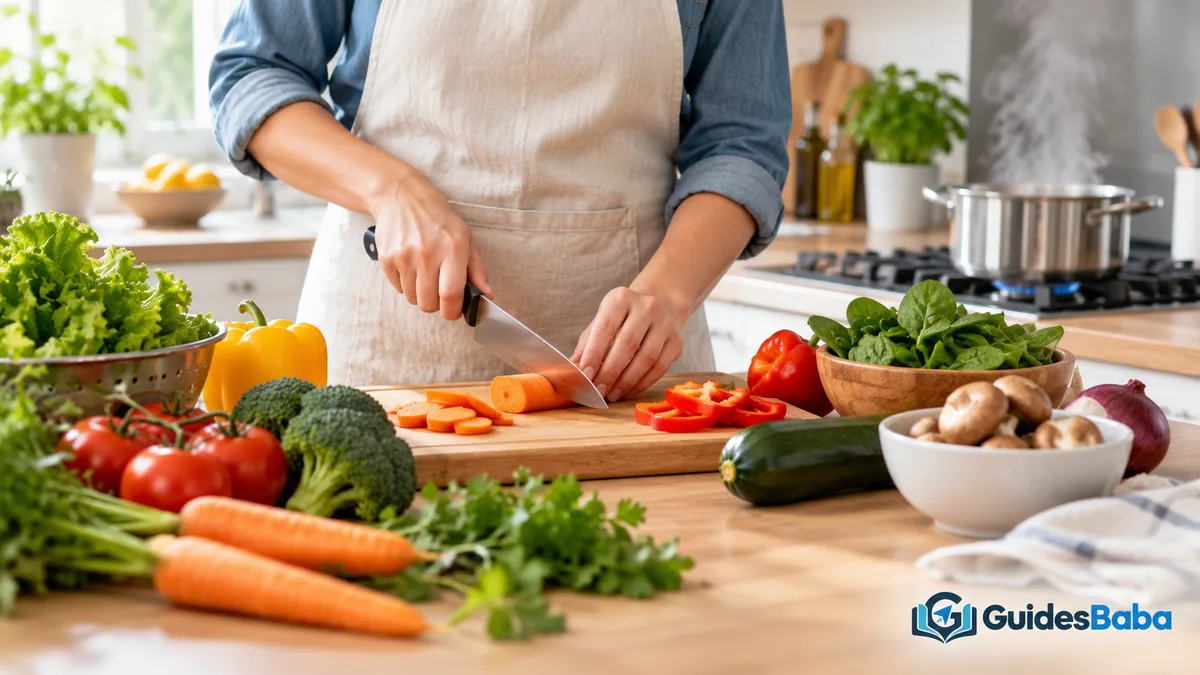
A pot of boiling water can help or harm. Cooking is a bit of a double-edged sword. So how does cooking affect nutrients in vegetables? The answer depends on the method.
Rather than fearing the stove, understand it. Heat changes some nutrients and frees others. You can cook and keep goodness. Good cooking works like a careful trade. It shapes what a balanced diet delivers.
Here is the honest answer. Cooking can lower some vitamins in vegetables. Water and high heat cause the biggest losses. Yet cooking also frees other nutrients. It makes some easier to absorb. This is not medical advice. See a professional.
This guide covers cooking and nutrients in plain terms. You will learn which methods keep the most. We will compare gentle and harsh cooking. Many tips point back to simple, steady habits.
So how does cooking affect nutrients in vegetables?
The honest answer starts with heat and water. Both can pull nutrients from vegetables. Some vitamins leak into the cooking water. Others simply break down with heat.
Think of cooking as a gentle trade. You lose a little of one nutrient. You often gain access to another. The net effect is usually small. A varied diet covers any gaps.
Does cooking always destroy nutrients? Not at all, and that is reassuring. Some nutrients survive heat just fine. A few even become easier to use. Method and time matter most here.
Why cooking changes nutrients
Cooking breaks down tough plant cell walls. This releases nutrients locked inside. Your body can then absorb them.
Heat also affects delicate vitamins. Some vitamins are sensitive to warmth. Others dissolve into cooking water. The loss depends on time and temperature. Short, gentle cooking loses the least.
Not every change is a loss. Cooking can make some nutrients available. It also kills harmful bacteria safely. Softer food is easier to digest. A cooked plate has real benefits. Balance guides the whole picture.
Did you know?
Cooking tomatoes can raise available lycopene. Some nutrients become easier to absorb after gentle heat.
Water-soluble vitamins and heat
Water-soluble vitamins are the most fragile. Vitamin C and B vitamins lead this group. They dissolve easily into water.
Boiling pulls these vitamins into the water. Longer cooking increases the loss. Cutting vegetables small speeds it up. High heat adds to the effect. Gentle methods protect these vitamins better.
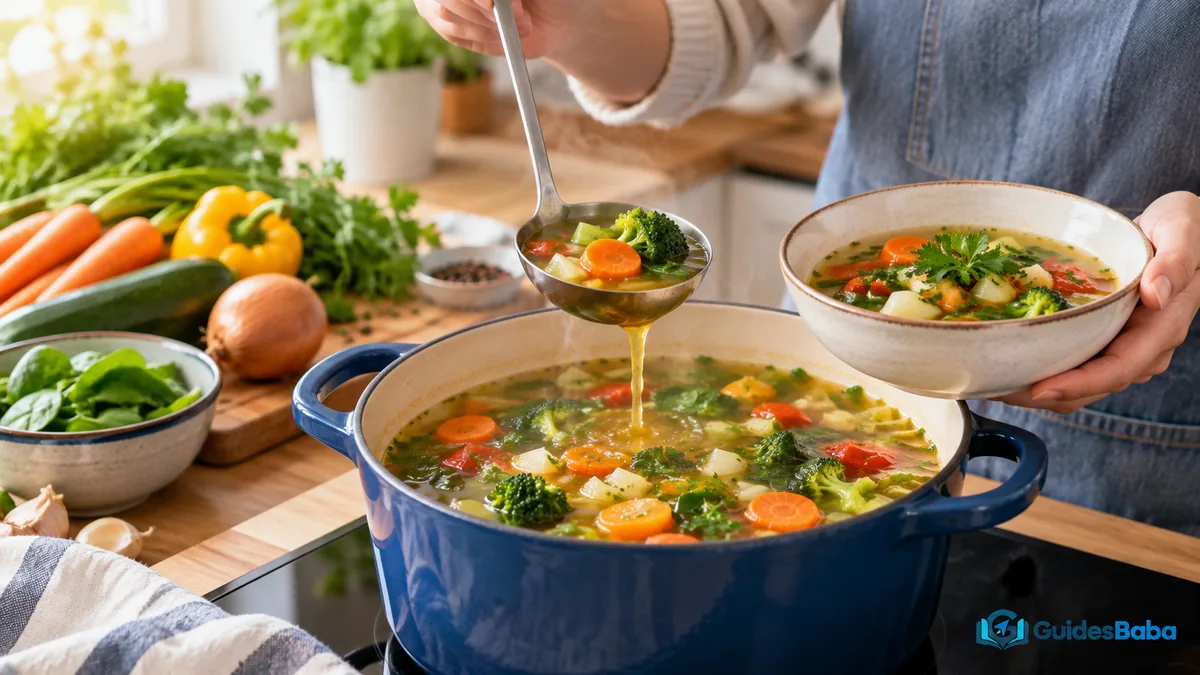
Do not pour that cooking water away. Use it in soups or sauces. The dissolved vitamins stay in the meal. Short cooking times also help. Small habits save real nutrients.
Fat-soluble vitamins and cooking
Fat-soluble vitamins behave quite differently. Vitamins A, D, E, and K belong here. They resist heat far better.
These vitamins do not dissolve in water. Boiling loses less of them. A little oil helps your body absorb them. Roasting and sauteing suit them well. Fat and these vitamins work together.
Do not skip healthy fats with vegetables. A drizzle of oil can help. It boosts absorption of these vitamins. Nuts or seeds work too. Fat turns a salad into fuel. Small additions make a difference.
How boiling affects vegetables
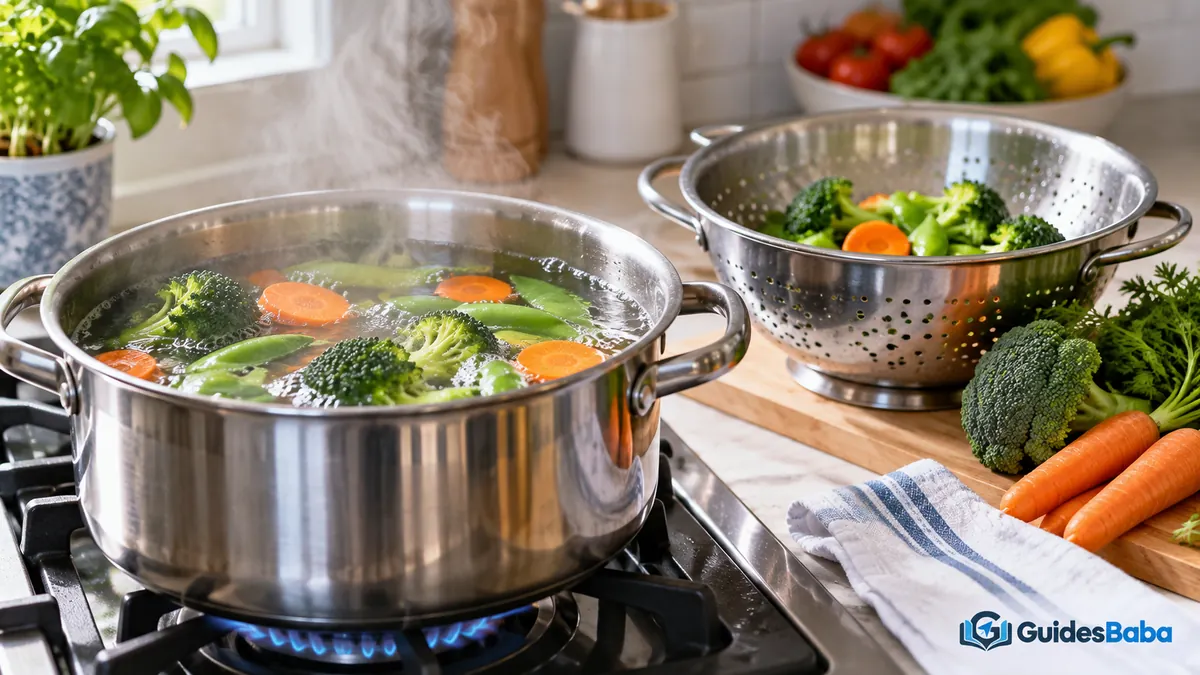
Boiling is common and very easy. Yet it can cost water-soluble vitamins. Nutrients leak into the hot water.
The longer you boil, the more you lose. A large pot of water dilutes further. Delicate greens suffer the most. Firm roots hold up a little better. Boiling suits some vegetables more than others.
Do not boil vegetables to mush. Keep the time short and gentle. Save the cooking water for stock. Serve vegetables while still bright. Bright colour often means kept nutrients.

How steaming protects nutrients
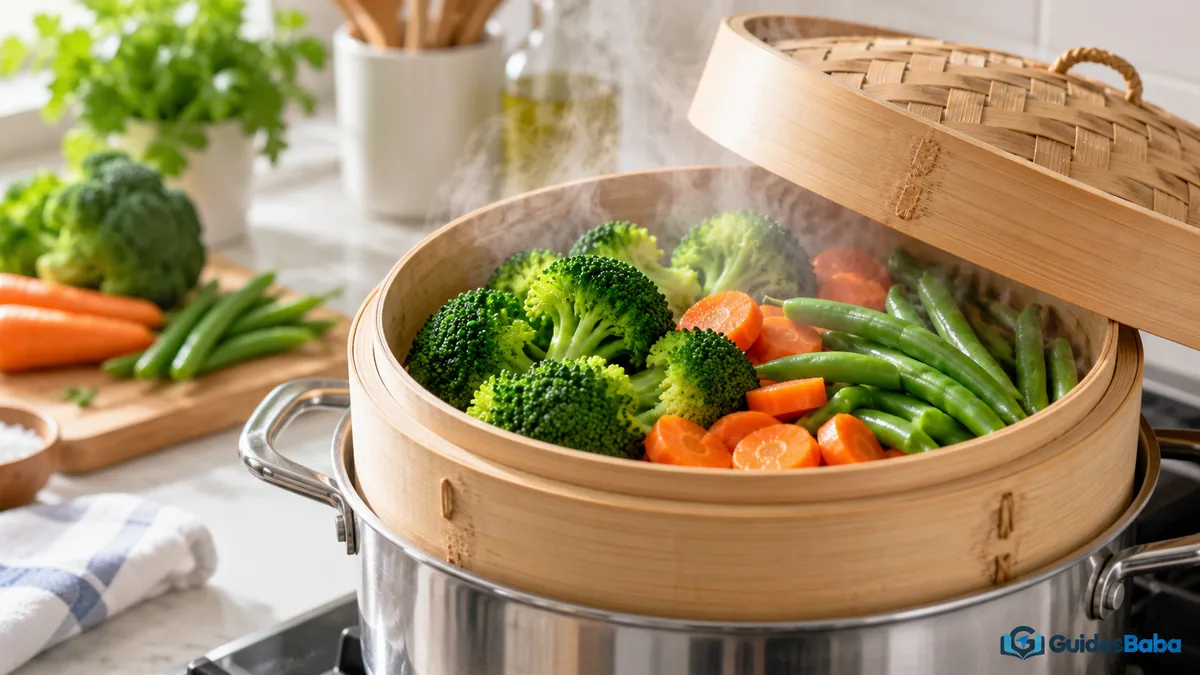
Steaming keeps vegetables above the water. They cook in gentle vapour instead. Fewer nutrients leak away.
This method spares water-soluble vitamins well. Vitamin C survives steaming better than boiling. Vegetables stay firm and bright. The flavour also stays fresh. Steaming is a nutrient-friendly choice.
Do not oversteam until vegetables collapse. A few minutes is often enough. Test with a fork for doneness. Serve them straight away. Steamed vegetables suit most meals. Simple gear does the job.
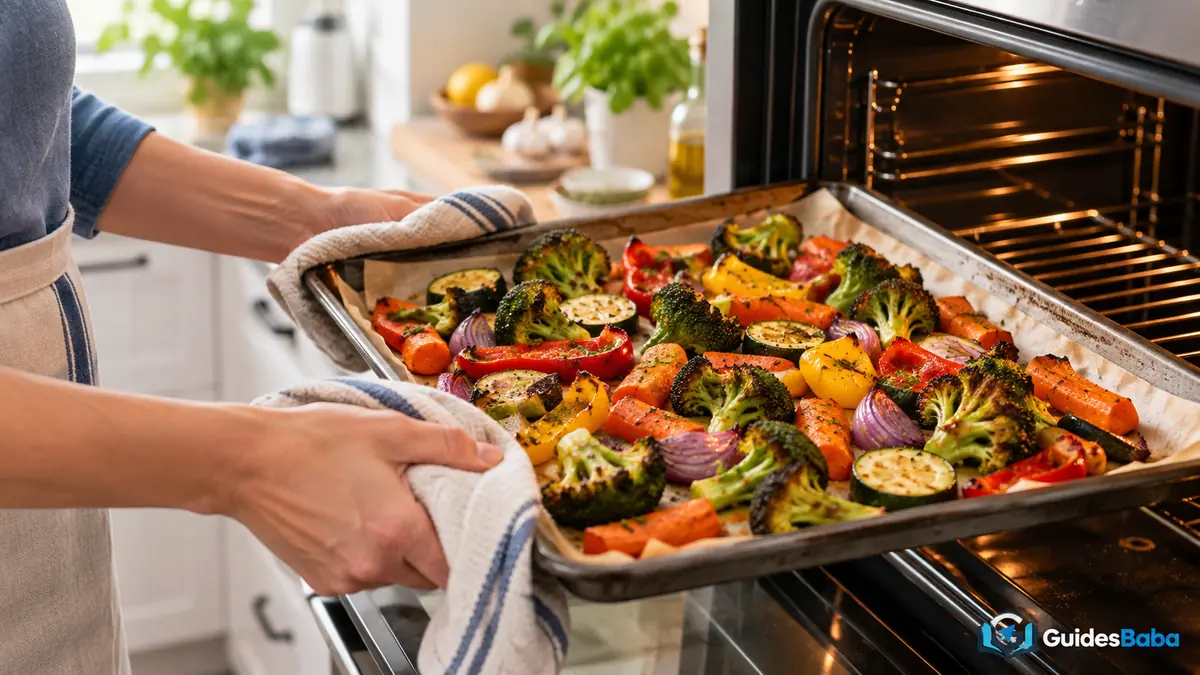
Roasting and baking vegetables
Roasting uses dry heat in the oven. It brings out deep, sweet flavour. Little nutrient leaks into water.
No cooking water means fewer leaked vitamins. Some heat-sensitive vitamins still drop. A light coat of oil helps. It aids fat-soluble vitamin absorption. Roasting balances flavour and nutrition well.
Do not roast at extreme heat too long. Charring can waste some nutrients. Aim for tender and golden. Use a modest amount of oil. Roasted vegetables please many eaters. Flavour makes them easy to enjoy.
Microwaving vegetables
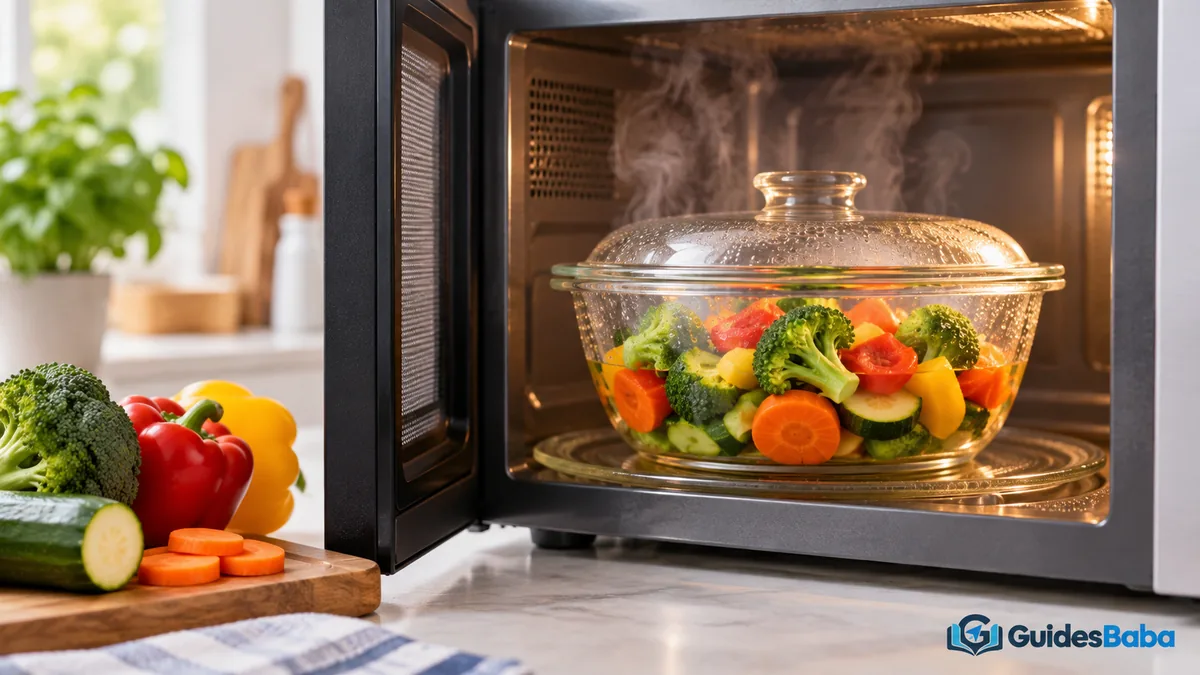
Microwaving surprises many careful cooks. It can protect nutrients rather well. Short times and little water help.
The quick cooking limits nutrient loss. Minimal water keeps vitamins in place. Vitamin C often survives nicely. The method is fast and easy. Microwaving deserves more credit than it gets.
Do not drown vegetables before microwaving. Use just a splash of water. Cover the bowl to trap steam. Stir once for even cooking. Quick cooking keeps colour bright. Speed protects delicate vitamins.
Stir-frying and sauteing
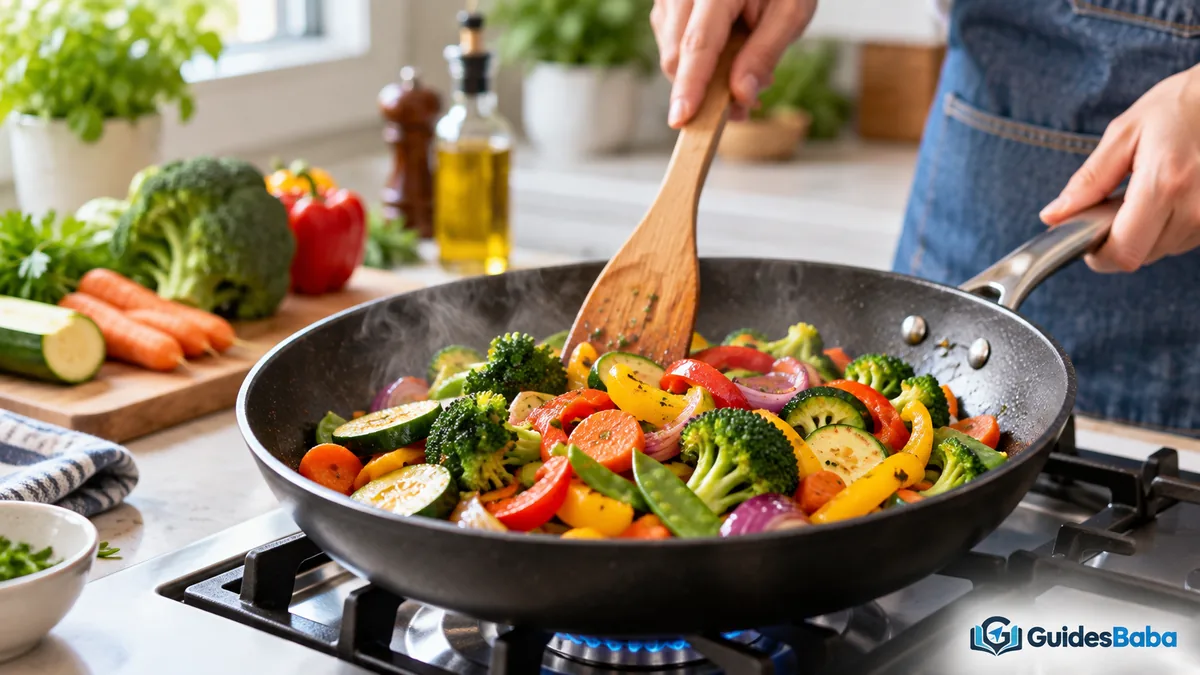
Stir-frying uses high heat and quick timing. A little oil coats the pan. Vegetables cook fast and stay crisp.
Short cooking limits vitamin loss. The oil aids fat-soluble vitamins. Bright colours signal kept nutrients. Flavour builds without long heat. Quick pan cooking works well.
Do not crowd the hot pan. Cook in small batches instead. Keep the vegetables moving quickly. Use a modest splash of oil. Crisp vegetables hold more goodness. Speed is the real secret.
Comparing gentle and harsh cooking methods
People often ask which method is best. The honest comparison is gentle versus harsh. Each style affects nutrients differently.
| Gentle methods | Harsh methods |
|---|---|
| Steaming, microwaving, quick stir-fry | Long boiling, heavy deep-frying |
| Keep more water-soluble vitamins | Lose more vitamins to water and heat |
| Short cooking times | Longer exposure to heat |
| Best for delicate greens | Best for hearty roots on occasion |
You do not have to pick one forever. Many cooks blend several methods. Steam greens and roast firm roots. Match the method to the vegetable.
When cooking boosts nutrients
Cooking is not always the villain. It can raise some available nutrients. Heat unlocks certain plant compounds.
Cooked tomatoes offer more usable lycopene. Cooked carrots release more beta-carotene. A little oil boosts these further. Softer cells free the goodness. Some vegetables shine after gentle cooking.
Do not assume raw always wins. Both raw and cooked have value. Eat a mix across the week. Variety captures the full range. Your plate gains from both. Balance beats any single rule.
Cutting and prepping vegetables
How you prep also affects nutrients. Cutting exposes more surface to air. Some vitamins fade after that.
Chop vegetables closer to cooking time. Larger pieces lose fewer nutrients. Peeling can remove fibre and vitamins. Scrub skins clean and keep them. Smart prep protects real goodness.
Do not soak cut vegetables for long. Water-soluble vitamins leak out slowly. Store prepped vegetables covered and cold. Use them within a day or two. Fresh prep keeps more value. Little habits matter here.
Leafy greens and heat
Leafy greens are tender and delicate. They cook in a flash. Overcooking wastes their vitamins fast.
Wilt greens briefly in a hot pan. Steam them for a short time. These leafy greens keep more that way. Serve them still bright green. Quick heat suits greens best.
Do not boil greens for long stretches. They lose colour and nutrients quickly. Add them late to hot dishes. A brief cook is plenty. Bright greens signal kept goodness. Gentle heat treats them kindly.
Cruciferous vegetables and cooking
Broccoli and cabbage form this hardy group. They hold up to various methods. Cooking still changes their profile.
Light steaming keeps their vitamin C. It also preserves helpful plant compounds. These cruciferous vegetables reward gentle cooking. Overboiling can waste their goodness. A short steam works nicely.
Do not cook them into grey mush. Keep the texture with some bite. Chop and rest broccoli briefly. This can support helpful compounds. Gentle methods serve this group. A light touch keeps value.
Common myths about cooking vegetables
One myth says cooking ruins all nutrients. In truth, losses are often modest. Some nutrients even improve with heat.
Another myth claims raw is always best. Raw suits some vegetables well. Others give more when cooked. Both have a rightful place. Variety settles the debate.
Some think frozen vegetables lack value. Frozen produce is picked and chilled fast. It often keeps nutrients well. Cooking it follows the same rules. Frozen can be a smart choice.
Common mistakes people make
One common mistake is overcooking everything. Long heat wastes fragile vitamins. Aim for tender, not mushy.
Another mistake is drowning vegetables in water. Then the vitamins wash away. Use less water and less time. Save any cooking liquid for soup. Small changes protect nutrients.
Some people always peel their vegetables. Skins often hold fibre and vitamins. Scrub them clean instead. Keep the peel where safe. Little habits keep more value. Prep matters as much as cooking.
Who might need tailored advice
General cooking suits many healthy adults. Still, some people have special needs. Certain conditions change the picture.
Some diets limit specific nutrients closely. Certain vegetables may need care then. Your doctor knows your situation best. Digestive issues can also shape choices.
This is not medical advice. See a professional for your personal needs. Use these cooking ideas as a friendly guide. A short chat can prevent bigger problems.
Cooking, vegetables, and a balanced diet
Cooking method is one piece of eating well. Variety across your week matters more. Balance covers any small losses.
Eat a mix of raw and cooked vegetables. Try several healthiest cooking methods often. Explore the best vegetables to eat too. A colourful plate covers the gaps.
Treat method as a gentle framework. Adjust it as your meals shift. Pair vegetables with fats and grains. This mix keeps meals rounded. Simple cooking does quiet work. Good habits compound over many weeks.
Frequently asked questions
How does cooking affect nutrients in vegetables?
Heat and water can lower some vitamins. Yet cooking frees other nutrients for absorption.
Which cooking method keeps the most nutrients?
Steaming and microwaving tend to keep the most. Both use short times and little water.
Does boiling destroy vitamins?
Boiling can wash out water-soluble vitamins. Keep the time short and save the water.
Are raw vegetables always healthier?
Not always, since cooking helps some nutrients. Eat both raw and cooked for balance.
Does cooking ever increase nutrients?
Yes, cooked tomatoes and carrots release more. Gentle heat can unlock certain compounds.
Should I peel vegetables before cooking?
Often the skin holds fibre and vitamins. Scrub it clean and keep it on.
Is microwaving vegetables bad?
No, microwaving can protect nutrients well. Use little water and a short time.
Do frozen vegetables lose nutrients?
Frozen vegetables often keep nutrients well. They are picked and chilled quite fast.
How should I cook leafy greens?
Cook greens quickly with brief heat. Wilt or steam them for a short time.
Can I reuse vegetable cooking water?
Yes, use it in soups or sauces. The dissolved vitamins stay in your meal.
The bottom line
So how does cooking affect nutrients in vegetables? Heat and water lower some vitamins. Gentle methods keep the most goodness. Cooking also frees other useful nutrients. Method and time matter most.
Steam, microwave, or stir-fry for delicate vegetables. Roast or lightly boil hardy ones. Raw or cooked, variety wins. Small cooking choices truly add up.
For more background, read this overview of a nutrient and its role. You can also learn about vitamin C and heat. Use trusted sources to guide your kitchen.
This is not medical advice. See a professional for your personal needs. Try one gentle method today. Then build slowly from there. Your vegetables will thank you.