
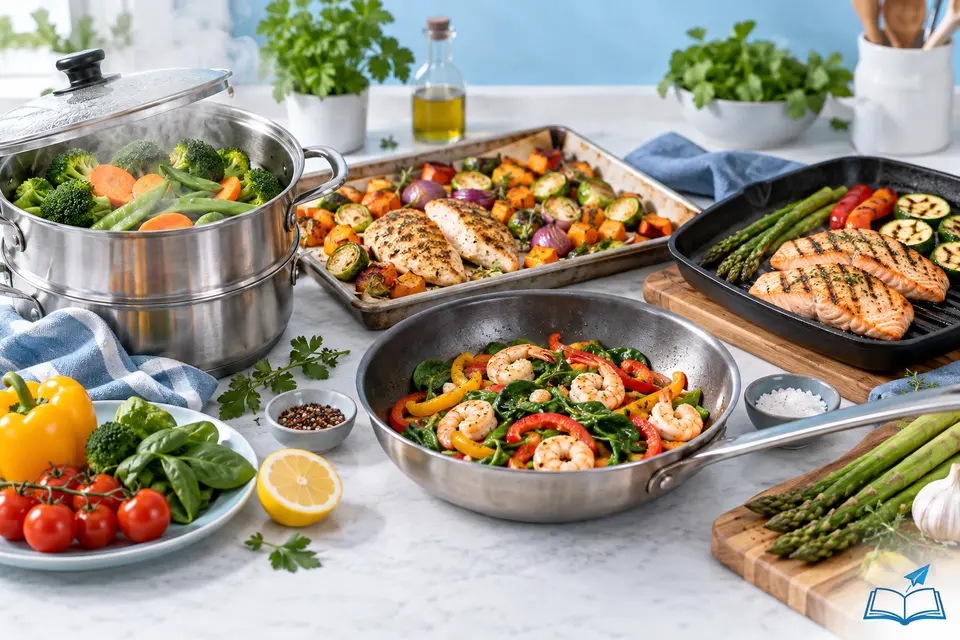
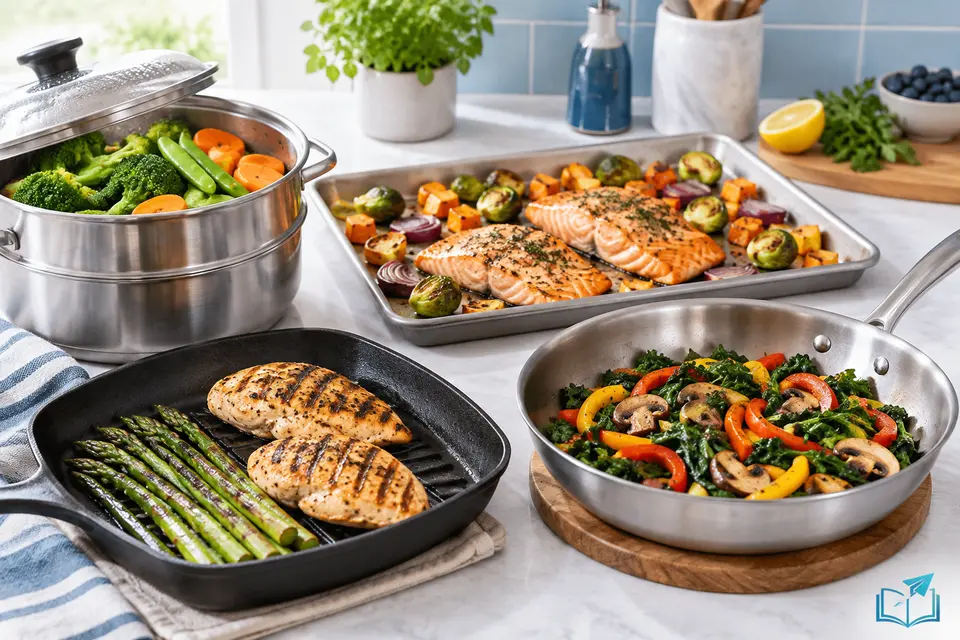
The stove can make or break a meal. A great vegetable can lose its shine. So what are the healthiest cooking methods? The answer is gentler than you think.
Rather than chasing one perfect technique, think in trade-offs. Some methods guard nutrients closely. Others add fat or harsh heat. A little knowledge changes every dinner. Good cooking is not rocket science.
Here is the honest answer. Gentle, moist heat usually protects the most nutrients. Steaming, poaching, and quick stir-frying rank highly. Roasting and baking work well with little oil. Deep frying sits at the bottom. This is not medical advice. See a professional.
This guide covers healthy cooking in plain steps. You will learn which methods keep goodness in. We will compare steaming and deep frying directly. Many tips link back to simple daily habits.
So what are the healthiest cooking methods?
The honest answer favours gentle heat and little fat. Steaming leads the pack for most vegetables. Poaching and stir-frying follow closely behind. Your method shapes the final plate.
Think of heat like sunlight on skin. A little is fine and even helpful. Too much for too long causes damage. Nutrients behave in a similar way. Gentle cooking keeps more goodness intact.
Does one method suit every food? Not quite, and that is fine. Fish loves a gentle poach. Root vegetables enjoy a slow roast. Match the method to the ingredient.
Why cooking method matters
Cooking does far more than warm food. It changes texture, flavour, and nutrients. The right choice protects real value.
High heat and water can leach vitamins away. Some nutrients dissolve into the cooking liquid. Others break down under harsh temperatures. Gentle methods limit both losses. See how cooking affects nutrients for detail.
Method also decides how much fat you add. Frying can double the calories fast. Steaming adds almost none at all. Small choices shape the whole meal. Your technique quietly guides your health. A better method rewards you daily.
Did you know?
Some vitamins slip into boiling water and get poured away. Steaming keeps far more of them on your plate.
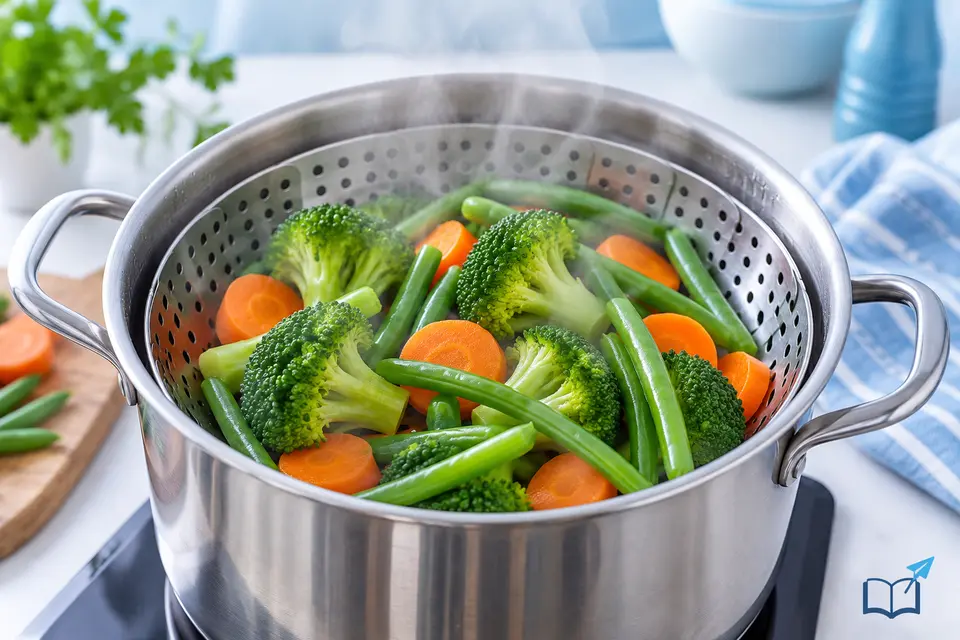
Steaming keeps nutrients in
Steaming ranks near the top for good reason. Food never sits in the water. Nutrients stay where they belong.
The gentle heat cooks food evenly. Vegetables keep colour, crunch, and flavour. You add no oil at all. This suits greens and delicate fish. A basic steamer basket does the job.
Steaming needs little effort or skill. You set a timer and wait. The food cooks itself with steam. Little can go badly wrong. Beginners love how forgiving it feels.
Boiling and its trade-offs
Boiling is fast and very simple. Yet it has a real downside. Nutrients can escape into the water.
Water-soluble vitamins dissolve as food cooks. Long boiling drains more of them away. You then tip that goodness down the sink. Shorter cooking limits the loss. Saving the liquid for soup helps too.
Boiling still suits some foods well. Pasta, grains, and eggs cope fine. Their key nutrients survive the water. Choose boiling when it truly fits. Keep the time as short as possible.
Roasting and baking basics
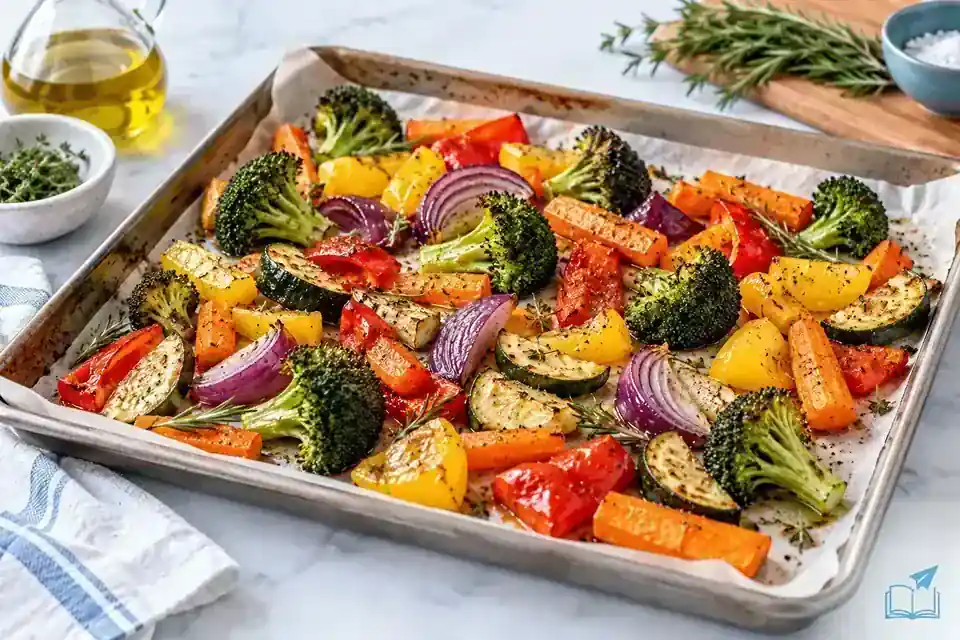
Roasting uses dry heat in an oven. It brings out deep, sweet flavour. Little added fat is needed.
The dry heat caramelises natural sugars. Vegetables turn golden and taste rich. A light brush of oil is enough. This method suits roots and squash. Flavour grows without much extra fat.
Baking works on a similar principle. Both cook food slowly and evenly. Very high heat can char surfaces though. Keep temperatures moderate to stay safe. Watch the clock near the end. A gentle roast beats a burnt one.
Grilling done well
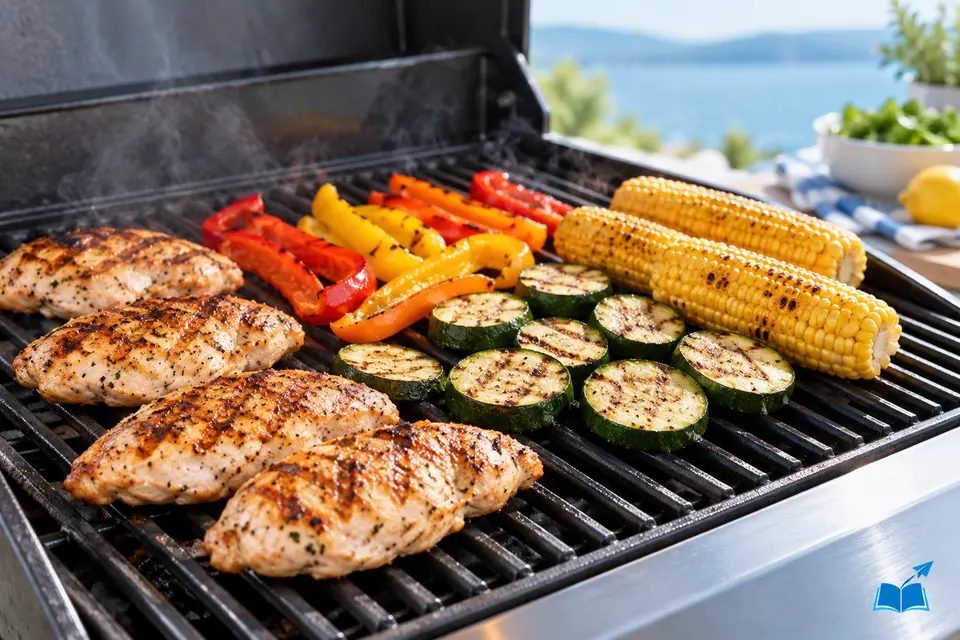
Grilling adds smoky flavour with little oil. Fat drips away from the food. That appeals to many cooks.
The open heat sears the surface fast. You get taste without heavy frying. Lean meats and vegetables both shine. Just avoid charring the food black. Burnt bits are best trimmed away.
Keep the heat sensible and turn often. This stops the outside from burning. Marinate first to add a helpful layer. Simple care keeps grilling healthy. Do not walk far from the flame.
Sauteing with less oil
Sauteing cooks food fast in a pan. A small amount of oil is enough. Speed keeps nutrients fairly safe.
The quick heat softens food gently. You stir often to cook it evenly. A non-stick pan needs less fat. Herbs and garlic lift the flavour. A splash of water can replace oil.
Choose your oil with a little thought. Some oils suit high heat better. Learn which are best cooking oils for the pan. A smart oil keeps things light.

Steaming versus deep frying compared
People often ask how methods stack up. The clearest contrast is steaming versus deep frying. Each sits at an opposite end.
| Steaming | Deep frying |
|---|---|
| Adds no oil or fat | Adds a lot of fat |
| Keeps most water-soluble vitamins | High heat can damage nutrients |
| Gentle on delicate foods | Crisp texture but heavy result |
| Best for everyday cooking | Best kept as a rare treat |
You do not need to ban frying forever. An occasional fried dish is fine. Just keep steaming as your default. Save the fryer for special days.
Poaching and gentle heat
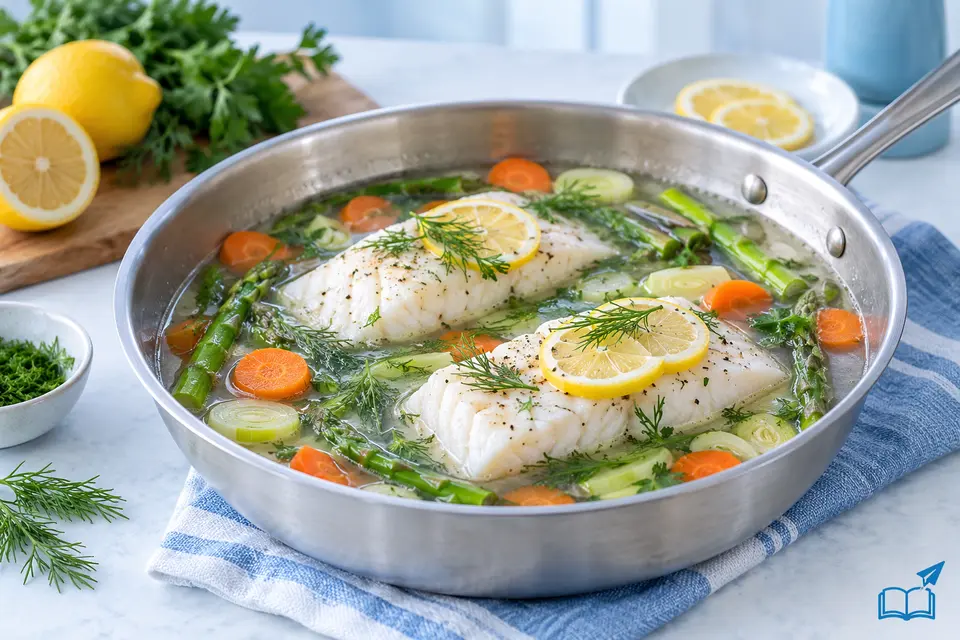
Poaching cooks food in barely simmering liquid. The heat stays low and kind. Delicate foods love this care.
Fish and eggs poach beautifully. They stay tender and moist. No added fat is needed at all. The liquid can carry gentle flavour. Herbs and stock make it richer.
Keep the water just below a boil. Small bubbles should barely rise. Rough boiling can break the food apart. Patience gives the best result. Watch the pot with a calm eye. Gentle heat rewards a gentle cook.
Does microwaving destroy nutrients?
Many people fear the microwave wrongly. It cooks fast with little water. That can actually protect nutrients.
Short cooking times limit vitamin loss. Little or no water means less leaching. Vegetables often keep good colour. The speed suits busy evenings well. A quick zap can beat long boiling.
Use a lid and a splash of water. Stir halfway for even heat. Avoid overcooking until food turns limp. Sensible use keeps meals healthy. The microwave deserves more respect. It is a handy, gentle tool.
Stir-frying quickly
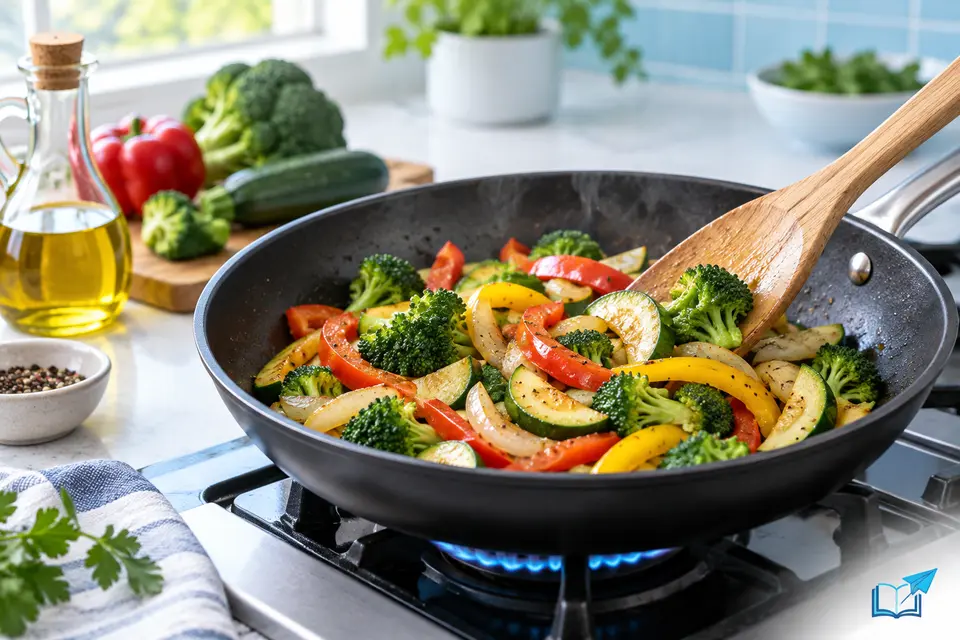
Stir-frying is fast, hot, and lively. Food cooks in a couple of minutes. Speed keeps texture and goodness.
A hot pan sears vegetables quickly. They stay crisp and bright. Only a little oil is required. Constant stirring stops any burning. Everything cooks in one busy pan.
Cut ingredients small and even first. This helps them cook at once. Have everything ready before you start. The action moves very fast. A calm setup makes stir-frying easy.
Choosing the right cooking oil
Oil choice affects both heat and health. Some oils handle high heat well. Others burn and taste bitter.
Oils have a smoke point limit. Past it they break down badly. High-heat cooking needs a stable oil. Gentle cooking allows more delicate ones. Match the oil to the job.
Use oil with a light hand always. A teaspoon often does the work. Measure rather than free-pouring from the bottle. Small amounts keep meals lighter. Good oil used wisely helps a lot. Balance flavour with a sensible amount.
Cooking vegetables the smart way
Vegetables reward a thoughtful cooking method. Gentle heat keeps their colour and crunch. Overcooking dulls both quickly.
Steam or stir-fry to protect nutrients. Cut pieces just before cooking them. Long soaking can wash goodness away. Cook only until just tender. Bright colour signals fresher nutrients. Pick from the best vegetables to eat often.
Do not drown vegetables in water. Use the smallest amount that works. Save any liquid for later use. Simple habits protect real value. A little care keeps veg vibrant. Your plate looks and tastes better.
Common cooking myths
One myth says raw food always wins. Cooking can boost some nutrients too. Both raw and cooked have value.
Another myth claims fat is the enemy. Some healthy fat helps absorption. A little oil can aid nutrients. Balance beats blanket bans here. Fear of fat can mislead cooks.
Some think healthy food must taste dull. Gentle methods bring out real flavour. Herbs and spices lift any dish. Healthy cooking can taste wonderful. Ditch the bland-food myth for good. Flavour and health can share a plate.
Common cooking mistakes
One frequent mistake is overcooking everything. Long heat drains colour and nutrients. Shorter cooking usually serves you better.
Another mistake is using too much oil. A heavy pour adds hidden calories. A measured spoon keeps things light. Try smart healthy ingredient swaps where they help. Small changes lower the fat load.
Some cooks boil vegetables far too long. Then they pour the goodness away. Steam or roast them instead. Save cooking water when you can. Little habits protect real value. Careful cooking pays you back daily.
Who might need tailored advice
General cooking tips suit many healthy adults. Still, some people have special needs. Certain conditions change the picture.
Some diets limit salt, fat, or sugar. Cooking choices then need extra care. Your doctor knows your situation best. Allergies also shape your safe options.
This is not medical advice. See a professional for your personal needs. Use these cooking ideas as a friendly guide. A short chat can prevent bigger problems.
Cooking methods and a balanced diet
Method choice supports a steady, balanced diet. Gentle cooking keeps meals light and rich. Balance grows easier to reach.
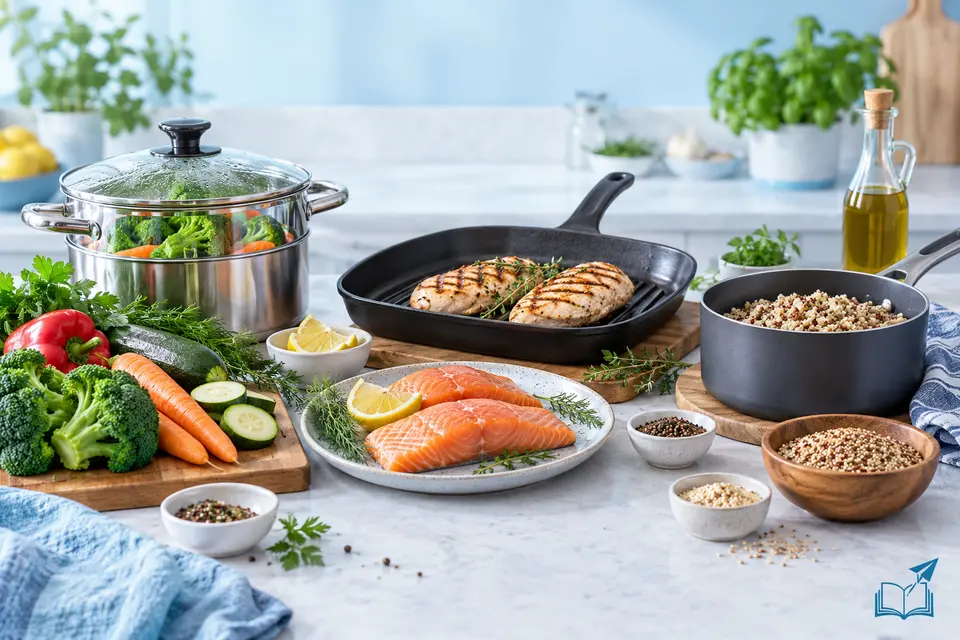
Steam vegetables and grill lean protein often. Roast roots for warmth and sweetness. Keep frying as a rare treat. No single meal carries the week. Variety across days matters most.
Treat your methods as a gentle framework. Adjust them as your tastes shift. Pair produce with protein and grains. This mix keeps meals rounded. Simple methods do the heavy lifting. Good habits compound quietly over weeks.
Frequently asked questions
What are the healthiest cooking methods?
Steaming, poaching, and quick stir-frying rank highly. Roasting and baking with little oil also work well.
Is steaming better than boiling?
Often yes, since food avoids the water. Fewer nutrients dissolve away during cooking.
Does frying make food unhealthy?
Frying adds a lot of fat and calories. Enjoy fried food only as an occasional treat.
Does microwaving destroy nutrients?
No, short cooking with little water protects nutrients. It can beat long boiling in some cases.
Which method keeps the most vitamins?
Steaming usually keeps the most water-soluble vitamins. Quick cooking with little water helps too.
Is grilling a healthy option?
Yes, when you avoid heavy charring. Trim burnt bits and keep the heat sensible.
How much oil should I use?
Use a small measured amount, often a teaspoon. Pouring freely adds hidden calories fast.
Can cooking add any nutrients?
Yes, cooking can boost some nutrients. It also makes certain foods easier to digest.
Is raw food always healthier?
No, both raw and cooked foods have value. Some nutrients rise after gentle cooking.
What is the worst cooking method?
Deep frying often ranks lowest for health. It adds heavy fat and uses harsh heat.
The bottom line
So what are the healthiest cooking methods? Gentle, moist heat usually protects the most nutrients. Steaming, poaching, and quick stir-frying lead well. Roasting and baking work with little oil. Keep deep frying as a rare treat.
Your method quietly shapes each meal. It decides fat, flavour, and nutrients. Choose gentle heat as your default. Small kitchen habits truly add up over time.
For more background, read this overview of cooking as a craft. You can also explore the basics of steaming food gently. Use trusted sources to guide your routine.
This is not medical advice. See a professional for your personal needs. Try one gentle method today. Then build slowly from there. Your future self will thank you.