
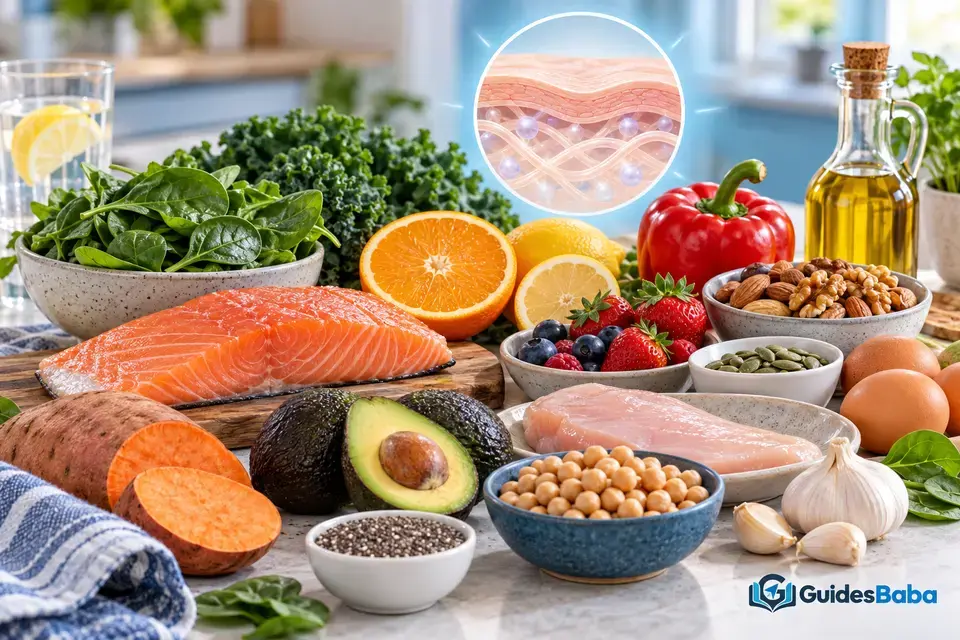
Your plate can quietly help your skin stay firm. So which foods contain nutrients that support collagen production? Can everyday meals really feed your collagen? In general terms, yes they can. Food and collagen are gently linked.
Rather than chasing pricey powders, think whole foods first. You are what you eat, as the old saying goes. A balanced plate matters most. Small daily choices add up over time. A professional can tailor the details for you.
Here is the honest answer. Your body builds collagen from simple nutrients. It needs protein for amino acids. It needs vitamin C as a helper. It also uses zinc and copper. A varied, colourful diet supplies these. A professional guides real, personal advice.
This guide covers collagen-supporting foods in general terms. You will learn simple, practical choices. We frame food kindly and without hype. This is not medical advice. See a professional.
Which foods contain nutrients that support collagen production?
The honest answer is many everyday foods. Collagen forms from amino acids and helpers. Protein foods supply the building blocks. Fruit and vegetables supply key helpers.
Think of collagen like a brick wall. Protein provides the bricks. Vitamin C acts as the mortar. Do you need one magic food? No, variety matters far more here. A colourful plate covers the bases.
Can food alone guarantee firm skin? Not entirely, many factors play a part. Sun, sleep, and genes matter too. A professional can guide you well.
How your body builds collagen
Collagen is the body’s main structural protein. It supports skin, joints, and more. Your body makes it from nutrients. Several helpers keep the process running.
Amino acids form the raw material. Vitamin C helps link the fibres. Zinc and copper support the enzymes. A steady supply keeps things smooth. No single nutrient works alone. Balance ties them together. A varied diet feeds the whole process.
You should focus on overall balance. Cover protein and colourful produce. See which essential nutrients you need. A professional can advise you.
Did you know?
Your body cannot build collagen without vitamin C. That is why fruit and vegetables matter so much.
Protein foods for collagen building blocks
Protein supplies the amino acids for collagen. These are its core building blocks. Both animal and plant foods count. Variety keeps the supply steady.
Eggs, fish, and poultry carry protein. Beans, lentils, and tofu do too. Nuts and seeds add more. Dairy provides another useful source. Spread protein across your meals. See foods naturally high in protein. Steady protein backs steady collagen.
You should include protein at each meal. Mix plant and animal sources. Balance protein with plenty of produce. A professional can advise you.
Vitamin C foods that support collagen
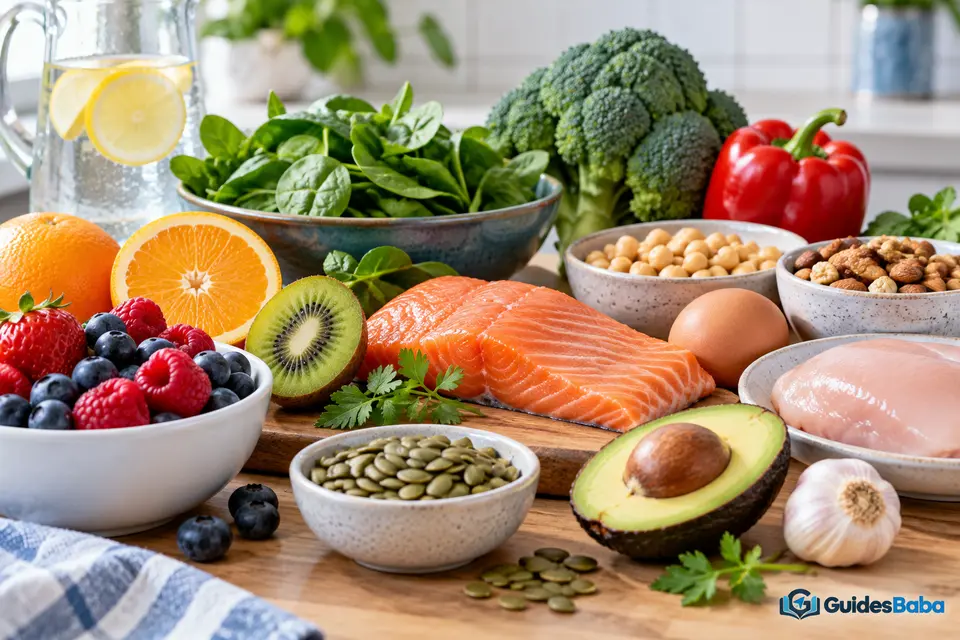
Vitamin C is the collagen helper. Your body cannot make collagen without it. Many fruits and vegetables supply it. A colourful plate delivers plenty.
Citrus fruits are a classic source. Berries and kiwi add more. Peppers and broccoli count too. Tomatoes and leafy greens help. Eat these foods often and fresh. Cooking can lower vitamin C. Raw and lightly cooked options keep more.
You should eat vitamin C foods daily. Enjoy a range of colours. Colour and freshness both matter here. Fresh produce supports your collagen. A professional can guide you.
Zinc and copper foods
Zinc and copper support collagen enzymes. They work quietly in the background. Many everyday foods supply them. Balance keeps these minerals steady.
Shellfish and meat carry zinc well. Beans, nuts, and seeds add more. Copper appears in nuts and whole grains. Wholemeal foods and cocoa help too. Explore the minerals your body needs. These minerals support the enzymes. Small amounts still matter greatly.
You should eat varied whole foods. Include nuts, seeds, and legumes. These supply steady trace minerals. A professional can advise you.
Berries and antioxidant-rich foods
Antioxidants help protect existing collagen. They fight everyday cell damage. Colourful produce supplies them well. Variety brings the widest benefit.
Berries carry many antioxidant compounds. Dark leafy greens add more. Colourful vegetables join the mix. These foods protect and support skin. See which foods contain the most antioxidants. Colour on the plate helps. Antioxidant-rich meals support your collagen.
You should eat a rainbow of produce. Let colour guide your basket. Every colour brings its own benefit. Antioxidants protect your collagen gently. A professional can guide you.

Bone broth and collagen-rich foods
Some foods contain collagen directly. Bone broth is a classic example. Your body still breaks it down. It uses the parts as building blocks.
Bone broth simmers bones and connective tissue. It releases some collagen and minerals. Slow-cooked cuts offer similar parts. Your gut digests these into amino acids. Evidence here stays modest and mixed. Whole foods remain the base. A varied diet covers the essentials well.
You should not rely on one food. Treat broth as a nice extra. Keep your overall diet balanced. A professional can advise you.
Leafy greens and vegetables
Leafy greens support collagen in many ways. They carry vitamin C and antioxidants. They add minerals and fibre too. A daily serving helps steadily.
Spinach, kale, and chard bring nutrients. Broccoli and peppers add vitamin C. Colourful vegetables round out the plate. These foods support skin from within. See twelve foods to eat every day. Greens quietly do a lot. A green habit supports your skin.
You should fill half your plate with produce. Choose several colours each day. Greens support your collagen gently. A professional can guide you.

Healthy fats and collagen
Healthy fats support skin more broadly. They help the skin barrier stay strong. They also carry useful vitamins. Balance makes them work best.
Oily fish provides helpful omega-3 fats. Nuts and seeds add more. Olive oil and avocado help too. These fats support supple skin. See which foods contain healthy fats. Fats round out a skin-friendly plate. Balance keeps them gentle and useful.
You should include healthy fats daily. Keep portions gentle and steady. These fats support your skin. A professional can advise you.
Vitamins that back collagen
Several vitamins support skin and collagen. Vitamin C leads the list clearly. Others play smaller supporting roles. A varied diet covers them.
Vitamin C helps build collagen directly. Vitamin A supports skin cell turnover. Some B vitamins support skin health. A balanced plate supplies these. See which vitamins your body needs. Food usually covers your needs. Variety keeps the vitamins flowing.
You should eat varied, colourful meals. Let food lead your vitamin intake. This supports your collagen naturally. A professional can guide you.

Whole foods versus collagen supplements
People often weigh two approaches here. The clear comparison is whole foods versus supplements. Each has strengths and limits.
| Whole foods | Collagen supplements |
|---|---|
| Supply many nutrients together. | Supply one main ingredient. |
| Usually affordable and familiar. | Often costly over time. |
| Strong overall evidence. | Evidence is still mixed. |
| Feed the whole body. | Target one narrow goal. |
Whole foods build a strong base. Supplements may help some people. Evidence for them stays mixed. A professional can help you decide.
Building a collagen-friendly plate
A simple plate covers most needs. It pairs protein with colourful produce. It adds healthy fats too. Structure keeps things easy.
Start with a protein source. Add two or more colourful vegetables. Include a vitamin C food. Finish with a little healthy fat. See what a balanced diet looks like. Simple plates work well. A balanced plate supports your collagen daily.
You should keep plates simple and colourful. Repeat easy, balanced meals often. This supports your collagen steadily. A professional can guide you.
Hydration and everyday collagen support
Water supports skin structure quietly. Well-hydrated skin looks plumper and fresher. Food and drink both help here. Steady hydration backs your daily habits.
Many fruits and vegetables carry water. They hydrate while feeding your skin. Plain water supports every cell too. Sugary drinks add little real value. Pair water with colourful produce. Steady sips help a lot. Good hydration rounds out a collagen-friendly routine.
You should keep water within easy reach. Enjoy water-rich fruit and vegetables. These support your skin gently. A professional can advise you.

Habits that protect your collagen
Food is only part of the picture. Daily habits protect collagen too. Sun and smoking both matter greatly. Gentle care supports your skin.
Strong sun can break down collagen. Smoking speeds collagen loss too. Good sleep supports skin repair. Gentle skin care helps as well. Food and habits work together. Neither works fully alone. A whole-life approach protects your collagen.
You should protect skin from strong sun. Avoid smoking where you can. These habits protect your collagen. A professional can advise you.
Common mistakes people make
One mistake is chasing one magic food. Collagen needs a varied diet. Balance beats any single fix. Variety works far better.
Another mistake is skipping protein or produce. Both are needed for collagen. People also over-rely on powders. They ignore sun and sleep. A whole-life view helps here. Balance carries the day.
You should avoid extreme food fads. Base choices on real advice. Protect skin from sun too. A professional can correct myths.
Who should get tailored advice
Diet and skin are personal. They depend on your health. They depend on your history too. One plan cannot fit all.
Some conditions affect nutrient needs. Some medicines change absorption too. Diet supports skin but is not everything. Your history shapes the picture. Only your team sees it fully. Personal advice beats general tips.
You should never self-diagnose from articles. Get personal advice before big changes. A professional can guide you safely.
When to seek professional help
General tips suit many people well. Still, every person is unique. Personal advice always matters most. Your health comes first here.
See a doctor about ongoing skin concerns. Ask before starting new supplements. A dietitian can tailor your meals. A dermatologist can assess your skin. You deserve proper care. Asking for help shows sense.
This is not medical advice. See a professional for your own care. Food supports skin but never replaces care. Then follow your trusted team.
Frequently asked questions
Which foods support collagen production?
Protein foods supply amino acids for collagen. Vitamin C foods help build the fibres.
Do I need vitamin C for collagen?
Yes, your body cannot build collagen without it. Fruit and vegetables supply plenty.
Does bone broth boost collagen?
It supplies some collagen and minerals. Evidence stays modest, so treat it as extra.
Are collagen supplements worth it?
Evidence is still mixed for most people. Whole foods build a stronger base.
What protein foods help collagen?
Eggs, fish, poultry, beans, and tofu all help. Spread protein across your meals.
Do berries help collagen?
Berries carry vitamin C and antioxidants. These support and protect your collagen.
Which minerals support collagen?
Zinc and copper support collagen enzymes. Nuts, seeds, and shellfish supply them.
Can food alone firm my skin?
Food helps, but sun and genes matter. A balanced diet supports your skin.
Does sugar harm collagen?
Excess sugar may stiffen collagen slowly. Balance helps protect your skin.
When should I see a professional?
See one before starting new supplements. A dietitian can tailor your plan.
The bottom line
So which foods support collagen production? Protein foods supply the building blocks. Vitamin C foods help link the fibres. Zinc, copper, and antioxidants support the work. A varied, colourful plate covers the bases.
You do not need pricey powders. Favour whole foods over quick fixes. Protect skin from sun too. Lean on a professional throughout.
For general background, read this overview of collagen. You can also learn about vitamin C. Trusted sources support professional advice.
This is not medical advice. See a professional for your own care. Food supports skin but never replaces it. Then let your trusted team guide you.