
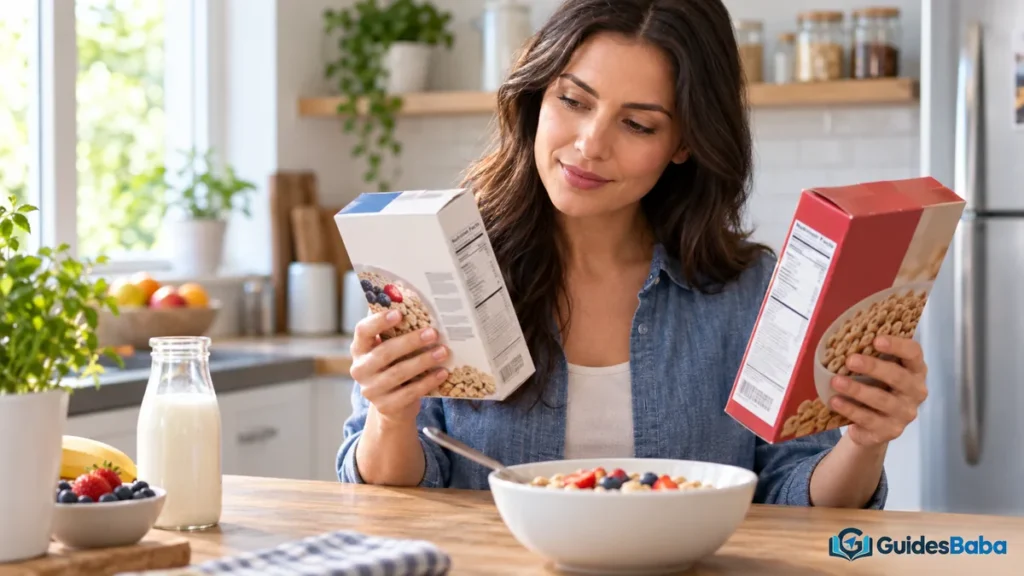
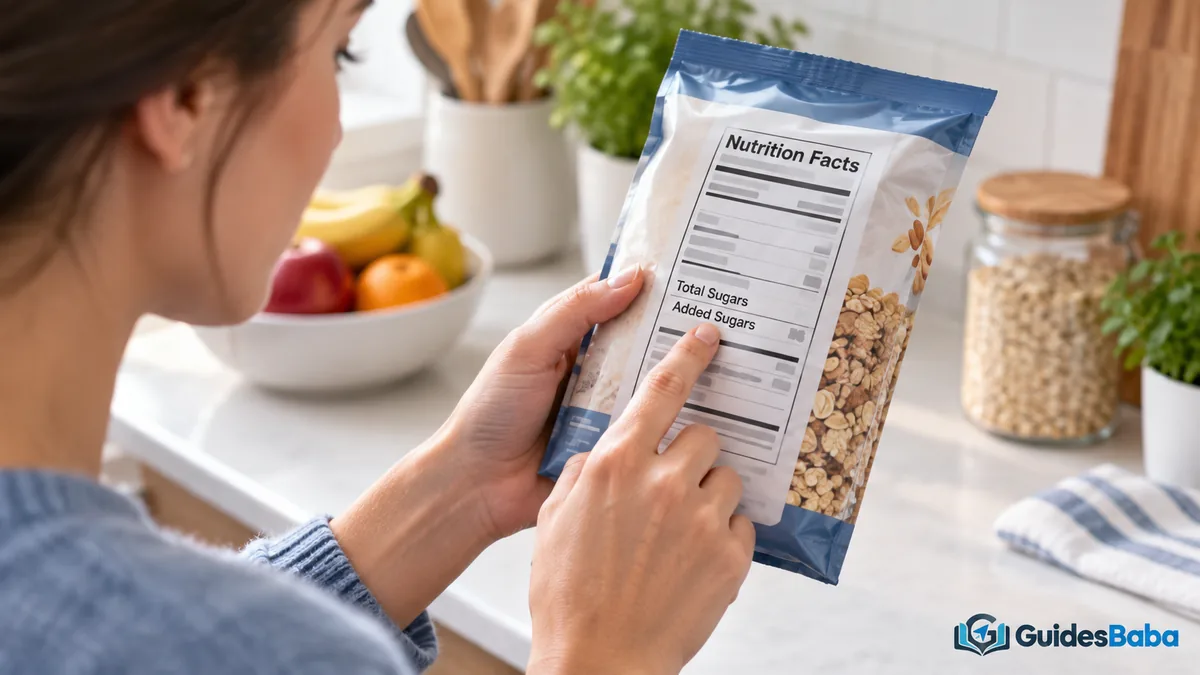
Sugar loves to hide in plain sight. It slips into foods you least suspect. So how can you find added sugar on a food label? The label holds every clue you need.
Rather than guessing from taste alone, read the panel. The label now splits sugar into two parts. One line shows added sugar directly. Learning about added sugars makes the panel far clearer. Knowledge here is real power.
Here is the honest answer. Look for the added sugars line under total sugars. Check the percent daily value beside it. Then scan the ingredients list for sweet names. Many sugars wear clever disguises there. This is not medical advice. See a professional.
This guide covers finding added sugar in plain steps. You will learn where the number sits. We will compare natural and added sugar. Many tips link back to reading the whole label.
So how can you find added sugar on a food label?
The honest answer sits in two places. First check the added sugars line. Then scan the ingredients for sweet names.
Think of the label as a treasure map. The added sugars line marks the spot. The ingredients list fills in details. Read both to catch every gram. One glance rarely tells the full story.
Is the sugar always obvious? Sadly not, and that is the challenge. Sweeteners hide under dozens of names. Some sound nothing like sugar at all. Learning those names sharpens your eye.
Why added sugar matters on a label
Added sugar behaves unlike natural sugar. It brings sweetness without much else. The extra calories add up fast.
Fruit and milk carry natural sugar. They also bring fibre, vitamins, and minerals. Added sugar arrives mostly alone. The label helps you tell them apart. That difference guides smarter choices.
Reading added sugar builds honest habits. You judge foods by their real content. No sweet marketing fools your eye. Every choice rests on clear facts. A little label reading pays off.
Did you know?
Added sugars can appear under many different names. Reading the ingredients list helps you spot each one.
Where added sugar appears on the label
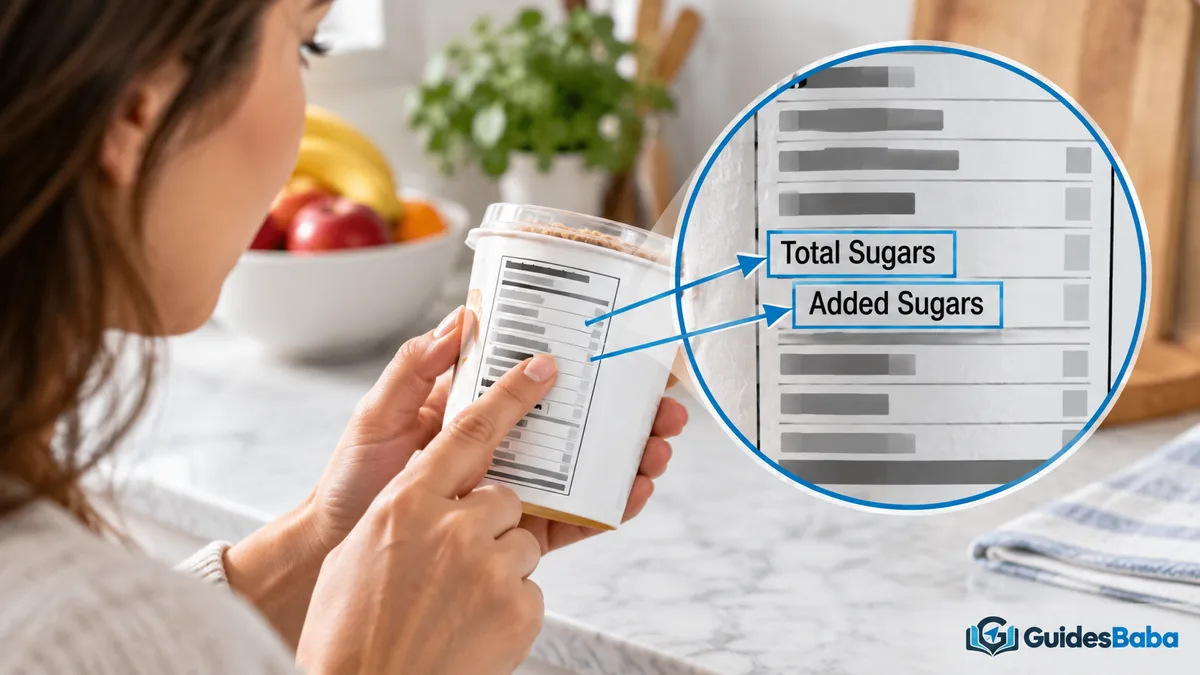
Added sugar sits inside the carbohydrate section. Look under the total sugars line. It appears slightly indented below.
The line usually reads includes added sugars. A gram figure follows right after. That number counts sugar put in during processing. It leaves out sugar found naturally. Reading it takes only a moment.
Look for the indent and the word includes. That formatting sets added sugar apart. It signals sugar that was added on purpose. Start your sugar check right there.
Total sugars versus added sugars
The label shows two sugar figures. Total sugars counts every kind together. Added sugars counts only the extra.
Total sugars includes natural and added together. Plain yogurt shows natural milk sugar. Its added sugars line may read zero. Compare the two numbers to learn more. The gap reveals what was put in.
A high total sugar with zero added is fine. That points to natural fruit or milk sugar. Focus your attention on the added line. That number matters most for extra sugar.
Reading the added sugars line
The added sugars line gives a gram figure. It refers to one serving of food. Keep the serving size in mind.
Read the grams as a per serving amount. Eat two servings and double that figure. The sugar total then climbs quickly. Scale the number to your real portion. That habit keeps your sugar math honest.
Want to check sugar fast? Find the added sugars line first. Then learn to read a nutrition facts label in full. The added sugars line ties it together.
Percent daily value for added sugar
Beside the grams sits a percent figure. It shows the percent daily value. This helps you judge the amount.
The percent compares one serving to a daily reference. A high percent means a lot of added sugar. A low percent means only a little. Use it as a quick guide. Five percent or less counts as low.
The percent daily value speeds up decisions. You need not weigh grams in your head. Just glance at the percent instead. It frames the sugar in context.

Spotting sugar in the ingredients list
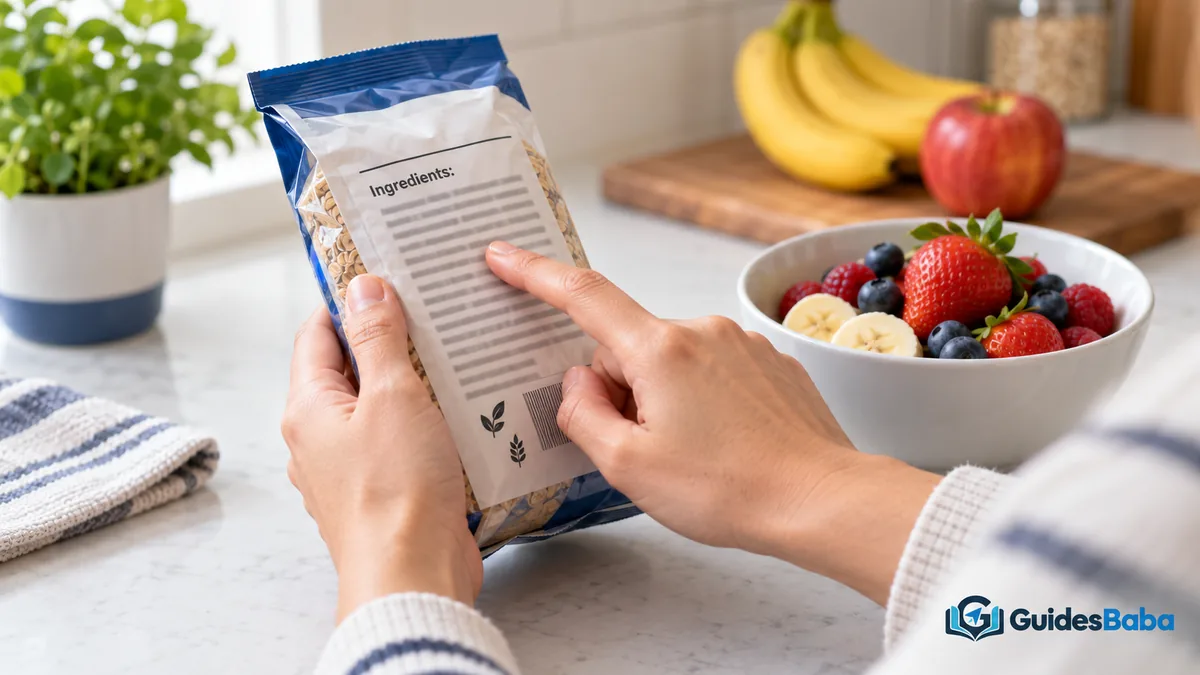
The ingredients list adds valuable detail. It names every sweetener in the food. Sugar can appear more than once.
Ingredients sit in order of weight. Sugar near the top means a large amount. Split names can spread sugar down the list. Watch for several sweeteners together. That trick hides the true total.
Learn to identify added sugar on a food label by name. The list reveals what the numbers hide. Read it every time you shop.
The many names for added sugar
Added sugar wears dozens of disguises. Some names sound sweet and obvious. Others slip past a quick glance.
Watch for words ending in ose. Glucose, fructose, and dextrose all count. Syrups of any kind count too. Cane juice and molasses join the list. Honey and concentrate also add sugar.
These names all mean added sugar. Manufacturers may use several at once. That spreads them across the list. Learn the common ones by heart. Recognition gets faster with practice.
How added sugar differs from sweeteners
Not every sweet ingredient is added sugar. Some sweeteners carry no calories at all. The label helps you tell them apart.
Sugar substitutes may sweeten without adding sugar. They do not always count as added sugar. Read the label to see the difference. Check both the sugar line and ingredients. Clarity comes from reading both parts.
Refined carbohydrates can also raise blood sugar. Learn about refined carbohydrates and their effects. They differ from sugar but still matter. Read the whole panel for context.
Comparing natural sugar and added sugar
People often confuse these two kinds. The honest comparison is natural versus added. Each behaves quite differently.
| Natural sugar | Added sugar |
|---|---|
| Found in fruit and plain milk | Put in during processing |
| Comes with fibre and nutrients | Brings mostly extra calories |
| Counted in total sugars only | Listed on its own line |
| Usually needs no label worry | Worth watching more closely |
You need not fear all sugar equally. Natural sugar in whole foods is fine. Focus your attention on the added line. That number rewards a closer look.

Using labels to compare products
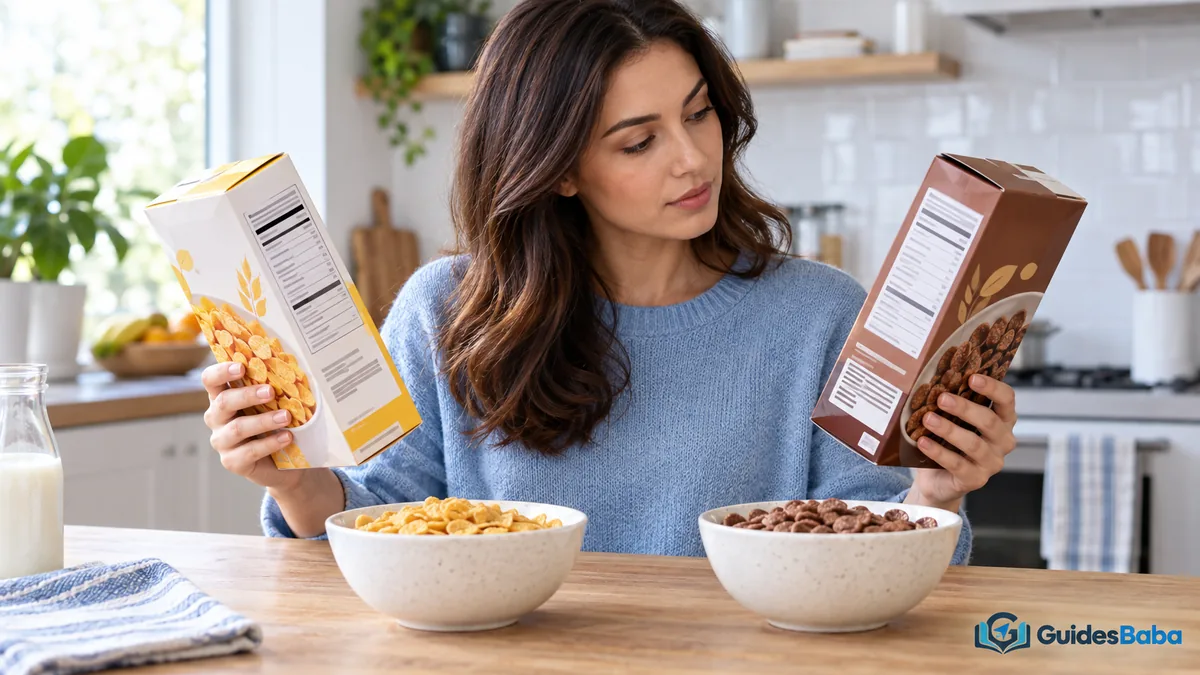
The added sugars line makes comparison simple. Two similar foods may differ widely. The label reveals the gap.
One cereal might list far more added sugar. Its box may still look healthy. Check the added sugars line on both. Pick the lower number when it fits. A fair check guides better buys. Two glances can save many grams.
Compare per serving to keep it fair. Watch for different serving sizes too. A smaller serving can hide more sugar. Small math brings real clarity.
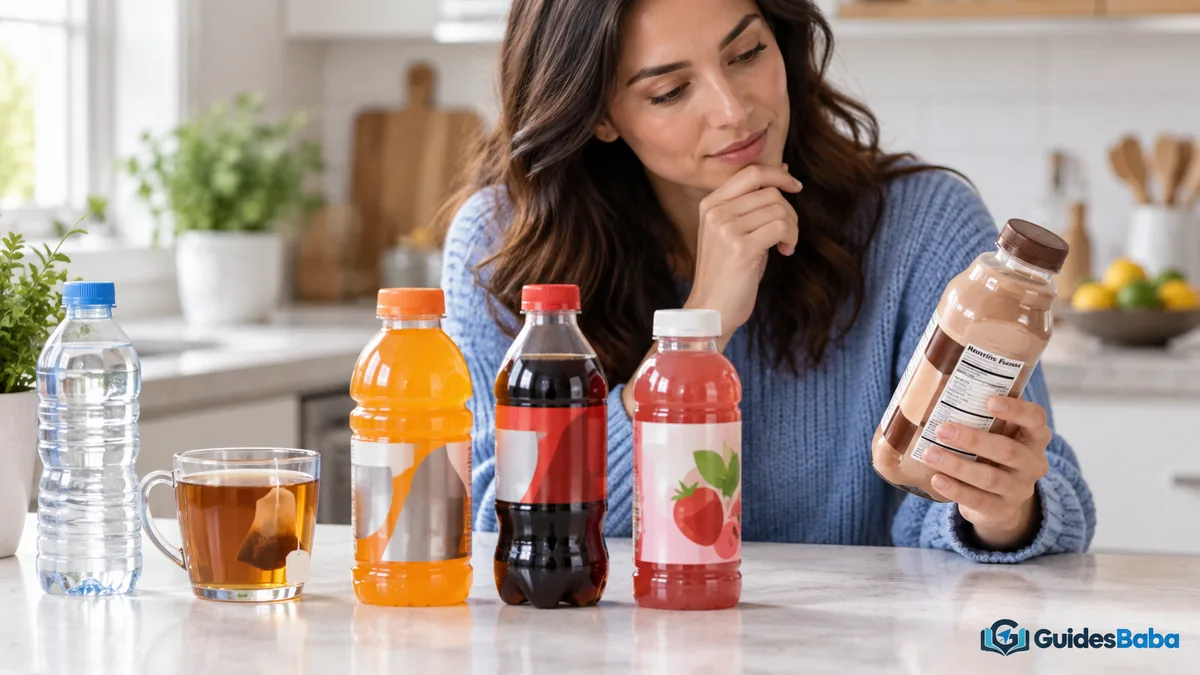
Added sugar hides in drinks
Drinks are a major added sugar source. Sweet flavour makes it easy to miss. One bottle can hold a lot.
Sodas and sweet teas top the list. Flavoured coffees add plenty too. Even some juices carry added sugar. Check the added sugars line on drinks. The number often surprises people.
Multi serving bottles multiply the sugar. One bottle may hold two servings. Drink it all and double the figure. Read the whole bottle carefully.
Added sugar hides in savoury foods
Added sugar is not just for sweets. Savoury foods often carry it too. This catches many shoppers off guard.
Sauces and dressings can hold surprising sugar. Bread and crackers sometimes contain it. Even soups may list added sugar. Check the label on savoury items. Sugar hides where you least expect.
Do not assume savoury means sugar free. Read the added sugars line anyway. A quick check reveals hidden grams. Labels tell the honest story. Trust the panel over the packaging.
Common added sugar mistakes
One common mistake watches only total sugars. That figure blends natural and added. It can mislead your judgement.
Another mistake skips the ingredients list. The line shows grams but not names. Reading both catches split sweeteners. Always check the list as well. That habit reveals hidden sugar.
Some shoppers ignore the serving size. They read one figure but eat more. The real sugar then doubles quietly. Match numbers to your portion. A small check keeps you honest.

Added sugar myths worth dropping
One myth says brown sugar is healthy. It is still added sugar though. The label counts it the same.
Another myth trusts natural sounding names. Cane juice and honey still add sugar. The label groups them as added. Read past the friendly wording. Names alone cannot be trusted.
Some think fat free means sugar free. Low fat foods often add sugar. That restores flavour lost with fat. Check the added sugars line anyway.
Who might need tailored advice
General label reading suits many healthy adults. Still, some people have special needs. Certain conditions change the picture.
Some manage blood sugar very closely. Added sugar then matters even more. Your doctor knows your situation best. Personal targets shape your safe choices.
This is not medical advice. See a professional for your personal needs. Use these label tips as a friendly guide. A short chat can prevent bigger problems.
Added sugar and a balanced diet
Watching added sugar supports steady eating. It helps you spot empty calories. Balance grows easier to see.
Whole foods carry little added sugar. Fruit, plain dairy, and grains work well. Spread these across your day often. No single food ruins a balanced week. Variety keeps your choices rounded.
Treat the added sugars line as a tool. It informs choices without ruling them. Pair it with whole, simple foods. Good habits compound quietly over weeks.
Frequently asked questions
How can you find added sugar on a food label?
Check the added sugars line under total sugars. Then scan the ingredients list for sweet names.
What is the difference between total and added sugars?
Total sugars counts natural and added together. Added sugars counts only the extra put in.
Does high total sugar always mean added sugar?
No, fruit and milk carry natural sugar. Check the added sugars line to be sure.
What names hide added sugar?
Watch for words ending in ose and syrups. Cane juice, honey, and molasses also count.
What percent daily value is low?
Five percent or less counts as low. Higher percentages mean more added sugar.
Is brown sugar healthier than white?
No, brown sugar is still added sugar. The label counts both the same way.
Do savoury foods contain added sugar?
Yes, sauces and breads often hold it. Always check the added sugars line.
Why does sugar appear in drinks?
Sweet drinks are a major sugar source. One bottle can hold several servings.
Does fat free mean sugar free?
No, low fat foods often add sugar. Check the added sugars line anyway.
Should I read the ingredients list too?
Yes, the list names every sweetener used. It reveals what the numbers can hide.
The bottom line
So how can you find added sugar on a food label? Look for the added sugars line under total sugars. Check the percent daily value beside it. Then scan the ingredients list for sweet names. Read both parts to catch every gram.
The label gives you every clue you need. It separates natural sugar from added. Learn the common sugar names by heart. Small habits like this truly add up over weeks.
For more background, read this overview of added sugar as a topic. You can also explore the wider role of sugar in foods. Use trusted sources to guide your habits.
This is not medical advice. See a professional for your personal needs. Read one added sugars line today. Then build slowly from there. Your future self will thank you.