
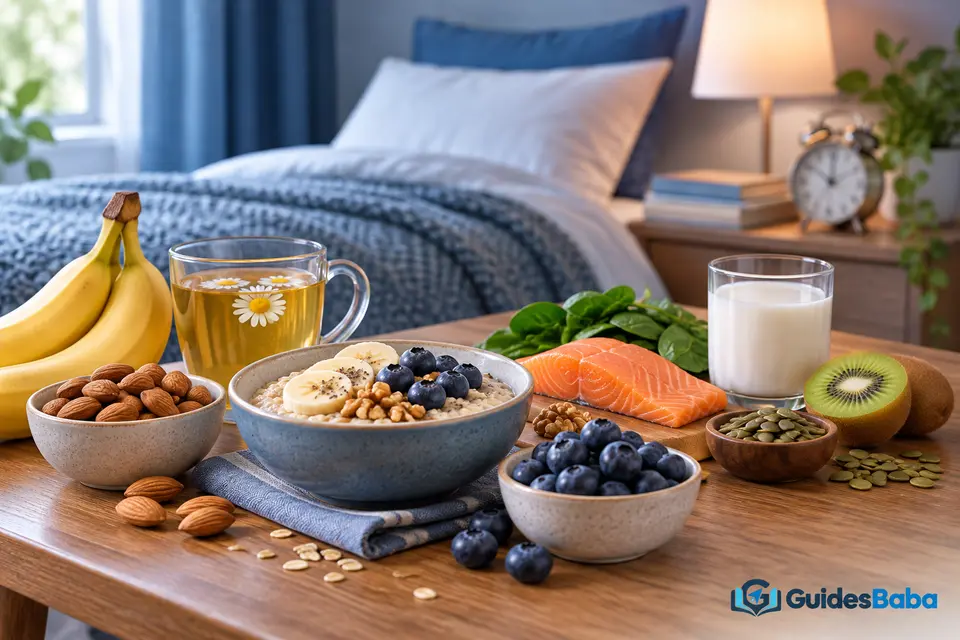
Good sleep can feel frustratingly out of reach. What foods help with sleep? Could your dinner plate nudge better rest? In general terms, some foods may support sleep. None of them work like magic.
Rather than hunting a miracle food, think patterns. No single snack sends you off. Your whole routine matters far more. The wider habit shapes your rest. A professional can guide the details.
Here is the honest answer. Some foods may gently support sleep. They supply nutrients tied to rest. The effect is small and general. No food cures poor sleep or insomnia. Habits and timing matter a great deal. A professional guides real, personal care.
This guide covers the topic in general terms. You will learn which foods may help. We frame food kindly and without hype. This is not medical advice. See a professional.
What foods help with sleep?
The honest answer is a gentle maybe. Some foods may support better rest. They carry helpful nutrients and calm. The effect stays small and general.
Think of it like setting a stage, not flipping a switch. One meal will not fix your nights. Does a single banana bring sleep? No, the wider routine matters more. Steady habits shape your rest over time.
Is there a magic sleep food? Not at all, that idea misleads. Food is only one small piece. Balance guides the smarter choices. A professional can guide you.
How food and sleep connect
Food and sleep share a quiet link. Some nutrients support natural sleep signals. Meals also affect comfort at night. The connection is real but modest.
Certain nutrients help the body make melatonin. Others support calm and steady energy. Heavy or late meals may disturb rest. The effect varies from person to person. Timing matters as much as choice.
You should not expect food to fix sleep. Diet supports, it does not cure. Habits and routine matter greatly. A professional can guide you.
Did you know?
Your body makes melatonin from a building block called tryptophan. Many everyday foods supply small amounts of it.
Foods rich in tryptophan
Tryptophan is a small amino acid. The body uses it to make melatonin. Many everyday foods contain it. No single food holds a lot.
Turkey, eggs, and dairy supply tryptophan. Nuts, seeds, and beans add more. Explore foods naturally high in protein here. These foods support the wider pattern. The effect on sleep stays gentle.
You should include protein across the day. Pair it with whole carbohydrates. Variety supports a calmer routine. Whole foods deliver it naturally. A professional can advise you.
Dairy and warm milk
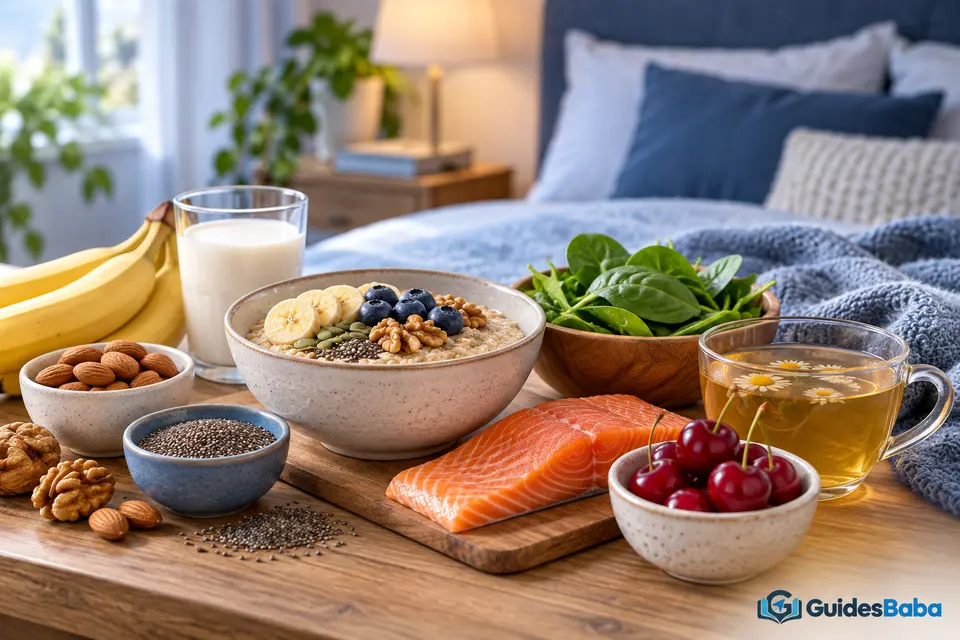
Warm milk is a classic bedtime idea. It carries tryptophan and calcium. The ritual itself may soothe. Comfort plays a part here.
Calcium helps the body use tryptophan. A warm drink can feel calming. The effect is gentle, not dramatic. Routine may matter as much as milk. Small comforts support winding down.
You should treat this as a habit. Enjoy warm milk if you like it. Skip it if dairy troubles you. Plant milks can work as well. A professional can advise you.
Nuts and seeds at night
Nuts and seeds make handy evening snacks. They supply magnesium and healthy fats. Some also contain a little melatonin. A small portion is plenty.
Almonds, walnuts, and pumpkin seeds are examples. Magnesium supports muscle and nerve calm. These foods fit a balanced pattern. The sleep effect stays modest and general. Keep the portion sensible at night.
You should keep nut portions small. A handful is usually enough. Variety supports the whole pattern. Seeds also bring useful minerals. A professional can advise you.
Whole grains and steady energy
Whole grains bring fibre and steady energy. They may help tryptophan reach the brain. Oats are a popular choice. Balance guides the portion.
Oats, brown rice, and wholegrain bread help. They avoid sharp sugar spikes. A calm blood sugar supports rest. This effect is gentle and general. Pair grains with a little protein.
You should favour whole grains at dinner. Keep the portion moderate at night. Variety supports a calmer routine. Fibre supports steady digestion too. A professional can advise you.
Fruit that may support rest
Some fruits appear in sleep research. Cherries and kiwi are common examples. They carry helpful natural compounds. The evidence stays early and small.
Tart cherries contain a little melatonin. Kiwi brings vitamins and antioxidants. Bananas add potassium and magnesium. These effects are modest, not proven cures. A varied fruit intake still helps.
You should enjoy fruit as part of dinner. Choose whole fruit over juice. Variety supports the whole pattern. Fresh and frozen fruit both count. A professional can advise you.

Sleep-friendly foods versus stimulating foods
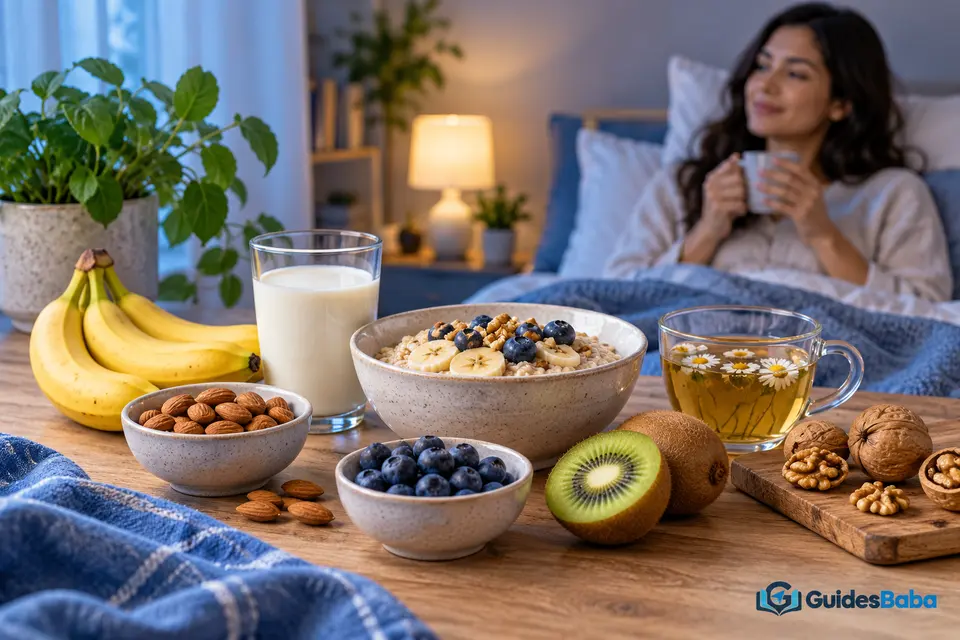
People often compare two broad choices. The clear comparison is sleep-friendly foods versus stimulating foods. Each shapes your evening differently.
| Sleep-friendly foods | Stimulating foods |
|---|---|
| Warm milk and dairy. | Coffee and energy drinks. |
| Oats and whole grains. | Sugary snacks and sweets. |
| Nuts, seeds, and kiwi. | Heavy, fried, late meals. |
| Light, gentle portions. | Large portions near bedtime. |
Sleep-friendly foods stay light and calming. Stimulating foods may keep you alert. Small swaps move you across. You do not need a strict plan. A professional can help you shift.
Caffeine and your evenings
Caffeine is a strong sleep disruptor. It can linger in the body for hours. Afternoon coffee may reach bedtime. Timing makes a real difference.
Learn how caffeine affects sleep in more depth. Read about how much caffeine is too much too. Many people underestimate their daily intake. Cutting back later helps some sleepers. This effect varies between people.
You should limit caffeine in the afternoon. Switch to water or herbal drinks. Small changes support calmer evenings. Herbal drinks make an easy swap. A professional can advise you.
Herbal drinks and rituals
Herbal teas feature in many bedtime routines. Chamomile is a well known example. The warmth and ritual may soothe. Evidence stays gentle and small.
Chamomile and lemon balm are popular choices. A warm, calming drink signals wind down. The routine may matter as much. These drinks are caffeine free. Simple rituals support steady sleep habits.
You should build a calm evening ritual. Choose caffeine free drinks at night. Small habits support winding down. A warm mug can feel grounding. A professional can advise you.

Meal timing before bed
When you eat matters for sleep. Large late meals can disturb rest. The body works to digest them. Lighter evenings often feel better.
Try to finish dinner a few hours early. This gives digestion some quiet time. Very late snacks may sit heavy. Learn why eating late at night matters here. Gentle timing supports steadier rest.
You should leave a gap before bed. Keep late snacks small and light. Steady timing supports the routine. Your body settles more easily then. A professional can advise you.
Foods and drinks to go easy on
Some foods work against restful sleep. Heavy, fried meals sit uncomfortably. Rich, spicy dishes may disturb some people. Alcohol also fragments deep rest.
Sugary snacks can spike then crash energy. Large portions strain late digestion. Alcohol may help you drift then wake. These effects vary between people. Gentle evenings usually feel better.
You should keep evening meals light. Go easy on rich, spicy food. Limit alcohol close to bedtime. Gentle evenings support deeper rest. A professional can advise you.
Hydration and night waking
Hydration matters for overall wellbeing. Yet too much fluid late disturbs sleep. Frequent trips break your rest. Balance guides the evening.
Drink steadily across the whole day. Ease off large drinks near bedtime. This small habit reduces night waking. The effect is simple and general. Comfort supports steadier sleep.
You should hydrate well during the day. Taper fluids in the late evening. Small habits support the routine. Comfort supports unbroken rest at night. A professional can advise you.
Building an evening eating routine
A steady routine supports better sleep. Your body loves gentle patterns. Regular meal times help a lot. Simple habits do most work.
Eat dinner at a fairly regular time. Keep the evening meal light. Add a small snack if needed. See how a balanced diet actually looks here. Routine supports the whole pattern.
You should keep evening timing steady. Repeat calm habits each night. Small routines build over time. Consistency matters more than any food. A professional can advise you.

Realistic expectations here
Food supports sleep only gently. There is no overnight food fix. Steady habits shape the results. Patience matters more than speed.
Sleep improves through many small changes. Bold promises usually mislead people. A calm routine works better. Balance beats any harsh rule. Small habits build the pattern over time.
You should set gentle expectations. Give any change real time. Steady habits support your rest. Small wins add up over weeks. A professional can guide you.
Common mistakes people make
One mistake is chasing a single sleep food. Another is eating a heavy late dinner. Balance beats any quick fix.
People often ignore caffeine and timing. Some rely on alcohol to unwind. Others expect instant, dramatic results. Steady habits work far better. Patience supports real, lasting change.
You should avoid quick fix thinking. Base changes on real advice. Think routine over single foods. A professional can correct myths.
Who should get tailored advice
Sleep and diet are personal matters. They depend on your health. They depend on your routine too. One plan cannot fit all.
Some sleep problems need real assessment. Medicines and conditions also matter. Food alone cannot carry it. Your history shapes everything here. Personal advice always beats general tips.
You should never self-diagnose from articles. Get personal advice before big changes. A professional can guide you safely.
When to seek professional help
General tips suit many people well. Still, every person is unique. Personal advice always matters most. Your wellbeing comes first here.
See a doctor about ongoing sleep problems. A dietitian can tailor your meals. A specialist can assess deeper issues. You deserve care and support. Asking for help shows sense.
This is not medical advice. See a professional for your own care. Food supports care but never replaces it. Then follow your trusted team.
Frequently asked questions
What foods help with sleep?
Some foods may gently support rest. Dairy, oats, nuts, and kiwi are examples.
Do any foods cure insomnia?
No, no food cures poor sleep. See a professional for ongoing problems.
Does warm milk really help?
It may soothe through comfort and tryptophan. The effect is gentle, not proven.
What is tryptophan?
It is a small amino acid from food. The body uses it to make melatonin.
Are cherries good for sleep?
Tart cherries contain a little melatonin. The evidence stays early and small.
Should I avoid caffeine at night?
Yes, caffeine can disrupt your sleep. Limit it during the afternoon and evening.
Is a bedtime snack okay?
A small, light snack is usually fine. Avoid large or heavy late meals.
Does alcohol help me sleep?
It may help you drift then wake. Alcohol fragments deeper, restful sleep.
How soon will food help?
Changes work slowly over many nights. Steady habits shape the results.
When should I see a professional?
See a doctor about ongoing sleep problems. A dietitian can tailor your meals.
The bottom line
So what foods help with sleep? Some foods may gently support rest. Dairy, oats, nuts, and kiwi are examples. Their effect stays small and general. Habits and timing matter most.
You do not need a magic food. Aim for light, balanced evenings. Limit caffeine and heavy late meals. Lean on a professional throughout.
For general background, read about sleep. You can also learn about melatonin. Trusted sources support professional advice.
This is not medical advice. See a professional for your own care. Food supports care but never replaces it. Then let your trusted team guide you.