
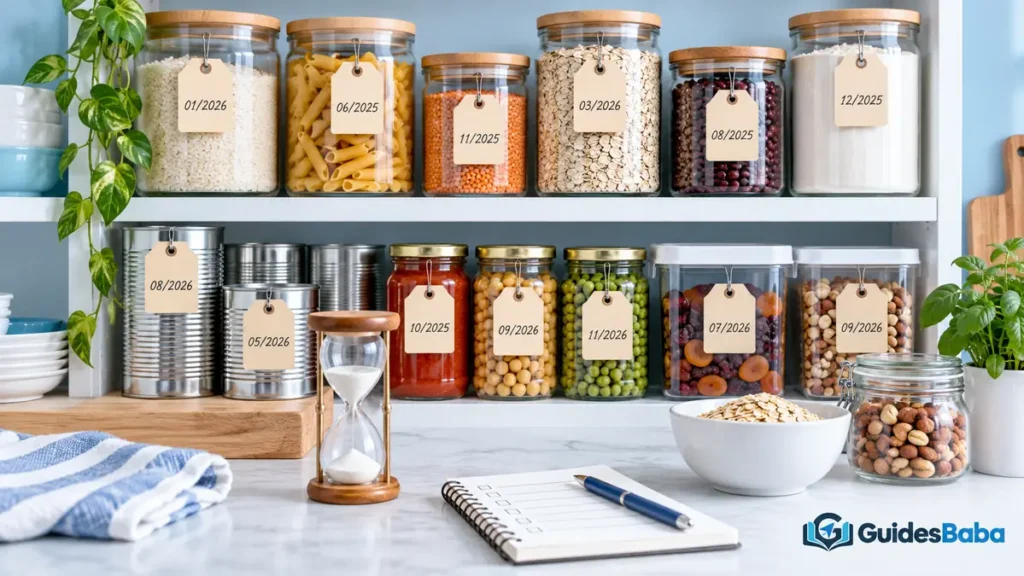
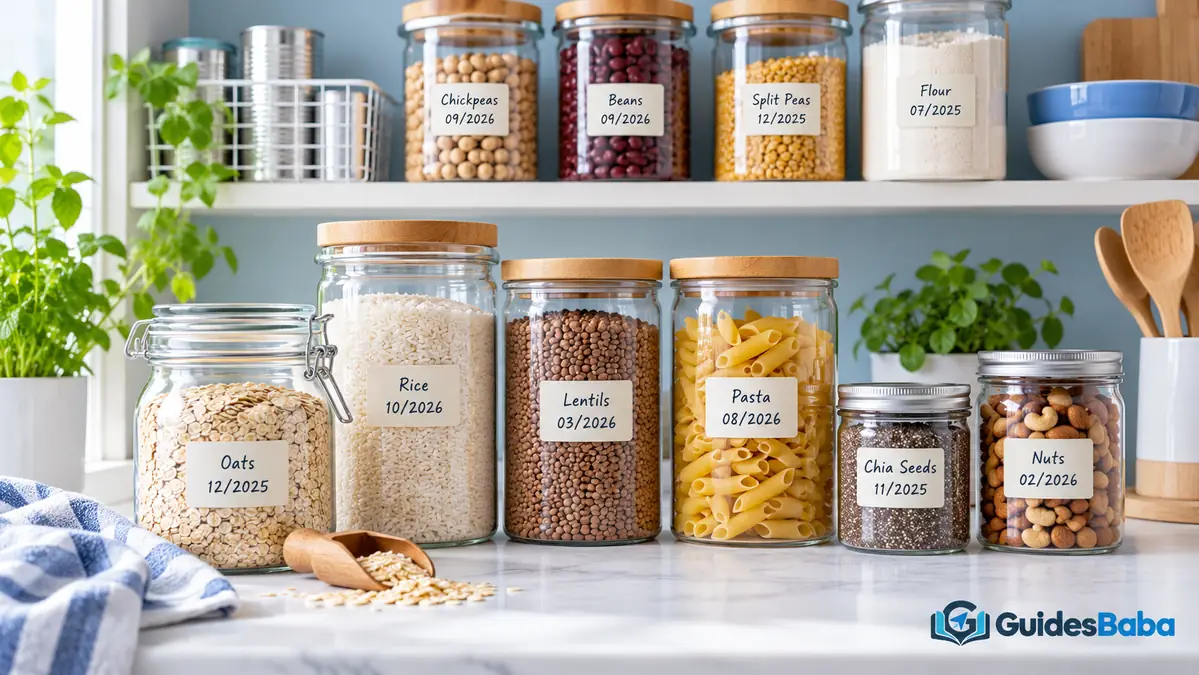
The back of the cupboard holds old jars. You wonder if they are still good. So how long do pantry foods usually last? The answer varies from months to years.
Rather than tossing tins on a whim, learn their real shelf life. Most pantry staples last a long time. Do not let food gather dust forever. A little knowledge saves money and waste.
Here is the honest answer. Dry, sealed foods often last many months. Some, like rice and tinned goods, last years. Oils, nuts, and flour have shorter lives. Storage and moisture change everything here. Cool, dry, sealed storage stretches shelf life.
This guide covers each pantry staple clearly. You will learn how long common foods keep. We compare long-life and perishable pantry foods. This is not medical advice. See a professional.
So how long do pantry foods usually last?
The short answer depends on the food. Some staples last months, others last years. Dryness is the deciding factor.
Think of your pantry as a spectrum. Dry, sealed foods sit at one end. Opened or oily foods sit nearer the other. Moisture and air shorten shelf life. Good storage shifts foods toward longer life.
Which foods last the longest of all? Rice, sugar, salt, and honey excel. Tinned foods keep for years too. Oils and nuts fade sooner. Storage still shapes every timeline. A cool, dry cupboard helps them all.
What makes a food last in the pantry
Long-life foods share a few key traits. Low moisture leads the list. Sealed packaging protects the rest.
Water is what spoilage needs most. Dry foods starve bacteria and mould. Fats can still turn rancid over time. Air and light speed that decline. So dryness and sealing matter greatly.
Cool temperatures slow every kind of change. Heat near the stove works against you. A steady, cool shelf is ideal. These simple factors set the timeline. Get these right and food lasts. Ignore them and it fades fast.
Did you know?
Moisture is the biggest enemy of pantry foods. Cool, dry, sealed storage keeps them good for longer.
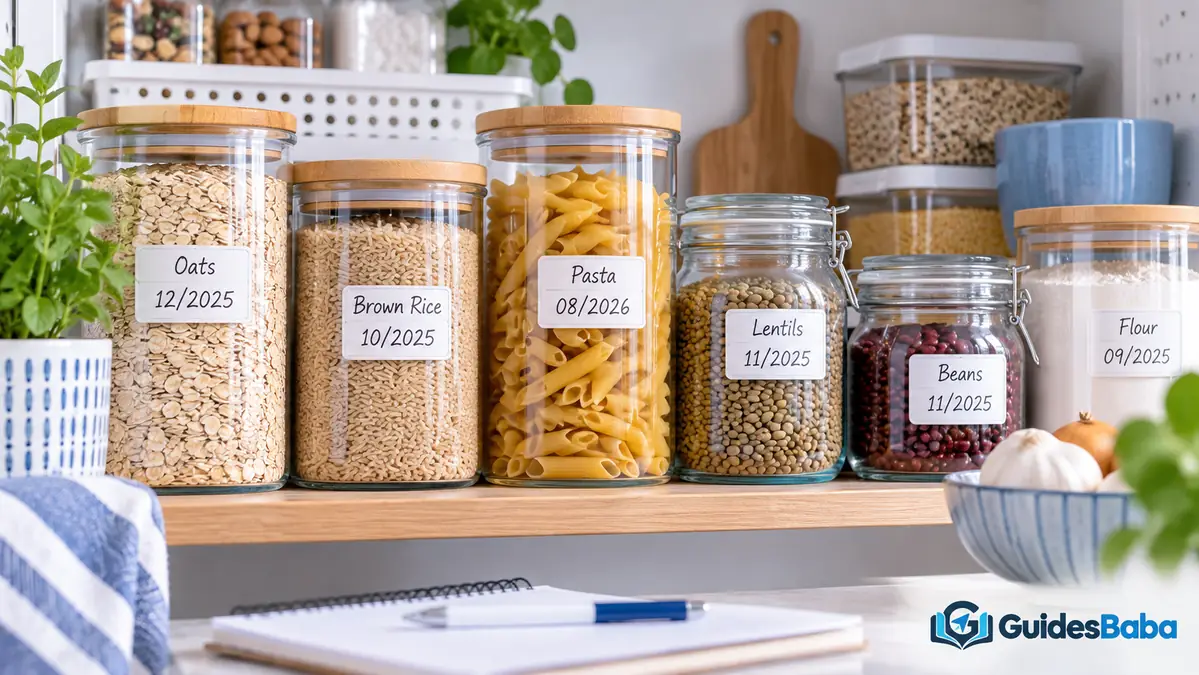
Dried grains, rice, and pasta
Dried grains are pantry champions of shelf life. White rice and pasta last a long time. Their dryness keeps spoilage away.
White rice can store for a very long time. Dry pasta keeps for months and beyond. Brown rice lasts less, due to its oils. Keep them sealed against moisture and pests. A cool cupboard suits them well.
Store grains in airtight containers. This blocks damp air and insects. Check for any musty smell before cooking. Follow official guidance if unsure. A dry jar keeps grains fresh for ages.
Tinned and canned foods
Tinned foods are famous for long shelf life. Sealing and heat make them very stable. Many keep safely for years.
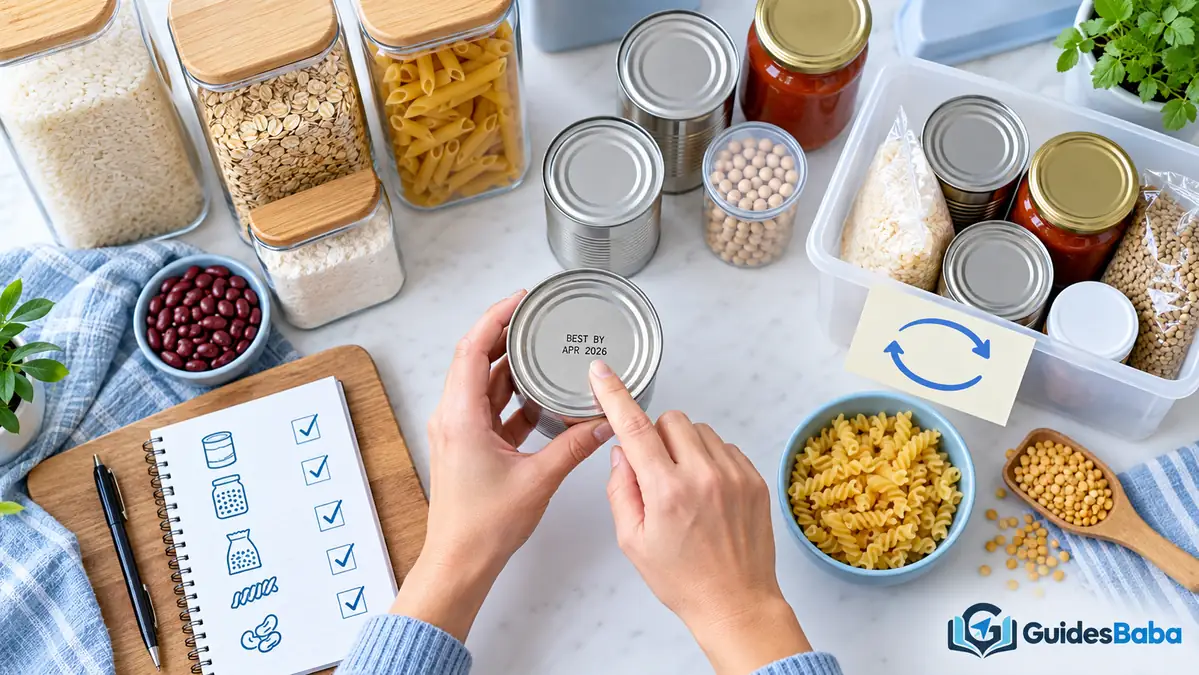
An undamaged tin protects food well. Low-acid foods often last longest. Acidic foods, like tomatoes, keep less long. Best-before dates guide quality, not strict safety. The food often outlasts the printed date.
Never use a bulging or leaking tin. Damage can let dangerous germs inside. Store tins somewhere cool and dry. When in doubt, throw it out. A dented seam can also break the seal. Check each tin before you open it.
Dried beans, lentils, and pulses
Dried pulses are a sturdy pantry staple. Beans and lentils store for a long time. Their dryness gives them staying power.
Dried beans keep for months and years. Older beans simply take longer to cook. Their nutrition stays largely intact. Keep them sealed and dry. A cool shelf protects them well.
Store pulses away from heat and damp. Airtight jars keep pests out. Discard any with mould or odd smells. Simple care keeps them safe. Very old beans may never soften fully. Buy them in amounts you will use.
Flour, sugar, and baking staples
Baking staples vary in their shelf life. Sugar lasts almost indefinitely when dry. Flour has a shorter, oil-based limit.
White sugar resists spoilage like salt. It may harden, but stays usable. White flour keeps for months when sealed. Wholemeal flour turns sooner, due to its oils. Store both cool and dry.
Keep flour and sugar in airtight tubs. This blocks damp air and pests. Discard flour that smells stale or musty. A cool cupboard extends their life. Hard sugar can be broken up again. Flour, though, is worth replacing when stale.
Oils, vinegars, and condiments
Oils and condiments have mixed shelf lives. Vinegar lasts a very long time. Oils turn rancid sooner than you think.
Cooking oils fade with heat, air, and light. Store them cool and tightly capped. Vinegar stays stable for years. Many condiments need the fridge once opened. Read each label for guidance.
Smell oil before using an old bottle. A sharp, off smell means rancid. Some opened sauces join the foods that need refrigeration. Follow the label after opening.
Nuts, seeds, and dried fruit
Nuts and seeds are rich in healthy fats. Those fats also make them spoil sooner. Cool storage keeps them fresh.
Whole nuts last longer than ground ones. The fridge or freezer extends their life. Dried fruit keeps well when sealed. Its low moisture slows spoilage. Store both away from heat.
Taste a nut before using a big batch. A bitter, soapy taste means rancid. Keep seeds sealed and cool. Freshness protects both flavour and nutrition. Buy nuts in smaller, fresher amounts. That way none sit around too long.

Spices, herbs, and seasonings
Dried spices rarely become unsafe quickly. Instead, they slowly lose their punch. Flavour fades before safety does.
Ground spices weaken faster than whole ones. Whole spices hold their aroma longer. Store them away from heat and light. A dark, cool cupboard suits them. Sealed jars keep flavour locked in.
Old spices are usually safe to use. They simply taste flat and dull. Refresh your favourites now and then. Aroma is your best freshness guide. Buy whole spices and grind as needed. Fresh grinding brings back lost flavour.
Long-life versus perishable pantry foods
Not every pantry food lasts the same. The clearest split is long-life versus perishable. Each group needs different care.
| Long-life pantry foods | Shorter-life pantry foods |
|---|---|
| Rice, sugar, and tinned goods | Flour, nuts, and oils |
| Very low moisture or sealed | Contain oils that turn rancid |
| Keep for years when dry | Best used within months |
| Stable at room temperature | Prefer cool, dark storage |
Dry, sealed staples fill the first group. Oily foods sit in the second. Moisture and fat set the timelines. Storage can stretch both further. Knowing the group guides your shopping. It also shapes how you store each food.
How storage conditions change shelf life
Storage can make or break shelf life. The same food lasts longer when cool. Heat and damp cut it short.
A hot cupboard near the oven ages food. Sunlight speeds decline in oils. Humidity invites mould and clumping. Airtight, cool, dark storage wins. Conditions matter as much as the food.
Freezing can extend some pantry foods. Nuts and flour keep longer when frozen. Learn how long frozen food stays safe. A cool home pantry helps too.
Reading dates on pantry foods
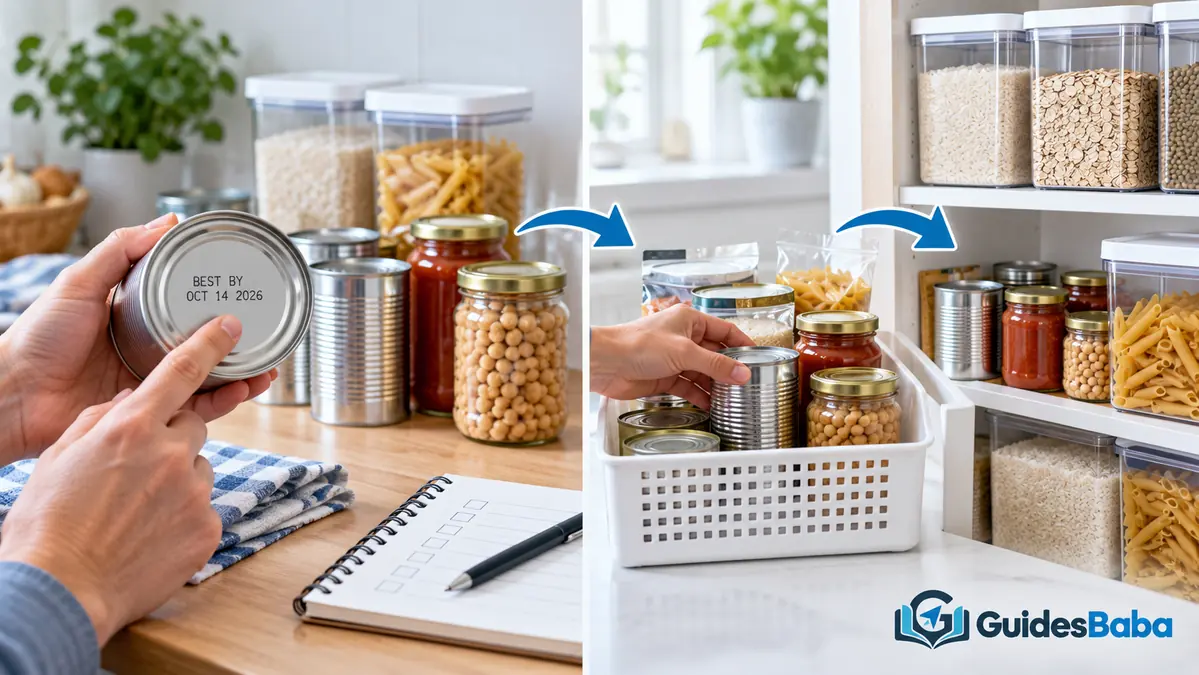
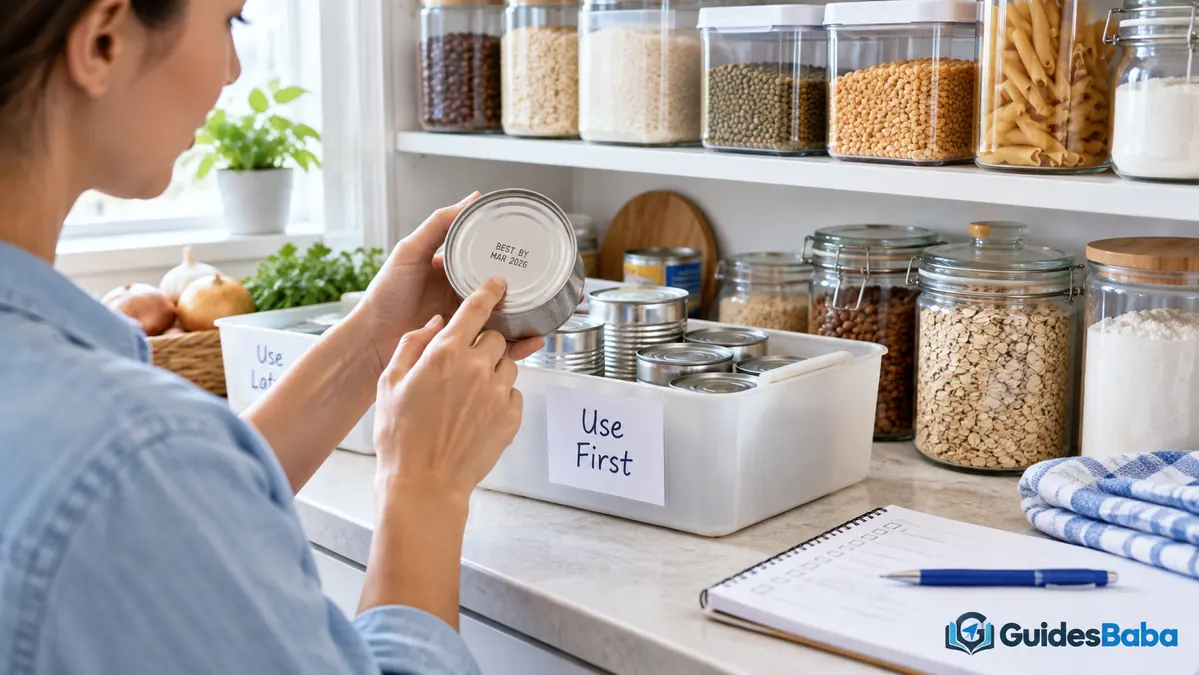
Most pantry dates are about quality. Best-before guides peak flavour and texture. It rarely marks a safety cliff.
Dry goods often outlast their printed date. Tinned foods usually do the same. Use-by dates are rarer on staples. They appear on more perishable items. Read each label with care.
Do not bin good food on the date alone. Check smell, look, and texture first. When unsure, follow official guidance. Your senses add useful information. A date and a sniff together decide. That combination rarely lets you down.
Rotating your pantry stock
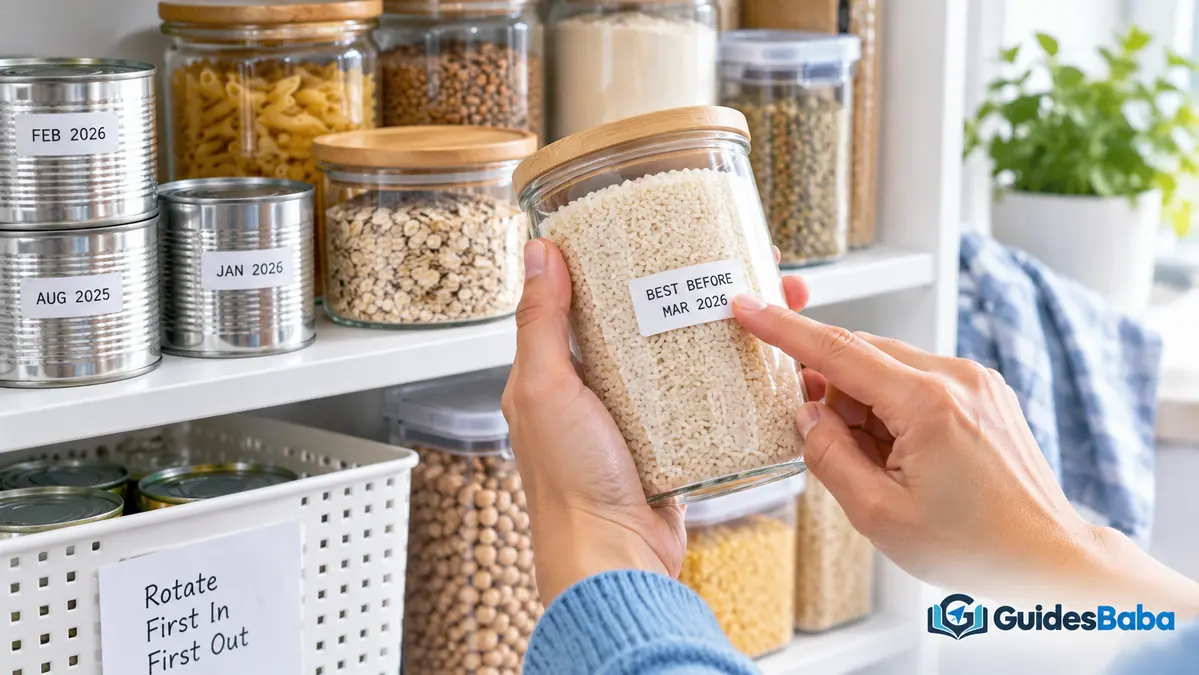
A rotating pantry wastes far less food. You use older items before newer ones. Nothing hides at the back for years.
Bring older stock to the front. Place new shopping behind it. Label jars with the date you opened them. Plan meals around what needs using. A tidy weekly meal plan helps here.
Check your pantry every so often. Note what is running low. Toss anything clearly past its best. Small habits keep the pantry fresh.
Signs pantry food has gone bad
Even dry foods can spoil eventually. Your senses give the clearest warning. Learn the common signs quickly.
Musty or rancid smells warn you first. Mould, clumping, or insects matter too. A bulging tin signals real danger. Off colours suggest you should stop. Trust these signals every time.
Rancid oil tastes sharp and bitter. Stale flour smells flat and dull. When in doubt, throw it out. Safety beats saving a little.
Common pantry storage mistakes
One common mistake is storing food near heat. A warm cupboard shortens every shelf life. Cooler spots serve you better.
Another mistake is leaving packets open. Air and damp then creep inside. Some forget to seal flour and nuts. Others ignore dates entirely. Small slips waste good food.
People also overbuy and then forget. Food ages at the back, unseen. Buy what you will use. Rotation prevents most of this waste.
Building a lasting pantry
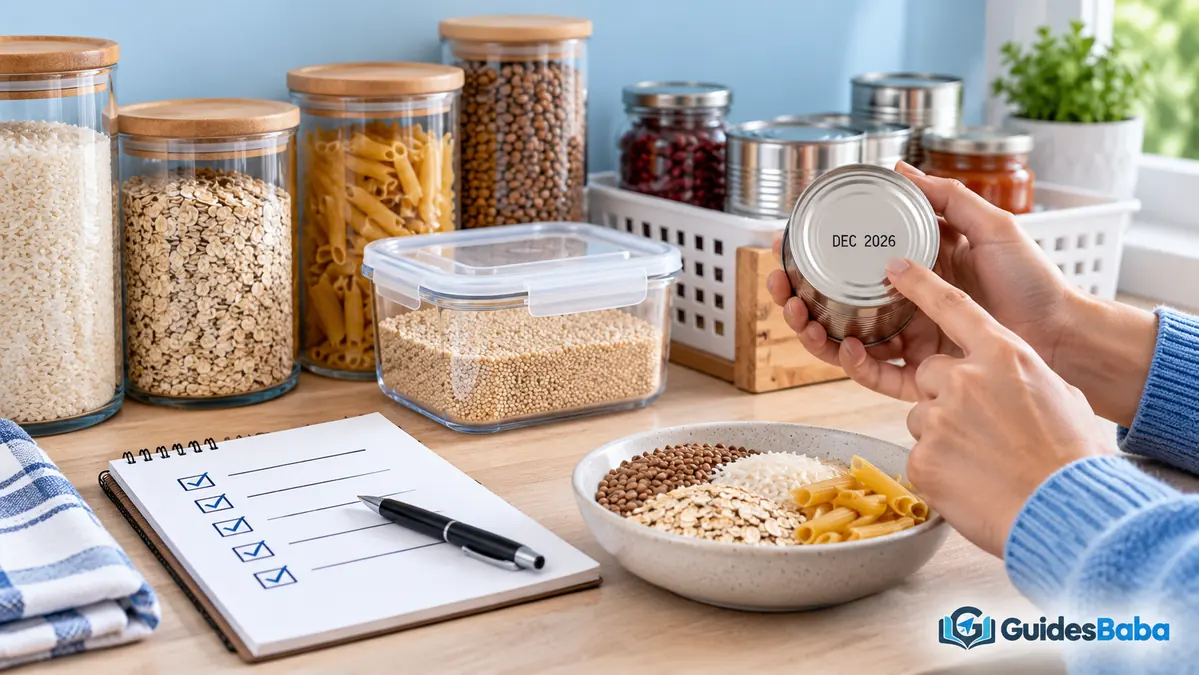
A lasting pantry starts with smart choices. Choose staples that store well. Buy amounts you will actually use.
Stock rice, pasta, tinned goods, and pulses. Add oils, spices, and baking basics. Keep them sealed, cool, and dark. Label and rotate as you go. A good pantry rewards a little care.
Balance long-life staples with fresh foods. Plan meals around both together. This keeps eating varied and cheap. A steady pantry supports steady cooking.
Pantry foods and a balanced diet
A well-stocked pantry supports good eating. It puts wholesome meals within reach. Healthy choices become the easy ones.
Combine pantry staples with fresh produce. Beans, grains, and tinned fish add nutrition. A balanced diet grows from this base. Long-life foods cut waste and cost. Both your health and budget gain.
Treat the pantry as a quiet ally. It keeps good food always ready. A little care extends every shelf life. Then cooking feels simple and calm.
Frequently asked questions
How long do pantry foods usually last?
It ranges from months to several years. Dry, sealed staples last the longest.
Do tinned foods really last for years?
Yes, undamaged tins keep for a long time. Never use a bulging or leaking tin.
How long does dried pasta keep?
Dry pasta lasts many months when sealed. Store it cool and away from damp.
Does flour go off?
Yes, flour turns stale over time. Wholemeal flour spoils faster than white.
Why do nuts spoil so quickly?
Their healthy fats can turn rancid. Cool storage helps them last longer.
Do spices expire?
Spices rarely become unsafe quickly. They mostly lose flavour over time.
How should I store pantry foods?
Keep them cool, dry, and sealed. Store them away from heat and light.
Are best-before dates about safety?
Usually they track quality, not safety. Many foods outlast the printed date.
Can I freeze pantry foods?
Yes, nuts and flour keep longer when frozen. Seal them well before freezing.
When should I throw pantry food out?
Bin anything with mould, pests, or off smells. Discard bulging or damaged tins too.
The bottom line
So how long do pantry foods usually last? Dry, sealed staples often last years. Tinned goods and rice lead the way. Oils, flour, and nuts fade sooner. Cool, dry storage stretches every shelf life.
Your pantry rewards a little attention. Keep foods sealed, cool, and dark. Rotate stock and trust your senses. Then good food is always ready.
For more background, read this overview of the pantry and its history. You can also explore how shelf life works. Use trusted sources to guide your habits.
This is not medical advice. See a professional for your personal needs. Store your pantry staples with steady care. Then enjoy them at their best.