
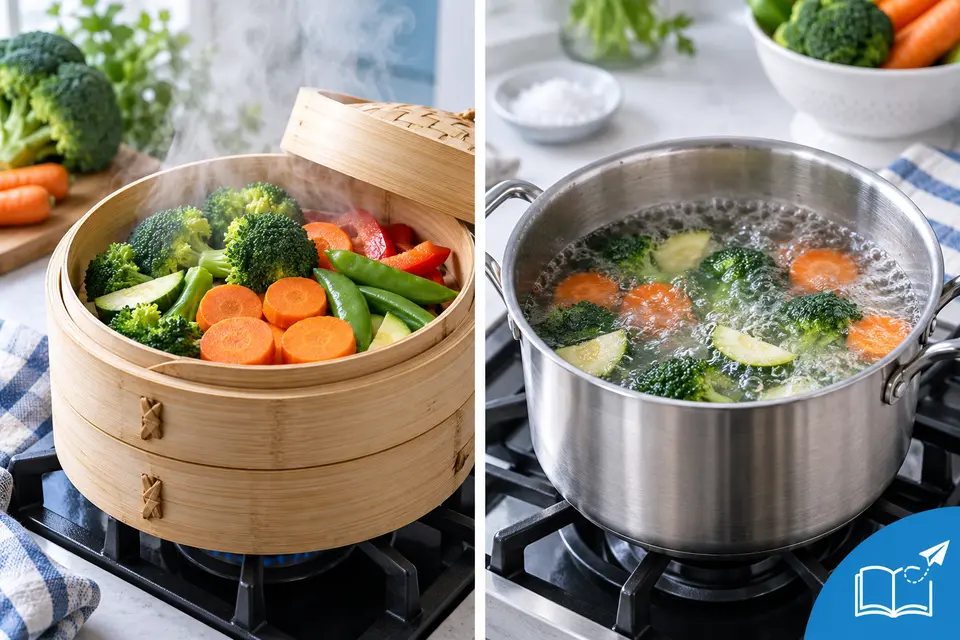
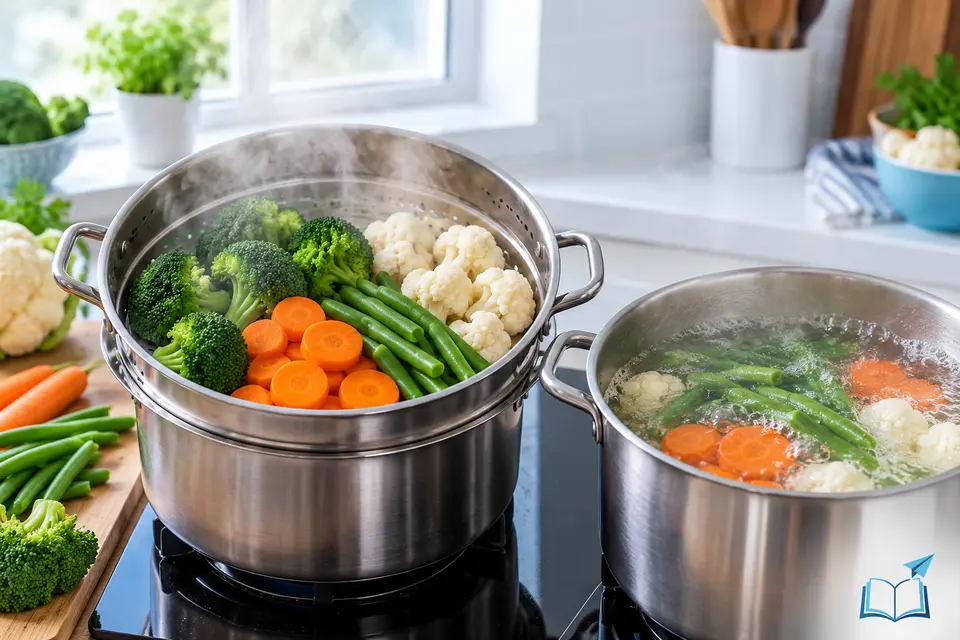
Two pots sit on the stove tonight. One steams, the other boils. So is steaming healthier than boiling? The answer leans one clear way.
Rather than picking a side blindly, look closer. Both methods use gentle, moist heat. Yet they treat nutrients differently. One keeps more goodness on the plate. The devil is in the detail.
Here is the honest answer. Steaming is usually healthier for most vegetables. Food never sits in the water. Fewer nutrients dissolve and drain away. Boiling still suits certain foods well. This is not medical advice. See a professional.
This guide covers steaming and boiling in plain terms. You will learn how each method works. We will compare them side by side. Many tips link back to simple daily habits.
So is steaming healthier than boiling?
The honest answer favours steaming for most produce. Steam cooks food above the water. Vitamins stay inside the food. Boiling lets some slip away.
Think of nutrients like sugar in tea. Stir it into hot water and it dissolves. Boiling does the same to vitamins. Steaming keeps that water apart. Less contact means less loss.
Does this mean boiling is bad? Not at all, and that matters. Some foods must be boiled. Pasta and grains need the water. Match the method to the food. That simple rule guides every dish.
Why the cooking method matters
The method changes far more than heat. It shapes texture, flavour, and nutrients. Small choices carry real weight.
Water pulls certain vitamins out of food. Long cooking makes the loss worse. You then pour that goodness away. Gentle steam avoids most of this. See how cooking affects nutrients for detail.
Method also decides your final texture. Boiled veg can turn soft and pale. Steamed veg stays bright and firm. The eye enjoys the difference too. Your technique quietly guides each meal. A better method rewards you daily. Your kitchen holds real power here.
Did you know?
Boiling can wash some vitamins into the water. Much of that goodness ends up down the sink.
How steaming works
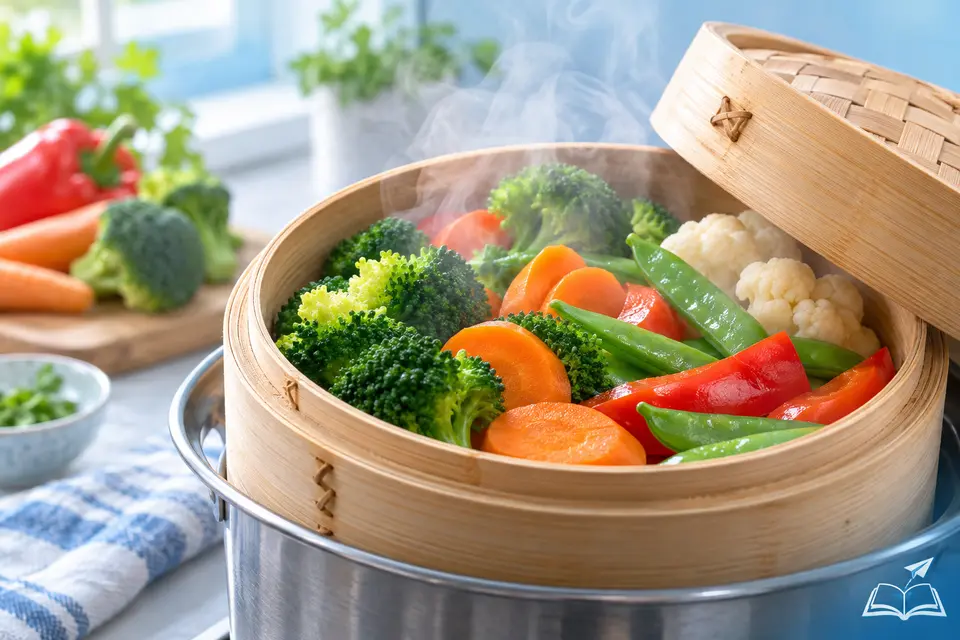
Steaming cooks food with hot vapour. The food sits above the water. Only the steam touches it.
Water boils in the pot below. Rising steam gently heats the food. Nutrients have no water to escape into. This keeps most vitamins in place. A simple basket makes it easy.
The heat stays even and kind. Food cooks without harsh contact. You add no oil at all. Little can go badly wrong. Beginners find steaming very forgiving. Clean-up stays quick and simple too.
How boiling works
Boiling submerges food fully in water. The bubbling liquid heats it through. Cooking happens fast and evenly.
The direct contact cooks food quickly. Yet the water pulls nutrients out. Vitamins dissolve into the surrounding liquid. The longer it boils, the more escapes. That liquid often gets thrown away. The goodness leaves with the water.
Boiling still has clear strengths. It suits pasta, rice, and eggs. Their key nutrients survive the water. The method is fast and familiar. Keep the cooking time short. A short boil limits nutrient loss.
What happens to vitamins
Some vitamins dissolve easily in water. Vitamin C and B vitamins do this. They are the ones most at risk. Heat and water both threaten them.
Boiling gives these vitamins somewhere to go. They leave the food and enter the water. Steaming removes that easy exit. The vitamins stay locked inside. Less water contact means less loss.
Other nutrients cope better with heat. Fat-soluble vitamins resist water loss. Minerals also tend to hold on. Still, gentle cooking helps them all. Shorter cooking protects the delicate ones. A quick method keeps more value. Speed protects the delicate nutrients most.
When boiling still makes sense
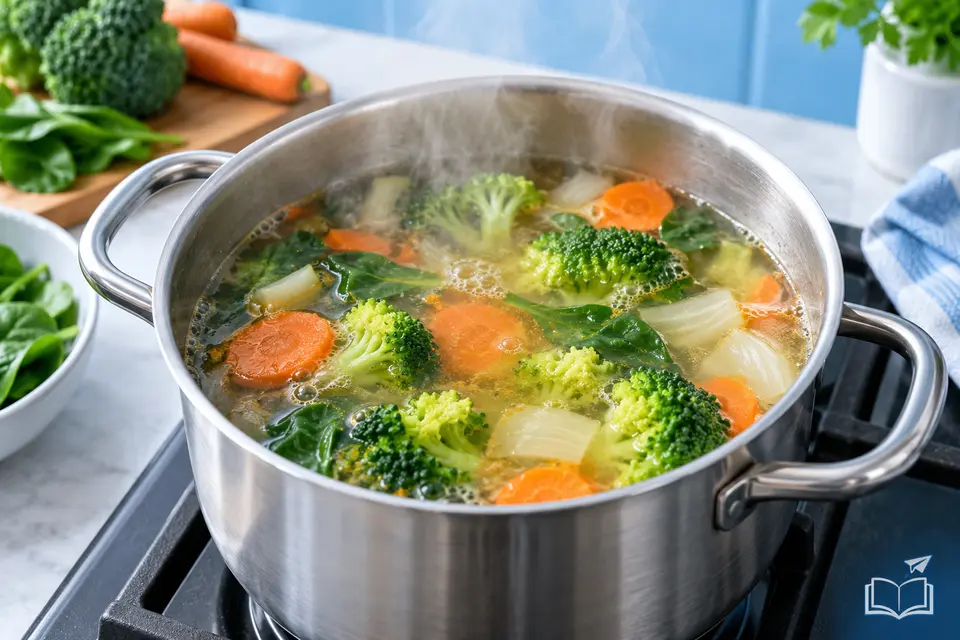
Boiling is not the villain here. Some foods truly need it. The water is the whole point.
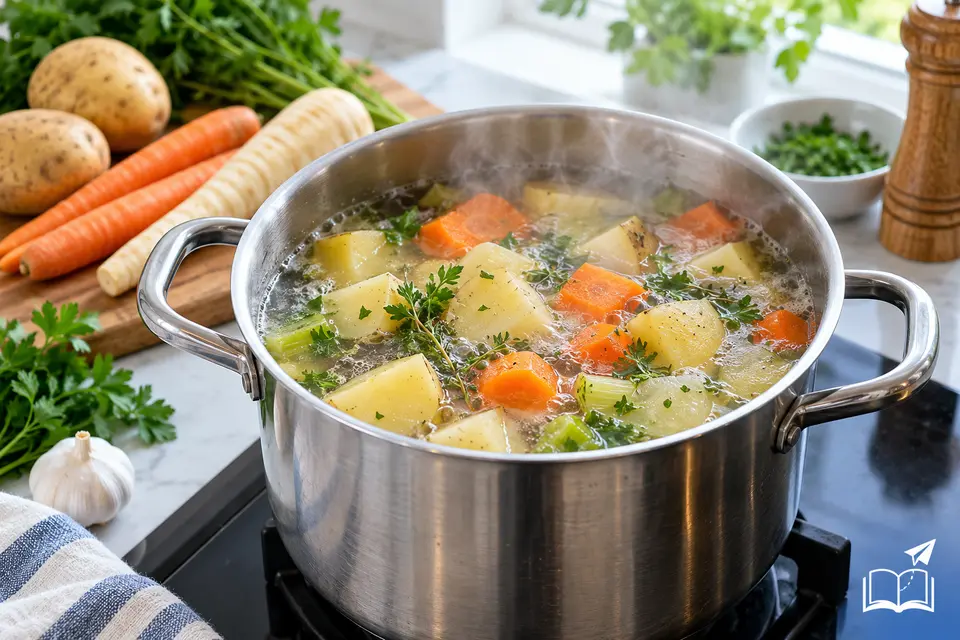
Pasta and grains soak up water. They cannot cook by steam alone. Eggs boil neatly in their shells. Dried beans need a long simmer. These foods suit the pot.
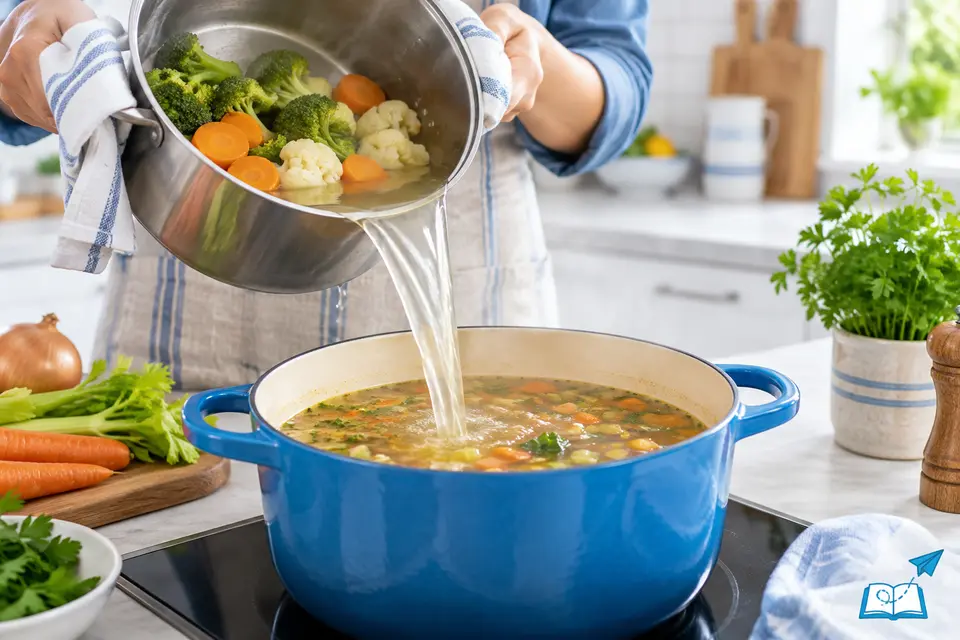
You can also save the boiling water. Use it as a base for soup. The lost nutrients return to your meal. That simple trick reclaims goodness. Waste less and gain more flavour. One small habit reclaims real goodness.
Steaming for vegetables
Vegetables shine when you steam them. They keep colour, crunch, and vitamins. The result looks fresh and lively.
Broccoli, beans, and carrots steam well. They stay firm and brightly coloured. Cook only until just tender. Overcooking still dulls the result. Pick from the best vegetables to eat often.
Cut pieces to a similar size. This helps them cook at once. Do not crowd the steamer basket. Even spacing lets steam flow. A little care keeps veg vibrant. Your plate looks fresher this way.

Steaming versus boiling compared
People often want a clear side view. The honest contrast is steaming versus boiling. Each has its own strengths.
| Steaming | Boiling |
|---|---|
| Food stays above the water | Food sits inside the water |
| Keeps most water-soluble vitamins | Some vitamins leach into liquid |
| Keeps colour and crunch | Can turn food soft and pale |
| Best for most vegetables | Best for pasta, grains, and eggs |
You do not need to boil everything. Steam your vegetables as a default. Boil the foods that truly need it. That balance uses each method wisely. Each pot earns its place then.
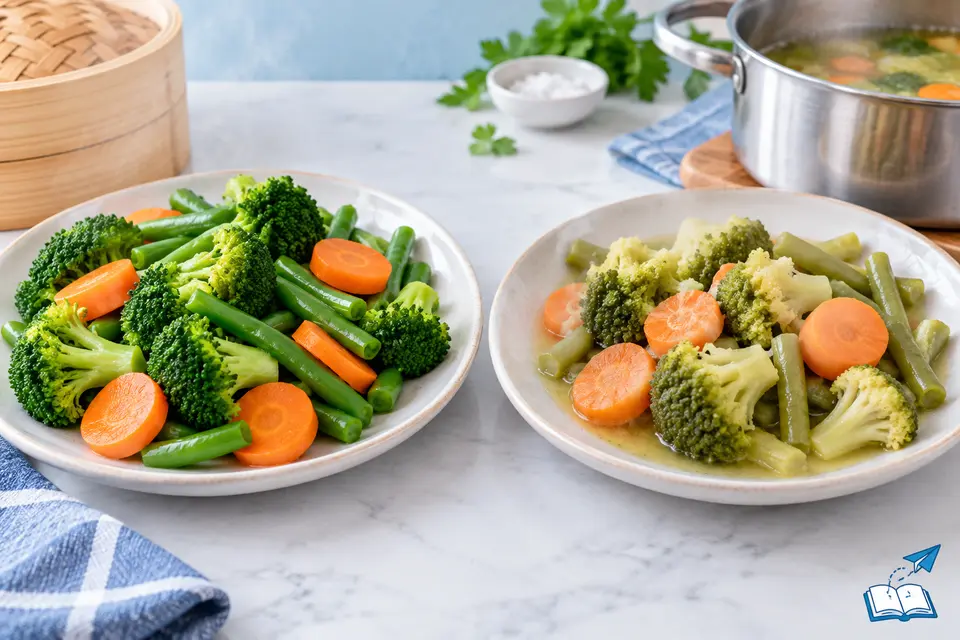
Texture, colour, and flavour
Health is not the only difference. Texture and colour change too. Your eyes notice the result.
Steamed vegetables stay bright and firm. They hold a pleasing gentle bite. Boiled ones can turn mushy fast. Their colour often fades away. Freshness shows on the plate.
Flavour follows a similar path. Steaming keeps natural taste concentrated. Boiling can wash flavour into the water. A quick steam keeps food lively. Good texture makes healthy eating easier. The eyes eat before the mouth.
Time and convenience
Both methods are simple to run. Neither needs much skill at all. Convenience often decides the winner.
Boiling can heat food a touch faster. Steaming takes just a little longer. The gap is usually small though. A steamer basket sets up quickly. Either fits a busy evening.
Set a timer for both methods. Walk away and let heat work. Check near the end for doneness. Simple timing prevents overcooking. A gentle approach saves the meal. Patience beats rushing every single time.
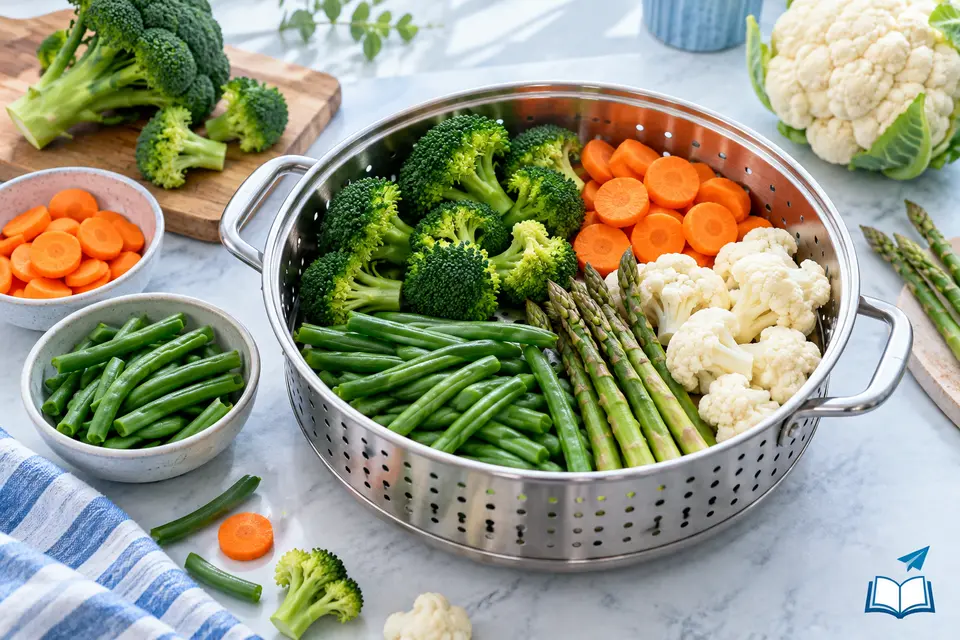
Energy and equipment
You need very little gear here. A pot and a basket suffice. Fancy tools are not required.
A cheap steamer insert works fine. A colander over a pot also does. Boiling needs only a plain saucepan. Both use everyday kitchen items. Simple tools keep costs low.
Use a lid to trap the heat. This speeds cooking and saves energy. Only boil the water you need. Small habits trim your bills. Efficient cooking helps the planet too. Small savings quietly add up.
Steaming leafy greens
Leafy greens cook in mere moments. They wilt fast under gentle steam. A light touch works best.
Spinach and kale need little time. Steam them until just bright and soft. Boiling can drain their vitamins quickly. A short steam keeps them nutrient rich. Explore nutrient dense leafy greens for ideas.
Watch greens closely as they cook. They pass from perfect to limp fast. Pull them off at the right moment. A splash of lemon lifts them. Quick cooking keeps greens at their best. Watch the clock and stay close.
Foods that suit boiling
Some foods clearly belong in water. Boiling is the right tool then. Fighting that wastes effort.
Potatoes for mashing need a boil. Pasta and rice absorb the water. Eggs cook neatly in the shell. Dried pulses soften with long simmering. These foods reward the pot.
Keep the boiling time sensible even so. Overcooked potatoes turn watery and dull. Drain them promptly when just tender. Save the water where you can. Smart boiling still limits nutrient loss. The pot can be kind too.
Common myths
One myth says boiling ruins all nutrients. It only affects water-soluble ones. Many nutrients survive the pot fine.
Another myth claims steaming is slow and fussy. A basic basket makes it quick. The setup takes barely a minute. Steaming is easier than it sounds. Fear of fuss holds people back.
Some think steamed food must taste bland. Herbs, lemon, and spices fix that. A little seasoning wakes food up. Healthy cooking can taste wonderful. Ditch the bland-food myth for good. Flavour and health share a plate.
Common mistakes
One common mistake is overcooking vegetables. Long heat drains colour and vitamins. Shorter cooking usually serves you better.
Another mistake is boiling then binning the water. That liquid holds real goodness. Save it for soups or sauces. Try smart healthy ingredient swaps where they help. Small changes protect real value.
Some people crowd the steamer basket. Then the steam cannot flow well. Food cooks slowly and unevenly. Give pieces a little room. Careful cooking pays you back daily. Little habits protect the whole meal.
Who might need tailored advice
General cooking tips suit many healthy adults. Still, some people have special needs. Certain conditions change the picture.
Some diets limit salt, fat, or potassium. Cooking choices then need extra care. Your doctor knows your situation best. Allergies also shape your safe options.
This is not medical advice. See a professional for your personal needs. Use these cooking ideas as a friendly guide. A short chat can prevent bigger problems.
Steaming, boiling, and a balanced diet
Both methods can support balanced eating. Steaming keeps vegetables light and rich. Boiling handles your grains and pulses.
Steam your greens and boil your pasta. Pair each with lean protein. Add whole grains for lasting energy. No single meal carries the week. Variety across days matters most.
Treat your methods as a gentle framework. Adjust them as your tastes shift. Pair produce with protein and grains. This mix keeps meals rounded. Simple methods do the heavy lifting. Good habits compound quietly over weeks.
Frequently asked questions
Is steaming healthier than boiling?
Usually yes for most vegetables, since food avoids the water. Fewer nutrients dissolve and drain away.
Why does boiling lose nutrients?
Water-soluble vitamins dissolve into the boiling water. That liquid often gets poured down the sink.
Which vitamins are lost in boiling?
Vitamin C and B vitamins are most at risk. They dissolve easily into hot water.
When should I boil instead of steam?
Boil pasta, rice, eggs, and dried beans. These foods need the water to cook.
Does steaming keep food more colourful?
Yes, steamed vegetables stay brighter and firmer. Boiling can turn them soft and pale.
Can I save boiling water?
Yes, use it as a soup or sauce base. This reclaims the lost nutrients.
Is steaming slower than boiling?
Only slightly, in most cases. The small time gap rarely matters much.
Do I need a special steamer?
No, a basket or colander over a pot works. Simple tools do the job.
Does steaming need any oil?
No, steaming adds no oil at all. That keeps the meal lighter.
How do I avoid overcooking?
Cook only until just tender. Set a timer and check near the end.
The bottom line
So is steaming healthier than boiling? For most vegetables, steaming usually wins. Food stays above the water. Fewer vitamins dissolve and drain away. Boiling still suits pasta, grains, and eggs.
Your method quietly shapes each meal. It decides nutrients, colour, and flavour. Steam your veg as a default. Small kitchen habits truly add up over time.
For more background, read this overview of steaming as a technique. You can also explore the basics of boiling water. Use trusted sources to guide your routine.
This is not medical advice. See a professional for your personal needs. Steam one vegetable tonight. Then build slowly from there. Your future self will thank you.