


Sweetness sells, but sugar carries a cost for many people. That is where a whole category of alternatives steps in. So what are sugar substitutes, and how do they work? The answer is sweeter than you might expect.
Rather than chasing one perfect sweetener, look at the whole family. Some come from plants, and some from labs. A few add calories, while many add almost none. Your tongue often cannot tell them apart. They shape how you handle added sugars each day.
Here is the honest answer. Sugar substitutes are ingredients that sweeten food without regular sugar. Some are artificial, and some are natural. Many add few or no calories. They aim to cut sugar while keeping taste. This is not medical advice. See a professional.
This guide covers sugar substitutes in plain language. You will learn what they are and how they differ. We will compare natural and artificial options fairly. Many tips link back to a simple, balanced plate.
So what are sugar substitutes?
The honest answer starts with sweetness. Sugar substitutes are ingredients used in place of sugar. They sweeten food and drink with less or no sugar. Many carry far fewer calories.
Think of them as stand-ins for a lead actor. Each one plays the same basic role. They deliver sweetness on the tongue. Some do it with almost no energy.
Do you need a chemistry degree to use them? Not at all, and that is reassuring. They appear in many everyday products. Diet drinks and sugar-free gum are common examples. Your kitchen may already hold a few.
Natural versus artificial sweeteners
Sugar substitutes split into two broad camps. Some come from natural sources like plants. Others are made through careful chemistry.
Stevia and monk fruit grow from plants. Aspartame and sucralose come from labs. Both aim to sweeten with little energy. The source does not always predict the taste.
Do not assume natural always beats artificial here. Both types face strict safety review. Each one suits different foods and recipes. A blend often gives the best result. Learn more about artificial sweeteners in detail.
Did you know?
Some sweeteners taste hundreds of times sweeter than sugar. A tiny amount can sweeten a whole drink.
High-intensity sweeteners explained
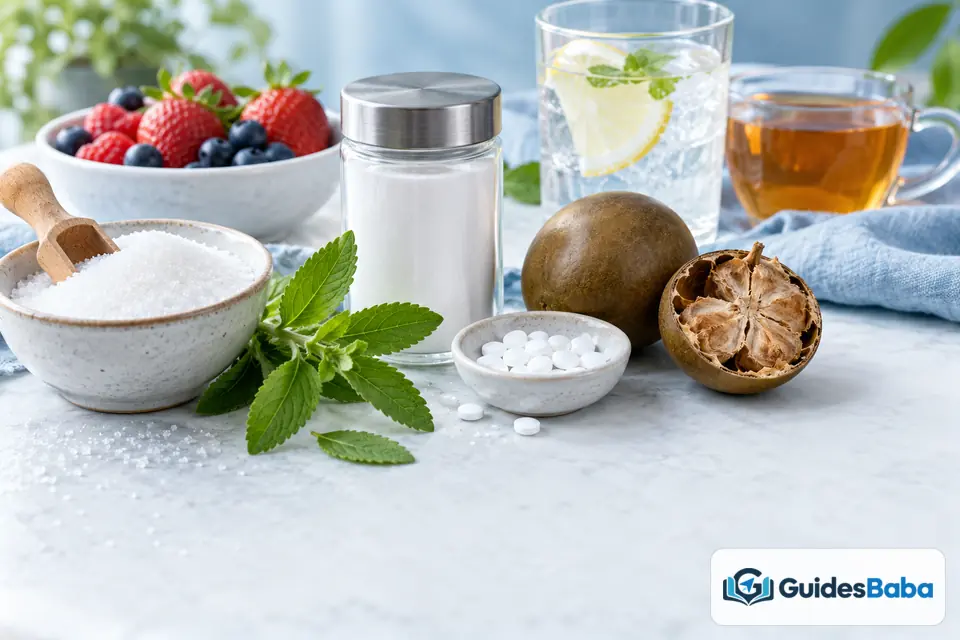
High-intensity sweeteners pack a big punch. They taste far sweeter than table sugar. So you need only a tiny amount.
This group includes aspartame and sucralose. Saccharin and stevia extracts belong here too. They add little or no energy to food. That makes them popular in diet products.
You will find them in many drinks and snacks. Sugar-free sodas rely on them heavily. They also appear in tabletop sweetener packets. A pinch replaces a spoon of sugar. Read labels to spot them by name. Manufacturers value how little they need to add.
Sugar alcohols and how they differ
Sugar alcohols form another useful group. Their names often end in the letters ol. Xylitol and erythritol are common examples.
These sweeteners carry some calories, but fewer than sugar. They do not spike blood sugar as sharply. Many appear in sugar-free gum and mints. They also add bulk to baked goods.
A large amount may upset some stomachs. Bloating and gas can follow big servings. Start small and see how you feel. Moderation keeps them comfortable to use. They still help you trim refined carbohydrates.
Plant-based sweeteners like stevia and monk fruit
Plant-based sweeteners have grown very popular. Stevia comes from a South American leaf. Monk fruit comes from a small green melon.
Both deliver sweetness with almost no calories. They do not raise blood sugar much. Many people like their natural label. Some notice a slight aftertaste.
Try them in tea, coffee, and yogurt. Use a light hand at first. A little goes a very long way. Blend them with other sweeteners if needed. Taste and adjust to suit your palate.
Why people choose sugar substitutes

People pick sugar substitutes for many reasons. Cutting calories is a common goal. Managing blood sugar is another big one.
Some want to protect their teeth. Sugar feeds the bacteria behind decay. Many substitutes do not cause the same harm. Dentists often favour sugar-free gum.
Others simply want to enjoy sweet treats. They keep flavour while trimming sugar. That balance appeals to many households. Small swaps can add up over time. A sweet coffee need not wreck your day.

Sugar substitutes and blood sugar
Many substitutes have little effect on blood sugar. They pass through with minimal impact. That trait draws a lot of interest.
High-intensity sweeteners add almost no glucose. Sugar alcohols raise it only gently. This can help people watching their intake. Still, whole meals matter more than one ingredient.
Never treat sweeteners as a cure. They support a wider healthy pattern. Balance your plate across many foods. A professional can guide personal choices. Food works best as a whole package.
Are sugar substitutes safe?
Safety is the question people ask most. Approved sweeteners pass strict review first. Agencies set safe daily intake levels.
These limits build in a large safety margin. Normal use stays well below them. The science on common sweeteners is broad. Most healthy adults tolerate them well.
Some people still prefer to limit them. Personal choice plays a real role here. Listen to your own body and doctor. Moderation remains a sensible default. This is not medical advice. See a professional.
Baking and cooking with substitutes

Baking with substitutes takes some practice. Sugar does more than add sweetness. It also adds bulk, colour, and moisture.
Some sweeteners cannot copy every job. Cakes may turn out drier or paler. Blends made for baking help a lot. They mimic sugar more closely.
Start with recipes built for substitutes. Follow the package guidance closely. Expect a little trial and error. Small test batches save waste. Patience brings tastier results over time.
Natural sweeteners versus artificial sweeteners
People often ask which camp wins. The honest comparison weighs several traits. Each type brings its own strengths.
| Natural sweeteners | Artificial sweeteners |
|---|---|
| Come from plants like stevia | Made through careful chemistry |
| Often carry a natural label | Backed by long safety testing |
| Can leave a mild aftertaste | Very consistent and predictable |
| Great for tea and yogurt | Great for diet drinks and snacks |
Neither camp is simply better here. Both help you cut back on sugar. Choose the taste that suits you. Real balance still comes from whole foods.
Where sugar substitutes show up

Sugar substitutes hide in many everyday products. Diet sodas are the obvious example. Sugar-free gum and mints use them too.
You will also spot them in flavoured water. Protein bars and shakes often include them. Some yogurts and desserts add them as well. Tabletop packets let you sweeten your own drinks.
Reading the label reveals the real story. Look for names like sucralose or stevia. Compare products to find your best fit. Small label checks build smarter habits. A quick scan tells you a lot. The ingredient list rarely hides the truth.
Sugar substitutes and dental health
Sugar feeds the bacteria that cause decay. Those bacteria make acid that harms enamel. Many substitutes do not feed them the same way.
This is why dentists often like sugar-free gum. Xylitol gum is a common favourite. It can support a healthier mouth. Chewing also helps clean your teeth.
Still, sweeteners are not a magic shield. Brushing and flossing remain essential. Regular checkups matter just as much. Good habits protect your smile best. Pair smart swaps with steady care. A dry mouth also needs your attention.
Easy swaps to try at home
Adding substitutes is simpler than it sounds. Sweeten tea or coffee with stevia. Stir monk fruit into plain yogurt.
Swap a sugary soda for a diet version. Bake with a sweetener blend built for it. Each small step trims your sugar total.
Change one small habit at a time. A slow build keeps meals enjoyable. New routines stick when they feel easy. Keep a favourite sweetener within reach. Your daily habits shape the bigger picture.
Common mistakes with sugar substitutes

One common mistake is using too much. More sweetness does not mean more benefit. A tiny amount usually does the job.
Another mistake is ignoring the rest of a product. A sugar-free snack can still be junk. Check fat, salt, and fibre too. Learn the difference between natural and added sugar.
Some people also expect magic results. Substitutes help, but they are not miracles. A balanced diet still does the heavy lifting. Treat them as one small tool. Habits matter more than any single swap.
Myths about sugar substitutes
One myth says all substitutes are dangerous. Approved options pass careful safety checks. Normal use stays within safe limits.
Another myth claims they always aid weight loss. They can help, but only within a plan. Overall calories and habits still count.
Some believe natural always means safer. Both natural and lab options face review. The label alone does not decide safety. Judge each sweetener on the evidence.
Who might need tailored advice
General guidance suits many healthy adults. Still, some people have special needs. Certain conditions change the picture.
People with diabetes may plan intake carefully. Some have a rare condition affecting aspartame. Pregnancy can raise its own questions.
Your doctor knows your situation best. Ask before making big diet changes. Use these ideas as a friendly guide. A short chat can prevent confusion.
Sugar substitutes in a balanced diet
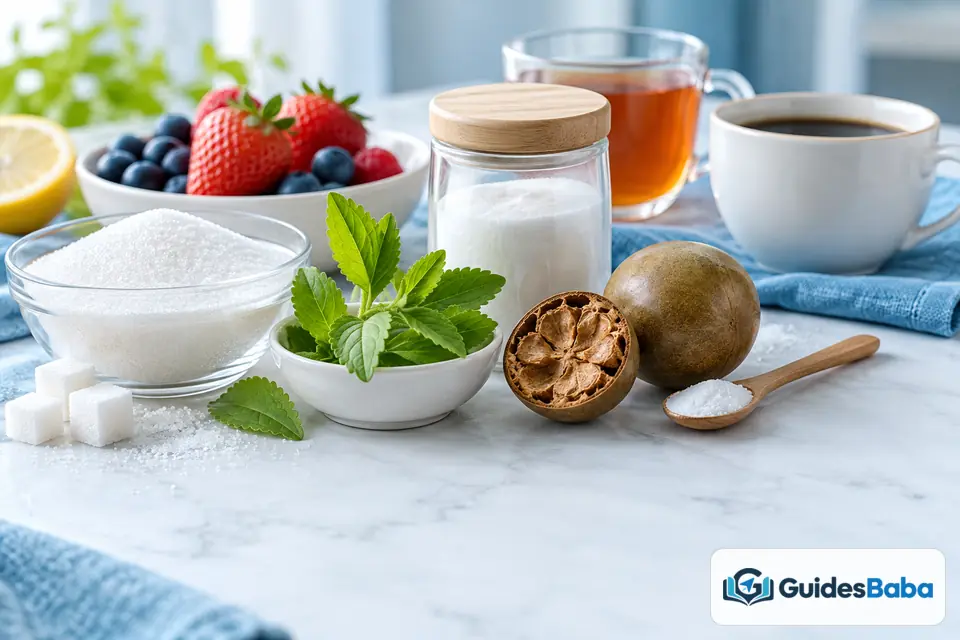
Sugar substitutes fit inside a wider pattern. They join fibre, protein, and healthy fats. Together these build a strong plate.
No single ingredient carries your whole diet. Balance across many foods matters most. Explore the foods to eat every day for ideas. Variety remains the guiding rule.
Treat sweeteners as a helpful swap. Pair them with whole, filling foods. This mix keeps your meals rounded. A simple plate does the heavy lifting. Good habits compound quietly across the weeks.
Frequently asked questions
What are sugar substitutes in simple terms?
They sweeten food with less or no sugar. Many add few or no calories.
Are sugar substitutes bad for you?
Approved options are safe in normal amounts. Very high intake is not advised.
Do sugar substitutes raise blood sugar?
Most have little effect on blood sugar. Sugar alcohols raise it only gently.
Are natural sweeteners better than artificial ones?
Neither is simply better than the other. Choose the taste that suits you.
Do sugar substitutes help weight loss?
They can help within a balanced plan. Overall calories and habits still count.
What is stevia made from?
Stevia comes from a sweet plant leaf. It adds almost no calories.
Can I bake with sugar substitutes?
Yes, but results can differ from sugar. Use blends made for baking.
Do sugar alcohols upset the stomach?
Large amounts can cause bloating or gas. Start small to test your tolerance.
Are sugar substitutes safe in pregnancy?
Many approved options are considered fine. Still, ask your doctor to be sure.
Which sweetener tastes closest to sugar?
Many people like erythritol and monk fruit. Taste varies from person to person.
The bottom line
So what are sugar substitutes? They are ingredients that sweeten with less sugar. Some are natural, and some are artificial. Many add few or no calories. They help you cut sugar while keeping taste.
Approved substitutes are safe in normal amounts. Reach for whole foods first, then sweeten wisely. Variety keeps every meal interesting. Small daily habits truly add up over time.
For more background, read this overview of sugar substitutes. You can also explore the sugar alcohol group in detail. Use trusted sources to guide your choices.
This is not medical advice. See a professional for your personal needs. Swap one sugary drink today. Then build slowly from there. Your habits will thank you.