

Gut health is everywhere in the news now. So how does the gut microbiome relate to inflammation? Is the gut a quiet bystander, or a key player? In general terms, the two are closely linked. The gut helps shape the body balance.
Rather than promising a simple gut fix, think balance. No single food resets your gut. A varied, fibre rich pattern matters far more. The idea is steady, everyday eating. A professional can tailor the details.
Here is the honest answer. The gut microbiome and inflammation are linked. Gut microbes help train the immune system. A diverse gut supports a calmer balance. Fibre and plants feed these microbes. This link is general, not a cure. A professional guides real, personal care.
This guide covers the topic in general terms. You will learn how the two connect. We frame food kindly and without hype. This is not medical advice. See a professional.
How does the gut microbiome relate to inflammation?
The honest answer is through a close link. Gut microbes help shape immune balance. Diet feeds those microbes daily. Balance sits at the heart.
Think of the gut like a garden, not a switch. It thrives on varied feeding. Does one yoghurt reset the gut? No, the whole pattern matters more. A varied diet supports the balance.
Is the gut the whole story? Not at all, many factors matter. Genes, sleep, and stress play roles. Food supports the gut over time. A professional can guide you.
What the gut microbiome is
The gut holds trillions of microbes. Together they form the microbiome. These microbes do useful work.
They help digest fibre we cannot. They make some helpful compounds. They also interact with the immune system. This community varies from person to person. Diet shapes it over time. Diversity seems to support balance.
You should think of it as a community. Feed it varied, whole foods. Balance beats any single food. Steady habits shape the gut. A professional can guide you.
Did you know?
A large part of your immune system sits near the gut. Gut microbes help train that system over time.
The gut barrier and inflammation
The gut has a protective lining. This lining acts as a barrier. It helps control what passes through. A healthy barrier supports balance.
A well fed gut supports this barrier. Fibre and microbes help maintain it. A strong barrier may calm the balance. This link is general, not a cure. Food supports the barrier quietly. Many habits shape it together.
You should support the gut barrier gently. Feed it fibre and whole foods. Balance beats any single food. Steady habits matter more than speed. A professional can guide you.
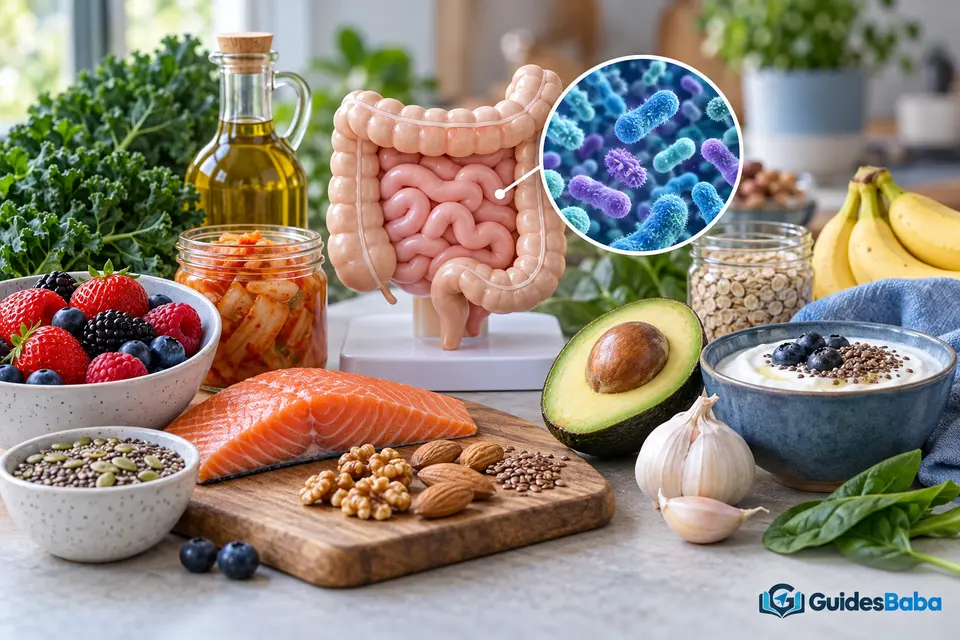
Fibre feeds the microbes
Fibre is the main food for microbes. Plants supply most of the fibre. The microbes ferment it usefully. Variety feeds a variety of microbes.
Beans and vegetables bring fibre. Fruit, oats, and seeds add more. Discover foods that support healthy gut bacteria here. A diverse plate supports a diverse gut. Fibre supports the whole pattern quietly.
You should eat plenty of fibre. Add it slowly to stay comfortable. Variety supports a healthy gut. Beans and oats are simple choices. A professional can advise you.
Prebiotics and the gut
Some fibres act as prebiotics. These feed the helpful gut microbes. They come from everyday plant foods. Variety helps you gather them.
Onions, garlic, and leeks contain them. Oats, bananas, and beans help too. Learn more about prebiotics and their food sources. Whole foods deliver them naturally. A varied plate feeds the gut well.
You should include prebiotic foods often. Mix onions, oats, and beans. Variety supports a healthy gut. Whole foods cover most needs. A professional can advise you.
Probiotics and fermented foods
Probiotics are live helpful microbes. Fermented foods can supply them. They add to the gut community. Effects vary from person to person.
Yoghurt, kefir, and kimchi contain them. Sauerkraut and miso add more. Read about probiotics and their food sources. The effect is general, not a cure. A varied diet supports the gut.
You should try some fermented foods. Add them slowly and gently. Variety supports a healthy gut. Whole foods come first here. A professional can advise you.

Why diversity matters
Diversity is a key theme here. A varied gut seems more resilient. Different plants feed different microbes. Range matters as much as amount.
Aim for many plant types weekly. Mix vegetables, fruit, beans, and grains. This range supports a diverse gut. A diverse gut may support balance. The link is general and gentle.
You should eat many plant types. Count colours across the week. Variety supports a healthy gut. Small swaps widen your range. A professional can advise you.

Short-chain fatty acids
Gut microbes make helpful compounds. Short-chain fatty acids are one group. They form when microbes ferment fibre. These compounds support the gut lining.
Fibre rich foods help produce them. Beans, oats, and vegetables feed this. These compounds may support a calmer balance. The effect is general, not a cure. A varied plate supports the process.
You should feed your microbes fibre. Eat beans, oats, and vegetables often. Variety supports a healthy gut. Whole foods do most of the work. A professional can advise you.
Foods that support healthy gut bacteria
Many everyday foods support the gut. Plants and fibre lead the way. Fermented foods add variety. Balance guides the choices.
Vegetables, fruit, beans, and whole grains help. Nuts, seeds, and olive oil add more. Fermented foods bring live microbes. A colourful plate supports the gut. Variety keeps the pattern interesting.
You should build meals around plants. Add fermented foods now and then. Variety supports a healthy gut. Small habits build the balance. A professional can advise you.
Foods that may disrupt balance
Some patterns may unsettle the gut. Heavily processed foods sit lower here. A low-fibre diet offers little food. Balance guides the choices.
Sugary drinks and refined snacks add little fibre. See foods that promote inflammation here. This is about less, not never. Occasional treats still fit a balanced pattern. Fibre rich foods keep the gut fed.
You should limit heavily processed foods. Keep fibre rich foods central. Balance beats strict bans. Cook at home a little more often. A professional can advise you.
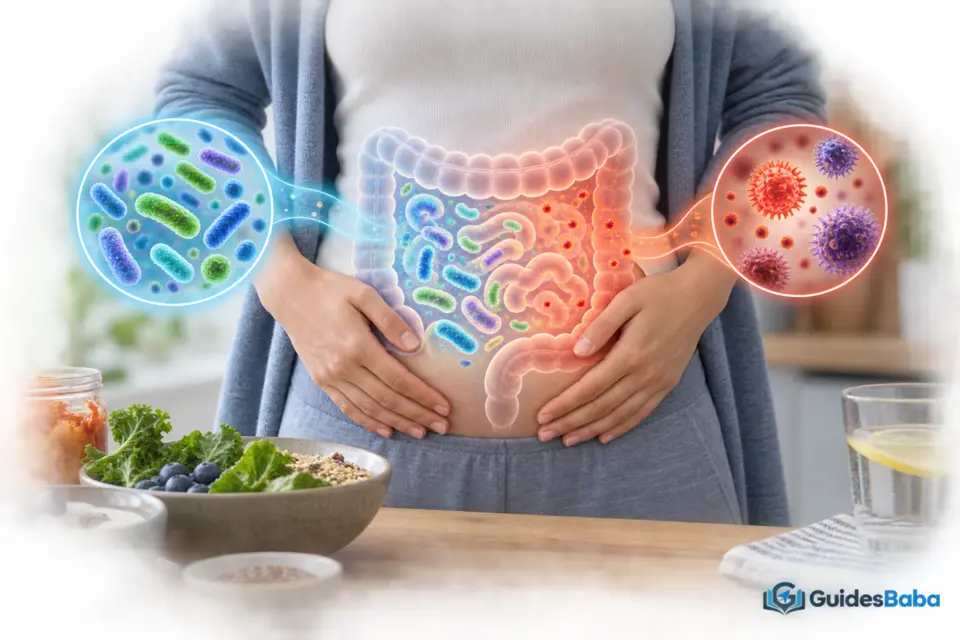
Fibre-rich pattern versus low-fibre pattern
People often compare two broad patterns. The clear comparison is a fibre-rich versus a low-fibre pattern. Each shapes the gut differently.
| Fibre-rich pattern | Low-fibre pattern |
|---|---|
| Feeds many gut microbes. | Feeds fewer microbes. |
| Centres plants and whole grains. | Leans on processed foods. |
| Supports gut diversity. | May lower diversity. |
| Rich in plant variety. | Lower in fresh plants. |
The fibre-rich pattern feeds the gut well. The low-fibre pattern feeds it less. Small swaps move you across. You do not need a total overhaul. A professional can help you shift.
The anti-inflammatory diet link
This topic overlaps with a famous pattern. The anti-inflammatory pattern shares these foods. Both centre plants and fibre. The overlap is wide and helpful.
Both favour vegetables, fruit, and whole grains. Read about the anti-inflammatory diet and its foods. A pattern beats any single food. Gut and inflammation share many foods. Steady habits shape the balance over time.
You should think whole patterns here. Feed the gut and the balance together. Steady eating supports both. A professional can guide you.
Stress, sleep, and the gut
Diet is not the only factor. Stress and sleep affect the gut too. The gut and brain talk closely. Whole habits matter here.
Poor sleep may unsettle the balance. Ongoing stress can affect digestion too. Gentle routines support the whole picture. Food works best alongside good habits. Balance ties it together.
You should care for sleep and stress. Pair good food with good rest. Whole habits support the gut. Small changes add up over time. A professional can advise you.
The gut and immune training
The gut and immune system work together. Microbes help train immune responses gently. This training builds over many years. Balance supports the whole process.
A well fed gut supports this training. Fibre and diverse plants help most. The effect is general, not a cure.

Realistic expectations for the gut
The gut responds slowly and gently. It is not a quick fix. Steady habits shape the results. Patience matters more than speed.
The gut shifts over weeks and months. Bold promises usually mislead people. A calm, steady approach works better. Balance beats any harsh rule. Small habits build the pattern over time.
You should set gentle expectations. Give any change real time. Steady habits support the gut. A professional can guide you.
Common mistakes people make
One mistake is chasing costly gut powders. Another is adding fibre too fast. Balance beats any quick fix.
People often expect food to cure conditions. Some take pricey pills without advice. Others cut whole food groups entirely. Steady habits work far better. Your team fills the gaps. Patience supports real, lasting change.
You should avoid chasing quick fixes. Base changes on real advice. Think patterns over single products. A professional can correct myths.
Who should get tailored advice
The gut and inflammation are personal. They depend on your health. They depend on your history too. One plan cannot fit all.
Some conditions involve the gut directly. Medicines can affect it too. Food alone cannot carry it. Your history shapes everything here. Only your team sees it fully. Personal advice always beats general tips.
You should never self-diagnose from articles. Get personal advice before big changes. A professional can guide you safely.
When to seek professional help
General tips suit many people well. Still, every person is unique. Personal advice always matters most. Your wellbeing comes first here.
See a doctor about ongoing gut symptoms. A dietitian can tailor your meals. A specialist can assess conditions. You deserve care and support. Asking for help shows sense.
This is not medical advice. See a professional for your own care. Food supports care but never replaces it. Then follow your trusted team.
Frequently asked questions
How does the gut microbiome relate to inflammation?
Gut microbes help train the immune system. A diverse gut may support a calmer balance.
Can food reset my gut overnight?
No, the gut shifts slowly over time. Steady, varied eating matters more than speed.
What feeds the gut microbes?
Fibre from plants is their main food. Beans, oats, and vegetables feed them well.
Are probiotics the same as prebiotics?
No, probiotics are live helpful microbes. Prebiotics are fibres that feed those microbes.
Do fermented foods help?
They can add helpful microbes to the gut. Effects vary from person to person.
Does fibre lower inflammation?
Fibre feeds microbes that support balance. The link is general and not a cure.
Do I need a gut supplement?
Most people can feed the gut with food. Ask a professional before taking supplements.
Does stress affect the gut?
Yes, stress and sleep affect the gut. Good habits support the whole picture.
Can gut care help everyone?
Needs vary from person to person. A professional can tailor the advice.
When should I see a professional?
See a doctor about ongoing gut symptoms. A dietitian can tailor your meals.
The bottom line
So how does the gut microbiome relate to inflammation? The two are closely linked. Gut microbes help train the immune system. A diverse gut supports a calmer balance. Fibre and plants feed these microbes.
You do not need costly powders. Aim for a varied, fibre rich plate. Feed the gut with whole foods. Lean on a professional throughout.
For general background, read this overview of the gut microbiota. You can also learn about dietary fibre. Trusted sources support professional advice.
This is not medical advice. See a professional for your own care. Food supports care but never replaces it. Then let your trusted team guide you.