


Weaning brings a wave of questions. So when should babies start solid foods? Is there a perfect moment to begin? Every baby follows their own path. The honest answer offers gentle guidance.
Rather than rushing to a fixed date, watch your baby. Readiness matters more than the calendar. General advice points to around six months. Your care team can guide the details.
Here is the honest answer. Most babies start solids around six months. Look for clear signs of readiness too. Milk stays their main food at first. Introduce simple foods gently and slowly. Always follow your own doctor or health visitor.
This guide covers general weaning ideas fairly. You will learn about signs and first foods. We stress checking with your own pediatrician. This is not medical advice. See a professional.
So when should babies start solid foods?

The general guidance is around six months. Many babies are ready near then. Signs of readiness matter just as much. Your pediatrician knows your baby best.
Think of weaning like learning to walk. It follows a rough timeline, not an exact one. Around six months suits many babies. Some are ready a little later. Readiness signs guide the timing. Never rush ahead of your own baby.
Should you start early? Usually not before the guidance. Milk meets their needs at first. Your health visitor can advise. Personal guidance always comes first. No guide replaces your own team.
Why timing matters
Timing helps weaning go smoothly. Starting when ready supports your baby. Their body and skills need to mature. Good timing sets a gentle pace.
A baby needs to sit fairly steadily. They must hold their head well. Their gut and system keep developing. Around six months many reach this stage. Signs confirm the calendar guidance.
You should not fixate on a single date. Watch your own baby closely. Your pediatrician can confirm readiness. Follow their guidance carefully. Every baby differs a little.
Did you know?
Guidance often points to around six months for solids. Readiness signs matter just as much as the age.
Signs your baby may be ready
Readiness shows through clear signs. These matter more than the exact age. Watching for them helps a lot. Your baby will show you the way.
They can sit up with little support. They hold their head steady and strong. They show real interest in food. They can pick things up and taste. These signs often appear together. They suggest your baby is ready.
You should not rely on one sign alone. Look for several appearing together. Your health visitor can confirm this. Then start gently and slowly.
Why not too early
Starting too early can cause problems. A young baby’s system is still maturing. Their gut needs a little more time. Guidance exists to protect them.
Very early solids may not sit well. A young baby cannot manage some textures. Milk meets their needs at first. Early starting adds little benefit. It may even carry small risks.
You should not feel pressure to rush. Some old advice suggested very early weaning. Modern guidance usually advises waiting. Your pediatrician can explain why. Trust current professional advice.
Why not too late
Waiting far too long has downsides too. Older babies need more than milk alone. Extra nutrients become important then. Balance means not too early or late.
Around six months, milk needs support. Iron stores can start to dip. Solid foods help fill the gap. New textures build important skills. Delaying a lot may slow this.
You should aim for the right window. Your baby’s cues help you judge. Your health visitor can guide timing. Ask if you feel unsure. Personal advice matters most here.
First foods to offer
First foods should be simple and soft. Single, gentle options work well. Let your baby explore new tastes. Keep the early days relaxed.
Soft cooked vegetables make a good start. Think carrot, sweet potato, or parsnip. Soft fruit like banana works too. Smooth cereals can feature early. Offer one new food at a time. Explore the best first foods for babies here.
You should introduce foods one by one. This helps you spot any reactions. Keep textures soft and safe. Your health visitor can suggest ideas.

Iron-rich first foods
Iron becomes more important around six months. A baby’s early stores begin to fall. Food starts to supply more of it. Iron-rich options are worth including.
Soft, well-cooked meat can provide iron. Lentils and beans offer plant iron. Iron-fortified cereals help as well. Leafy greens add a little too. See foods highest in iron here.
You should include iron foods gently. Keep textures soft and safe. Your health visitor can advise more. Never guess at supplements alone. Food is a great starting point.
Textures and progressing

Weaning is a gradual journey. Textures change as your baby grows. Start smooth, then move to lumps. Each stage builds new skills.
Begin with smooth purees or soft pieces. Move to mashed and lumpier foods. Then offer soft finger foods. Chewing skills develop over time. Let your baby set the pace.
You should not rush the textures. Follow your baby’s growing skills. Your health visitor can guide progress. Watch closely at every stage.
Foods to avoid early on
Some foods are best kept for later. Knowing them keeps your baby safe. Guidance can differ a little by area. Always check local advice too.
Avoid added salt and sugar early. Skip honey in the first year. Keep away from whole nuts. Cut round foods to reduce choking risk. Avoid low-fat and diet products. Your health visitor can share a full list.
You should check advice for your area. Guidance can differ between countries. Your health visitor knows local rules. Always confirm with a professional. Advice can change over time.
Introducing common allergens
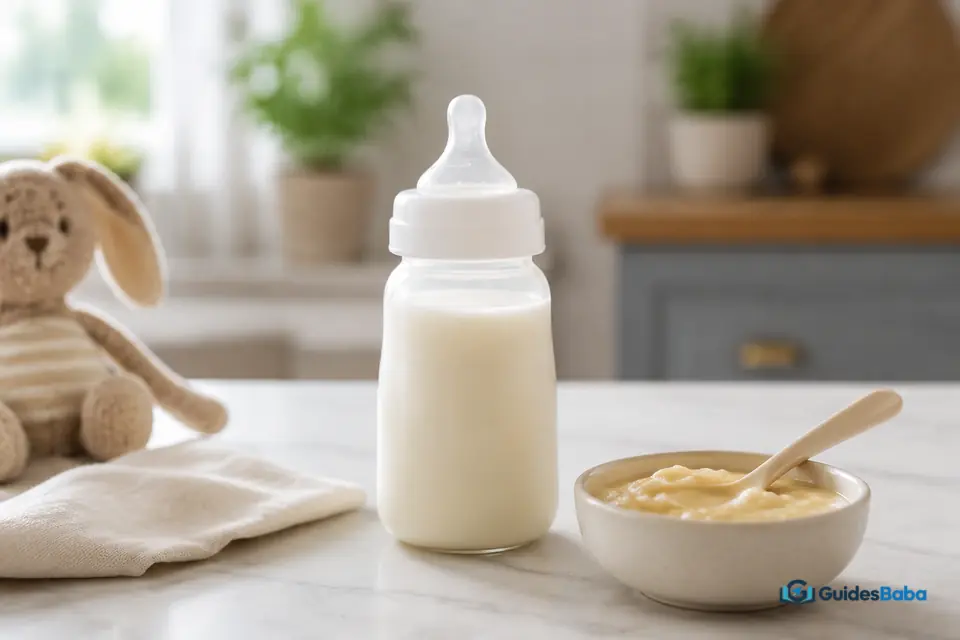
Allergens can feel worrying to parents. Current guidance often suggests introducing them gently. Timing and method matter here. Your pediatrician can advise clearly.
Common allergens include egg and peanut. Dairy, wheat, and fish appear too. Offer them one at a time. Watch closely for any reaction. This helps you spot problems early. Advice varies for higher-risk babies.
You should get personal guidance first. Some babies need extra caution here. Family allergy history matters a lot. Ask your pediatrician before starting. Never guess with allergens alone.
Milk still matters
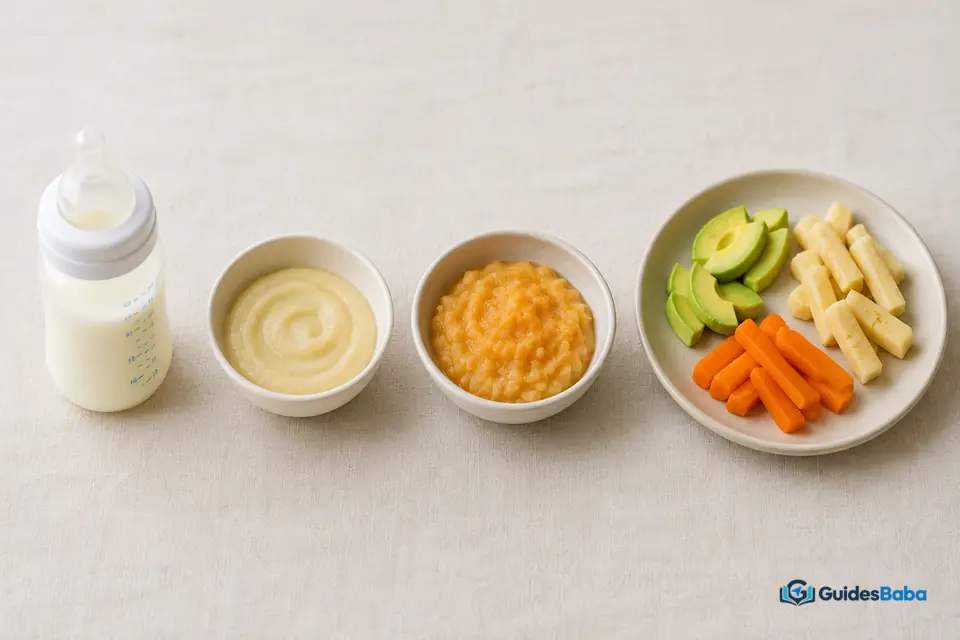
Solids do not replace milk at first. Breast milk or formula stays central. It remains their main source of nutrition. Solids simply sit alongside it early on.
In the beginning, solids are for practice. Milk still provides most nutrients. Over months, food grows in importance. The balance shifts quite gradually. Your baby leads this change.
You should keep milk feeds going. Reduce them only as solids grow. Your health visitor can guide this. See what a balanced diet looks like later. Milk and food work together.
Baby-led weaning versus purees
Parents often compare two weaning styles. The clear comparison is baby-led weaning versus purees. Both can work well together.
| Baby-led weaning | Spoon-fed purees |
|---|---|
| Baby holds soft foods | Parent offers smooth spoonfuls |
| Explores texture early | Eases into textures slowly |
| Can be messy and fun | Tidier and controlled |
| Needs close supervision | Also needs supervision |
Neither style is the only right way. Many families happily blend both. Let professionals guide your approach. Your baby’s comfort matters most.
Keeping mealtimes safe
Safety comes first at every meal. Choking is a real concern. Simple steps lower the risk. Careful habits are worth it.
Always stay with your baby while eating. Keep them sitting upright and steady. Cut foods into safe shapes. Avoid hard, round, or small items. Learn to spot choking signs. A calm, watchful adult helps.
You should learn basic infant first aid. Many parents find a class helpful. Your health visitor can point you there. Never leave a baby eating alone. Safety habits protect your child.
Common weaning mistakes
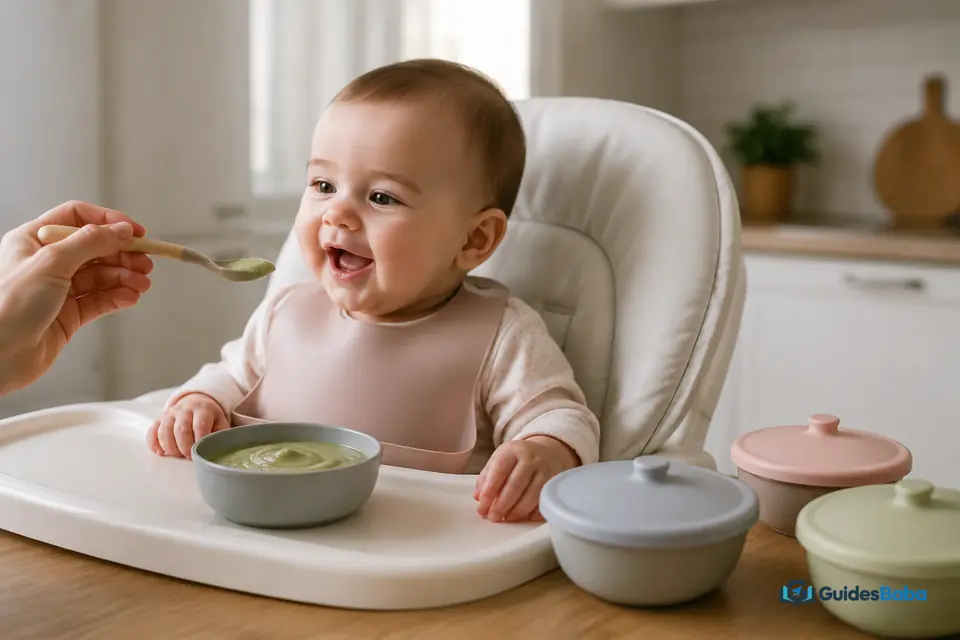
One mistake is starting far too early. Guidance exists for good reasons. Another is rushing through the textures. Slow progress usually works better.
Some parents give up after one refusal. Babies often need many tries. Others add salt or sugar early. A few skip iron-rich foods. All can cause issues. Patience solves most of them.
You should avoid guessing at big changes. Base your choices on real advice. Your health visitor can correct myths. Trusted guidance keeps you steady. Reliable sources beat online rumours.
Watching your baby’s cues
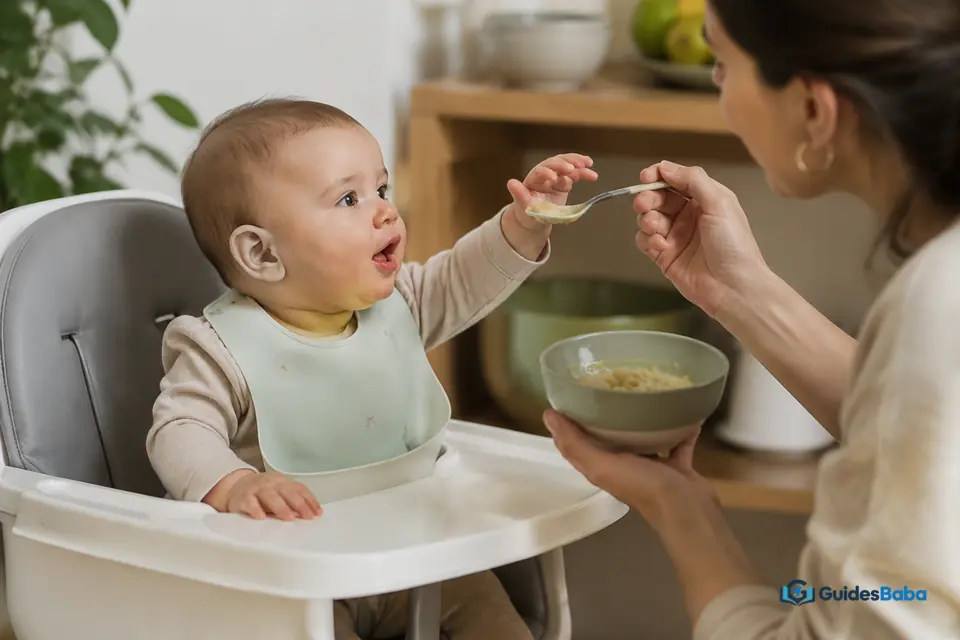
Babies communicate through their behaviour. Their cues tell you a lot. Learning to read them helps greatly. Weaning becomes a shared conversation.
They may lean in for more food. They might turn away when full. Some clamp their mouth shut. Others get excited at mealtimes. Respect these signals gently. Never force a baby to eat.
You should follow your baby’s lead. Appetite naturally varies day to day. Your health visitor can reassure you. Trust the cues you see. Responsive feeding builds healthy habits.
When to seek professional advice
General tips suit many babies well. Still, every baby is unique. Personal advice always matters most. Your situation is truly your own.
See your pediatrician or health visitor. Ask about timing, allergens, and growth. Some babies need special care. Reflux and allergies need attention. Your team will tailor everything. Regular checks keep you reassured.
This is not medical advice. See a professional for your own plan. Use these ideas as general background. Then follow your trusted care team. They know your full history.
Building happy mealtime habits
Good habits grow from small steps. Keep mealtimes calm and positive. Let your baby explore and enjoy. Small shifts feel manageable.
Offer a mix of gentle flavours. Eat together as a family sometimes. Let your baby touch their food. Stay patient with the mess. Keep portions small and simple. Small routines make a difference. A relaxed mood removes stress.
Above all, trust yourself as a parent. You know your baby best. Adjust as your baby grows. Lean on your care team. They are there to help you.
Frequently asked questions
When should babies start solid foods?
General guidance suggests around six months. Look for readiness signs and ask your pediatrician.
How do I know my baby is ready?
They sit steadily, hold their head, and show interest. Several signs usually appear together.
Can I start solids before six months?
Usually it is best to wait. Always check with your health visitor first.
What are good first foods?
Soft cooked vegetables and soft fruit work well. Offer one new food at a time.
Why does iron matter now?
Early iron stores start to fall around then. Iron-rich foods help fill the gap.
Should I still give milk?
Yes, milk stays their main food at first. Solids sit alongside it early on.
How do I introduce allergens?
Offer them one at a time and watch closely. Ask your pediatrician for guidance first.
What foods should I avoid early?
Avoid added salt, sugar, honey, and whole nuts. Cut round foods to reduce choking risk.
Is baby-led weaning better than purees?
Neither is the only right way. Many families happily blend both approaches.
When should I seek advice?
See your pediatrician or health visitor. Ask about timing, allergens, and growth.
The bottom line
So when should babies start solid foods? General guidance points to around six months. Watch for clear signs of readiness. Milk stays their main food at first. Ask your pediatrician about your own baby.
You do not need to rush this. Follow your baby’s cues and pace. Introduce simple foods gently and slowly. Lean on your care team throughout.
For general background, read this overview of weaning. You can also learn about baby food here. Use trusted sources alongside professional advice.
This is not medical advice. See a professional for your own care. Every baby is truly different and unique. Then let your trusted team guide you.