

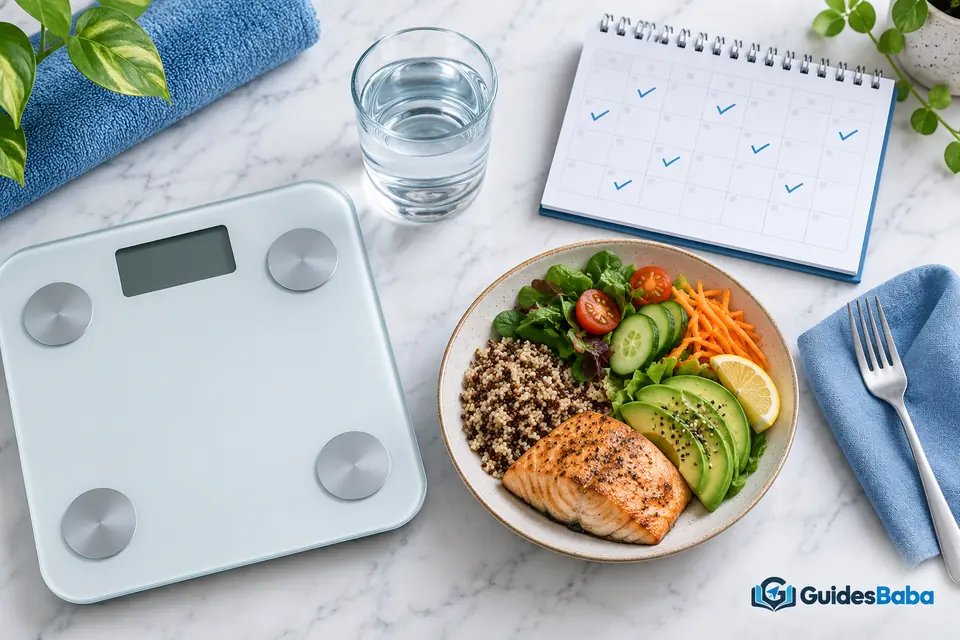
You step on the scale two mornings running. The number moves, yet nothing feels different. So why can body weight fluctuate from day to day? Your body is far busier than the scale admits.
Rather than panic at every wobble, understand it. Daily swings are normal and very common. They rarely reflect real fat change. Water, food, and salt drive most of them. Knowing this brings a calmer view.
Here is the honest answer. Daily weight shifts mostly reflect water and food. Salt, carbs, and hormones move water around. Your last meal still sits inside you. These changes come and go quickly. Real fat change happens slowly over weeks.
This guide covers the main reasons weight swings. You will learn which shifts are just noise. We compare water weight and true fat change. This is not medical advice. See a professional.
So why does weight fluctuate daily?

Daily weight is a moving target by nature. Your body gains and loses water constantly. Food and drink add temporary weight too.
Think of the scale like a busy tide. The water level rises and falls hourly. The shoreline itself barely changes at all. Fat is the shoreline, not the tide.
Should a two kilo swing worry you? Usually not, as water explains most of it. A salty dinner can hold water overnight. That water leaves again within days. Read the trend, not the tide.
How water drives most daily changes

Water makes up a large share of you. It flows in and out through the day. That movement shifts your weight often.
You drink, sweat, and lose water while breathing. Each of these nudges the scale around. A single glass of water has weight. So does the sweat from a warm walk. These small shifts add up fast.
None of this reflects fat gain or loss. It is simply water on the move. Staying hydrated actually steadies the swings. Learn how much water to drink each day for balance.
Did you know?
Your weight can swing by one to two kilos within a single day. Most of that change is water, not fat.
Why salt makes the scale jump

Salt has a strong pull on water. Your body holds extra water to balance it. That water shows up on the scale.
A salty meal can add a kilo overnight. The next morning you may weigh more. Yet you have not gained any fat. Your body simply parked some water. It releases that water over a day or two.
This is why restaurant meals feel heavy. They often carry a lot of hidden salt. The jump fades as balance returns. Do not read it as failure. Patience settles the number.
How carbohydrates affect your weight

Carbohydrates also hold water in your body. Your muscles store carbs alongside water. Eating more carbs can lift the scale.
Each gram of stored carb holds some water. A big pasta meal can raise your weight. That change is storage, not fat gain. Cutting carbs can drop water quickly too. The whoosh is water, not magic.
This explains fast early loss on low-carb plans. Much of it is simply water leaving. The scale rewards you at first. Real fat change still takes time. Know what the number means.
Why your last meal still counts

Food and drink have real physical weight. Whatever you ate still sits inside you. That adds to your morning number.
A large dinner can linger into the morning. Fibre-rich foods pass through more slowly. This is normal and healthy digestion. These high-fibre foods support your gut well. Their weight is temporary, not fat.
Waste also has weight until it leaves. Regular bathroom habits shift the scale daily. None of this reflects fat change. It is simply food in transit. The body clears it in time.
How hormones move the number
Hormones quietly shape your water balance. They shift across the day and month. Those shifts can move your weight.
Many people hold water at certain times. Monthly cycles can add a temporary kilo or two. Stress hormones can also hold water. These changes are normal and pass. They rarely reflect true fat gain.
Understanding this brings real relief. A heavier week need not mean failure. Hormonal water often leaves on its own. Track the longer pattern instead. Kindness helps you read it calmly.
Why exercise can change the scale short term
Hard exercise affects your weight in odd ways. You lose water through heavy sweat. That can drop the number quickly.
New or intense workouts can also hold water. Your muscles repair and briefly retain fluid. This can nudge the scale upward. It is a sign of recovery, not fat. The water settles within days.
So the scale can mislead after training. A drop may be sweat, not fat loss. A rise may be repair, not gain. Judge fitness by strength and energy. The number is only one clue.

Why the time of day matters
When you weigh yourself changes the result. Morning weight is usually your lowest. Evening weight tends to run higher.
Overnight you lose water through breath and sweat. You also eat nothing while you sleep. So mornings give a leaner reading. Food and drink build up through the day. Evenings naturally show a bigger number.
This is why timing must stay consistent. Weigh at the same moment each time. Compare like with like for fairness. Otherwise the swings mislead you. Consistency is your friend.
Water weight versus true fat change
People often confuse these two very different things. The clear comparison is water weight versus fat change. Each behaves in its own way.
| Water weight change | True fat change |
|---|---|
| Happens within hours | Builds over weeks |
| Driven by salt and carbs | Driven by energy balance |
| Comes and goes quickly | Changes slowly and steadily |
| Shows big daily swings | Shows a gentle trend |
Daily swings are almost always water. Real fat change hides in the trend. One heavy morning means little alone. Watch the direction across weeks.
How to read the scale without stress
The scale is a tool, not a judge. Treat its daily number with light hands. One reading rarely tells the truth.
Look at the average across a whole week. That smooths out the daily noise. A falling trend means real progress. A single spike is usually water. Trends calm the mind.
You can also skip daily weighing entirely. Some people feel better checking weekly. Photos and clothes offer gentler clues. Choose what keeps you steady. Peace supports progress.
How food choices steady the swings
Your food choices shape how much you swing. Very salty meals cause bigger jumps. Balanced meals keep things calmer.
Whole foods tend to carry less hidden salt. Fibre and water support smooth digestion. A balanced diet reduces sharp scale spikes. Steady eating leads to steadier numbers. Simple food helps a lot.
Heavily processed meals often swing you more. They pack salt and refined carbs together. Learn how refined carbohydrates affect your body. Gentle choices keep the scale calmer.
How sleep affects your morning weight
Sleep quietly shapes your morning reading. You lose water through breath all night. That lowers your weight by morning.
Poor sleep can also affect your hunger. Tired days often bring more snacking. So rest links to the scale indirectly. Good sleep supports steadier numbers.
One rough night rarely changes your fat. Read such mornings with patience. The pattern matters more than one day.
Why the trend beats any single number
A single weight is only a snapshot. It captures one busy moment in time. The trend tells the honest story.
Plot your weight across several weeks. The daily zigzag smooths into a line. That line reveals your real direction. Individual points barely matter alone. Zoom out to see clearly.
This mindset removes much daily stress. The bigger picture keeps you grounded.
Common myths about daily weight
One myth says every gain means new fat. In truth, most daily gains are water. Fat cannot appear that fast.
Another myth claims a good day should show loss. Water can hide real progress for days. The scale is not a daily scorecard. Patience beats daily judgement. Trends reveal the truth.
Some believe sweating off water burns fat. Lost sweat returns as soon as you drink. That water weight is not fat. Hydration simply resets the balance. Facts ease the worry.
Common mistakes when tracking weight
One common mistake is weighing every single day. Daily numbers swing and can crush morale. Weekly checks give a calmer view.
Another mistake is weighing at random times. Morning and evening give different results. Inconsistent timing makes the data noisy. Pick one time and keep to it. Fairness needs consistency.
Some people react hard to one bad reading. They slash food after a water spike. That harsh response often backfires. Trust the trend, not the moment. Calm choices win.
Who might need tailored guidance
General facts suit most healthy adults well. Still, some people need personal care. Certain situations change the picture.
Sudden or large swings can sometimes signal issues. Heart, kidney, or other conditions may play a role. Your doctor understands your full history. Personal advice always beats general rules here.
This is not medical advice. See a professional for your own situation. Use these ideas as a friendly guide. A short chat can prevent bigger problems.
Building a calm weighing routine
A calm routine takes the drama out. Choose one regular day and time to weigh. Keep the process simple and quick.
Record the number without judging it. Look at the weekly average instead. Let single readings pass without worry. This habit protects your peace of mind. Steady tracking beats anxious checking.
Remember the scale is one small tool. Clothes and photos add helpful clues. Many signals paint the real picture.
Frequently asked questions
Why can body weight fluctuate from day to day?
Daily swings mostly reflect water, food, and salt. Real fat change happens slowly over weeks.
How much can weight change in a day?
One to two kilos of swing is common. Most of that change is simply water.
Does salt really raise my weight?
Yes, salt makes your body hold water. That water leaves again within a day or two.
Why do I weigh less in the morning?
Overnight you lose water and eat nothing. So mornings usually give your lowest reading.
Do carbohydrates cause weight gain overnight?
Carbs store water in your muscles. This adds weight without adding any fat.
Should I weigh myself every day?
Daily weighing can be noisy and stressful. Weekly checks give a calmer, clearer trend.
Why did I gain weight after exercise?
New workouts can hold water during recovery. This is repair, not fat gain.
Is water weight the same as fat?
No, water weight comes and goes quickly. Fat changes slowly over many weeks.
How do I know if it is real fat?
Watch the trend across several weeks. A steady direction shows real change.
Can hormones affect my weight?
Yes, hormones can make you hold water. These shifts are normal and pass.
The bottom line
So why can body weight fluctuate from day to day? Water, food, and salt drive most of the swings. Carbs and hormones move water around too. Your last meal still sits inside you. Real fat change unfolds slowly over weeks.
Read the scale with light, patient hands. Weigh at the same time each week. Watch the average, not the single number. A calm routine keeps your mind steady.
For more background, read this overview of human body weight as a topic. You can also explore how water retention works. Use trusted sources to guide your habits.
This is not medical advice. See a professional for your personal needs. Let the daily wobbles pass without worry. Then trust the steady trend over time.