
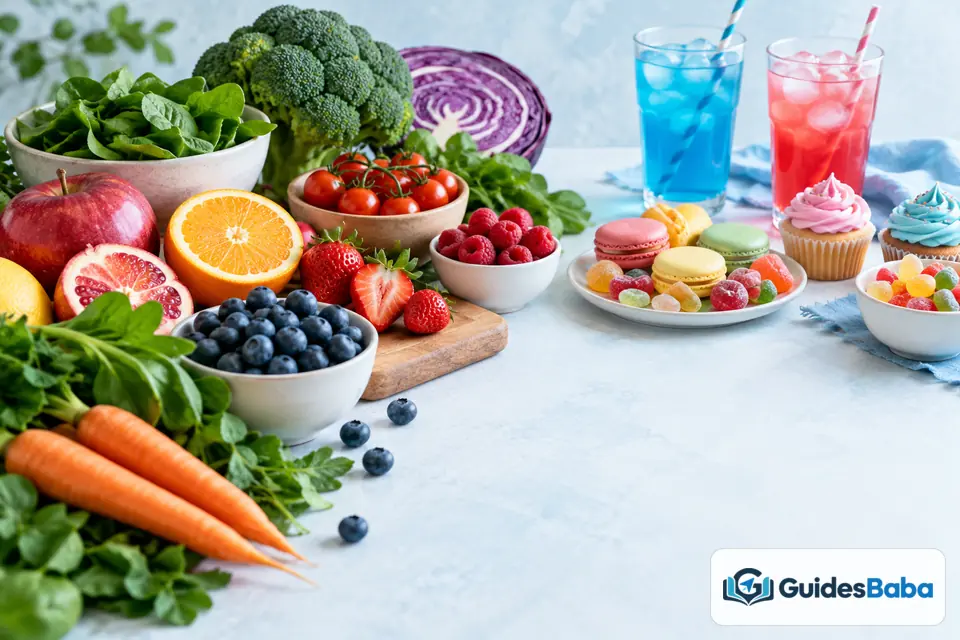
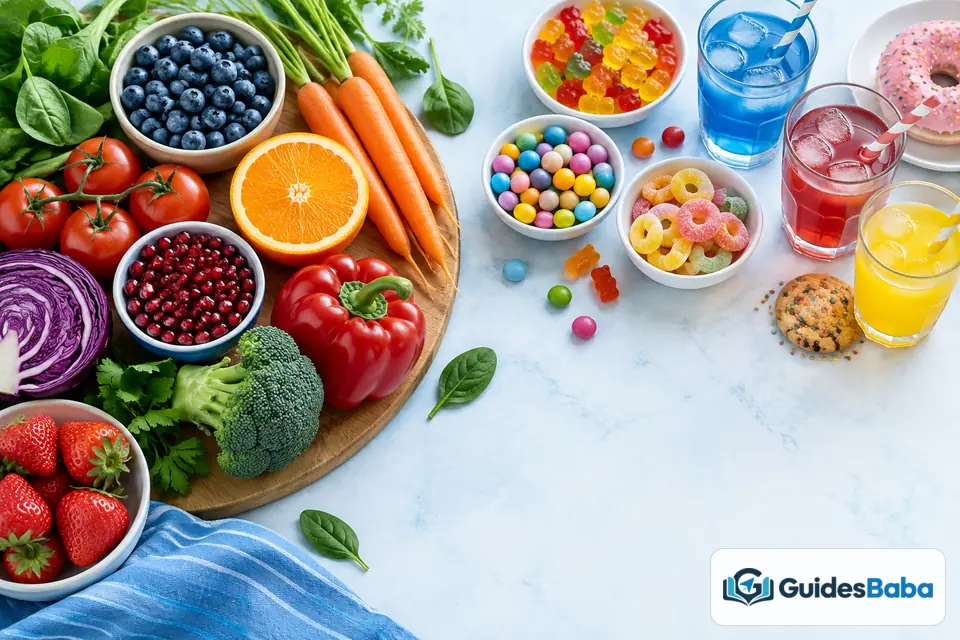
Bright sweets and vivid drinks catch every eye. That colour rarely comes from the fruit alone. So are food colour additives safe to eat? The answer is more reassuring than the rumours suggest.
Rather than fearing every bright shade, learn the facts. Colour additives do a simple job. They restore or add colour to food. Some come from plants, and some from labs. They shape how you judge added sugars in treats.
Here is the honest answer. Approved food colour additives are considered safe in normal amounts. Agencies review them before they reach shelves. They set safe daily intake limits. Very high intake is a different question. This is not medical advice. See a professional.
This guide covers food colour additives in plain language. You will learn what they are and how they work. We will compare natural and synthetic colours fairly. Many tips link back to a simple, balanced plate.
So are food colour additives safe?
The honest answer starts with review. Approved colours pass safety testing first. Agencies set limits with a wide margin. Normal use stays well below them.
Think of the limit like a speed sign. It sits far below any real danger. Everyday eating rarely comes close. That gap is the safety buffer.
Does safe mean you should eat unlimited amounts? Not quite, and that is worth remembering. Heavily coloured foods are often treats. They tend to carry sugar and little else. Balance still matters most here.
What food colour additives are
Food colours are additives that add colour. They make food look bright and appealing. Some restore colour lost in processing.
Others simply make a product more fun. Colours appear in sweets, drinks, and sauces. They also brighten baked goods and cereals. The job is purely visual.
Colour does not add nutrition by itself. It shapes how we expect food to taste. Our eyes guide our first impression. A bright shade can raise appetite. Still, the colour is only skin deep. A pale food can taste just as good.
Did you know?
Beetroot juice colours many pink foods. Turmeric gives a warm yellow without any lab.
Natural food colours and where they come from
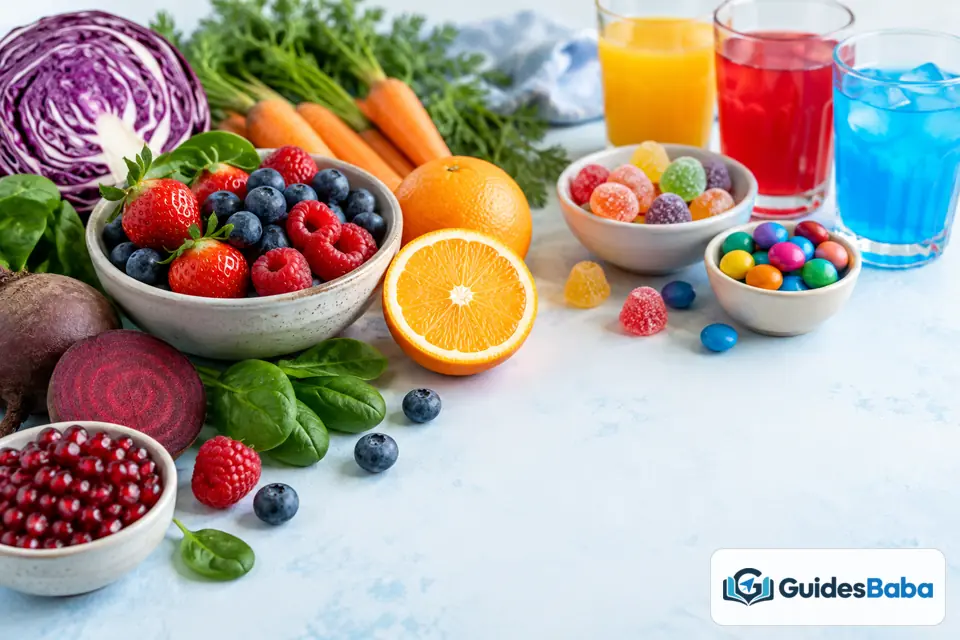
Natural colours come from familiar sources. Beetroot gives a deep pink shade. Turmeric adds a warm yellow tone.
Spinach and other greens lend green. Carrots and paprika offer orange hues. Berries and grapes bring purple and red. These colours grow in a garden.
Natural colours can shift with heat and light. Their shades vary from batch to batch. That trade-off suits clean-label products. Many shoppers happily accept it. Nature rarely gives perfect consistency. The gentle variation feels reassuringly real.
Synthetic food colours and how they work
Synthetic colours are made in a lab. They deliver bright, steady shades. A tiny amount goes a long way.
These colours stay consistent across batches. They resist fading from heat and light. That makes them cheap and reliable. Large-scale makers value that trait.
Each approved colour passes safety review. Agencies watch the evidence over time. Some colours carry extra label warnings. That helps sensitive shoppers choose. Consistency is their main strength. Bright, even shades survive long storage.
How colour additives are tested
Safety testing sits behind every approved colour. Scientists study each one closely. Agencies then set safe intake limits.
These limits build in a large safety margin. Normal eating stays far below them. Approvals get reviewed as evidence grows. This keeps the system current.
No approval promises zero risk for everyone. A few people react to certain colours. Very high intake can matter too. Moderation stays a wise habit. This is not medical advice. See a professional.

Colour additives and children
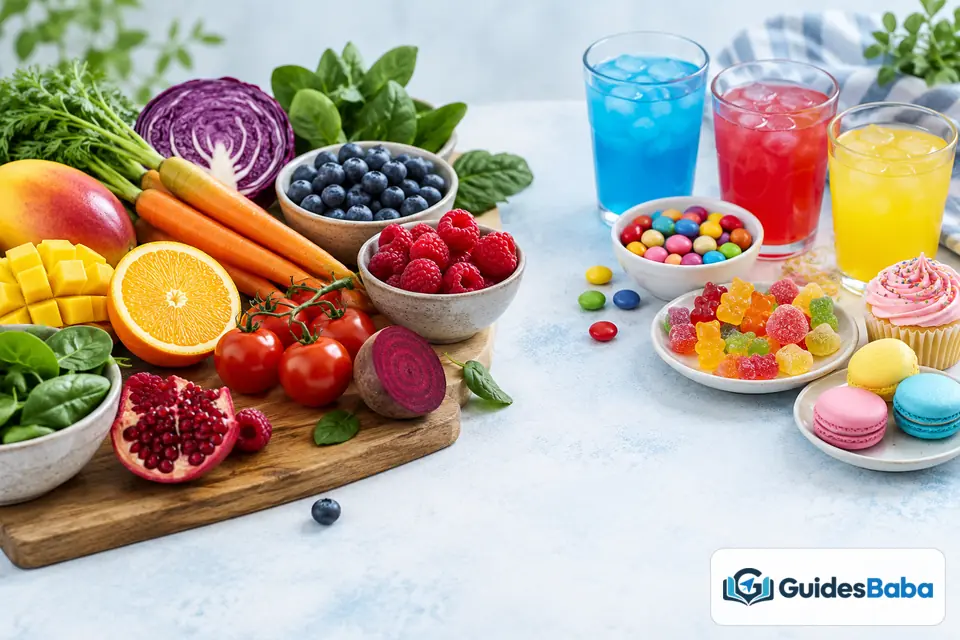
Parents often worry about colours and kids. This concern is fair and common. Children eat many brightly coloured snacks.
Some studies looked at certain colours and behaviour. Results are mixed and still debated. Many families choose to limit bright colours. That is a reasonable personal choice.
Some products carry a label advisory. It flags certain colours for parents. Whole foods suit children very well. Plain snacks avoid the question entirely. Balance shapes a healthy young diet.
Common concerns about food colours
People raise a few common concerns. Some worry about long-term health effects. Others fear links to hyperactivity.
Approved colours pass careful review. Safe limits leave a wide margin. The evidence on behaviour stays mixed. Sensitivities affect only a small group.
If a colour bothers you, avoid it. Reading labels makes that easy. You stay in full control here. Personal choice plays a real role. Fear need not drive every decision.
Natural food colours versus synthetic food colours
People often ask which type is better. The honest comparison weighs several traits. Each type brings its own strengths.
| Natural food colours | Synthetic food colours |
|---|---|
| Come from plants and minerals | Made through careful chemistry |
| Often carry a clean label | Very bright and consistent |
| Shades can fade over time | Resist heat and light well |
| Loved by clean-label shoppers | Often cheaper at large scale |
Neither type is simply better here. Both must pass the same safety review. Natural does not always mean safer. Judge each colour on its evidence.
Where food colours appear most
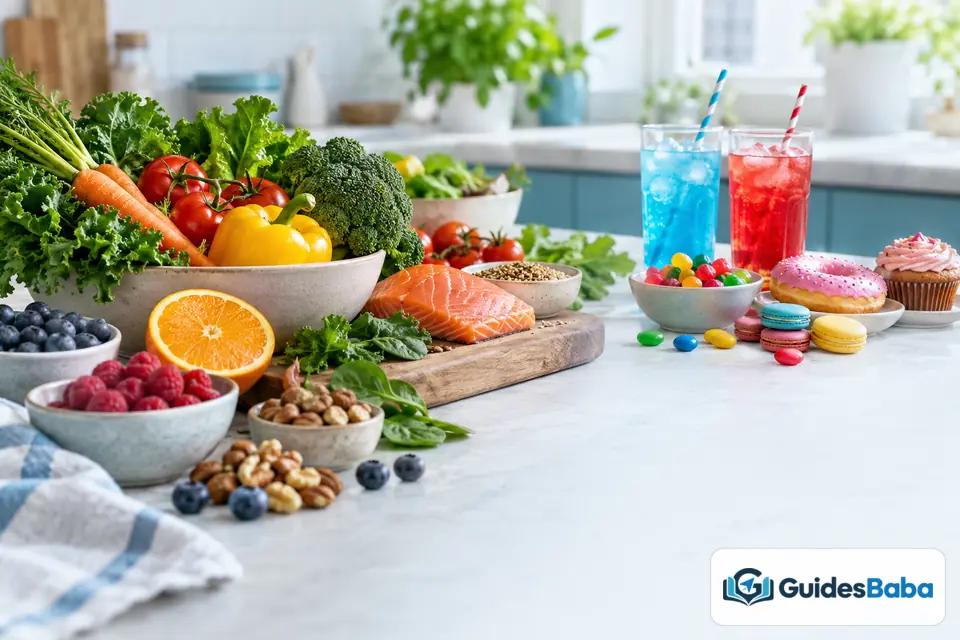
Food colours cluster in certain products. Sweets and candies use them heavily. Fizzy drinks and cordials rely on them.
Cakes, icing, and cereals often carry colour. Some sauces and snacks use them too. These foods tend to be treats. That pattern is worth noticing.
Whole fresh foods rarely need added colour. Fruit and vegetables bring their own. Cooking at home skips most colours. See the foods with the most antioxidants instead.
Reading labels for food colours
A label reveals the colours inside. Look in the ingredient list carefully. Colours may show a name or code.
Some regions use numbers for colours. Others spell the full name out. Either way, they must appear. The list runs by weight order.
Compare two products side by side. Pick the one that fits your goals. Labels turn worry into simple choices. Learn to make your everyday diet healthier too.
How to reduce food colour intake
Cutting colour intake is simpler than it sounds. Cook more meals from scratch. Whole ingredients carry almost none.
Choose fresh fruit over bright sweets. Pick plain yogurt and add your own fruit. Each swap trims added colour. Home cooking gives you full control.
Change one habit at a time. A slow build keeps meals enjoyable. New routines stick when they feel easy. Keep simple staples in your kitchen. Small steps beat sudden overhauls.
A short history of food colouring

Colouring food is not a new idea. People have brightened food for centuries. Early cooks used spices and plants.
Saffron lent a rich golden colour. Beet juice added a deep red. These natural dyes came from the kitchen. The habit is really very old indeed. Cooks prized colour long before science explained it.
Later, lab-made colours joined the mix. They offered bright and steady shades. Rules and testing grew alongside them. Today, approval comes before sale. The system has matured over many years. Oversight has grown much stricter over time.
How colour shapes appetite
Colour changes how we expect food to taste. A bright red drink hints at cherry. A yellow one suggests lemon.
Our eyes shape the first impression. We often taste what we expect. Makers use this to please shoppers. Colour sells before the first bite. A dull shade can lower our appetite.
This is worth knowing as a shopper. A vivid shade can boost appeal. It does not add any nutrition. Stay aware of that simple trick. Your eyes can gently mislead you.
Colour in home cooking
Home cooks can colour food naturally. Beetroot tints a pink frosting. Turmeric brightens rice and curries.
Spinach can green a smoothie. Berries add purple to yogurt. These options skip lab-made dyes. They also bring real nutrients along. Paprika lends a warm orange to stews.
Natural colours behave a little differently. Heat and time can shift the shade. Expect gentle, earthy tones. The result feels honest and fresh. A little experimenting pays off. You control every ingredient in the bowl.
Common myths about food colours
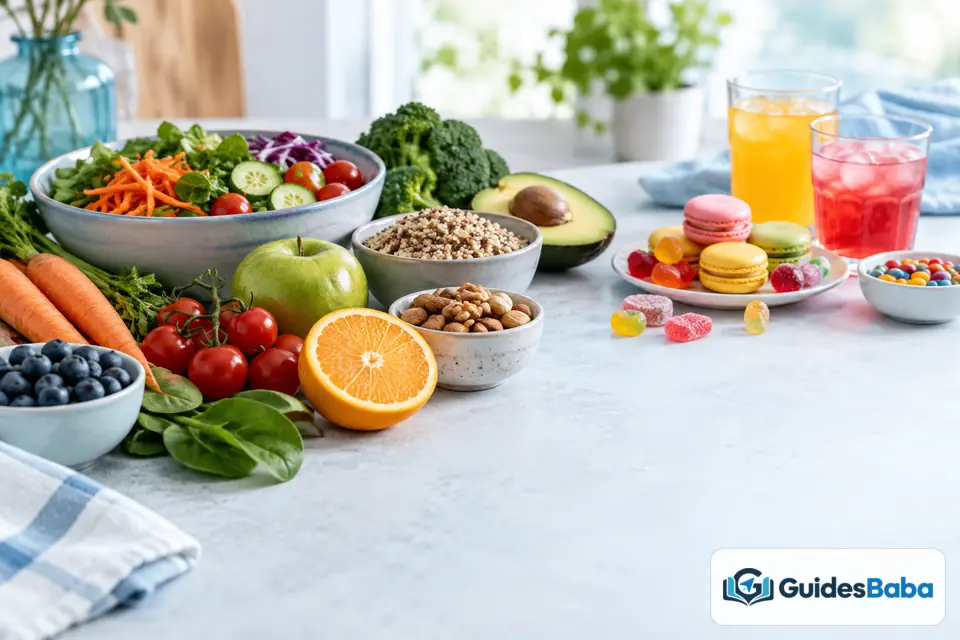
One myth says all colours are dangerous. Approved options pass careful review. Safe limits leave a wide margin.
Another myth claims natural always means safe. Some natural colours can still trigger reactions. The source alone does not decide safety.
Some believe colour changes the nutrition. In truth, colour is purely visual. It does not add or remove nutrients. Judge food by its whole recipe.
Common mistakes people make
One common mistake is fearing colour alone. A bright shade does not mean danger. The whole recipe matters more.
Another mistake is ignoring sugar and salt. People fixate on colour names instead. The bigger issues often sit elsewhere. Learn what a balanced diet looks like.
Some people also trust bold front labels. Words like natural can mislead. Turn the pack over and read. The ingredient list tells the truth. Habits matter more than any single shade.
Who might need tailored advice
General guidance suits many healthy adults. Still, some people have special needs. Sensitivities change the picture.
A few people react to specific colours. Others follow strict medical diets. Reading labels then becomes essential. Small details can matter a lot.
Your doctor or dietitian knows you best. Ask before making big diet changes. Use these ideas as a friendly guide. A short chat can prevent confusion.
Food colours and a balanced diet
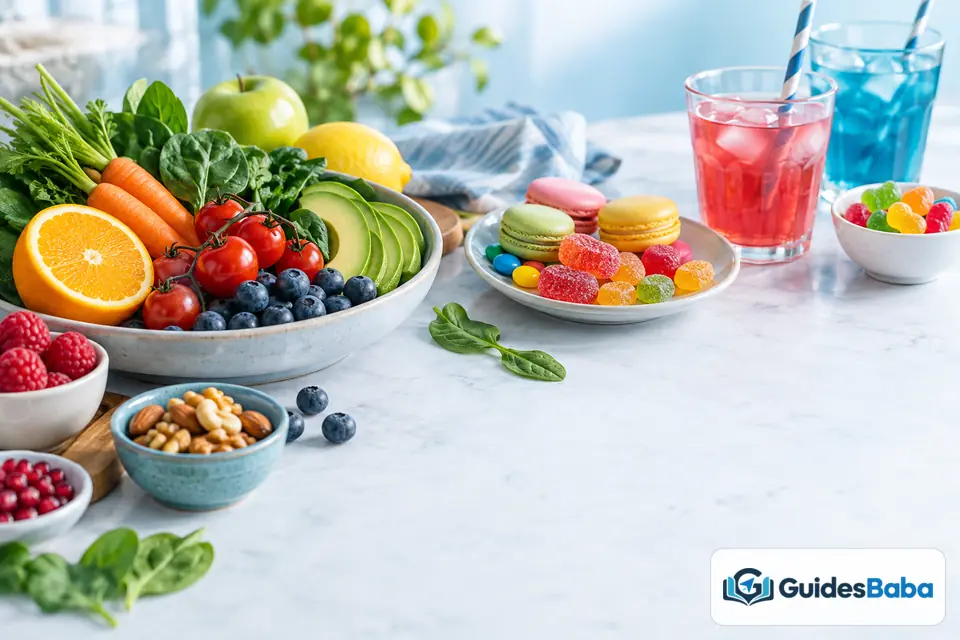
Food colours sit inside a wider pattern. What matters is the whole plate. Colours are a tiny part of it.
No single additive defines your diet. Balance across many foods matters most. Explore the foods to eat every day for ideas. Variety remains the guiding rule.
Treat colour as one small factor. Pair treats with whole, filling foods. This mix keeps your meals rounded. A simple plate does the heavy lifting. Good habits compound quietly across the weeks.
Frequently asked questions
Are food colour additives safe?
Approved colours are safe in normal amounts. Agencies set safe daily intake limits.
Are natural colours safer than synthetic ones?
Not always, since both pass the same review. Judge each colour on evidence.
Do food colours cause hyperactivity?
The evidence is mixed and still debated. Many families limit certain colours.
Which foods contain the most colour additives?
Sweets, fizzy drinks, and cereals lead. Bright snacks and icing rank high too.
Are food colours listed on labels?
Approved colours must appear on the label. Look in the ingredient list.
What are natural food colours made from?
They come from plants like beetroot and turmeric. Carrots and berries add colour too.
Can I avoid food colours easily?
Choose whole foods and cook at home. Read labels on packaged items.
Does food colour affect the taste?
Colour is mostly visual, not flavour. Still, it shapes our expectations of taste.
Are food colours safe for children?
Approved colours are considered safe in normal amounts. Many parents still limit bright ones.
Do bright colours mean unhealthy food?
Not by themselves, but they often mark treats. Check the whole label and portion.
The bottom line
So are food colour additives safe? Approved colours are safe in normal amounts. Agencies review them and set limits. Some are natural, and some are made. The whole recipe matters more than the shade.
Colours are not the villain many fear. Focus on whole foods and balanced meals first. Read labels to guide your choices. Small daily habits truly add up over time.
For more background, read this overview of food colouring. You can also explore the colour tartrazine in detail. Use trusted sources to guide your plate.
This is not medical advice. See a professional for your personal needs. Read one label today. Then build slowly from there. Your choices will improve.