
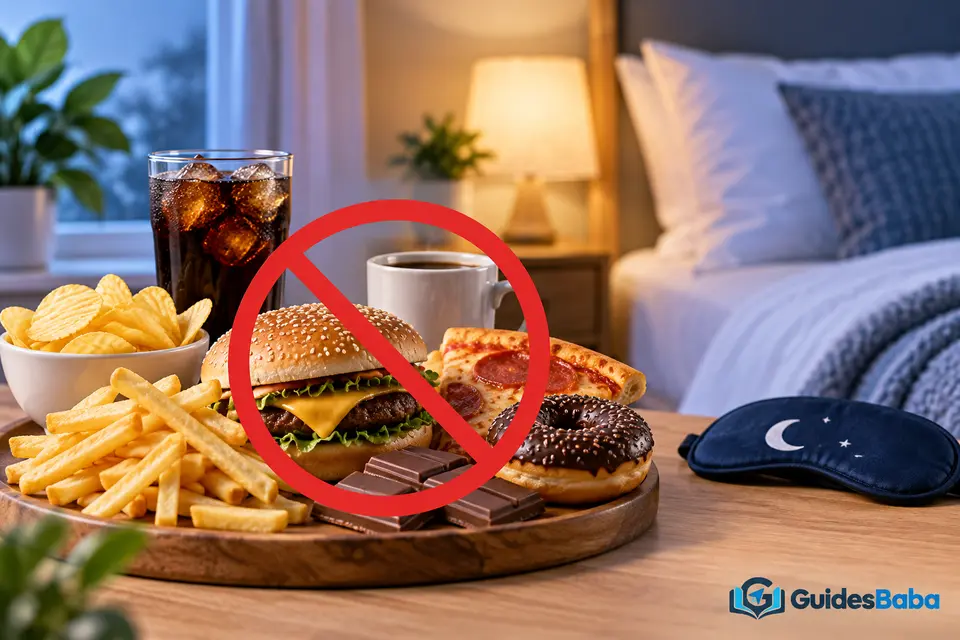
A restless night often starts at dinner. What foods should you avoid before bed? Could a late snack be stealing your sleep? In general terms, some foods may disturb rest. The effect varies between people.
Rather than banning foods forever, think timing. No single snack ruins every night. Your whole evening routine matters more. The wider habit shapes your rest. A professional can guide the details.
Here is the honest answer. Some foods may disturb sleep before bed. Caffeine, heavy meals, and alcohol lead the list. Their effect is general, not a rule. No food guarantees a bad night. Habits and timing matter a great deal. A professional guides real, personal care.
This guide covers the topic in general terms. You will learn which foods to watch. We frame food kindly and without hype. This is not medical advice. See a professional.
What foods should you avoid before bed?
The honest answer names a few usual suspects. Caffeine and heavy meals top the list. Alcohol and sugary snacks follow close. The effect stays general and personal.
Think of it like clearing the runway, not blocking it. One snack will not doom your night. Does a single coffee wreck sleep? Not always, but timing tips the odds. Steady evening habits shape your rest.
Is every evening food a problem? Not at all, most foods are fine. It is about timing and amount. Balance guides the smarter choices. A professional can guide you.
Why late foods can disturb sleep
The body slows down near bedtime. Digestion works better earlier in the evening. Heavy late food keeps it busy. That effort can disturb rest.
Some foods stimulate the brain and body. Others cause discomfort while lying down. Blood sugar swings may also wake you. The effect differs from person to person. Timing shapes much of the outcome.
You should not expect one rule for all. Diet supports sleep, it does not fix it. Habits and routine matter greatly. A professional can guide you.
Did you know?
Caffeine can stay active in your body for many hours. An afternoon coffee may still linger at bedtime.
Caffeine late in the day
Caffeine is the classic sleep disruptor. It keeps the brain alert for hours. Coffee, tea, and cola all contain it. Afternoon doses can reach bedtime.
Learn how caffeine affects sleep in more depth. Read about how much caffeine is too much too. Many people forget hidden caffeine sources. Chocolate and some medicines also carry it. Sensitivity varies widely between people.
You should cut caffeine after early afternoon. Switch to water or herbal drinks. Small changes support calmer evenings. A professional can advise you.
Chocolate and cocoa at night
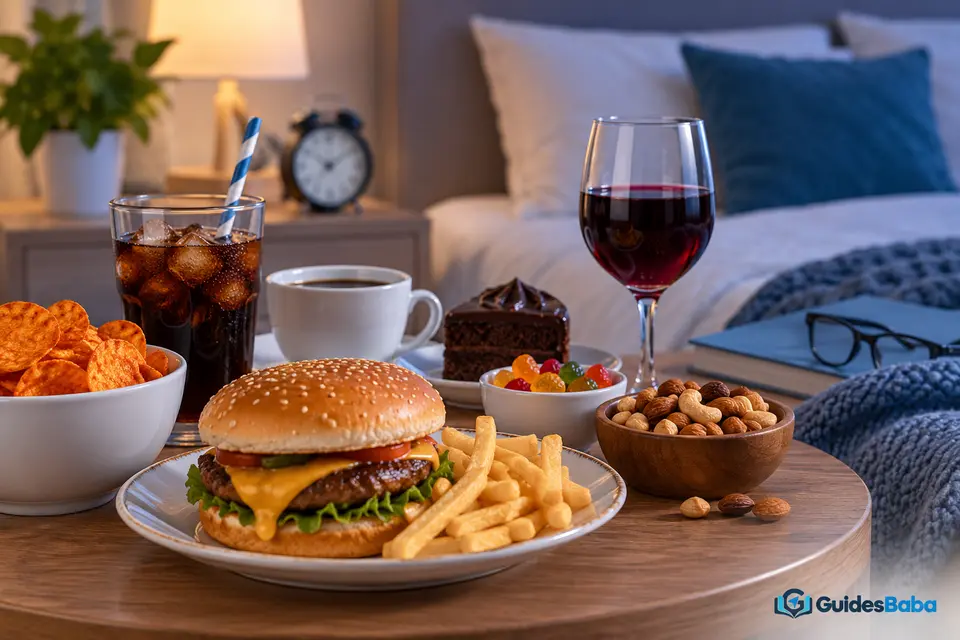
Chocolate hides caffeine inside it. Dark chocolate carries the most. It also brings sugar and fat. A late bar may disturb rest.
The caffeine keeps some people alert. Sugar adds an energy swing too. Milk chocolate has a little less. The effect is general and personal. Sensitive sleepers should take care.
You should limit chocolate late at night. Enjoy it earlier in the day. A warm decaf drink works better. Small habits support the routine. A professional can advise you.
Heavy and fatty meals
Large meals sit heavy near bedtime. Fatty and fried foods digest slowly. The body stays busy and warm. That effort can disturb sleep.
Rich curries and fried plates are examples. Big portions strain late digestion. Lying down may bring discomfort. The effect is general, not certain. Lighter evenings usually feel better.
You should keep the evening meal light. Finish dinner a few hours before bed. Small, gentle portions help most. A professional can advise you.
Spicy foods at night
Spicy dishes can trouble some sleepers. They may cause warmth and discomfort. Heartburn sometimes follows a spicy meal. Sensitivity varies from person to person.
Chilli and hot sauces are common triggers. Discomfort while lying down disturbs rest. Not everyone reacts the same way. The effect stays personal and general. Gentle flavours suit late meals better.
You should test your own tolerance. Save spicy meals for earlier hours. Keep late dinners mild and simple. Your stomach will thank you later. A professional can advise you.
Alcohol before bed
Alcohol feels relaxing at first. Many people use it to unwind. Yet it disturbs deeper sleep later. The trade off is a real one.
Alcohol may help you drift off quickly. Then it fragments rest through the night. You may wake more often. Deep sleep often suffers most. The effect grows with larger amounts.
You should keep alcohol modest at night. Leave a gap before bedtime. Water between drinks helps too. A calm wind down helps more. A professional can advise you.


Sugary snacks and desserts
Sweet treats tempt many people at night. They spike blood sugar quickly. A later crash may disturb rest. The energy swing works against sleep.
Learn about added sugars and where they hide. Cakes, sweets, and biscuits are examples. Sugary drinks add to the load. This effect is general and gentle. Steady blood sugar supports calmer nights.
You should keep late desserts small. Choose whole fruit if you want sweetness. Small swaps support the routine. A professional can advise you.
Foods to favour versus foods to limit before bed
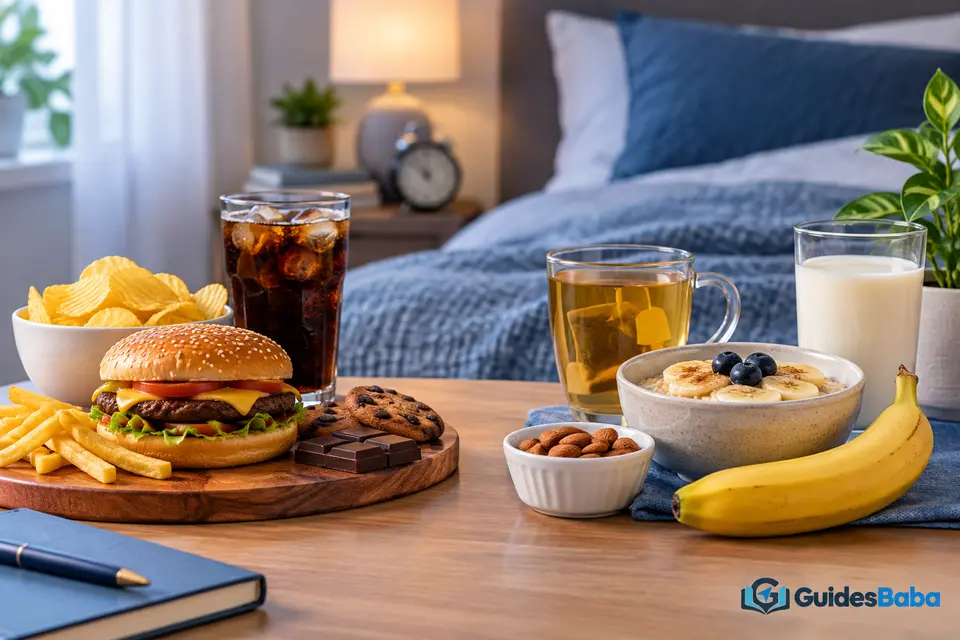
People often compare two evening choices. The clear comparison is foods to favour versus foods to limit before bed. Each shapes your night.
| Foods to favour | Foods to limit |
|---|---|
| Light, gentle portions. | Heavy, fatty, fried meals. |
| Water and herbal drinks. | Coffee, cola, energy drinks. |
| Whole fruit for sweetness. | Sugary desserts and sweets. |
| Mild, simple flavours. | Spicy dishes and alcohol. |
Favoured foods stay light and calming. Limited foods may keep you alert. Small swaps move you across. You do not need a strict plan. A professional can help you shift.
Very large portions at night
Portion size matters as much as choice. A huge plate strains late digestion. The body stays busy and warm. Comfort often suffers as a result.
Even healthy food can feel heavy in bulk. A large late dinner may disrupt rest. Smaller evening portions usually feel better. This effect is general and personal. Timing and size work together.
You should keep evening portions moderate. Save the biggest meal for earlier. Light dinners support the routine. Comfort improves when portions stay small. A professional can advise you.

Fizzy drinks and hidden caffeine
Fizzy drinks carry more than sugar. Many colas contain hidden caffeine. Some flavoured waters do too. Bubbles may also cause bloating.
Caffeine and sugar together disturb rest. Bloating can add night discomfort. Reading labels reveals hidden caffeine. This habit supports better choices. Water is a calmer evening option.
You should check drink labels at night. Swap fizzy drinks for water. Small habits support the routine. A professional can advise you.
Salty snacks and thirst
Salty snacks tempt many people at night. Crisps and salted nuts are examples. Salt can leave you thirsty later. Extra drinks then break your sleep.
Very salty food may cause bloating. Thirst can wake you in the night. Lighter snacks avoid this problem. The effect is simple and general. Gentle choices support steadier rest.
You should keep late snacks low in salt. Choose something light and simple. Small habits support the routine. A professional can advise you.
Late fluids and night waking
Drinking a lot late can break sleep. Full bladders cause night waking. Frequent trips fragment your rest. Balance guides the evening.
Hydrate steadily across the whole day. Ease off large drinks near bedtime. This small habit reduces waking. The effect is simple and general. Comfort supports steadier sleep.
You should hydrate well during the day. Taper fluids in the late evening. Small habits support the routine. A professional can advise you.
Building a calmer evening routine
A steady routine supports better sleep. Your body loves gentle patterns. Regular meal times help a lot. Simple habits do most work.
Eat dinner at a fairly regular time. Keep the evening meal light. Discover foods that help with sleep here. A calm wind down supports rest. Routine supports the whole pattern.
You should keep evening timing steady. Repeat calm habits each night. Small routines build over time. A professional can advise you.
Realistic expectations here
Avoiding foods helps only so much. There is no single magic fix. Steady habits shape the results. Patience matters more than speed.
Sleep improves through many small changes. Bold promises usually mislead people. A calm routine works better. Balance beats any harsh rule. Small habits build the pattern over time.
You should set gentle expectations. Give any change real time. Steady habits support your rest. A professional can guide you.
Common mistakes people make
One mistake is a heavy late dinner. Another is afternoon coffee out of habit. Balance beats any quick fix.
People often rely on alcohol to unwind. Some snack on sweets right before bed. Others ignore hidden caffeine entirely. Steady habits work far better. Patience supports real, lasting change.
You should avoid quick fix thinking. Base changes on real advice. Think routine over single foods. A professional can correct myths.
Who should get tailored advice
Sleep and diet are personal matters. They depend on your health. They depend on your routine too. One plan cannot fit all.
Some sleep problems need real assessment. Reflux and other conditions matter. Food alone cannot carry it. Your history shapes everything here. Personal advice always beats general tips.
You should never self-diagnose from articles. Get personal advice before big changes. A professional can guide you safely.
When to seek professional help
General tips suit many people well. Still, every person is unique. Personal advice always matters most. Your wellbeing comes first here.
See a doctor about ongoing sleep problems. A dietitian can tailor your meals. A specialist can assess deeper issues. You deserve care and support. Asking for help shows sense.
This is not medical advice. See a professional for your own care. Food supports care but never replaces it. Then follow your trusted team.
Frequently asked questions
What foods should you avoid before bed?
Caffeine, heavy meals, and alcohol are common ones. Sugary and spicy foods can also disturb rest.
How late is too late for caffeine?
Sensitivity varies, so aim to stop by early afternoon. Caffeine can linger for many hours.
Is a bedtime snack bad?
No, a small light snack is usually fine. Avoid large or heavy late meals.
Does alcohol ruin sleep?
It may help you drift then fragment rest. Deeper sleep often suffers most.
Are spicy foods a problem at night?
They can cause warmth or heartburn in some people. Sensitivity varies from person to person.
Should I skip dessert before bed?
Keep late desserts small if you enjoy them. Whole fruit is a gentler choice.
Do fizzy drinks affect sleep?
Many contain hidden caffeine and sugar. Both can disturb your rest.
Why do late meals feel heavy?
The body slows digestion near bedtime. Large meals then keep it busy.
How soon before bed should I eat?
Try to finish dinner a few hours early. Keep any later snack light.
When should I see a professional?
See a doctor about ongoing sleep problems. A dietitian can tailor your meals.
The bottom line
So what foods should you avoid before bed? Caffeine, heavy meals, and alcohol lead the list. Sugary and spicy foods can also disturb rest. The effect is general, not a rule. Timing and amount matter most.
You do not need strict bans. Aim for light, calm evenings. Finish big meals a few hours early. Lean on a professional throughout.
For general background, read about sleep hygiene. You can also learn about caffeine. Trusted sources support professional advice.
This is not medical advice. See a professional for your own care. Food supports care but never replaces it. Then let your trusted team guide you.