
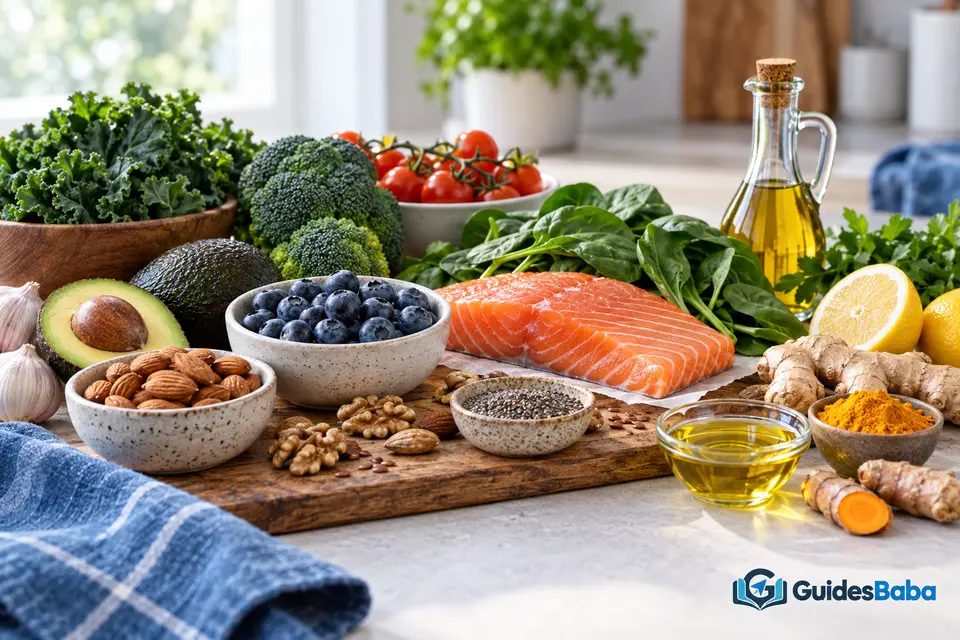
Inflammation is a hot topic in every feed today. So which foods have anti-inflammatory properties? Are certain foods magic, or is it a pattern? In general terms, whole plant foods lead the way. They bring helpful compounds to the plate.
Rather than hunting one hero food, think variety. No single bite calms inflammation. A colourful, balanced pattern matters far more. The idea is gentle, everyday eating. A professional can tailor the details.
Here is the honest answer. Many whole foods have anti-inflammatory properties. Vegetables, fruit, and whole grains lead the list. Oily fish and olive oil help too. Nuts, seeds, herbs, and spices add more. These foods support a calmer balance gently. A professional guides real, personal care.
This guide covers the foods in general terms. You will learn the main groups. We frame food kindly and without hype. This is not medical advice. See a professional.
Which foods have anti-inflammatory properties?
The honest answer is mostly whole plant foods. Add oily fish and healthy fats. Colour and variety matter most. Balance sits at the heart.
Think of it like a full paint box, not one colour. Each food adds a different shade. Does one berry calm inflammation? No, the whole pattern matters more. A varied plate shapes the balance.
Is this a rigid list of superfoods? Not at all, it stays flexible. Many everyday foods qualify here. It leaves room for foods you love. A professional can guide you.
Why certain foods may help
Plant foods carry helpful natural compounds. These include antioxidants and polyphenols. They work gently inside the body.
These compounds may support a calmer balance. The effect is general, not a cure. Diet is one factor among many. Sleep, movement, and stress matter too. Food supports the body over time. Many habits shape inflammation together.
You should not expect food to cure. Diet supports, it does not fix. Balance beats any single food. Steady habits matter more than speed. A professional can guide you.
Did you know?
Deep plant colours often signal helpful compounds. A rainbow plate gathers many of them at once.
Colourful vegetables lead the way
Vegetables sit at the centre here. Their colours signal helpful compounds. Leafy greens are a strong choice. Variety matters more than any single one.
Spinach, kale, and broccoli all help. Peppers, tomatoes, and carrots add colour. Discover the most nutrient dense leafy greens here. Fresh, frozen, and tinned all count. A colourful plate supports the whole pattern.
You should fill half your plate with vegetables. Mix the colours across the week. Variety supports a calmer balance. Greens and bright peppers are easy wins. A professional can advise you.
Berries and other fruit
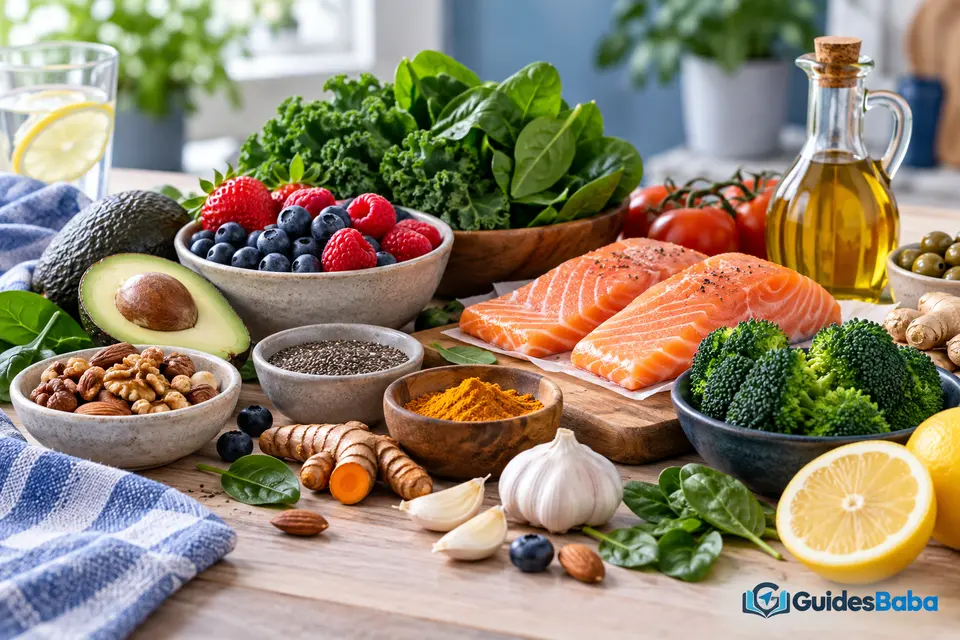
Fruit brings colour and helpful compounds. Berries are a popular choice. They carry antioxidants naturally. Colour signals a range of nutrients.
Blueberries, strawberries, and cherries all help. Oranges, apples, and grapes add variety. Learn about foods with the most antioxidants here. Whole fruit beats fruit juice here. A varied fruit bowl supports the pattern.
You should enjoy a range of fruit. Reach for berries when you can. Variety supports the whole pattern. Fresh or frozen both work well. A professional can advise you.
Polyphenols in everyday foods
Plants contain compounds called polyphenols. These appear in many everyday foods. They form part of the pattern. Variety helps you gather them.
Berries, olive oil, and green tea contain them. Nuts, herbs, and dark vegetables help too. Learn more about polyphenols and their sources. The effect is general, not a cure. Whole foods deliver them naturally.
You should favour whole plant foods. Enjoy a range of colours daily. Variety supports the whole pattern. Swap fizzy drinks for green tea. A professional can advise you.
Oily fish and omega-3 fats
Oily fish is a classic choice here. It brings omega-3 fats naturally. These fats may support a calmer balance. The type of fat matters most.
Salmon, sardines, and mackerel all help. Trout and herring add more options. These fats support the whole pattern. Two portions a week is a common aim. Variety keeps meals interesting.
You should include oily fish regularly. Tinned sardines are cheap and easy. Healthy fats support the whole pattern. Plant omega-3 sources exist too. A professional can advise you.

Nuts, seeds, and olive oil
Healthy fats belong on this list. The type of fat matters most. Some fats support a calmer balance. Balance guides the choices.
Olive oil is a common staple. Walnuts and almonds bring healthy fats. Flax and chia seeds help too. These foods support the whole pattern. Variety keeps meals interesting. Healthy fats support steady, everyday eating.
You should choose healthy fats often. Use olive oil in cooking. Add a small handful of nuts. A professional can advise you.
Whole grains and beans
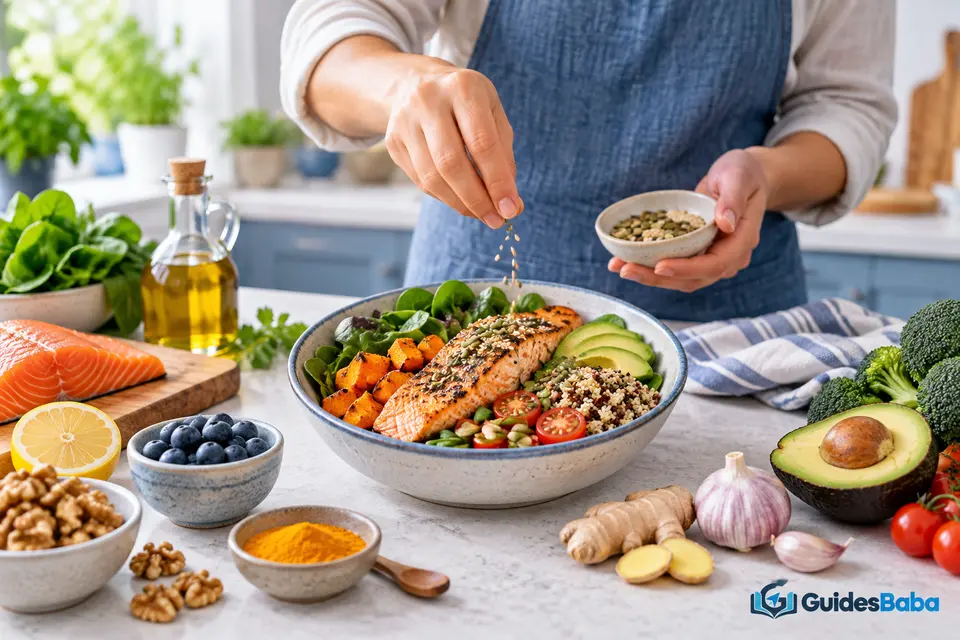
Whole grains and beans bring fibre. Fibre feeds helpful gut microbes. These foods anchor the pattern. Plants supply most of the fibre.
Oats, brown rice, and barley help. Lentils, chickpeas, and black beans add more. These foods support steady digestion too. A diverse plate supports a diverse gut. Fibre supports the whole pattern quietly.
You should build meals around these foods. Add fibre slowly to stay comfortable. Variety supports a healthy gut. Beans and oats are simple choices. A professional can advise you.
Herbs and spices that help
Herbs and spices belong in this pattern. They come from plants too. Small touches support varied eating.
Ginger, turmeric, and garlic feature often. They bring plant compounds along with taste. Enjoyment keeps the pattern sustainable. This effect is gentle and general. Flavour supports steady, varied eating.
You should cook with herbs and spices. Let flavour make plants appealing. Variety supports the whole pattern. A professional can advise you.
Green tea and warm drinks
Some drinks fit this pattern too. Green tea is a common example. It carries plant compounds naturally.
Green tea brings polyphenols along with warmth. Herbal teas add variety without sugar. Water remains the best everyday drink. These swaps support the whole pattern. A calm cup can replace fizzy drinks.
You should swap sugary drinks for tea. Keep water as your main drink. Variety supports a calmer balance. A professional can advise you.

The Mediterranean pattern connection
These foods overlap with a famous pattern. The Mediterranean pattern shares them widely. Both centre plants and healthy fats. The overlap is wide and helpful.
Both favour vegetables, fruit, and whole grains. Both include olive oil and oily fish. Explore the Mediterranean diet and its foods. A pattern beats any single food. Steady habits shape the balance over time.
You should think whole patterns here. Borrow ideas from this style freely. Steady eating supports the balance. A professional can guide you.
Anti-inflammatory foods versus pro-inflammatory foods
People often compare two broad groups. The clear comparison is anti-inflammatory foods versus pro-inflammatory foods. Each shapes daily eating.
| Anti-inflammatory foods | Pro-inflammatory foods |
|---|---|
| Colourful vegetables and fruit. | Sugary drinks and sweets. |
| Oily fish and olive oil. | Fried and packaged snacks. |
| Whole grains and beans. | Refined white grains. |
| Nuts, seeds, and herbs. | Processed and cured meats. |
The first group centres whole foods. The second leans heavily processed. You can read about foods that promote inflammation too. Small swaps move you across. A professional can help you shift.
How these foods support immune balance
Inflammation and immunity are closely linked. These foods support a calmer balance. They bring antioxidants and fibre together. Balance ties it together.
A plant rich plate supports both systems. Many of these foods overlap widely. This effect is gentle and general. Food supports the body quietly. No single food carries it. A whole pattern supports steady balance.
You should think whole patterns here. Favour plants, fibre, and healthy fats. Balance supports a calmer response. The two systems share many foods. A professional can guide you.
Building simple everyday meals
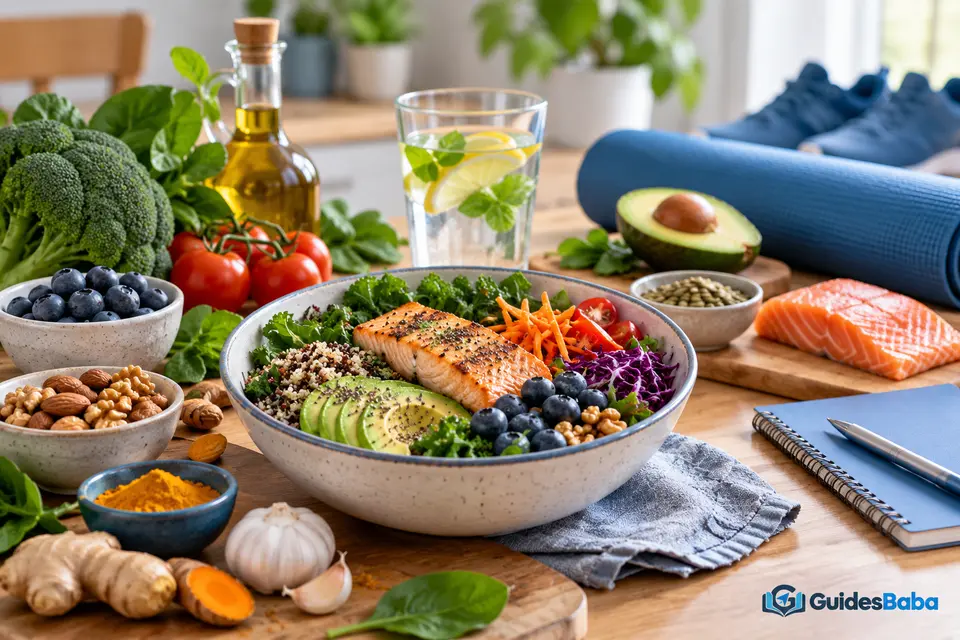
These foods suit real, busy life. Simple meals do most of the work. You do not need fancy or costly foods. Consistency matters more than novelty here.
Start with a plant based bowl. Add whole grains and a protein. Finish with fruit for something sweet. Small prep saves time. Simple meals keep the pattern realistic.
You should keep meals simple and steady. Repeat favourites through the week. Small habits build the pattern. A professional can advise you.
Realistic expectations for these foods
These foods work slowly and gently. They are not a quick fix. Steady habits shape the results. Patience matters more than speed.
The body responds over weeks and months. Bold promises usually mislead people. A calm, steady approach works better. Balance beats any harsh rule. Small habits build the pattern over time.
You should set gentle expectations. Give any change real time. Steady habits support the balance. A professional can guide you.
Common mistakes people make
One mistake is chasing single super foods. Another is ignoring the wider pattern. Balance beats any quick fix.
People often expect food to cure conditions. Some drop foods they love entirely. Others buy costly powders and pills. Steady habits work far better. Your team fills the gaps. Patience supports real, lasting change.
You should avoid chasing quick fixes. Base changes on real advice. Think patterns over single foods. A professional can correct myths.
Who should get tailored advice
Diet and inflammation are personal matters. They depend on your health. They depend on your history too. One plan cannot fit all.
Some conditions involve ongoing inflammation. Allergies also shape safe choices. Food alone cannot carry it. Your history shapes everything here. Only your team sees it fully. Personal advice always beats general tips.
You should never self-diagnose from articles. Get personal advice before big changes. A professional can guide you safely.
When to seek professional help
General tips suit many people well. Still, every person is unique. Personal advice always matters most. Your wellbeing comes first here.
See a doctor about ongoing pain or swelling. A dietitian can tailor your meals. A specialist can assess conditions. You deserve care and support. Asking for help shows sense.
This is not medical advice. See a professional for your own care. Food supports care but never replaces it. Then follow your trusted team.
Frequently asked questions
Which foods have anti-inflammatory properties?
Vegetables, fruit, whole grains, and beans lead. Oily fish, olive oil, and nuts help too.
Do these foods cure inflammation?
No, food does not cure inflammation. These foods may support a calmer balance.
Are berries a good choice?
Yes, berries carry helpful antioxidants naturally. Enjoy them fresh or frozen often.
Is oily fish worth eating?
Oily fish brings helpful omega-3 fats. Many people aim for two portions weekly.
Do herbs and spices help?
Ginger, turmeric, and garlic bring plant compounds. They add flavour and support varied eating.
Which foods should I limit?
Limit sugary drinks and refined grains. Fried and processed foods appear less often.
Do I need supplements?
Most people meet needs through food. Ask a professional before taking supplements.
Does olive oil count?
Yes, olive oil is a healthy fat. Use it in place of harder fats.
Can these foods help everyone?
Needs vary from person to person. A professional can tailor the advice.
When should I see a professional?
See a doctor about ongoing pain or swelling. A dietitian can tailor your meals.
The bottom line
So which foods have anti-inflammatory properties? Mostly whole plant foods lead the way. Add oily fish and olive oil. Include nuts, seeds, herbs, and spices. These foods support a calmer balance gently.
You do not need strict rules. Aim for a varied, colourful plate. Make small swaps toward plants. Lean on a professional throughout.
For general background, read this overview of inflammation. You can also learn about antioxidants. Trusted sources support professional advice.
This is not medical advice. See a professional for your own care. Food supports care but never replaces it. Then let your trusted team guide you.