
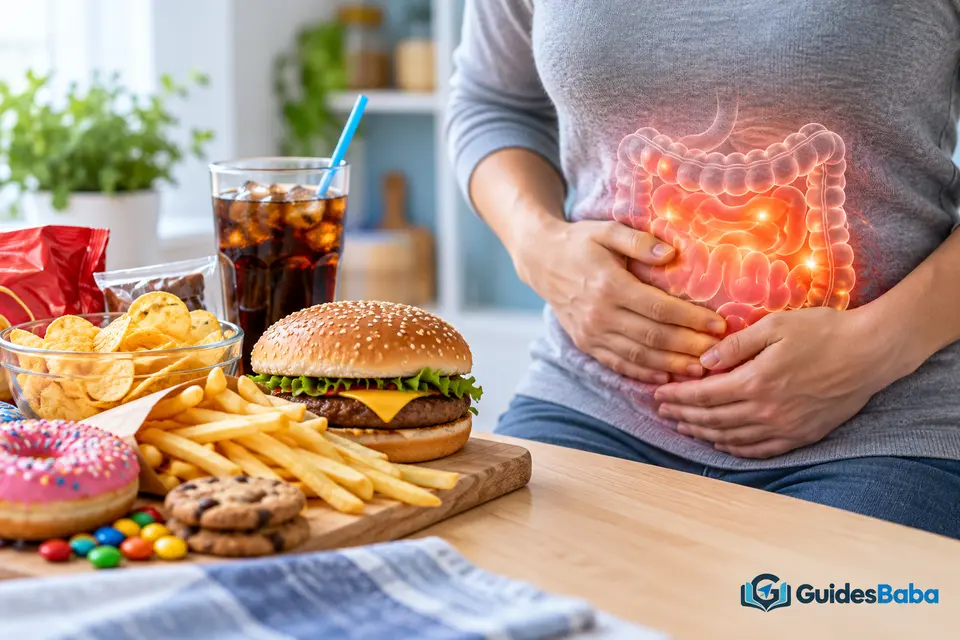
Ultra-processed foods line nearly every store shelf. Can ultra-processed foods contribute to inflammation? Could your favourite snack stir quiet trouble? In general terms, they may play a part. The research is still unfolding.
Rather than fearing every packet, think patterns. No single food seals your fate. Your whole diet matters far more. The wider habit shapes the balance. A professional can guide the details.
Here is the honest answer. Ultra-processed foods may contribute to inflammation. Diets high in them show links. These links are associations, not proof. The jury is still out on causes. Food is one factor among many. A professional guides real, personal care.
This guide covers the topic in general terms. You will learn what these foods are. We frame food kindly and without hype. This is not medical advice. See a professional.
Can ultra-processed foods contribute to inflammation?
The honest answer is a cautious yes. They may contribute in some people. The link appears in many studies. Proof of cause stays limited.
Think of it like background noise, not one alarm. One packet will not decide your health. Does a single biscuit cause inflammation? No, the wider pattern matters more. Steady habits shape the balance over time.
Is every processed food harmful? Not at all, the picture is mixed. Some processed foods still offer nutrients. Balance guides the smarter choices. A professional can guide you.
What counts as an ultra-processed food?
Processing sits on a wide scale. Ultra-processed foods sit at the far end. They contain many industrial ingredients. Home kitchens rarely hold these.
Think fizzy drinks, packaged snacks, and instant meals. Mass-produced breads and sweets often qualify. Many additives and refined ingredients appear. These foods are built for long shelf life. Convenience is their main selling point.
Not all packaged food is ultra-processed. Tinned beans and plain yoghurt differ greatly. Reading labels helps you tell them apart. A professional can guide you.
Did you know?
The word ultra-processed comes from a system called NOVA. It sorts foods by how much they are processed.
How inflammation works in the body
Inflammation is a natural body response. It helps you heal and fight infection. Short term inflammation is helpful.
Sometimes low grade inflammation lingers quietly. This type can persist without clear signs. Diet is one factor among many. Genes, sleep, and stress also matter. Food supports the body over time.
You should not expect food to fix this. Diet supports, it does not cure. Balance beats any single change. A professional can guide you.
Why processing may matter
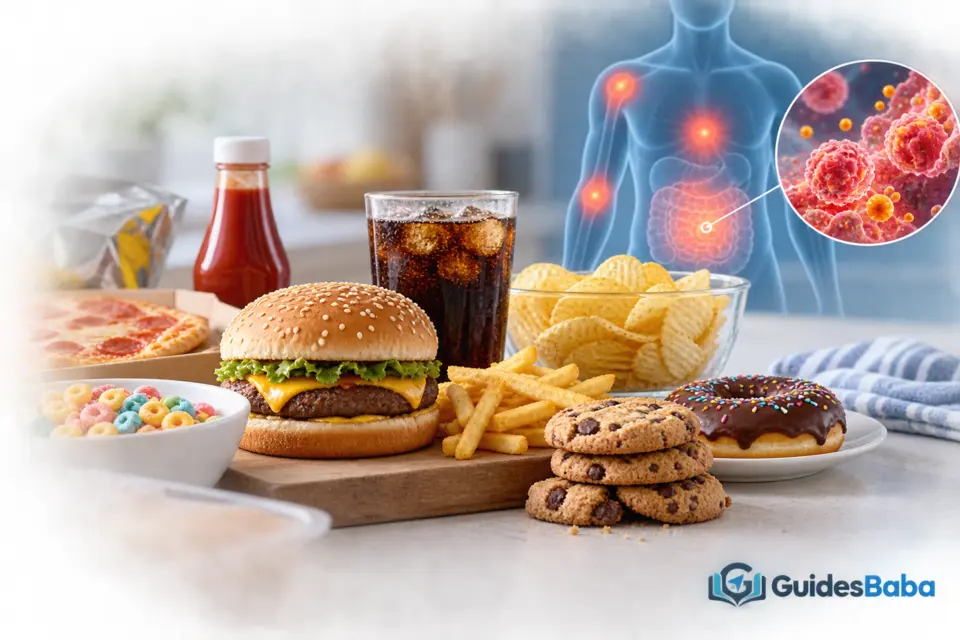
Processing changes food in several ways. It strips some nutrients and fibre. It often adds sugar, salt, and fat. These shifts may affect the body.
Refined ingredients digest quickly and spike energy. Fibre loss reduces gentle, steady digestion. Additives change texture and taste. The overall package may nudge inflammation. This effect is general, not certain.
You should focus on the whole pattern. Fewer ultra-processed foods may help. Whole foods support a calmer balance. A professional can advise you.
Added sugars and the body
Many ultra-processed foods carry added sugars. Sweet drinks are a common source. Sugar adds energy with little else. High intake may affect the body.
Learn about added sugars and where they hide. Frequent sugar spikes may strain balance over time. The link to inflammation stays general. No single sweet treat decides things. Moderation keeps the pattern realistic.
You should keep sugary drinks occasional. Choose water or plain options often. Small swaps add up over time. A professional can advise you.
Refined carbohydrates and processing
Refined carbohydrates feature in many products. White bread and pastries are examples. Processing removes fibre and some nutrients. The body digests them quickly.
Read more on refined carbohydrates and their effects. Quick spikes may nudge the body over time. Whole grains offer a steadier option. This link stays general and cautious. Balance matters more than any rule.
You should favour whole grains often. Swap white bread for wholemeal choices. Variety supports a calmer balance. A professional can advise you.
Fats and additives to watch
Some ultra-processed foods use certain fats. Fried and packaged snacks are examples. The type of fat can matter. Additives also shape these foods.
Industrial fats may affect the body differently. Many additives simply improve shelf life. Most approved additives are considered safe. The wider pattern still matters most. Whole foods keep things simpler.
You should read labels when unsure. Favour simple, recognisable ingredients often. Home cooking gives you control. A professional can advise you.

Fibre lost during processing
Fibre often disappears during heavy processing. Whole foods keep their natural fibre. Fibre feeds helpful gut microbes. Its loss may matter here.
A high fibre plate supports steady digestion. It also supports a diverse gut. Discover foods with the most fibre here. This gut link stays gentle and general. Plants supply most of the fibre.
You should eat plenty of whole plants. Add fibre slowly to stay comfortable. Beans and oats are simple wins. A professional can advise you.

Whole foods versus ultra-processed foods
People often compare two broad choices. The clear comparison is whole foods versus ultra-processed foods. Each shapes daily eating.
| Whole foods | Ultra-processed foods |
|---|---|
| Keep natural fibre. | Often stripped of fibre. |
| Low in added sugar. | Often high in added sugar. |
| Simple, short ingredients. | Long ingredient lists. |
| Support a calmer balance. | May nudge inflammation. |
Whole foods keep more of their goodness. Ultra-processed foods often lose it. Small swaps move you across. You do not need a total overhaul. A professional can help you shift.
The gut microbiome link
The gut hosts trillions of microbes. These microbes influence inflammation signals. Fibre feeds the helpful ones. Processing often removes that fibre.
A diverse plate supports a diverse gut. Ultra-processed diets may narrow that diversity. This link stays general and evolving. Food supports the gut quietly. No single meal decides the outcome.
You should feed your gut varied plants. Add beans, vegetables, and whole grains. Variety supports a healthy gut. A professional can guide you.
Salt in processed foods
Ultra-processed foods often carry plenty of salt. Salt improves taste and shelf life. Most people eat more than needed. Excess salt may affect the body.
Cutting back is easier with home cooking. Herbs and spices replace some salt. The inflammation link here stays general. Balance guides the smarter choices. Small changes help over time.
You should taste before adding salt. Cook more meals from scratch. Herbs bring flavour without excess. A professional can advise you.
How much really matters
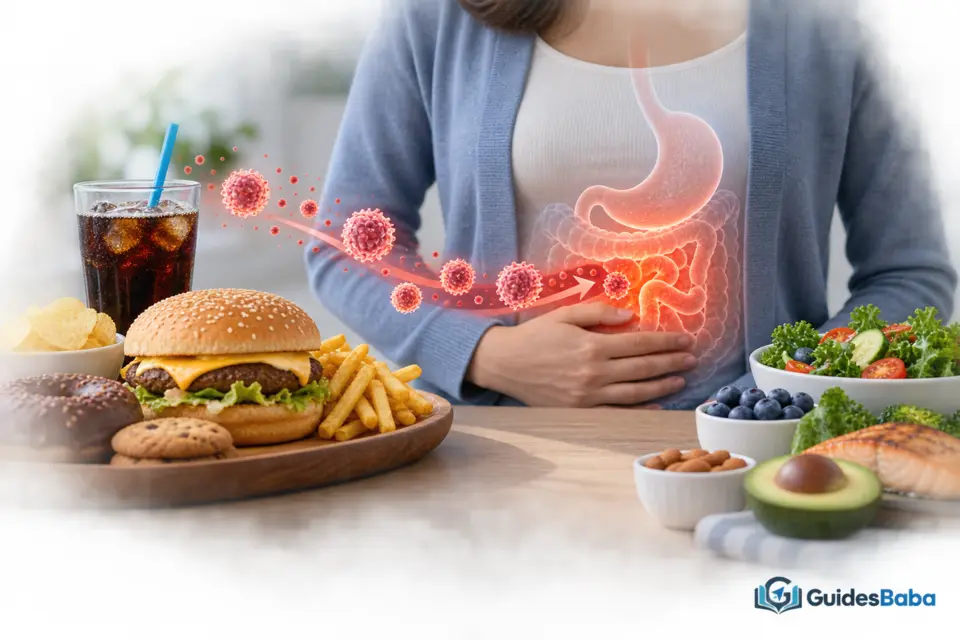
Amount and frequency matter a great deal. An occasional treat is not the issue. A daily habit carries more weight. Pattern beats any single food.
Most diets include some processed food. The goal is less, not never. Small, steady reductions add up. Perfection is not the target here. Balance keeps the plan realistic.
You should aim for gentle progress. Reduce ultra-processed foods step by step. Steady habits shape the balance. A professional can guide you.
Simple swaps that help
Swaps make change feel easy. They replace one food with a better option. Small wins build real momentum. Consistency matters more than novelty.
Swap crisps for nuts or fruit. Choose water over sugary drinks. Pick wholemeal bread over white. See how to make your everyday diet healthier here. Small swaps support the whole pattern.
You should start with one swap. Repeat it until it feels normal. Then add another gentle change. A professional can advise you.
Reading food labels
Labels reveal how processed a food is. Long ingredient lists are a clue. Unfamiliar names suggest heavy processing. A quick scan helps a lot.
Check for added sugars near the top. Watch for many additives and refined oils. Shorter lists often mean simpler food. This habit supports better choices. Knowledge makes shopping easier.
You should read labels without stress. Aim for simpler ingredient lists. Small habits build the pattern. A professional can advise you.
Cooking more at home
Home cooking gives you real control. You choose the ingredients yourself. You can cut sugar and salt. Simple meals do most work.
Batch cooking saves time on busy days. Frozen vegetables make this easy. You do not need fancy skills. Basic meals beat takeaway habits. Cooking keeps the pattern realistic.
You should cook a little more often. Start with quick, simple recipes. Small habits build over time. A professional can advise you.

Realistic expectations here
Change works slowly and gently here. There is no overnight fix. Steady habits shape the results. Patience matters more than speed.
The body responds over weeks and months. Bold promises usually mislead people. A calm approach works better. Balance beats any harsh rule. Small habits build the pattern over time.
You should set gentle expectations. Give any change real time. Steady habits support the balance. A professional can guide you.
Common mistakes people make
One mistake is banning every packet. Another is chasing a single villain food. Balance beats any quick fix.
People often ignore the wider pattern. Some expect instant results from swaps. Others feel guilt over one treat. Steady habits work far better. Patience supports real, lasting change.
You should avoid all or nothing thinking. Base changes on real advice. Think patterns over single foods. A professional can correct myths.
Who should get tailored advice
Diet and inflammation are personal matters. They depend on your health. They depend on your history too. One plan cannot fit all.
Some conditions involve ongoing inflammation. Allergies also shape safe choices. Food alone cannot carry it. Your history shapes everything here. Personal advice always beats general tips.
You should never self-diagnose from articles. Get personal advice before big changes. A professional can guide you safely.
When to seek professional help
General tips suit many people well. Still, every person is unique. Personal advice always matters most. Your wellbeing comes first here.
See a doctor about ongoing symptoms. A dietitian can tailor your meals. A specialist can assess conditions. You deserve care and support. Asking for help shows sense.
This is not medical advice. See a professional for your own care. Food supports care but never replaces it. Then follow your trusted team.
Frequently asked questions
Can ultra-processed foods contribute to inflammation?
They may contribute in some people. The link is general and not proven.
What are ultra-processed foods?
They are industrially made foods with many additives. Fizzy drinks and packaged snacks are examples.
Do they always cause inflammation?
No, food does not work that simply. The wider pattern matters far more.
Are all processed foods bad?
No, many processed foods offer nutrients. Tinned beans and plain yoghurt are examples.
Does sugar drive inflammation?
High added sugar intake may play a part. The link stays general, not certain.
Should I ban these foods completely?
No, aim for less, not never. Balance keeps the plan realistic.
Does fibre help here?
Yes, fibre feeds helpful gut microbes. Whole plants supply most of the fibre.
What foods should I choose instead?
Favour whole foods, vegetables, and whole grains. Swap sugary drinks for water.
How fast will I notice change?
The body responds over weeks and months. Steady habits shape the results.
When should I see a professional?
See a doctor about ongoing symptoms. A dietitian can tailor your meals.
The bottom line
So can ultra-processed foods contribute to inflammation? They may play a part for some people. Diets high in them show links. These links are general, not proof. The wider pattern matters most.
You do not need strict bans. Aim for a varied, balanced plate. Make small swaps toward whole foods. Lean on a professional throughout.
For general background, read this overview of ultra-processed food. You can also learn about inflammation. Trusted sources support professional advice.
This is not medical advice. See a professional for your own care. Food supports care but never replaces it. Then let your trusted team guide you.