

The best study guide is the one that matches your course, current level, and exam tasks. It should explain ideas clearly, provide realistic practice, and correct mistakes. A popular brand cannot replace that fit.

This guide gives you a neutral way to compare printed, digital, and self-made options. You can use the same checks for school, college, or certification study.
Which study guide is the best?
The best study guide matches the exact learning goal. It covers the right material, uses accurate examples, and asks useful questions. Its answers explain why, not only what.
For most students, a combined guide works best. Use a trusted book or course resource for coverage. Add personal notes, class examples, and an error log.
Did you know?
A shorter guide can beat a larger one when its questions closely match the required skills.
Seven signs of a strong study guide
First, check alignment. The chapters should match the current syllabus, test outline, or learning goals. A guide for the wrong edition can waste valuable time.
Second, check accuracy. Definitions, formulas, dates, and answer explanations should agree with trusted course sources. Look for editors, authors, and a clear update date.
Third, inspect the practice. Questions should resemble the thinking required in class. A pile of easy definitions will not prepare you for analysis or problem solving.
Fourth, review the feedback. The answer key should explain mistakes. Fifth, check navigation. Weak topics must be easy to find and revisit.
Sixth, judge readability. Clear language beats fancy language. Seventh, consider access. The guide should fit your time, device, budget, and study setting.
That sounds like many checks, but don’t judge a book by its cover. A ten-minute sample review can reveal most of them.


Printed versus digital study guides
Printed guides offer focus and easy handwritten notes. They work without a battery or internet connection. Page flipping can also support a clear sense of location.
Digital guides offer search, quick updates, links, and portable access. Some include quizzes and progress tracking. Notifications and extra tabs can create distraction.
Neither format wins every time. Pick the one you will use actively. The tool should fit your routine like a good pair of shoes.
Best study guide format by subject
Math and physics need worked examples and fresh problem sets. The guide should show main steps, then remove support. Answers must explain where errors happen.
Biology and anatomy benefit from labeled diagrams, process maps, and comparison charts. Cover labels before testing yourself. Draw key systems from memory.
History guides need timelines, causes, evidence, and comparisons. Do not stop at dates. Practise explaining why events changed and how sources support claims.
Language guides need vocabulary in context, grammar examples, and real reading or listening. A word list alone is not enough. Use each word in a sentence.
For several ready-made layouts, visit our study guide examples. You can adapt each one without changing the course goal.
Should learning style decide the best guide?
Personal preference can affect comfort. However, the task should decide the main method. A visual preference does not remove the need to solve equations.
Use visuals when they show useful structure. Use spoken explanation when it tests understanding. Use movement only when it supports the real skill.
The best guide uses several forms when the subject needs them. Variety keeps practice honest and helps you see ideas from another angle.

How to test a study guide before choosing it
Pick one topic you partly understand. Read the guide’s explanation and close it. Explain the topic aloud, then answer two questions without help.
Check the feedback. Did it show why your answer worked or failed? Could you find the weak point quickly? If yes, the guide passed a useful test.

Try a second topic at the expected exam level. One easy sample can flatter a weak resource. The rubber meets the road when practice becomes unfamiliar.
Should you use more than one study guide?
Use more than one source when each has a clear job. One may explain concepts. Another may provide practice. Your own error log can direct review.
Avoid collecting many guides without using them. More resources can create more choices and less practice. Set one primary guide and one support source.
Our study guide book overview helps compare commercial books. The good study guide checklist checks missing parts.
The best study guide routine
Begin with a diagnostic test. Mark each topic as ready, unsure, or not ready. Study the weakest useful topic first.
Use short sessions with recall and practice. Check answers after a real attempt. Record the mistake, correction, and next review date.
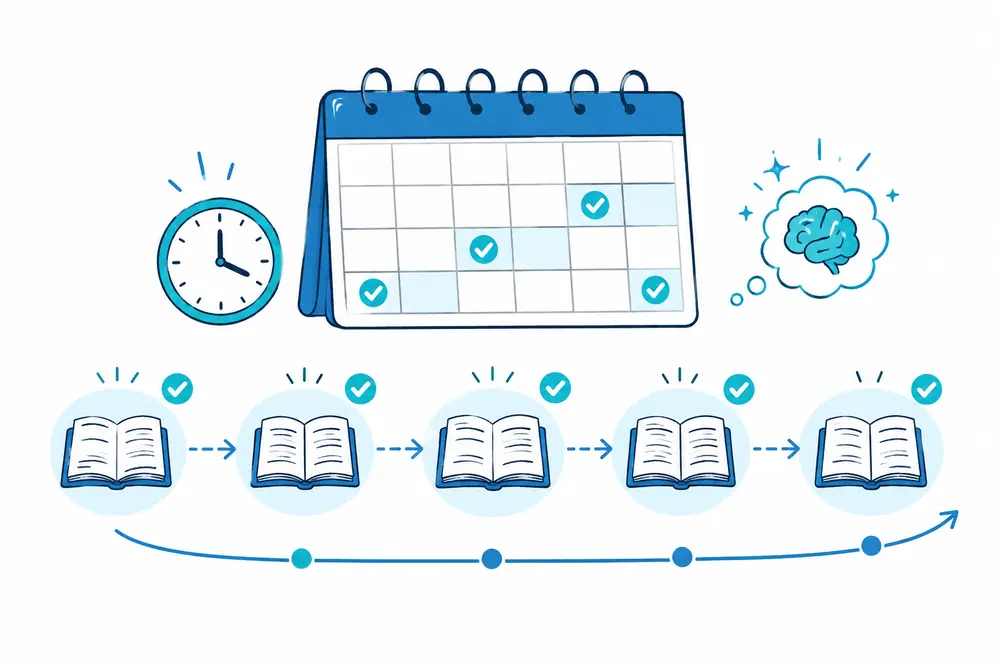
Cornell’s effective study strategies recommend retrieval and distributed practice. UNC also explains strategic test preparation based on course goals.
Read next
Start with the simple definition and purpose of a study guide.

Free versus paid study guides
Free guides can be excellent when they come from a school, library, teacher, or official provider. They may cover one topic instead of a full course.
Paid guides often add editing, large question banks, and full practice tests. Price does not guarantee accuracy. Always inspect sample pages first.
Compare total value, not page count. Clear explanations and realistic questions matter more than bonus files. All that glitters is not gold.
Use legal copies and library access when possible. Do not download unknown files that may be unsafe or unauthorized.
How to choose an exam study guide
Find the official exam outline before comparing books. Check tested topics, question types, timing, and scoring. The guide should follow the current version.
Look for a diagnostic test and several levels of practice. Explanations should show why answers work. Timed tests alone do not teach weak skills.
Check whether practice resembles the real format. Similar surface wording is not enough. The reasoning and difficulty should also match.
Save one fresh practice test for later. A clean check gives a better measure of progress. Familiar questions can flatter your score.
Use a simple study guide scoring rubric
Score alignment first. Give the guide a high mark only when it covers the right course and level. Missing required topics should lower the result quickly.
Score accuracy and source quality next. Check several facts and answers. A single serious error can make a guide hard to trust.
Then score practice, feedback, navigation, and access. Use the same questions for every option. Comparing like with like keeps the choice fair.
Do not let a polished cover control the score. Put substance before style. Actions speak louder than words.

Study guide red flags
Avoid guides that promise guaranteed grades or instant mastery. No resource controls effort, background, or exam conditions. Strong methods use honest language.
Watch for copied summaries without examples or questions. Passive reading can feel easy while leaving weak recall hidden.
Check answer keys for mistakes and thin explanations. A letter without a reason gives little help after an error.
Be careful with outdated editions and unnamed authors. Trust grows through clear sources, current dates, and visible review.
Choose a guide you can actually use
Readable text, clear headings, and strong contrast support focus. Digital guides should work on the device you use most.
Check whether images include descriptions and useful captions. Color should not carry meaning alone. Printed pages should leave room for notes.
Consider internet access, printing cost, and screen comfort. A feature has no value when you cannot use it during normal study.
Choose the simplest option that meets the goal. Keep it simple and you are more likely to return.
How to improve a guide after choosing it
Add class examples beside the matching topic. Record teacher corrections and assignment feedback. These details make a general guide fit your course.
Create an error log from every practice set. Write the wrong idea, correct rule, and next review date. Keep the log shorter than the main guide.
Add new questions instead of more summaries. Fresh attempts reveal whether understanding transfers. Use a trusted source to verify each answer.
Remove repeated or unused pages. A living guide should become sharper over time. Out with the old, in with the useful.

Make the final decision
Choose two strong options after your first review. Test the same weak topic with each. Compare explanation, practice, feedback, and ease of use.
Select one primary guide. Keep one support source for missing explanations or extra practice. Too many main guides can split your attention.
Set a one-week trial. Track completed questions and corrected errors. Evidence from use matters more than first impressions.
At the end, keep, adjust, or replace the guide. The best choice is the one that improves real performance.
Choose a guide for your current stage
Beginners need clear explanations and guided examples. A question-heavy workbook may feel confusing before the basic rules make sense.
Intermediate learners need mixed practice and useful feedback. They should explain choices, not only repeat steps.
Advanced learners need realistic difficulty, unfamiliar cases, and time pressure when relevant. Basic summaries may add little value.
Choose for today’s need, not the learner you hope to become next month. Walk before you run.
How to judge question quality
Check whether questions match the course actions. Definitions test recall. Cases, essays, and problems test deeper use.
Look for a range of difficulty. Easy questions build the base. Harder questions reveal whether the idea transfers.
Inspect wording for clarity. Trick wording should not replace subject knowledge. Ambiguous questions teach confusion.
Review answer explanations and scoring criteria. A strong question needs feedback that helps the next attempt.

Verify important guide claims
Compare major facts with official course sources. Check formulas, rules, dates, and exam requirements. Small mistakes can spread across many questions.
Look for named authors, editors, and updates. Trust should come from evidence, not confident marketing.
Read correction pages when publishers provide them. Update your copy before studying the affected section.
When sources disagree, follow the authority named by your course. Go straight to the source.
Digital guide privacy and account checks
Use trusted platforms and normal account security. Review what data a quiz tool stores. Avoid unnecessary personal details.
Check export and offline options before building many notes. Your work should remain available when a subscription ends.
Do not share passwords or private course files. Collaboration should use approved links and permissions.
Turn off distracting alerts during study. A useful app should support attention, not compete for it.
Final checklist before you commit
Confirm alignment, accuracy, practice, feedback, navigation, access, and cost. Test one weak topic and one difficult question.
Check the edition and current exam outline. Read a full answer explanation. Make sure the format works in your normal study place.
Choose one primary guide and one support source. Set the first review session on your calendar.
After one week, judge results instead of promises. The best guide earns trust through use.

Choose a guide when time is short
Start with the official topic list and a diagnostic test. Choose a guide that makes weak high-value topics easy to find.
Prefer clear explanations, targeted questions, and answer reasons. Skip bundles that require hours of setup before practice begins.
Use one primary source. Extra resources can wait. When time is tight, too many roads slow the journey.
Short deadlines do not make accuracy optional. Verify key rules and formulas before building practice around them.
Choose a guide for a long course
Look for chapter alignment, cumulative review, and enough practice for repeated use. The guide should grow with the course.
Add class notes after every lesson. Use review dates and an error log. Small updates keep the resource useful for finals.
Check whether early topics return in later practice. Cumulative questions help prevent old learning from fading.
Choose durable access. A course-long guide should remain available across devices or terms when needed.
Review your choice after one week
Count real attempts, corrected errors, and topics improved. Do not judge the guide by pages read.
Ask whether feedback changes the next attempt. Check whether navigation saves time. Note any missing course material.
Keep the guide when evidence improves. Adjust it when small gaps appear. Replace it when accuracy or alignment fails.
There is no shame in changing tools. A bad workman blames tools, but a careful learner still chooses wisely.

What proof should a good guide provide?
A good guide should show who created it and when it was updated. It should identify the course, level, or exam it covers.
Sample pages should reveal the real explanation style. Practice questions should include clear answers and reasons, not hidden marketing promises.
Important claims should connect to trusted sources. Corrections should be easy to find when an error appears.
User reviews can add context about printing, access, and unclear sections. They cannot replace your own alignment check.
The strongest proof comes from use. If recall, accuracy, and correction improve, the guide supports the goal.
Check progress after spaced sessions. Fast improvement during one sitting can disappear by the next day.
Use at least one fresh question when measuring progress. Familiar questions may reward memory of the answer.
Ask whether the guide saves time finding and fixing weak topics. Efficiency matters when the course has many demands.
Keep notes about missing explanations and weak practice. Small additions may rescue an otherwise strong resource.
Replace the guide when errors, poor alignment, or access problems keep returning. Do not throw good time after bad.
The final choice should feel practical, not perfect. No guide can remove every hard topic or replace steady work.
Choose the resource that helps you find gaps, practise the right skills, and understand corrections. Then use it across several spaced sessions.
Keep your course sources nearby for deeper explanations. A study guide is a bridge, not the whole destination.
Best study guide FAQ
Is a paid study guide always better?
No. Price does not prove alignment or accuracy. Review sample pages and answer explanations before paying.
Are flashcards the best study guide?
Flashcards work well for recall. They are weaker for long explanations and multi-step problems. Combine them with practice that matches the subject.
Can I make the best guide myself?
Yes. A self-made guide can match your course closely. Verify its facts and add enough new practice.
The final takeaway
The best study guide is accurate, aligned, active, and easy to use. It should expose weak knowledge and show how to fix it.
Test one sample topic before choosing. If the guide improves recall and correction, it has earned a place in your plan.