
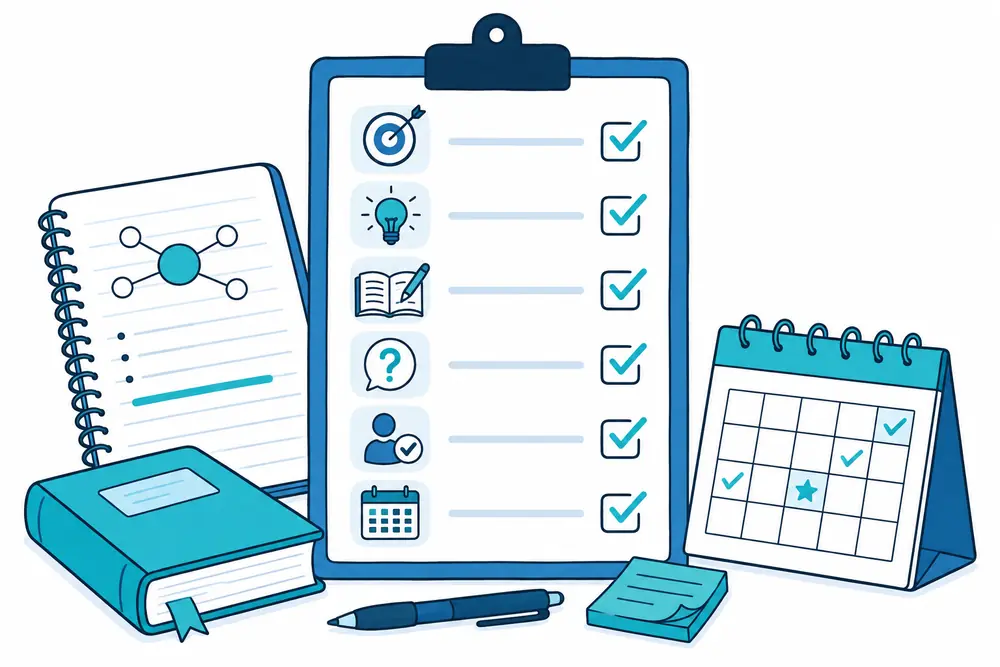
A good study guide includes clear goals, key concepts, examples, practice questions, answers, and a review plan. Each part should help you recall or use information. Decoration is optional. Useful practice is not.

The guide should also match your course or exam. A perfect-looking page can still miss the target. This checklist shows what belongs inside and why it matters.
What does a good study guide include?
A good study guide contains the material you must learn and a way to test it. It normally includes learning goals, topic summaries, key terms, examples, questions, and an answer key.
Strong guides also show connections. They compare similar ideas, explain causes, and mark common errors. A short schedule helps you review before the deadline.
Did you know?
The answer key is most useful when it explains mistakes. A bare answer checks results but teaches very little.
1. Clear learning goals
Every section should begin with a goal. Use an action word such as define, compare, solve, label, or explain. These words show the kind of practice you need.
Find goals in the syllabus, assignment instructions, review sheet, or textbook chapter. Teacher feedback can reveal hidden priorities. When in doubt, go straight to the horse’s mouth.
A weak goal says, “Know chapter four.” A stronger goal says, “Compare mitosis and meiosis.” The second goal can become a chart and a recall question.
2. Key concepts and terms
List the main ideas under short headings. Explain each in your own words. Keep exact wording only when a formal definition or formula requires it.
Do not copy every bold word from the textbook. Select terms that support the learning goals. Add a short example or contrast when a term is easy to confuse.

Definitions with context
A definition alone can be fragile. Add where the idea appears, what it affects, or how it differs. Context gives the term more hooks in memory.

Relationships between ideas
Use arrows, short labels, or comparison rows. Show causes, steps, categories, and exceptions. These links often matter more than isolated facts.
3. Examples and useful visuals
Examples turn a rule into something concrete. Include one clear example after each difficult idea. Then add a new problem that uses the same rule.
Visuals should carry information. Use a timeline for order, a diagram for parts, and a chart for comparison. A picture without a learning purpose can become clutter.
Label every diagram from memory. Cover the labels, name each part, then check. That small action turns a visual into active practice.
4. Practice questions that match the task
Questions are the engine of a good study guide. They force your brain to retrieve and apply material. Could a guide really test readiness without them?
Mix question types when the real exam mixes them. Use short recall, explanation, comparison, calculation, and application. Match the difficulty to course work.
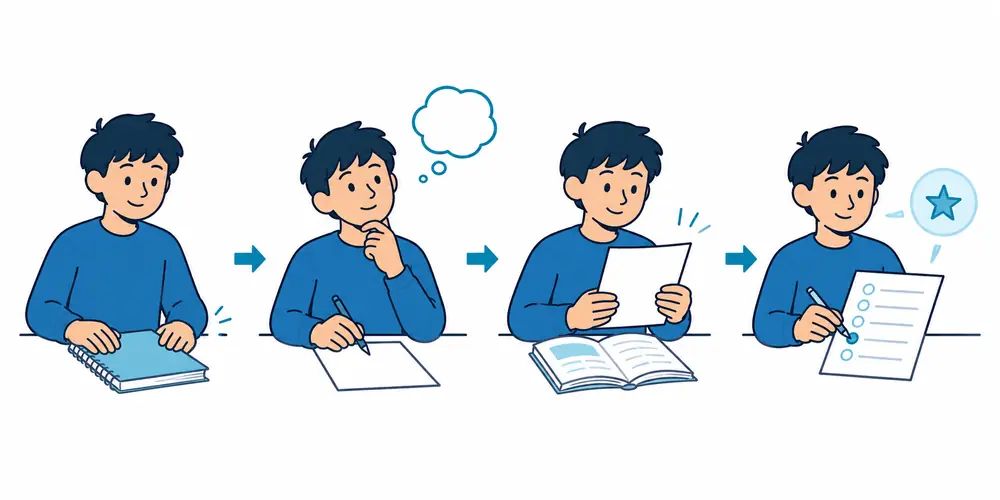
The University of North Carolina recommends self-testing and focused study sessions. Its guide to studying smarter explains why active methods beat passive review.
Recall questions
Recall questions ask for a fact, term, step, or formula. Keep prompts on one side and answers elsewhere. Do not let visible answers spoil the attempt.
Application questions
Application questions use the idea in a new case. They work like a road test. Knowing the rules matters, but you must also steer.

5. Answers and feedback
Place answers after the questions or on a separate page. This simple choice protects the practice. An answer should state the result and show the reason.
For calculations, show the main steps. For writing, provide criteria or a model outline. For multiple choice, explain why the wrong choices fail.
Add a place to record errors. Note the topic, the mistaken idea, and the correct rule. Review that list before the next practice set.
6. A realistic review plan
A good guide tells you what to review first. Mark topics as ready, unsure, or not ready. Spend most time where the evidence shows a gap.
Schedule short reviews across several days. Begin each session with recall. End by choosing the next weak topic. Little and often does the trick.
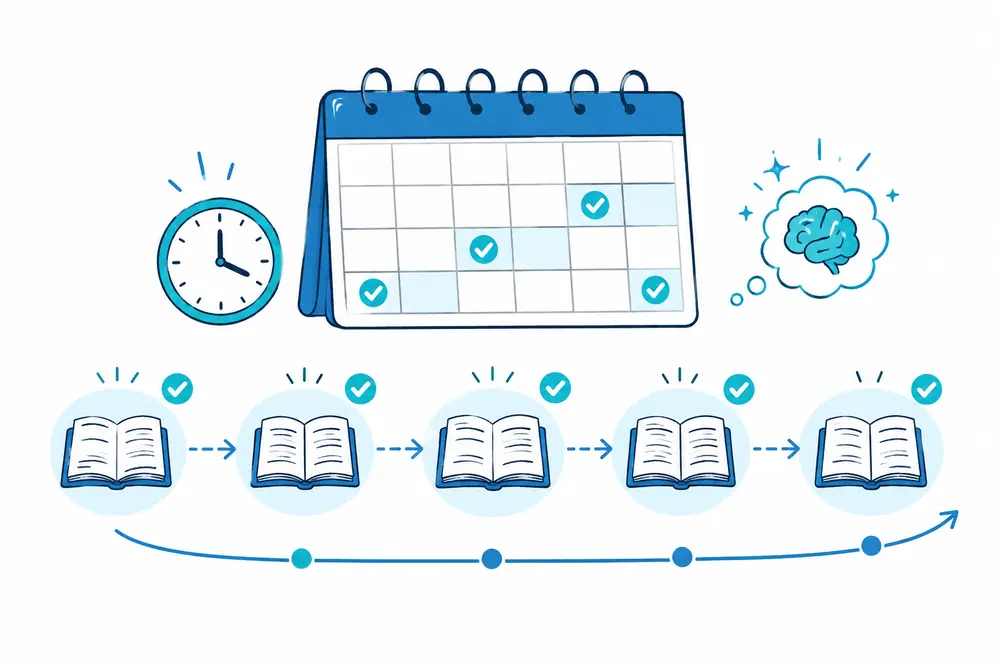
Cornell University also recommends distributed practice. Its effective study strategies support repeated retrieval over time.
Useful optional parts
Some guides benefit from formulas, source lists, mnemonic cues, or blank diagrams. Add them only when the subject needs them. Every part should earn its space.
A confidence rating can help plan review. Use a simple low, medium, or high label. Then prove the rating with a question before trusting it.
For longer exams, add a progress tracker. Record completed topics and practice scores. Do not turn tracking into the main task. The tail should not wag the dog.
What should you leave out?
Leave out copied paragraphs that you cannot explain. Remove repeated examples and decorative elements that hide structure. Skip facts that do not support a learning goal.
A guide also should not contain unchecked AI output. AI can draft questions and summaries, but course sources must verify them. Accuracy comes before speed.
If your guide keeps growing, split it by unit. A smaller guide makes weak areas easier to see. Our study guide examples show several subject-based layouts.
How to test your study guide
Put the guide away and answer its questions. Explain the main goals aloud. Solve one fresh problem and label one visual. The results reveal whether the guide works.
Ask three final questions. Does it match the course? Can I practise without seeing answers? Does feedback help me correct mistakes?
If the answer is yes, the guide is ready. If not, improve the weak part. You can also review the purpose of a study guide or compare the best study guide features.
Read next
Learn what to expect inside a full study guide book.

7. Source notes and accuracy checks
Write the source beside important facts, formulas, and quotations. A page number or lesson name makes later checking much easier.
Compare your summary with the original source. Ask whether you changed the meaning while shortening it. Simple wording should keep the correct idea.
Mark facts that need teacher confirmation. Do not hide uncertainty behind confident wording. A question mark is better than a wrong statement.
Review dates matter for changing subjects. Check current rules, software, and exam plans. Measure twice, cut once.
8. Questions at several difficulty levels
Begin with recall. Ask for terms, facts, steps, and formulas. These questions show whether the base knowledge is available.
Add explanation and comparison. Ask why a process works or how two ideas differ. This level checks connections, not only memory.
Include application with a new example. A useful guide should prepare you for unfamiliar wording. New cases reveal flexible understanding.
Finish with mixed practice. Combine topics so the correct method is not obvious. Variety is the spice of life and a strong test.
9. Honest self-assessment
Add a simple confidence label after each topic. Use ready, unsure, or not ready. Then prove the label with a question.
Track mistakes by cause. Separate missing knowledge, misunderstood rules, careless steps, and time pressure. Each cause needs a different response.
Record lucky guesses as weak answers. A correct choice without a reason does not prove understanding. Review it before moving on.
Update confidence after practice. The guide should change with evidence. Do not let an old label control the next plan.
10. A clear and accessible layout
Use headings that match the learning goals. Keep related material together. A reader should find a weak topic without searching every page.
Choose readable text and strong contrast. Do not use color as the only signal. Add labels, symbols, or patterns beside color.
Leave space around questions and diagrams. Crowded pages hide the structure. White space is not wasted when it guides attention.
Digital guides should work on small screens. Links need clear names. Images need descriptive alt text and nearby explanations.
How the checklist changes by subject
Math guides need formulas, worked examples, and independent problems. Show key steps in the answer section. Include common error patterns.
Science guides need diagrams, processes, evidence, and comparisons. Ask what changes when one part changes. Label visuals from memory.
History guides need timelines, causes, results, and source evidence. Add short thesis prompts. Facts should support an explanation.
Language guides need words in context, grammar patterns, and real use. Include reading, listening, speaking, or writing when required.

Use teacher and peer review wisely
Ask a teacher whether the guide matches the course goals. Bring focused questions. “Is this comparison required?” works better than “Is this good?”
Trade practice questions with a classmate. Solve them alone before discussing answers. This creates fresh attempts and shows unclear wording.
Check every peer correction against a trusted source. A confident group can still share one mistake. The blind should not lead the blind.
Keep the final guide personal. Group feedback can improve it, but your weak topics should control your review plan.
Run a final study guide audit
Check that every learning goal has an explanation and practice question. Remove material that does not support a goal.
Confirm that answers stay separate from prompts. Review the answer explanations for clear reasons. Correct any fact that lacks a reliable source.
Test the main sections without notes. Mark gaps and add only what helps fix them. More pages are not always more useful.
Finish by setting the next review date. A guide works through use, not storage. Strike while the iron is hot.
Parts students often forget
Many guides forget learning goals. Without a goal, facts collect without a clear test. Write the action before the summary.
Others forget new practice. Worked examples can feel familiar because the answer is visible. Add questions without support.
Answer explanations are another common gap. A bare answer cannot correct faulty reasoning. Include one clear reason for each difficult item.
Review dates also disappear. A guide without a plan may sit unused. Out of sight can become out of mind.
How much time should guide building take?
Use short updates during the course. Add goals, examples, and questions after each lesson. This spreads the work.
Set a limit before polishing the layout. Content and practice come first. Stop changing colors when the guide already reads clearly.
For a small quiz, one focused session may work. A final exam guide needs several sessions and later practice.
Do not confuse making with studying. Spend at least as much time answering as organizing. The doing is the learning.
Keep one clear current version
Date every major version. Remove or label older copies. This prevents an outdated formula or topic list from returning.
Use simple file names with the subject and unit. Store source notes beside the guide. Back up important digital work.
When a teacher corrects material, update the guide and answer key together. A changed question with an old answer creates trouble.
Keep a short change note for important updates. It helps group members and future you understand what moved.

A five-minute readiness test
Choose one goal at random. Explain it without notes. Give one example and answer one application question.
Check the answer and explain any error. If the reason remains unclear, return to the source and rebuild that part.
Repeat with a second topic from another unit. Mixed selection reduces the comfort of studying in a fixed order.
If both attempts work after a gap, the guide is doing its job. The acid test is independent recall.
Build a useful feedback loop
Every practice attempt should create a next action. A missed fact needs recall. A weak explanation needs another connection or example.
A careless step may need slower checking. A timing problem may need shorter timed sets. Name the cause before choosing the fix.
Review the corrected idea after a gap. Do not assume one correction will last. Add a similar question with different wording.
Remove the topic from the weak list only after repeated success. Once bitten, twice shy can be a useful study rule.
Make the guide truly yours
Use examples from your class and mistakes from your work. Personal evidence makes a general structure more relevant.
Rewrite confusing explanations in words you understand. Keep exact technical terms where the subject requires them.
Add teacher corrections and source pages. Do not copy another learner’s guide without checking its fit and accuracy.
A personal guide should still stay clear. Ownership means useful choices, not decoration for its own sake.
Use class language when the teacher expects it. Add a plain explanation beside difficult terms, then practise the exact term.
Choose examples that expose your usual mistake. A perfect example teaches less when it never challenges the weak step.
Keep a short list of questions for the teacher. Resolve them before the final review. Do not build certainty on a guess.
Finally, read the guide on the device or paper you will actually use. Fix small layout problems before they waste study time.
Keep the guide close to the original learning goals. New material should earn a place through relevance and useful practice.
Ask whether every page helps you explain, recall, compare, solve, or apply. Remove pages that only look busy.
Use the final version across several short sessions. A good structure should remain clear even when you are tired.
After the exam, note which parts helped most. That evidence improves the next guide you build.
Keep useful sections as a future template, but clear old answers and course details. The next guide should start with new goals, current sources, and fresh practice.
That final reflection turns one finished guide into a better study system.
Good study guide FAQ
How long should a study guide be?
It should be long enough to cover the goals and short enough to review. One unit may need one page. A final exam may need several sections.

Should a study guide include every note?
No. Select material that supports the goals. Keep sources nearby for details. A guide should reduce noise, not move it.
Should answers appear beside questions?
Usually not. Place them elsewhere so you can make a real attempt. Easy answers weaken active recall.
The final takeaway
A good study guide includes targets, explanations, examples, practice, feedback, and a review plan. Its structure should make learning visible and mistakes useful.
Build the smallest guide that covers the real goals. Then test it without notes. That honest test tells you what to improve next.