

ChatGPT can create a study guide from a topic, pasted notes, or uploaded course materials. The useful question is whether that guide can be trusted.

A strong result needs clear scope, source rules, accuracy checks, and active practice. Without those controls, the output may only look complete.
Can ChatGPT create a study guide?
Yes. ChatGPT can organize topics, explain concepts, define terms, create questions, and draft a review plan.
It can also work from uploaded materials when that feature is available. You should still compare important content with trusted course sources.
Did you know?
ChatGPT Study Mode is designed to guide thinking with questions and step-by-step support. It can also quiz you and create practice questions.
What does ChatGPT need to build a useful guide?
Give it your level, subject, exact topic, assessment type, deadline, and covered objectives. Add the materials your class actually uses.
Explain what you already know and what feels difficult. This context helps the guide match your needs instead of an imaginary student.
Best source inputs
Use clean lecture notes, a syllabus, learning objectives, textbook extracts, and official teacher review sheets. Remove unrelated pages.
Focused files usually work better than a large mixed folder. Fewer clean sources make checking and citation easier.
Best instruction inputs
Describe the structure you want. Ask for concise explanations, vocabulary, examples, recall questions, and a final error checklist.
Tell ChatGPT to flag missing evidence. Require it to separate source-based facts from optional explanations.
Can ChatGPT create a guide from a topic alone?
Yes, but a topic-only guide may not match your class. It can include different terminology, depth, methods, or examples.
Use topic-only output as a planning draft. Confirm the final scope with your syllabus and teacher materials before studying.
Can ChatGPT turn notes into a study guide?
Yes. Paste a short set or upload a focused file. Ask for an outline first, then generate sections separately.
The official OpenAI guidance on file work recommends using fewer focused documents and breaking large tasks into smaller questions.
What can the finished guide include?
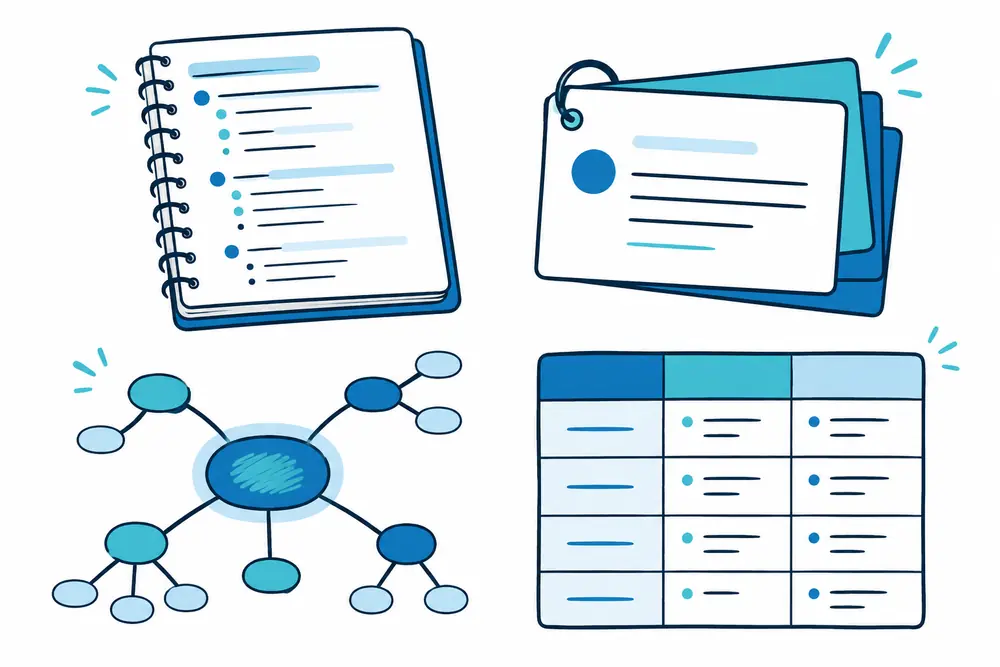
It can include a topic map, explanations, definitions, examples, comparisons, timelines, practice questions, and review schedules.
It can also suggest mnemonics and analogies. Treat those as memory aids, not proof. Verify that each device preserves the correct meaning.

A reliable ChatGPT study guide prompt
Use this structure: “Create a guide for my level and assessment. Use only the attached materials and covered objectives.”
Add: “Flag gaps, cite source sections, keep explanations brief, and create recall questions with a separate answer key.”
Why should ChatGPT create the outline first?
The outline exposes missing topics and irrelevant sections before the full draft. Compare every heading with the assessment scope.
Ask which source supports each section. Remove unsupported topics. A correct outline is the skeleton that holds everything else.
Source-first ChatGPT versus topic-only ChatGPT
Both approaches can produce readable pages. Only one begins with the exact material you must learn.
How do you verify a ChatGPT study guide?
Check every definition, date, formula, step, unit, exception, and citation. Use the original course source for the comparison.
Ask ChatGPT to identify uncertain claims, but do not rely on that check alone. Models can miss their own errors.
Use a claim-and-source table
Place the guide claim in one column and the supporting course section in another. Add a correction column for mismatches.
This method turns vague checking into visible work. It also makes later updates easier when the course changes.
Can ChatGPT create study questions?
Yes. Ask for recall, explanation, comparison, application, and problem-solving questions. Match their style to the real assessment.
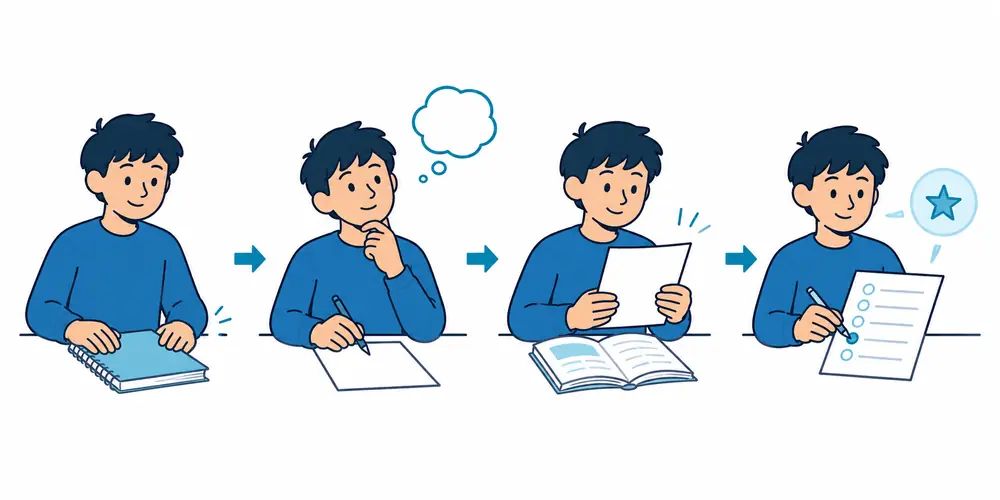
Keep the answer key separate. Attempt each question before checking. Otherwise, the guide becomes another reading page.
Can ChatGPT create flashcards?
It can draft question-and-answer pairs from your material. Keep each card focused on one idea and one clear answer.
Delete vague cards. Split crowded answers. Add cards from your real mistakes, because those gaps deserve repeated attention.
Can ChatGPT explain difficult topics?
Yes. Ask for a simpler explanation, analogy, example, diagram description, or step-by-step walkthrough.
Then explain the idea back without help. If your version breaks, request a smaller step. Understanding must survive outside the chat.
Should you use Study Mode?
Study Mode is designed for guided learning. It can ask questions, explain ideas step by step, and check understanding.
The official ChatGPT Study Mode guide recommends sharing your level, topic, goal, current understanding, and deadline.
Use Study Mode while building the guide
Ask it to question your understanding before writing a final explanation. Add your successful explanation to the guide.
This keeps you involved. The conversation becomes a workshop instead of a vending machine for finished answers.
What are the limitations?
ChatGPT can produce incorrect, outdated, incomplete, or unsupported content. It may simplify away important conditions and exceptions.
It also cannot know your teacher’s hidden priorities. Give it explicit objectives and feedback instead of asking it to guess.
What should you avoid uploading?
Do not upload private student data, passwords, restricted exam content, confidential feedback, or copyrighted material without permission.
Remove names and identifiers. Follow school policy. Use short, cleaned extracts when full documents are unnecessary.
Is a ChatGPT study guide cheating?
Using a tool for personal review may be allowed, but school rules differ. Creating submitted work or sharing restricted answers may violate policy.
Ask your teacher when the rule is unclear. Keep your process transparent. Use ChatGPT to support learning, not hide missing work.
Read next
Learn when ChatGPT helps studying and where you still need trusted sources.
Can ChatGPT make a review schedule?
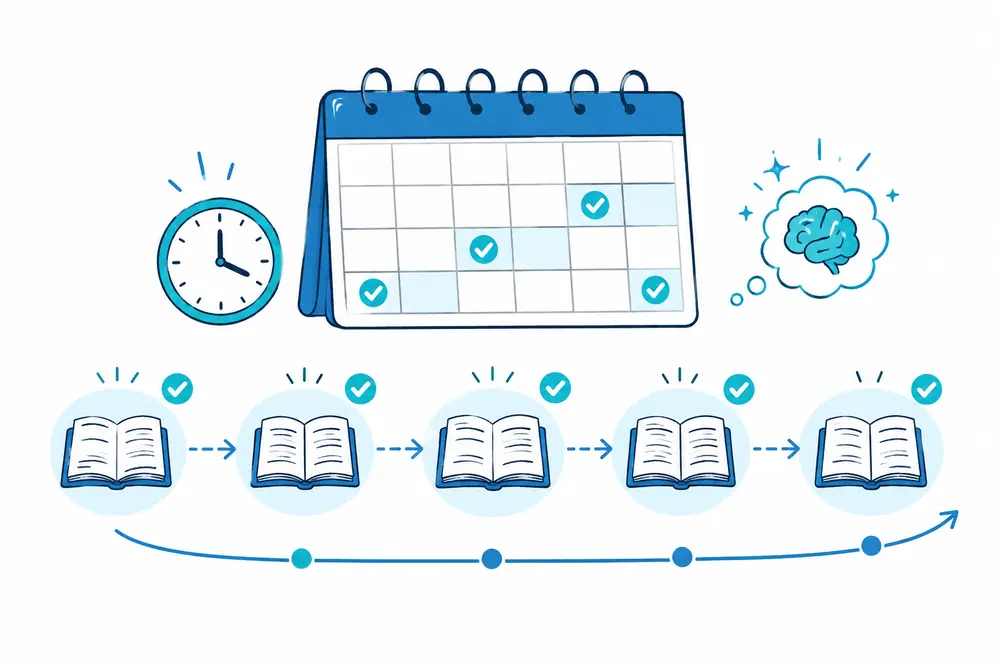
Yes. Give your deadline, available study periods, covered topics, and confidence ratings. Ask for shorter repeated reviews.
Update the schedule after practice. Your results should change the plan. A calendar that ignores mistakes is only decoration.
How do you improve the first draft?
Remove filler, correct facts, add missing objectives, shorten long explanations, and turn headings into questions.
Add your teacher’s wording, worked examples, and common mistakes. Personal edits make the guide fit the real course.
Ask ChatGPT to critique the guide
Request a coverage check against your objectives. Ask which sections lack examples, practice, or clear source support.
Then judge the critique yourself. A second AI pass can reveal gaps, but it is not an independent authority.
Test the guide before trusting it
Complete one closed-book session. Track missed questions, unclear prompts, and slow searches. Repair those areas immediately.
Read our full workflow for creating a study guide with AI. Compare it with creating your own guide.
How does the guide change by subject?
ChatGPT should not use one universal structure for every class. Each subject proves knowledge differently.
Give the required task before requesting content. Ask the tool to explain why each section supports that task.
Delete sections that do not help performance. A good guide follows the assessment, not a generic template.
Math and technical subjects
Request formulas, conditions, units, worked examples, and fresh problems. Ask for the reasoning behind each step.
Verify every calculation. Match notation with the course. Include common setup errors and method-selection questions.
Reading and discussion subjects
Request themes, claims, evidence, comparisons, and source questions. Keep summaries shorter than the practice section.
Never trust generated quotations without opening the original text. Use assigned material for exact wording and evidence.
Can ChatGPT cite the study guide sources?
It can provide source references when working from supplied files or the web. Those references still need checking.
Ask for the file name, page, heading, and supporting passage location. Open each source before accepting the claim.
A citation is a path to evidence, not automatic evidence. Remove unsupported material from the final guide.
Can it include current information?
ChatGPT may access current sources in supported workflows, but availability and results vary. Confirm every time-sensitive claim directly.
Add a verification date beside changing rules, prices, schedules, standards, and product features.
Use official sources for final decisions. Do not let a fluent summary replace the latest document.
Can teachers use ChatGPT for study guides?
Teachers can draft outlines, question variations, reading-level versions, and practice sets. Human review remains essential.
Check curriculum alignment, accessibility, answer accuracy, and difficulty. Remove questions that reveal protected assessment content.
Students should know how AI supported the material when disclosure matters. Clear authorship protects trust.
Can a group create one guide with ChatGPT?
Yes. Assign different objectives, use shared source rules, and combine work in one master document.
Ask ChatGPT to identify duplicate or conflicting explanations. Then let a person settle each conflict with the course source.
Keep a change log. Group work becomes confusing when nobody knows which version contains verified corrections.
Can you download or copy the guide?
You can move the finished content into a document, notes app, or learning system. Available export options may differ.
Preserve headings, source references, question separation, and verification labels. Test tables on mobile before relying on them.
Keep one master file. A chat history alone is a poor long-term filing system.
Can you build the guide on a phone?
Yes, but smaller screens make source comparison harder. Work in short sections and use simple layouts.
Check uploaded pages and generated tables carefully. Move the final guide to a larger screen when complex diagrams matter.
Use voice input only when it protects accuracy. Review transcription before asking ChatGPT to organize the material.
Can a free account make a guide?
Free access may support study conversations and guide creation, but current limits and tools can change.
Check the product directly before planning around a specific file or usage allowance. Keep the workflow simple.
You can still paste short notes, request an outline, and verify sections manually when advanced tools are unavailable.
Signs that a ChatGPT guide is strong
It covers every objective, cites trusted sources, separates answers, includes varied practice, and flags uncertainty.
Its explanations remain brief but complete. Examples match the course method. Review tasks target real weak areas.
Most importantly, the guide improves closed-book performance. Good appearance cannot replace that result.
Warning signs that the guide is weak
Watch for unsupported facts, repeated sections, invented citations, vague questions, and examples outside the course level.
Be cautious when every topic receives equal space. Important weak areas should receive more practice.
A guide that only summarizes is incomplete. It must create opportunities to retrieve and apply knowledge.
Can ChatGPT create a complete study kit?
It can draft a guide, key-concept list, practice set, flashcards, and review plan from course materials.
OpenAI Academy demonstrates a source-grounded study kit workflow that calls out gaps and keeps practice close to course materials.
Create components separately when the course is large. Smaller outputs are easier to inspect and correct.
How often should you update the guide?
Update after new lessons, teacher corrections, quizzes, and practice sessions. Add mistakes while they remain fresh.
Remove solved problems that no longer teach anything. Keep a few mixed-review questions for older topics.
Add a version date when requirements can change. One current guide beats several uncertain copies.
Run a final guide audit
Compare headings with objectives, facts with sources, and practice with the exam format. Check privacy and school rules.
Take a short closed-book quiz. Mark every section that failed to support an answer.
Repair those sections before expanding the guide. Weak coverage deserves attention before extra design.

Practical questions about ChatGPT study guides
How quickly can ChatGPT make one?
It can produce a first draft quickly. A trustworthy guide takes longer because sources, scope, facts, and questions need checking.
Measure total preparation time, not generation time. A fast inaccurate guide creates extra work and weak learning.
How long should the guide be?
Length should follow the covered objectives and assessment. Ask for concise sections rather than a fixed page count.
Split a large course into unit guides. Create one mixed-review sheet after the units pass separate checks.
Should it include an answer key?
Yes, but keep the key separate from the questions. Attempt every item before opening the answer.
Ask for explanations on difficult answers. Verify those explanations against the source before adding them permanently.
Can ChatGPT add diagrams?
It can describe diagrams, suggest layouts, and sometimes create visuals through supported features. Check every label and relationship.
Use course-approved diagrams when exact anatomy, scale, notation, or process order matters. Decorative visuals add little learning value.
Can you move the guide into flashcards?
You can copy verified question-and-answer pairs into a flashcard tool. Review import formatting before creating the set.
Keep one concept per card. Remove vague prompts and add cards from real mistakes after each session.
Should a teacher check the guide?
Ask focused questions about unclear methods, scope, or disputed facts. Teachers may not have time to review every line.
Show the source and your proposed wording. Apply each correction across every related section.
Is the guide private?
Privacy depends on the service, account, settings, and material. Review current data controls before sharing personal or school content.
Remove names, grades, passwords, and confidential details. Use cleaned notes when the original file contains unnecessary information.
Can it replace a course or textbook?
No. A study guide compresses and organizes learning material. It cannot provide every explanation, example, or required source.
Use ChatGPT beside the course. Let the teacher, syllabus, and official materials define what you must learn.
Use follow-up prompts to improve weak sections
Ask for a clearer example, a harder question, or a source location. Change one problem at a time.
Request a list of assumptions behind the explanation. Hidden assumptions often reveal why a guide does not match the course.
After each follow-up, update the stable document. Do not let useful corrections disappear inside a long chat.
Turn the guide into a mock exam
Give the verified objectives, allowed question styles, difficulty, and time limit. Keep answers hidden until completion.
Compare every question with the course scope. Remove items that test unassigned material or use unfamiliar methods.
Use results to revise the guide. A mock exam should expose gaps, not merely produce another score.
The bottom line
ChatGPT can create a strong study guide when you supply trusted materials and clear instructions. It can organize, explain, question, and schedule.
You still control accuracy and learning. Verify the guide, answer without help, and revise from mistakes. See what a good study guide includes.
Keep the verified master outside the chat. Add course feedback and performance results after every review session.
If an output cannot be traced, mark it clearly or remove it. A smaller trusted guide beats a larger uncertain one.
Use ChatGPT to speed useful work. Let your sources and independent answers decide what remains in the final version.