

Everyone wants a study app that costs nothing. Not a free trial. Not a teaser. A real one.

Here is the honest truth. Some apps are 100% free. Many just pretend to be. They hook you first. Then they ask for your card.
So which study app is truly free? Short answer: Khan Academy. But it is not the only one.
This guide names the apps that stay free forever. It shows what you actually get. And it warns you about the sneaky ones. In our little corner of the internet, we say a free lunch still hides a bill under the plate.
The short answer: which study apps are actually 100% free?
Khan Academy is the clearest winner here. It is 100% free. No hidden paywalls, no subscriptions, and no in-app purchases.
Why can it do that? It runs as a registered nonprofit. Donations pay the bills, so you never do.
You get full courses, practice exercises, and video lessons. It covers math, science, and humanities. It works for school and early college alike.
But Khan Academy is not your only choice. A few other strong tools stay free too. Think of them like public parks. Anyone can walk in, and the gate never asks for money.
Below, we break the whole thing down. First the free apps. Then the traps. Then a simple plan you can copy today.
Did you know?
Anki, the famous flashcard app, is completely free on desktop and Android. But the iPhone version costs a one-time $24.99. Same app, very different price, just because of the device.
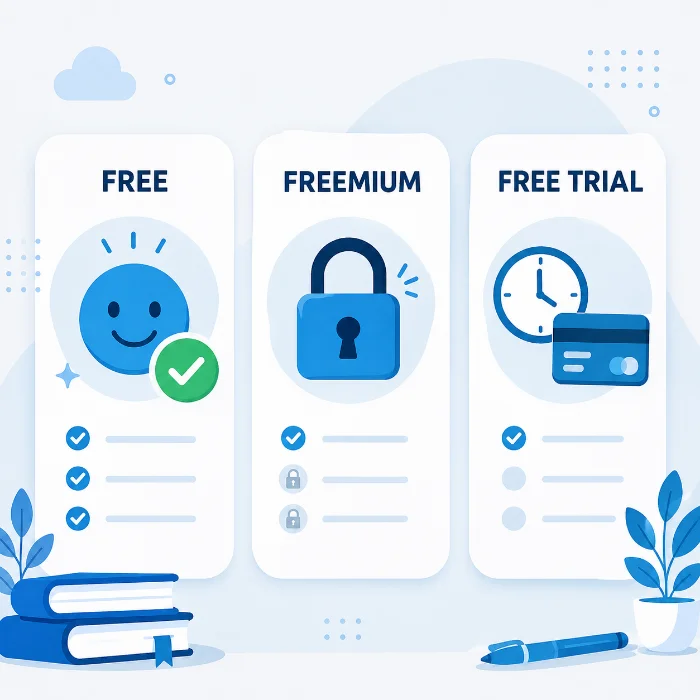
“Free” has three flavors, and only one is truly free
Here is where most students get tricked. The word “free” means three very different things.
Truly free. The whole app costs nothing, forever. No card, no catch. Khan Academy lives here.
Freemium. The basic app is free. But the good parts sit behind a paywall. You can study, yet the app keeps nudging you to pay.
Free trial. This one is a wolf in sheep’s clothing. It feels free for seven days. Then it bills you and hopes you forgot.
Can you see the trap now? Many “best free app” lists mix all three together. That is how a trial sneaks onto your card. As the old saying goes, not every shiny coin is gold.
So keep this rule close. If an app needs your card just to start, it is not truly free. Real free apps let you walk in with empty pockets.
This guide sticks to the first flavor as much as possible. We flag any catch in plain words. That way, you always know what you are getting.

The best 100% free study apps right now
Let us get practical. These apps give real value without asking for money. Some are fully free. Others have a free core that is big enough to matter.
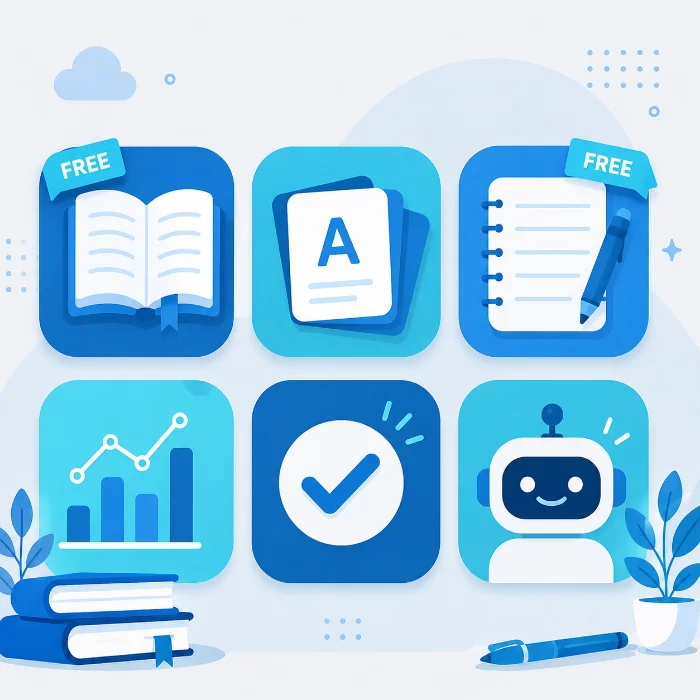
Khan Academy is best for structured learning. It walks you through full subjects, step by step. Test prep and progress tracking come built in.
It even offers a free AI tutor now. So you get gentle guidance without a price tag. For most students, this alone covers a huge chunk of school.
Anki is the king of memory work. It uses spaced repetition to lock facts into your brain. It is free on desktop and Android, and fully open-source.
Medical students swear by it. So do language learners. If you must memorize a mountain of facts, Anki is your best friend.
Google NotebookLM is a free AI study partner. It turns your notes and PDFs into summaries, outlines, and audio. All you need is a Google account.
Want more AI help for notes? See our pick for the best AI tool for study notes. It pairs nicely with NotebookLM.
Microsoft OneNote is a fully free note app. No feature locks, no device limits. It just works, on every screen you own.
Notion offers a strong free plan for students. You can build planners, trackers, and study notes in one place. It is like a digital binder that never runs out of pages.
Free study apps for what you actually need
Different jobs need different tools. So let us sort the best free apps by task. Pick the ones that fit your week.
For flashcards and fast memory
Anki leads the pack for pure recall. It shows a card, hides it, then brings it back later. That timing is the secret sauce.
Quizlet also has a free tier for quick decks. It is simple and fast for light revision. Just know its best features cost extra.
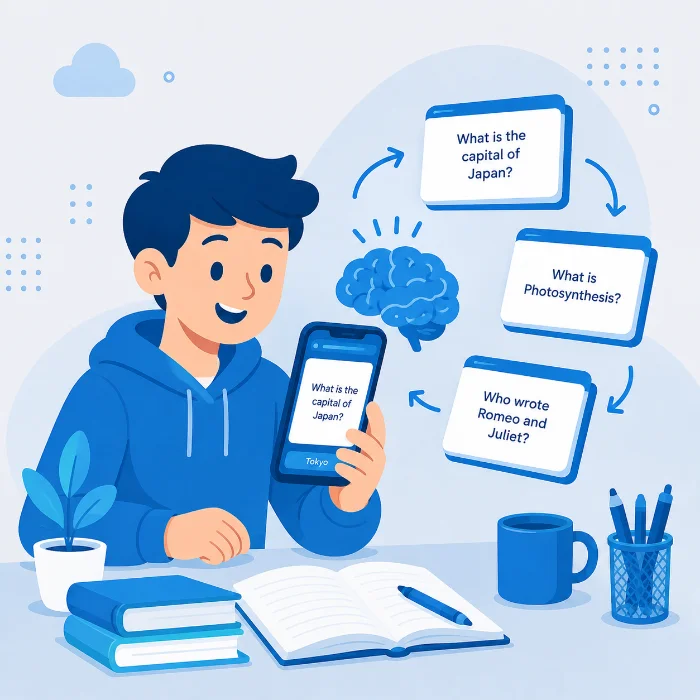
Spaced repetition sounds fancy. It is simple, though. The app reminds you of a fact right before you forget it.
Prefer cards from your own notes? A free study guide made with AI can turn messy notes into clean cards. Pair that with Anki, and revision almost runs itself.
For notes and organization
OneNote is the safe pick for notes. It is fully free and syncs across devices. You can type, draw, or paste screenshots.
Notion goes further for planning. Build a class tracker, a reading list, and a calendar. It keeps your whole term in one tidy spot.
Obsidian is free for personal use too. It links your notes like a web. Big thinkers love how ideas connect inside it.
For AI study help
NotebookLM is the standout free AI tool. Feed it a PDF, and it explains the hard parts. It even makes an audio recap you can play on the bus.
Some newer apps, like Knowt, offer free AI flashcards too. They turn your notes into quizzes in seconds. Just watch their limits before you lean on them.
AI tools save real time on boring tasks. They summarize, sort, and quiz for you. But treat their answers with care, and always double-check the facts.
For math and problem solving
Microsoft Math Solver is free and very handy. Snap a photo of a problem, and it shows the steps. No subscription, no nonsense.
GeoGebra is free for graphs and geometry. It makes shapes and functions come alive. Visual learners find it a real gift.
Wolfram Alpha has a free version too. It solves and explains a huge range of problems. The deepest steps sit behind a small paywall.

For focus and language
Forest helps you beat your phone habit. You plant a tree, and it grows while you study. Leave the app, and the tree dies.
For languages, Duolingo is free but ad-heavy. Anki also builds free vocabulary decks. Together they cover most language goals for zero cost.
Why these free apps actually work
Free does not mean flimsy. The best free apps use proven learning science. That is why they beat many pricey ones.
The first idea is active recall. You pull an answer from memory, instead of rereading. That small effort builds strong memories.
Anki and Quizlet run on this idea. They quiz you, so your brain does the work. Reading feels easy, but testing makes it stick.
The second idea is spacing. You review a fact over days, not all at once. Each review makes the memory tougher to lose.
This is why one late-night cram fades so fast. Your brain treats it like a stranger. Spaced reviews turn that stranger into an old friend.
The third idea is focus. Apps like Forest guard your attention. A calm mind learns far more than a busy one.
Put these three together, and free apps punch above their weight. You get real results for zero cash. Who said good study tools must be costly?
How to build a free study stack that actually works
One app rarely does it all. The trick is stacking a few free ones. Think of it like a toolbox, not a single hammer.
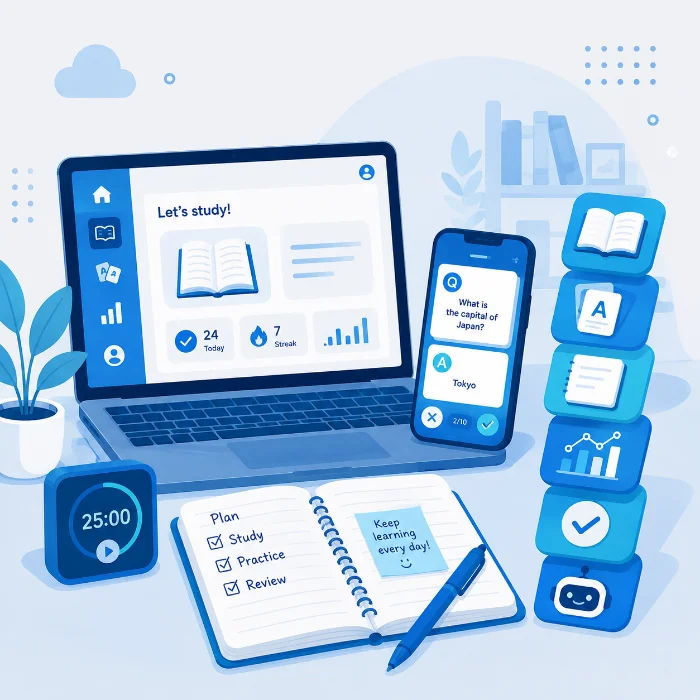
Here is a simple, no-cost setup. It covers learning, notes, memory, and focus.
See how each piece is free? You just built a full study system for nothing. Want more no-cost options beyond apps? Browse our list of the best free study websites to round it out.
Best free study apps for college students
College brings big reading loads and tight deadlines. Free apps can carry a lot of that weight.
Quizlet and Anki handle your flashcards. Notion or OneNote keeps every class organized. NotebookLM chews through long research PDFs.
Need a planner that never forgets? A free AI study planner maps your week in minutes. It turns a scary syllabus into small, calm steps.
Add a free citation tool like Zotero for essays. Now your whole college workflow costs zero. Not bad for a broke student, right?
Free study apps for every type of learner
Not all students study the same way. So the “best” free app changes with your goal. Here is a quick map by need.
High school students
Khan Academy is the anchor here. It matches most school subjects closely. Add Anki for vocabulary and quick facts.
OneNote keeps class notes neat and searchable. A free timer app guards focus during homework. That trio covers a full school day.

College and university students
Reading loads get heavy fast in college. NotebookLM turns dense PDFs into short recaps. Notion holds your deadlines in one calm view.
Pair those with Anki for exams and Zotero for essays. Now the workload feels smaller. You spend energy learning, not chasing files.
Self-learners and exam prep
Teaching yourself a new skill? Khan Academy and free courses lead the way. Anki locks in the facts you cannot forget.
For big exams, mix practice and recall. Study the topic, then quiz yourself hard. That loop is how top scorers train.
Are free study apps as good as paid ones?
Often, yes. Free does not mean weak. Khan Academy and Anki beat many paid tools flat out.
Paid apps mostly sell polish and shortcuts. They add nicer design or auto-made cards. But the core learning still comes from you.
Think about what you truly pay for. A paid app cannot memorize facts for you. Only your effort can do that.
Free tools give you every ingredient you need. Videos teach, cards drill, and timers protect focus. The recipe is complete without a receipt.
So spend money only when free truly falls short. For most students, that day rarely comes. Why pay for water when the tap runs clean?

Watch out for the “free” traps
Not every free app plays fair. Some hide the price until the last second. Others bury you in ads.
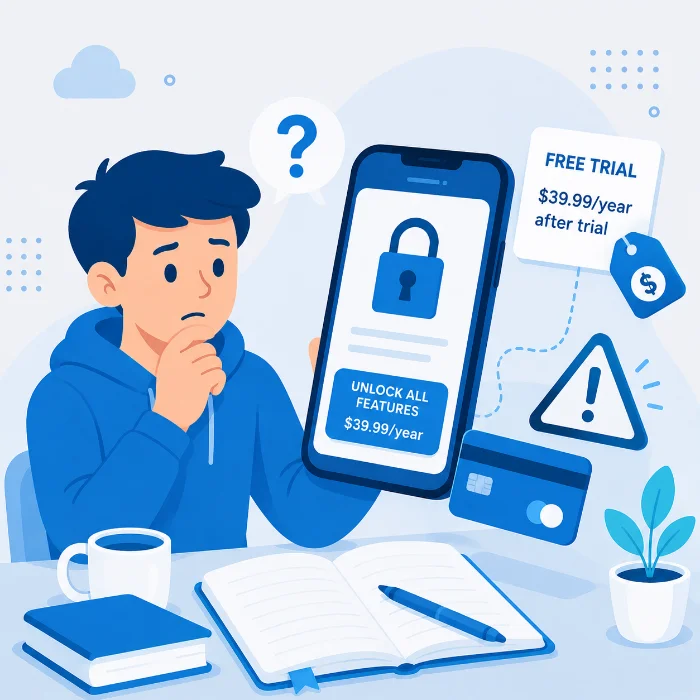
Watch the free trial trap first. It asks for your card up front. Then it charges you when the trial ends.
Next, watch the paywall. The app lets you start a deck, then locks the rest. You feel stuck halfway up the hill.
Ads are the quieter cost. Free language apps often flood you with them. They eat your time even when they save your money.
Privacy matters too. Some free apps sell your data to pay their bills. Stick with trusted names like Khan Academy, Anki, and Microsoft.
Before you sign up, ask one thing. Does this app want my card just to start? If yes, close the tab. A truly free app never needs your card to begin.
How to spot a truly free app in 30 seconds
You do not need to read every review. A quick check saves you from nasty surprises. Run these steps before you install.
First, open the app store page. Scroll to the “in-app purchases” line. If it lists prices, the free tier has limits.
Second, try to start without a card. A truly free app lets you jump right in. A trial blocks you at the door.
Third, search the app name plus “free.” Real students will tell you the truth fast. Their honest reviews cut through the ads.
Do this quick check, and you rarely get burned. A minute of care beats a month of surprise charges. Look before you leap, as the old line goes.
Keep a short list of apps you trust. Return to it whenever you need a new tool. A trusted shortlist saves time and protects your wallet.
Frequently asked questions


Which study app is completely free?
Khan Academy is completely free, with no paywalls or in-app purchases. Anki on desktop and Android is free too.
Is Khan Academy 100% free?
Yes. Khan Academy is a nonprofit, so every course and video stays free. You never pay a subscription.
What are the best free study apps?
Khan Academy, Anki, Google NotebookLM, Microsoft OneNote, and Notion top the list. Each gives real value for zero cost.
Are free study apps as good as paid ones?
Often, yes. Khan Academy and Anki match or beat many paid tools. You can learn deeply without spending a dime.
What language learning apps are 100% free?
Duolingo is free but shows ads. Anki also works great for building your own free vocabulary decks.
Can I use these study apps offline?
Some can. Anki and OneNote work offline once set up. Khan Academy needs the internet for most videos.
Is Anki really free?
Yes, on desktop and Android. The iPhone app costs a one-time $24.99. The shared cards and syncing stay free.
Which free app is best for memorizing facts?
Anki wins for heavy memory work. Its spaced repetition beats plain rereading. Medical and language students rely on it daily.
Do free study apps show a lot of ads?
It depends on the app. Khan Academy and OneNote show none. Some free language apps, like Duolingo, show many.
Still hungry for more no-cost help? Our free study guides pair perfectly with these apps.
So, which study app is 100% free? Khan Academy leads, with Anki, NotebookLM, OneNote, and Notion close behind. Stack a few, dodge the trial traps, and your studying stays smart and free.
Start with one app today. Add a second next week. Before long, you will own a full study system that never charges you a cent.
Money should never block your learning. The best tools of our time sit within reach, for free. All you must bring is the will to use them.
Pick your first app now. Open it, and study one small thing. That single step is where every top student began.