
Free study guides exist for school subjects, college courses, entrance tests, and professional exams. The hard part is finding a guide that is accurate, current, and matched to your goal.
This guide shows where to search, how to check each source, and when “free” comes with limits. You will also learn how to build a reliable set without collecting digital clutter.
Where can I find free study guides?
Start with official course and exam websites. Then check your school portal, teacher resources, public library, open textbooks, and university learning pages. These sources usually have clearer ownership than random downloads.
Search by the exact subject, course code, exam name, and current year when needed. Add terms such as objectives, sample questions, review guide, or practice test.
Free does not always mean complete. A guide may cover only one unit or offer limited practice. Beggars cannot be choosers, but careful search still matters.
Did you know?
A public library card may unlock digital test-prep books and databases that normally require payment.
Check official sources first
An official exam provider defines the test. Its outline, handbook, sample questions, and score information should shape your study plan. Third-party material should support that target, not replace it.
Look for pages labeled preparation, candidate handbook, test content, sample items, or practice. Confirm the page belongs to the current exam provider.
For New York exams, official departments publish useful material. The New York State Department of Civil Service provides test guides and resource booklets when available.
Download the official outline before anything else. It is the blueprint. Without it, you may build a beautiful house on the wrong lot.

Search the exam announcement
Some guides appear inside an exam announcement instead of a resource library. Read every linked document. Note the tested subjects, format, dates, and allowed materials.
Save the announcement beside your guide. Use it as a checklist when comparing outside resources.
Use official samples as a difficulty check
Official samples may be short, but they show wording and task type. Compare outside questions with them. Material that feels unrelated needs another look.
One sample cannot predict the whole exam. Still, it gives a trustworthy point of reference.
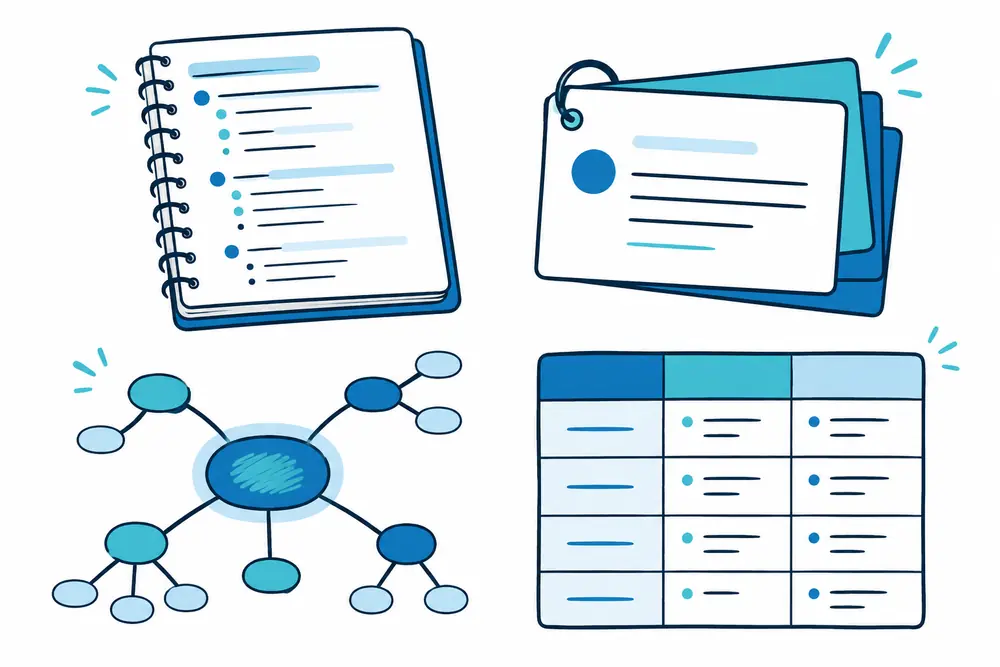
Use public and school libraries
Libraries offer printed books, ebooks, databases, and trained help. Search the catalog by exam name, subject, and publisher. Ask a librarian when results look thin.
The New York Public Library explains that cardholders can find test-prep books and online study guides for Regents exams. Its Regents preparation resource is one useful starting point.
Check loan periods and renewal limits. A digital copy may have a waiting list. Reserve it early instead of waiting until exam week.
School libraries may provide course-specific material unavailable to the public. Use your student portal and ask the librarian about databases. Many hands make light work.
Find open textbooks and learning resources
Open educational resources allow free access under stated licenses. They may include full textbooks, chapters, questions, slides, and instructor material.
OpenStax provides free peer-reviewed textbooks for many high school and college subjects. MIT OpenCourseWare shares course material from many MIT classes. Both can support deeper learning.
A textbook is not automatically a study guide. Turn chapters into learning goals, recall questions, and practice. Our study guide explanation shows that difference.
Check the level and edition. An advanced resource may explain too much. Horses for courses.
Search teacher and course portals
Teachers often publish review sheets, learning goals, vocabulary lists, and practice questions. Start with the learning platform used by your class.
Search your school domain with the course code and phrase “study guide.” Add the teacher name only when the page is intended for public access.
Do not rely on another class without checking coverage. Two teachers may use the same textbook but test different chapters.
Course material should stay private when required. Never upload restricted files to an outside tool without permission. Better safe than sorry.
Use free study websites carefully
Study websites can provide explanations, videos, flashcards, and practice. The best choice depends on the subject and task. One platform rarely does everything well.
Use lesson platforms when you need teaching. Use open textbooks for structured reading. Use flashcards for short recall. Use official sites for exact exam rules.
Our comparison of the best free study websites matches common needs with suitable platforms. It also explains common free-plan limits.
Check whether the site requires an account or payment card. “Start free” may describe a trial, not permanent access. Read the small print.
How to search for free study guides
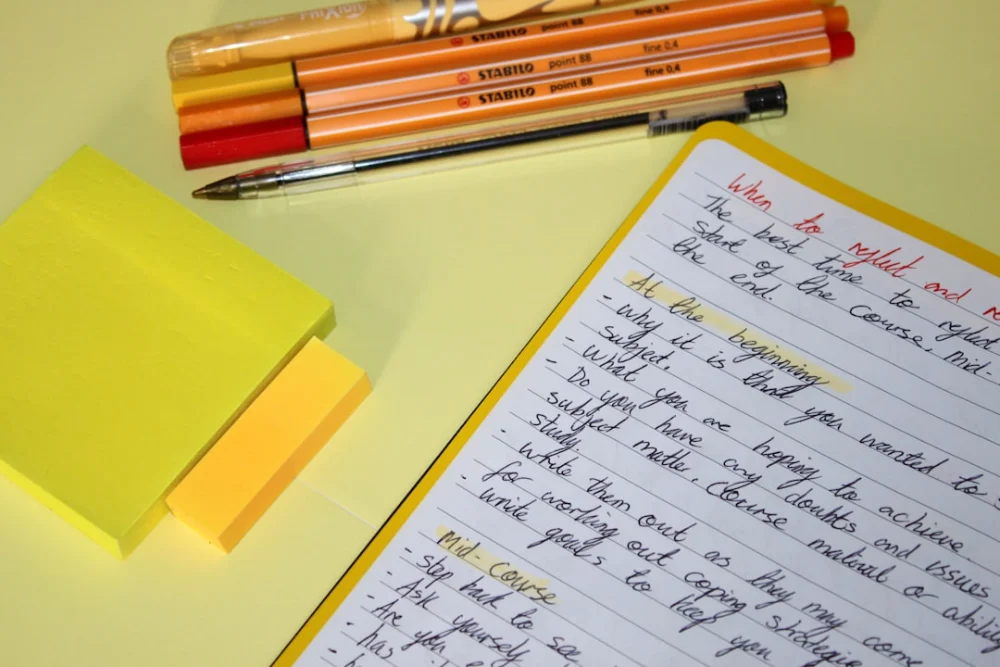
Use an exact phrase for the course or exam. Add a file type only when you want a downloadable document. Try terms such as syllabus, objectives, sample questions, and review packet.
Limit searches to official domains when accuracy matters. Search a school, university, library, or government website directly. A focused search beats a hundred random tabs.
Change one search term at a time. Broad searches find categories. Specific searches find the chapter, skill, or exam version you need.
Open the source page before downloading. A direct file can hide its date and publisher. Look before you leap.
How do you check whether a free guide is accurate?
Compare important definitions, formulas, dates, and rules with two trusted sources. Use your course material or official provider as the final standard.
Look for named authors and editors. Check whether the guide links to sources. A confident tone is not evidence.
Review the answer key. Work several questions without looking. When an answer seems wrong, trace the rule and confirm it elsewhere.
Watch for outdated terminology and dead links. Those signs do not prove every fact is wrong, but they justify extra checking.
Avoid unsafe or misleading downloads
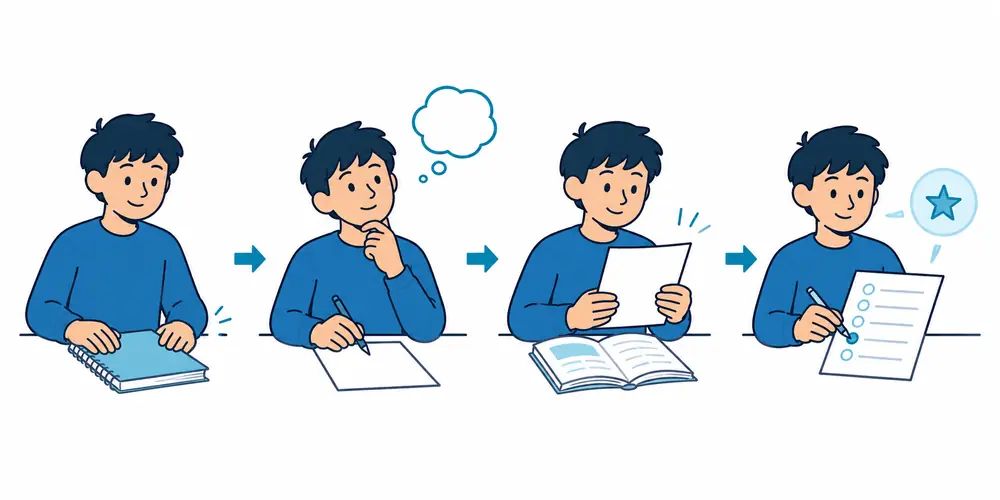
Do not download executable files for a simple guide. Educational documents normally use standard formats. Leave pages that demand unusual software or browser permissions.
Watch for fake download buttons and endless redirects. Use the publisher’s real website. Scan files with your device’s security tools.
Never provide payment details for a resource advertised as fully free. A legitimate free trial should explain its end date and renewal terms clearly.
Do not share school passwords or private records. A free file is not worth an account problem. There is no such thing as a free lunch.
Organize free study material without creating clutter
Create one folder for the course or exam. Add subfolders for official material, explanations, and practice. Name files with the topic and date.
Keep one master topic list. Link each resource to a specific learning goal. Delete duplicates that add no new value.
Choose one main guide. Treat other sources as support. Too many complete guides create conflicting plans and slow decisions.
Review the folder weekly. Remove outdated or weak files. A place for everything and everything in its place.
Turn free resources into your own guide
List the learning goals from the official source. Add a short explanation for each goal. Write questions that require recall and application.
Use one example from a trusted source, then create a fresh practice item. Keep answers separate. Mark the source beside facts that may change.
Add diagrams only when they teach location, sequence, or relationships. Decoration is not study. Form should follow function.
Our free process for making a study guide gives a complete workflow. It works with documents, notes, and simple digital tools.
Where can you find free guides for exams?
Begin with the exam provider. Search its handbook, content outline, sample questions, and practice test. Then check public libraries and school support centers.
Match every outside guide with the correct test version. Similar exam names can cover different content. Confirm the code, date, and audience.
Use our focused guide to finding exam study guides for entrance, school, and professional tests. It includes an exam-resource checklist.
Save the official page, not only the downloaded file. Return before the exam to check updates. The early bird catches the worm.
Find free guides by subject
Subject searches work better when they include the course level and unit. “Biology study guide” is broad. “High school cell division review guide” gives a clearer target.
For math, search the skill and required level. For history, include the period or event. For literature, include the exact work and course expectations.
Science guides need current terms and clear diagrams. Language guides should include context, audio when useful, and examples beyond word lists.
Use the teacher’s vocabulary in your search. Speak the same language as the course.
Find free college study guides
Begin with the course learning platform, department page, and university library. Search the course number with syllabus, review, or learning objectives.
Open textbooks and university course archives can explain difficult units. Compare their order and depth with your assigned course.
Academic support centers may publish study strategies and host review sessions. These services can help you use material, not only find it.
Do not copy another student’s submitted work. Use shared guides to learn concepts and create original answers.
Find free guides for school classes
Check teacher pages, classroom platforms, curriculum portals, and school libraries. Parents and students should use the exact grade and course name.
State education websites may publish standards, sample items, and released material. These sources show expected skills.
Match the guide with the teacher’s current unit. A complete subject website may include content not yet taught.
Ask for help when the course target remains unclear. A problem shared is a problem halved.

Find free professional exam guides
Certification providers normally publish candidate handbooks and content outlines. Some add sample questions, webinars, or resource lists.
Government employers may publish guides for civil service tests. Professional associations may provide preparation pages for members or candidates.
Confirm jurisdiction and test version. Rules for a similar certification in another state or country may differ.
Use third-party practice only after checking the official domains. Keep your eye on the ball.
How to evaluate user-created study guides
User-created guides can reveal helpful examples and memory cues. They can also contain missing context, old material, and confident errors.
Check the creator’s course, teacher, date, and sources when available. Compare every important claim with your own material.
Do not assume high views or ratings prove accuracy. Popularity measures attention, not truth.
Keep useful questions and rebuild answers from trusted sources. Trust, but verify.
Understand licenses and sharing rules
Open resources usually state a license that explains copying, adapting, and attribution. Read it before reposting or editing the material.
Free access does not automatically allow redistribution. A commercial book offered through a library remains copyrighted.
Link to the official source when sharing. Include required credit for openly licensed material. Do not remove author names or license notices.
When rules are unclear, use the guide privately and ask the publisher. Honesty is the best policy.
Should you download or bookmark a guide?
Bookmark pages that update often, such as exam rules and current objectives. Return to them before important dates.
Download allowed files needed offline. Save the source URL and access date beside each copy.
Web pages can disappear, while downloaded files can become outdated. Keep both when the publisher allows it.
Use clear filenames and one current folder. Do not let useful material vanish into the downloads pile.
Build a small free resource stack
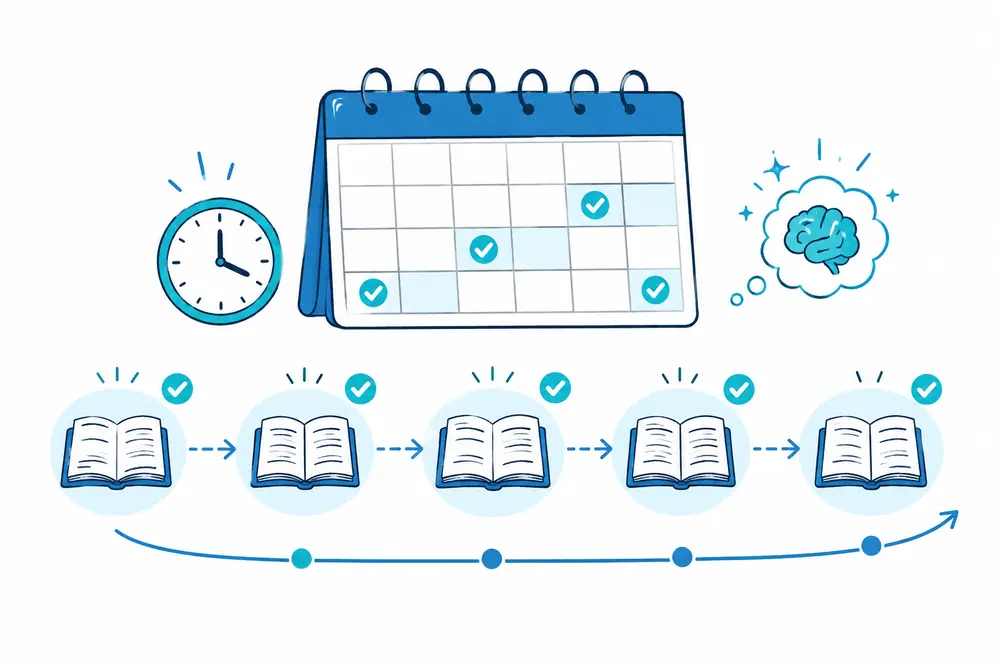
Choose one official source for goals, one teaching source for explanations, and one practice source for feedback. Add a planner only when scheduling needs support.
Give every resource a job. If two tools do the same thing, keep the clearer one. Fewer tools reduce switching and repeated setup.
Test the stack for one week. Measure recall, completed practice, and corrected errors. Replace weak tools instead of adding more.
A small sharp knife cuts better than a drawer of blunt ones.
Keep free guides current
Record the date you checked each guide. Return to official sources when a course, law, technology, or exam changes.
Replace broken links and old objectives. Keep useful explanations only after confirming they still support the current target.
Do not mix old and new files under the same name. Archive outdated versions in a separate folder.
Review the resource list before every major exam cycle. A stitch in time saves nine.
Check accessibility before committing
Look for readable text, keyboard navigation, captions, transcripts, and useful image descriptions. Check whether the guide works with your device.
Download a legal offline copy when the publisher allows it. A website that requires constant streaming may fail on a weak connection.
Try one page with the tools you normally use. Do not build the whole plan around a format that blocks access.
A truly useful free guide should be usable, not merely available.
How to ask a teacher or librarian for help
Give the exact course, exam, level, and deadline. Explain whether you need teaching, practice, a book, or a printable guide.
Share the resources you already checked. This prevents repeated suggestions and helps the person find the missing piece.
Ask about databases, reserve copies, workshops, tutoring, and interlibrary loans. Many useful options hide behind unfamiliar names.
A clear question opens the right door. It never hurts to ask.
Free study guide FAQ
Are free study guides legal?
Yes, when the publisher offers them legally. Check the license or sharing terms. Do not download copied commercial books from unauthorized sites.
Can I trust student-created guides?
Use them as support, not final authority. Verify facts and coverage against the course or official exam source.
Do free guides include answer keys?
Some do. Strong resources include answers and useful reasons. A key without explanations offers limited feedback.
Can I find free printable study guides?
Yes. Search official and open educational sites for printable files. Check page count before printing to avoid unnecessary cost.
Read next
Compare what free study websites do best.
The final takeaway
Recheck every major resource before a new semester or exam window. Small updates protect the accuracy of the full plan.
Save the source page and review date with every important file. This small record helps you spot changed content and explain where the information came from.
Free study guides are easy to find when you search in the right order. Start with official sources, then libraries, course portals, and open resources.
Check accuracy, scope, date, safety, and licensing before relying on any file. Keep one clear guide and a few useful supports. Why carry a warehouse when a strong toolkit will do?
If cost is part of the decision, read how much study guides cost. It explains when a paid resource may be worth it.