
Exam study guides are available from test providers, schools, libraries, and trusted learning platforms. The right source depends on the exact exam, version, and date.

This guide gives you a reliable search order. It also shows how to check coverage, practice quality, updates, and hidden access limits before you begin.
Where can I find study guides for exams?
Start on the official exam website. Download the handbook, content outline, sample questions, and testing rules. These documents define what the exam can cover.
Then check your school, training provider, and public library. Use outside websites for extra teaching and practice only after confirming the official target.
Search the complete exam name and code. Similar titles can lead to the wrong test. Measure twice, cut once.
Did you know?
An official content outline can be more valuable than a long commercial guide because it shows the exact tested domains.
Use the official exam website first
The exam owner controls the name, objectives, format, scoring, and rules. Its website should be your first stop. Look for candidate resources, preparation, or test content.
Save the current handbook and note its publication date. Check for update notices. A guide written for an older version may teach removed topics.
New York State Courts publishes exam study guides and sample questions for listed title series. Official samples reveal the style, though they may not show full difficulty.
Keep the official outline open while reviewing other material. It acts like a compass. Without it, even fast progress can move in the wrong direction.
Confirm the exam code
Certification programs may offer several tests with similar names. Match the code, level, language, and jurisdiction before downloading a guide.
Write the code on your study folder. This small step prevents hours of mixed material.
Check the testing date
Objectives can change before your appointment. Confirm the version used on your scheduled date. Do not rely only on a book cover.
Return to the official site during the final week. Better safe than sorry.
Check school and college support services
Schools may provide review packets, tutoring, workshops, and past practice material. Search the student portal and academic support center.
Teachers often know which resources match the current course. Ask for the official review sheet and priority topics. Their answer can save a long search.
College libraries may subscribe to exam databases. Career centers may also provide certification and entrance-test resources.
Use available support early. The early bird catches the worm. A workshop held next month cannot help after tomorrow’s exam.
Find exam guides through libraries
Public libraries carry print books and ebooks for popular exams. Search the catalog using the complete exam name, not only “test prep.”
Ask whether the library offers learning databases. These may include practice tests, flashcards, videos, and digital books.
Check edition dates and waiting lists. Reserve a popular book several weeks early. Renew it before the loan expires.
The New York Public Library highlights free Regents preparation through branches and online resources. A library card can open more doors than a basic web search.
Where can you find free exam study guides?
Official exam sites, government departments, public libraries, and school portals offer the safest starting points. Open educational sites can fill subject gaps.
Free practice websites may cover many exams. Verify their relationship to the exam owner. A disclaimer does not make questions wrong, but it shows the provider is independent.
Our broader list of free study guide sources explains how to search and verify downloads. Use it before paying for a bundle.
Remember that free access may require a library card or student account. There is no such thing as a free lunch.

How to compare exam study guides
Build a short checklist from the official domains. Mark where each guide teaches and tests those areas. Missing high-value domains are a serious weakness.
Inspect sample pages. Look for clear explanations, worked examples, mixed practice, and detailed answer reasons. Page count alone means little.
Check the intended learner. A quick review assumes background knowledge. A beginner guide should teach foundations before difficult practice.
Our article on choosing the best study guide provides a format and quality comparison. Compare apples with apples.
Check practice-question quality
Good questions match the exam’s task type and content level. They also use clear wording and provide a defensible answer.
Answer explanations should teach the rule. They should show why wrong choices fail. This feedback turns an error into a next step.
Use official samples as an anchor. Third-party questions should feel related without copying protected exam content.
A huge question bank can repeat easy patterns. Quality beats quantity. The proof is in the pudding.
Make sure the exam guide is current
Look for a publication or update date. Compare the listed domains with the current official outline. Check whether scoring or delivery changed.
Do not assume a new product page means new content. Confirm the edition inside the sample or copyright page.
Watch for guides that promise leaked questions. Legitimate preparation teaches objectives and skills. It does not depend on stolen test content.
When sources disagree, follow the current exam owner. The buck stops there.
Digital versus printed exam study guides
Digital guides offer search, links, updates, and interactive practice. They may require an internet connection or active subscription.
Printed books support focused reading and handwritten notes. They cannot update themselves when the test changes.
Choose around your habits and timeline. Some learners combine a printed core book with digital practice. One size does not fit all.
Read what study guide books include before buying. Check the table of contents and sample practice first.

How much should you spend on exam guides?
Start with free official resources. Pay only for a clear gap, such as teaching, more practice, or detailed feedback.
Compare total costs. Subscriptions, extra tests, printing, and access codes can change the final amount.
Our study guide cost guide explains common price factors and hidden charges. Set a budget before browsing.
An unused package offers no value. Buy the smallest resource you will finish. A bird in the hand is worth two in the bush.
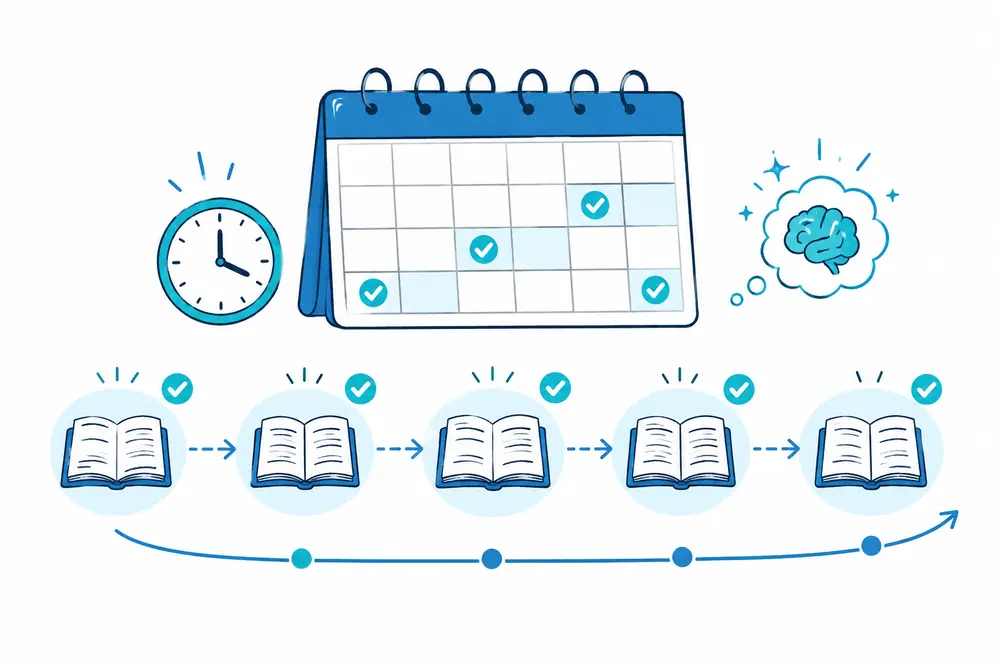
Turn the exam guide into a study plan
Take a short diagnostic test first. Mark domains as ready, unsure, or not ready. Study weak high-value areas before polishing strengths.
Assign topics to calendar sessions. Begin each session with recall. Add explanation and practice after identifying the gap.
Track errors by reason. Separate knowledge gaps, misunderstood questions, and rushed mistakes. Each type needs a different response.
Complete mixed timed practice near the exam. Review the reason behind errors. Slow and steady wins the race.
Warning signs of a weak exam guide
Leave guides that hide their edition, author, or scope. Be cautious when every claim sounds guaranteed.
Watch for broken links, repeated questions, and answer keys without reasons. These shortcuts weaken feedback.
Avoid resources that request unnecessary personal data. Do not upload identification documents or private school files to unknown platforms.
Check refund and renewal rules before paying. Look before you leap.
Find guides for entrance exams
Entrance exams often have official handbooks, content domains, registration rules, and sample items. Start with the organization that owns the test.
Schools and libraries may provide preparation events or online practice. Search the admissions or counseling page for approved resources.
Confirm whether the test has sections, optional essays, calculator rules, or adaptive delivery. Your guide should reflect those conditions.
Use diagnostic results to choose topics. Do not review every page equally when some domains carry more weight.

Find guides for school final exams
The teacher’s review sheet, syllabus, assignments, and feedback define the course final. Another school’s guide may use a different sequence.
Group material by learning goal, not notebook date. Add questions from homework mistakes and classroom examples.
Ask whether the exam is cumulative and how each unit is weighted. This information changes the study schedule.
Past quizzes can reveal question style without predicting the exact final. Make hay while the sun shines.
Find guides for certification exams
Certification tests may change objectives on a published schedule. Record the version active on your test date.
Official candidate handbooks explain eligibility, identification, scheduling, retakes, and score reports. Study guides should never replace those rules.
Compare providers through samples and objective coverage. Look for clear explanations rather than pass guarantees.
Join official webinars or candidate sessions when available. Ask questions at the source.
Use practice tests with a study guide
A diagnostic practice test shows where to begin. A later mixed test checks whether learning transfers across topics.
Do not take full tests every day. Review the reason behind each error and practise the missing skill first.
Save at least one fresh test for realistic timing. Repeated questions may measure memory of the answer instead of understanding.
A practice score is a weather report, not a permanent label. Use it to prepare for the next conditions.
What should answer explanations include?
A strong explanation names the tested idea and shows the reasoning. It explains why the correct answer fits the question.
It should also address common wrong choices. Understanding the trap prevents the same mistake under new wording.
For calculations, explanations should show units and intermediate steps. For reading questions, they should connect the answer with evidence.
Skip guides that provide only letters when feedback is your main need. A map without landmarks offers little help.

Find accommodation and accessibility information
Use the official exam website for accommodation policies and deadlines. Third-party guides may summarize rules incorrectly.
Check available formats, assistive technology rules, breaks, and required documentation. Begin early because approval may take time.
Choose study material with captions, transcripts, keyboard access, readable contrast, and adjustable text when needed.
Preparation should match actual test conditions as closely as approved. Forewarned is forearmed.
Check digital access before buying
Confirm supported devices, browsers, internet requirements, and expiration dates. Ask whether progress syncs across devices.
Check limits on practice attempts and exports. A large library may matter less when access ends before your exam.
Review privacy terms before uploading notes. Remove private names, records, and protected class files.
Save permitted results and error logs. Do not wait until the final day of access.
Use an exam guide in a study group
Assign each member an objective to explain without notes. Other members should ask one follow-up question.
Compare answers with the official source, not the loudest voice. Groups can spread errors as quickly as good ideas.
Trade original practice questions and solve them alone. Discuss methods after every person makes an attempt.
End with individual weak-topic plans. Many hands make light work, but each learner must do the remembering.
Use the guide during exam week
Focus on questions, error reasons, and high-value weak topics. Do not rebuild the whole guide during the final days.
Practise under realistic timing and allowed-tool conditions. Review instructions before starting each session.
Keep the final review short and targeted. Follow normal sleep and meal routines that support attention.
Check the official appointment details, location, identification, and arrival rules. The devil is in the details.

What to do after a practice test
Classify each miss as knowledge, reasoning, timing, or reading error. Write the tested objective beside it.
Review the rule and solve a new question. Then return after a gap to confirm the correction lasted.
Notice correct guesses too. A correct answer without clear reasoning needs another attempt.
Update the next study session from this evidence. What gets measured gets managed.
Compare sample pages before choosing
Read one explanation and solve several sample questions. Check whether the language, depth, and difficulty match official examples.
Inspect the answer reasons. Strong samples teach the rule and common mistake instead of repeating the correct option.
Check navigation, page layout, and accessibility. A useful book or platform should make goals and practice easy to find.
Do not buy based on a cover and testimonials alone. The proof is in the pudding.
Track progress without complicated tools
Create a table with objective, last score, error reason, confidence, and next review date. Update it after meaningful practice.
Use ready, unsure, and not ready when numbers add little value. Spend most time on weak high-value objectives.
Compare performance after a gap. Improvement during one sitting may reflect short-term familiarity.
Keep tracking simple enough to maintain. A map should help the journey, not become another destination.
Avoid exam resource overload
Choose one main guide, the official outline, and one targeted practice source. Add another resource only for a measured gap.
Repeated setup and platform switching steal practice time. Similar guides may also use conflicting terminology.
Finish a useful section before searching for a better one. Improvement comes from attempts and feedback.
Too many cooks spoil the broth. Keep the study system lean.
Run a final guide check before the exam
Confirm that every official domain appears in the guide. Mark weak areas that still need a short review.
Check testing rules, appointment details, identification, location, and allowed materials on the official site.
Complete a final mixed practice set and review only the reasons behind errors. Avoid adding a new full resource.
Prepare what you need and stop at a sensible time. Finish strong rather than frantic.
Exam study guide FAQ
Are official exam guides enough?
They define the target but may offer limited teaching. Add trusted explanations and practice when needed.
Can I use an older exam guide?
Only after comparing it with the current outline. Use unchanged subject explanations, but replace outdated rules and objectives.
How many practice tests should I take?
Quality matters more than a fixed number. Take enough to diagnose gaps, practise timing, and confirm improvement.
Should I use several complete guides?
Usually no. Use one main guide and targeted support. Multiple full plans can create repetition and confusion.
Read next
Build a free guide from your verified exam material.
The final takeaway
Ask the provider when official documents conflict or remain unclear. A direct answer is safer than building plans around a guess.
Keep a short record of the guide edition and official outline date. Update that record when the provider announces a new test version.
Use every resource for a clear job. Teaching, practice, timing, and official rules should stay connected inside one plan.
The best exam guide search begins with the exam owner. Confirm the name, code, version, date, domains, and format.
Then use schools, libraries, and trusted websites to fill exact gaps. Check practice quality and answer reasons. Why study harder when the target itself is still blurry?