
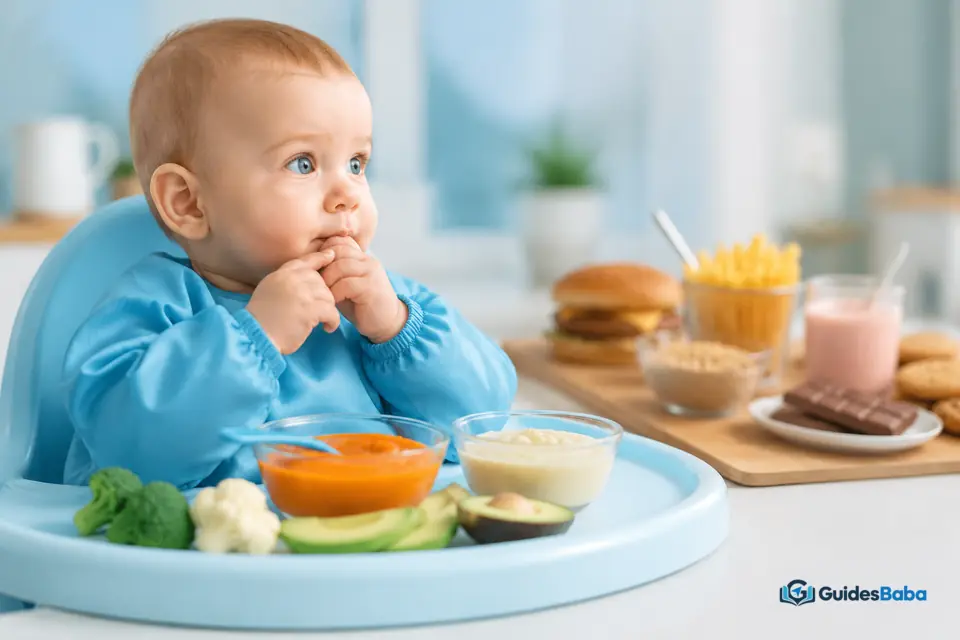

New eaters need extra care and caution. So what foods should babies avoid? Some everyday foods can pose real risks. It pays to know them early. A little knowledge goes a long way.
Rather than worrying about every bite, learn the key risks. A short list covers most concerns. Safe swaps are usually simple. Knowledge brings real peace of mind.
Here is the honest answer. Avoid honey before one year of age. Skip choking hazards like whole nuts. Cut out added salt and sugar. Steer clear of unpasteurised foods. Always follow your own pediatrician for advice.
This guide covers foods babies should avoid. You will learn the main risks. We also cover safer swaps. This is not medical advice. See a professional.
So what foods should babies avoid?
The honest answer is a short list. A few foods carry real risks. Most everyday foods are fine. Focus on the key ones.
Think of this list like a safety fence. It keeps your baby away from harm. Honey, choking hazards, and salt top it. Added sugar and unpasteurised foods follow. Some fish and cow’s milk need care. Is the list long? No, it is short and clear.
Which risk matters most? Choking and honey deserve real attention. Read the full picture below. Your pediatrician can add local advice. Personal guidance always comes first.
Why some foods are risky for babies
Babies are not tiny adults. Their bodies are still developing. Some foods overwhelm them easily. Caution keeps them safe.
Young guts handle salt and sugar poorly. Small airways choke on hard chunks. Immune systems fight infection less well. Honey can carry rare spores. These facts explain the warnings. Learn about when babies start solid foods here.
You should treat these risks seriously. Simple habits lower the danger. Prepare food with real care. Your pediatrician can guide you. Safety is always worth it.
Did you know?
A baby’s kidneys cannot handle much salt. That is why babies need very little of it.
Honey and botulism risk
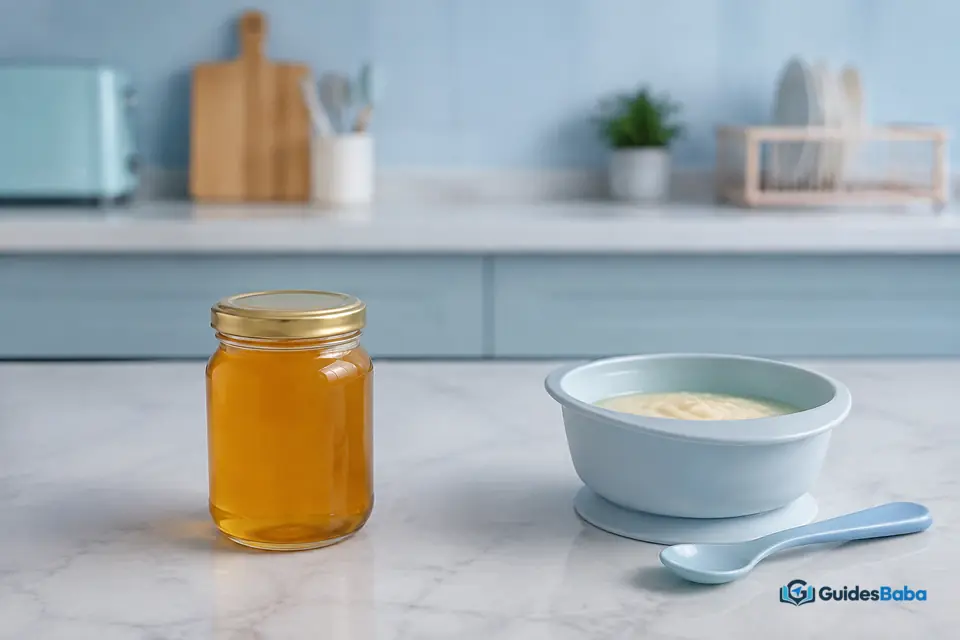
Honey tops the avoid list. Never give it under one year. It can carry rare spores. The risk is serious.
Honey may contain botulism spores. A baby’s gut cannot fight them yet. These spores can cause infant botulism. That illness is rare but serious. This applies to raw and cooked honey. Baked goods with honey count too.
You should avoid all honey before one year. Check labels on processed foods. Some products hide honey inside. Your pediatrician can answer questions. When unsure, leave it out. Better safe than sorry here.
Choking hazard foods
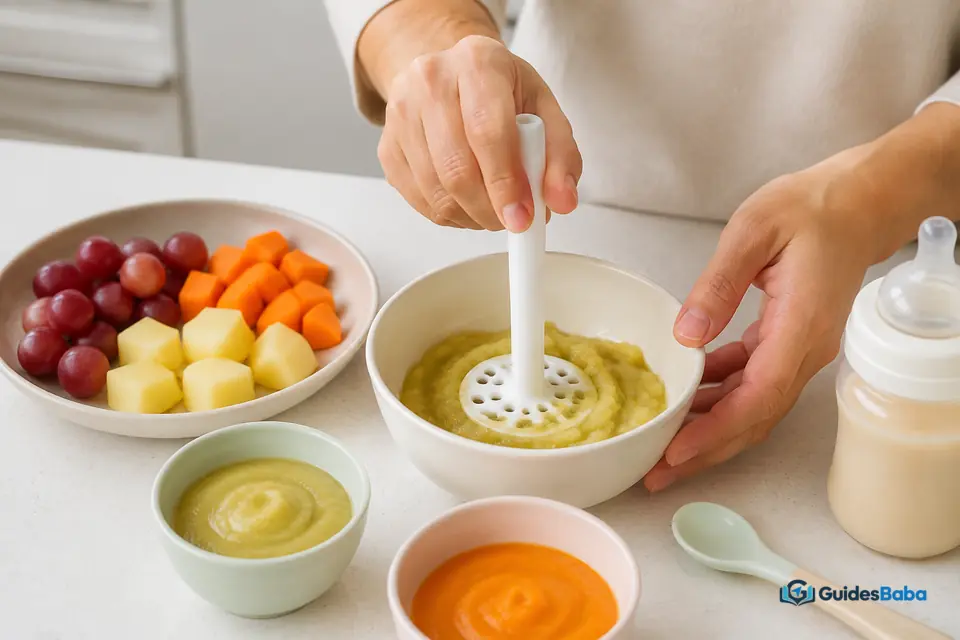
Choking is a very real danger. Small airways block easily. Certain shapes and textures raise risk. Careful prep saves lives.
Hard, round, and sticky foods are risky. Whole grapes and cherry tomatoes choke easily. Chunks of raw apple are dangerous. Popcorn and hard sweets are too. Always cut foods into safe pieces. Never leave a baby eating alone.
You should supervise every single meal. Sit your baby upright to eat. Cut round foods lengthways and small. Learn infant first aid too. Your pediatrician can share safe tips. A calm setting helps too.
Whole nuts and hard foods
Whole nuts are a clear hazard. They are hard and round. Babies cannot chew them safely. Avoid them completely.
Never give whole or chopped nuts. They can lodge in tiny airways. Smooth nut butter is a safer form. Spread it thin on soft food. Hard raw vegetables also pose risks. Cook or grate them soft instead.
You should keep hard foods off the tray. Soften, mash, or grate them first. Always watch your baby closely. Your pediatrician can advise further. Texture really matters here.
Round and slippery foods
Round foods roll into airways easily. Their shape makes them risky. Slippery skins add to the danger. Cutting them helps a lot.
Grapes and blueberries need cutting small. Cherry tomatoes should be quartered. Sausage and hot dog rounds are risky. Cut such foods lengthways, not across. Remove tough skins where you can. Small pieces are much safer.
You should prepare these foods with care. Never offer them whole. Sit close and stay watchful. Your pediatrician can show safe sizes. Take a few extra seconds.
Added salt
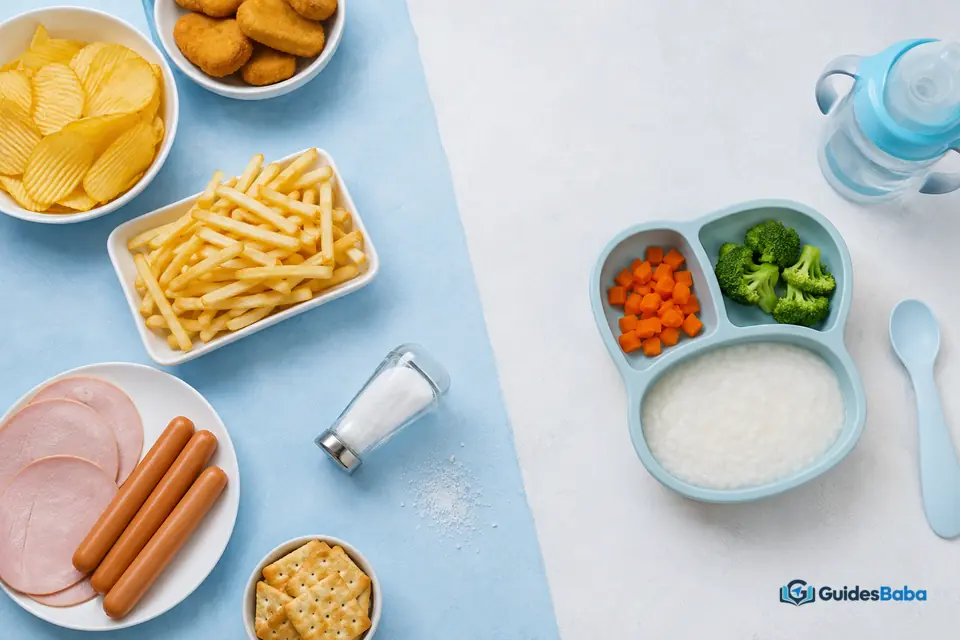
Salt is hard on tiny kidneys. Babies need only a trace. Their bodies cannot process much. Keep salt very low.
Do not add salt to baby food. Avoid salty snacks and crisps. Skip stock cubes and gravy. Watch salt in bread and cheese. Many processed foods hide salt. Cook fresh food without added salt.
You should read labels carefully. Choose low-salt options when possible. Season your own plate separately. Your pediatrician can offer guidance. Fresh, plain food is best. Your baby will not miss salt.

Added sugar and sweet treats
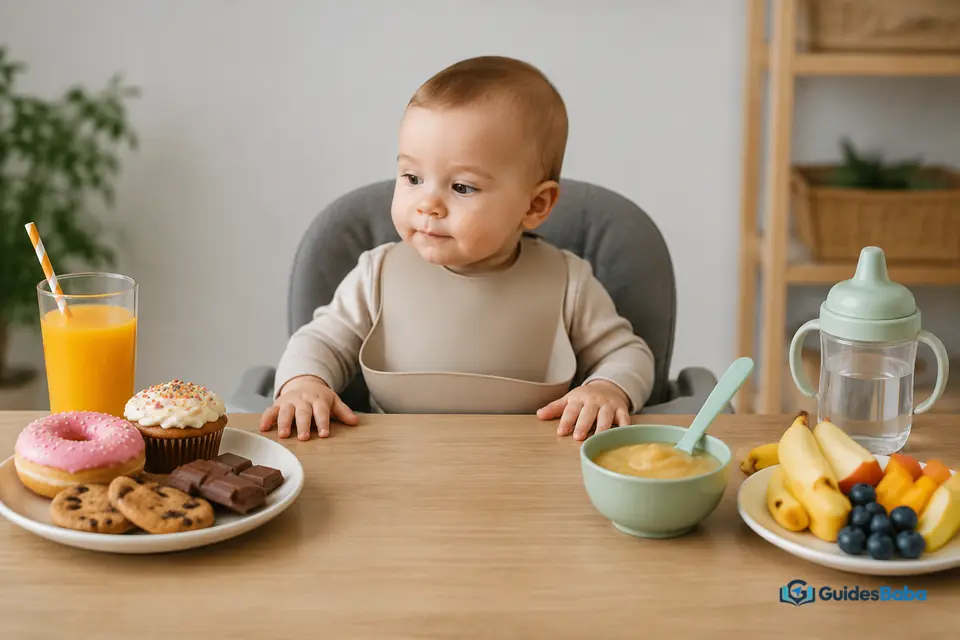
Sugar offers babies no real benefit. It can harm new teeth. It builds a sweet tooth early. Keep sugar to a minimum.
Avoid sweets, biscuits, and sugary drinks. Skip added sugar in baby meals. Fruit gives natural sweetness instead. Watch sugar hidden in snacks. Sweet drinks can harm teeth fast. Water and milk are better choices.
You should build savoury tastes early. Offer plenty of vegetables and plain foods. Save treats for much later. Your pediatrician can advise on this. Simple habits protect teeth. Healthy habits start right now.
Highly processed foods
Processed foods often hide salt and sugar. They suit adults, not babies. Fresh food is far better. Choose simple ingredients.
Many ready meals are too salty. Some snacks pack hidden sugar. Processed meats can be very salty. Additives offer babies little value. Fresh, home-cooked food wins here. Simple recipes keep things safe.
You should favour whole, fresh foods. Cook in batches to save time. Freeze small portions for later. Your pediatrician can suggest ideas. Plain cooking is best.
Unpasteurised and raw foods
Some foods can carry harmful bacteria. Babies fight infection less well. Unpasteurised items raise the risk. Choose safe versions instead.
Avoid unpasteurised milk and cheese. Skip raw or undercooked eggs. Do not serve raw or rare meat. Wash fruit and vegetables well. Some soft cheeses need avoiding too. See foods that cause food poisoning here.
You should cook foods thoroughly. Store and chill food safely. Follow use-by dates closely. Your pediatrician can share safe choices. Hygiene protects your baby.
Certain fish and mercury
Most fish is good for babies. A few types need limits. Some carry higher mercury levels. Choose lower-mercury options.
Limit shark, swordfish, and marlin. These can be high in mercury. Choose salmon or well-cooked white fish. Always remove every small bone. Cook fish until fully done. Small, safe portions work well.
You should follow local fish advice. Guidance can vary between countries. Balance benefits against the limits. Your pediatrician can clarify choices. Variety in moderation helps. Fish still brings great benefits.
Cow’s milk as a main drink
Cow’s milk is not a main drink yet. It lacks enough iron for babies. Breast milk or formula leads first. Timing matters here.
Do not use cow’s milk as the main drink under one year. Small amounts in cooking are fine. Full cow’s milk lacks key iron. It can also strain young kidneys. Iron-rich foods matter more now. See foods highest in iron here.
You should keep milk feeds central. Introduce cow’s milk drinks later. Your pediatrician can advise the timing. Follow their guidance closely. Iron needs stay important. Patience pays off with milk.
Common allergens and care
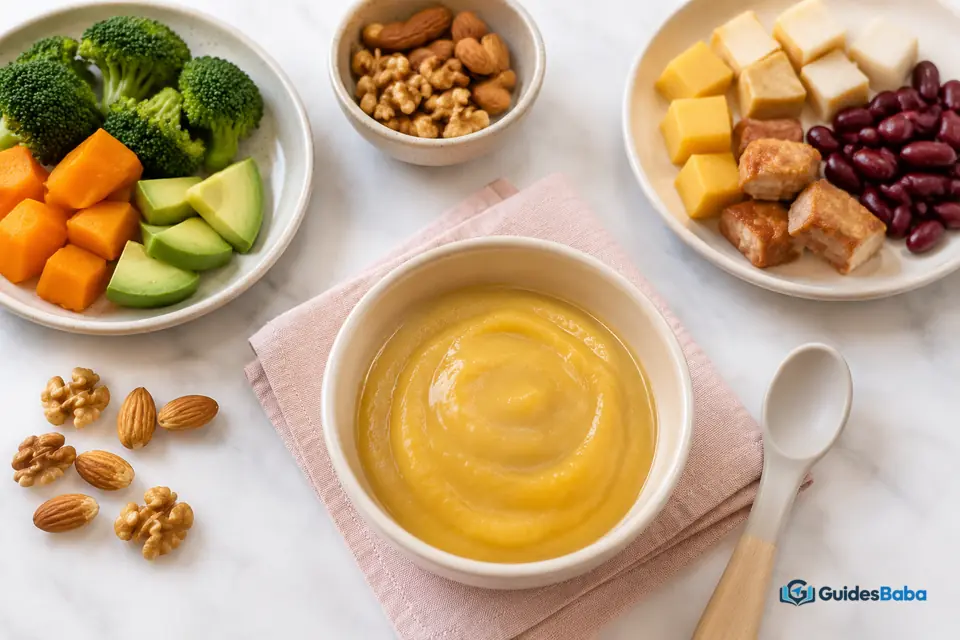
Allergens are not simply banned foods. Many should be introduced carefully. Early, careful exposure can help. Watch closely for reactions.
Common allergens include egg, dairy, and nuts. Introduce them one at a time. Offer a small amount first. Then watch for any reaction. Seek help for serious symptoms. Read about the most common food allergens here.
You should not delay allergens without reason. Careful early exposure may reduce risk. Some families need extra caution. Your pediatrician can guide this. Personal advice matters most. Take it slow and steady.
Safe foods versus risky foods
It helps to compare two groups. The clear comparison is safe foods versus risky foods. One list guides your prep.
| Safer for babies | Risky for babies |
|---|---|
| Soft cooked vegetables | Whole nuts and hard chunks |
| Mashed or small pieces | Whole round grapes |
| Fresh, plain home cooking | Salty processed snacks |
| Water and milk feeds | Honey and sugary drinks |
Lean toward the safer list daily. Prepare risky foods carefully or skip them. Supervision still matters at every meal. Your pediatrician can tailor this.
How to prepare foods safely
Safe prep lowers most risks. Clean hands and surfaces first. Cook and cut with care. Habits keep meals safe.
Wash fruit and vegetables well. Cook meat and eggs thoroughly. Cut round foods small and long. Remove bones, pips, and stones. Cool hot food before serving. Store leftovers safely and promptly.
You should always supervise eating. Sit your baby upright and secure. Watch every mouthful closely. Your pediatrician can share safe steps. Careful prep is worth it.
Common feeding mistakes
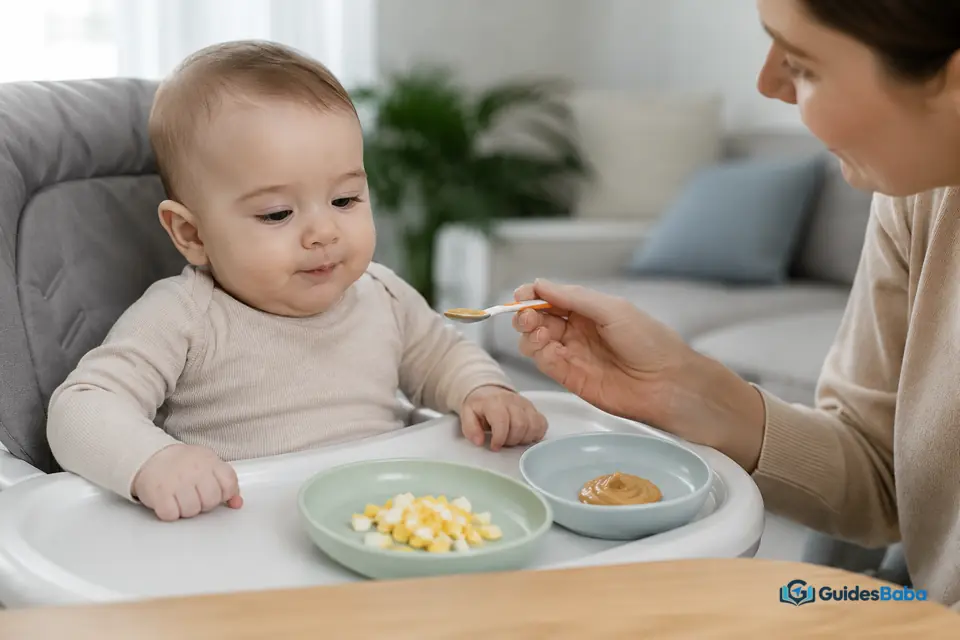
One mistake is adding salt or sugar. Babies simply do not need them. Another is offering honey too early. Both cause avoidable harm.
Some parents give whole nuts or grapes. Others rush cow’s milk as a drink. A few skip supervision at meals. These mistakes raise real risks. Small changes prevent them. Awareness makes a big difference.
You should base choices on good advice. Avoid guessing or copying trends. Every baby is truly unique. Your pediatrician can correct worries. Trusted guidance keeps babies safe. Reliable sources beat online myths.
When to ask your pediatrician
General advice suits many babies well. Still, every baby is unique. Personal guidance matters most. Your baby’s needs are their own.
See your pediatrician about foods and allergies. Ask before introducing risky items. Some babies need special diets. Reflux or allergies need extra care. Your doctor will tailor everything. Regular checks keep you reassured.
This is not medical advice. See a professional for your own plan. Use these ideas as gentle background. Then follow your trusted care team. They know your baby best.
Frequently asked questions
What foods should babies avoid?
Avoid honey, choking hazards, and added salt or sugar. Skip unpasteurised foods and whole nuts too.
Why can’t babies have honey?
Honey can carry spores that cause infant botulism. Avoid it before one year of age.
What are the main choking hazards?
Whole nuts, grapes, hard chunks, and popcorn are risky. Always cut foods small and supervise.
Can babies have salt?
Babies need very little salt at all. Do not add salt to their food.
Is sugar bad for babies?
Added sugar offers no benefit and harms teeth. Keep sweet foods and drinks very limited.
Can babies drink cow’s milk?
Not as a main drink under one year. Small amounts in cooking are fine.
Are peanuts safe for babies?
Whole nuts are a choking hazard. Smooth, thin nut butter is safer.
Should I avoid allergens?
No, introduce allergens carefully one at a time. Ask your pediatrician for guidance first.
Is unpasteurised cheese safe?
Avoid unpasteurised milk and cheese for babies. Choose pasteurised, safer options instead.
When should I seek advice?
See your pediatrician about foods and allergies. Ask before offering any risky item.
The bottom line
So what foods should babies avoid? Skip honey before one year of age. Avoid choking hazards like whole nuts. Cut out added salt and sugar. Steer clear of unpasteurised foods.
You do not need to worry endlessly. A short, clear list covers the risks. Prepare foods safely and supervise meals. Lean on your pediatrician throughout.
For general background, read this overview of botulism. You can also learn about choking. Use trusted sources alongside professional advice.
This is not medical advice. See a professional for your own care. Every baby is truly different and special. Then let your trusted team guide you.