
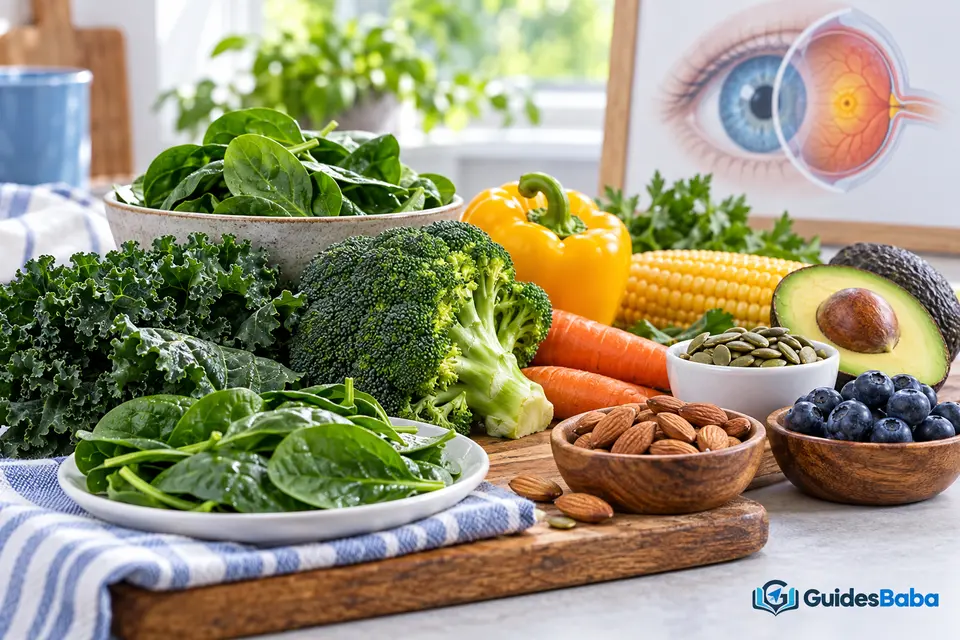
These two nutrients are the talk of the town for eyes. So what foods contain lutein and zeaxanthin? Can your plate really deliver them? In general terms, yes it can. Many everyday foods carry both.
Rather than chasing pills, think colour and variety first. Lutein and zeaxanthin come from plants. A steady, varied diet usually delivers plenty. Whole foods bring extra benefits too. An eye doctor can tailor the details.
Here is the honest answer. Leafy greens are the richest food source. Egg yolks offer a well-absorbed form. Colourful vegetables and fruits help too. Corn and orange peppers add more. This is general information only. A professional guides your real care.
This guide covers lutein and zeaxanthin foods in plain terms. You will learn the top sources and how to eat them. We favour food first over high-dose pills. This is not medical advice. See a professional.
What foods contain lutein and zeaxanthin?
The honest answer is refreshingly simple. Leafy greens top the list by far. Egg yolks and colourful produce follow. Variety brings the widest benefit.
Think of your plate like a paint palette. The more colours, the better. Deep greens and bright yellows shine here. Does one salad matter? No, the steady pattern matters far more.
Are supplements the only route? Not at all, food comes first. Whole foods carry these nutrients gently. An eye doctor can guide you.
What lutein and zeaxanthin are
Lutein and zeaxanthin are plant pigments. They belong to the carotenoid family. They give many vegetables their colour. Your eyes gather them in one spot.
These pigments collect in part of the retina. That area is called the macula. They act a little like inner sunglasses. They help filter harsh blue light. This is a general, food-focused picture. A cared-for diet supports them.
You should think of them as everyday nutrients. They work best within a full diet. Read more about helpful carotenoids in food. A professional can advise you.
Did you know?
Lutein and zeaxanthin gather in the macula of the retina. Your body cannot make them alone.
Leafy greens lead the way
Leafy greens are the star sources here. Spinach and kale carry plenty. Collard greens rank highly too. A daily handful goes far.
Dark green leaves hold the most lutein. Their deep colour hints at the pigment. Cooked greens can pack them tightly. Raw greens work well too. A regular serving supports your eyes. Greens are gentle and versatile. They also fit almost any meal easily.
You should add greens most days. Toss them into salads or soups. See which leafy greens are most nutrient dense. A professional can advise you.
Eggs and lutein
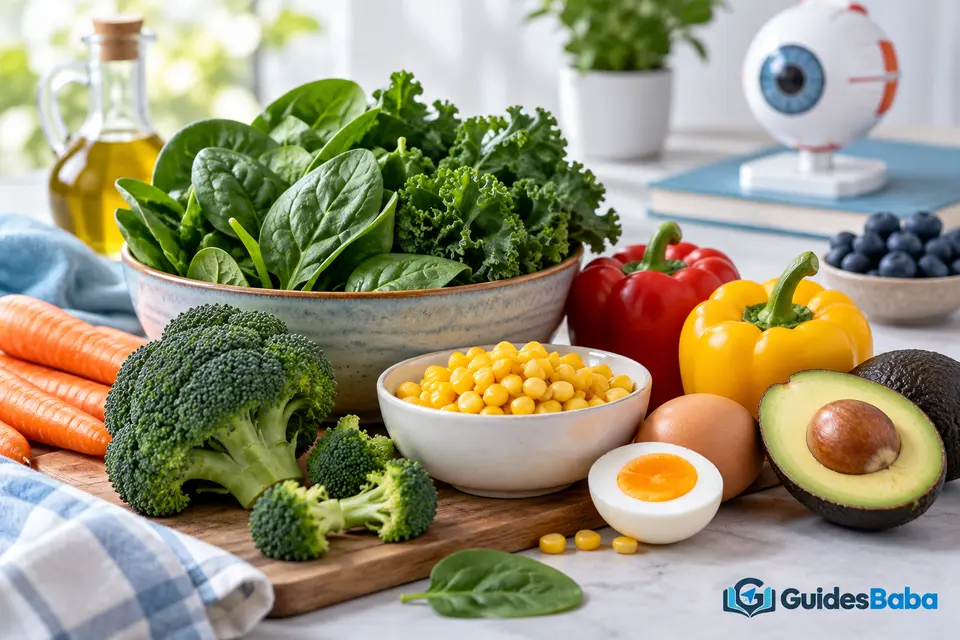
Egg yolks offer a handy source. Their form absorbs quite well. The fat in yolk helps uptake. Eggs suit many everyday meals.
The yolk carries the lutein and zeaxanthin. Its natural fat aids absorption. That makes eggs a friendly choice. They fit breakfast or lunch easily. Moderation still matters here. Eggs join a balanced plate nicely. Their yolk also carries useful fat.
You should enjoy eggs within a varied diet. Pair them with vegetables often. Balance beats any single food. A professional can guide you.
Colourful vegetables and fruits
Colour on your plate signals these nutrients. Bright vegetables and fruits help here. Orange, yellow, and green all count. Variety widens the benefit.
Orange peppers carry zeaxanthin well. Peas and broccoli add lutein. Some fruits contribute smaller amounts. A rainbow plate covers more ground. This is a broad, general point. Different colours bring different nutrients.
You should mix many colours each week. Explore how different colours provide different nutrients. Balance beats any single food. A professional can advise you.
Corn and other yellow foods
Yellow foods can carry zeaxanthin. Corn is a familiar example. Other yellow produce helps too. These add gentle variety.
Corn holds a useful share of zeaxanthin. Its yellow colour hints at this. Egg yolks share that yellow tone. Yellow peppers join the group too. This is a general, food-focused idea. Variety keeps the plate interesting.
You should welcome yellow foods often. Rotate them with greens and oranges. Balance across colours works best. A professional can guide you.

How much do you need
There is no single magic number. General guidance favours a varied diet. Regular greens usually deliver plenty. Balance matters more than counting.
A daily serving of greens helps a lot. Add eggs and colourful produce too. Most healthy eaters can reach useful amounts. Exact needs vary by person. A professional can advise on specifics. Steady habits beat one big effort.
You should focus on regular variety. Skip the urge to chase numbers. A professional can set personal targets. A professional can guide you.
Cooking and absorption
Cooking can affect these pigments. Gentle methods help preserve them. Some cooking can aid absorption too. Small choices make a difference.
Light cooking can soften plant cells. That can free the pigments a little. A little fat helps uptake further. Overcooking may waste some nutrients. This is a simple, general rule. Gentle cooking keeps more goodness.
You should cook greens lightly where you can. Pair them with a little oil. Simple methods protect more nutrients. A professional can guide you.
Pairing with healthy fat
These pigments are fat-loving by nature. A little fat helps you absorb them. That is a simple, useful trick. Small pairings pay off.
Add olive oil to a leafy salad. Include avocado or a few nuts. Eggs bring their own helpful fat. These fats boost absorption gently. This is a broad, general point. Balance the fat sensibly.
You should pair greens with healthy fats. Learn which foods are good for eye health. Keep portions balanced and gentle. A professional can advise you.
Food sources versus supplements
People often weigh two approaches here. The clear comparison is food sources versus supplements. Each carries different pros and cons.
| Food sources | Supplements |
|---|---|
| Bring many nutrients together. | Offer isolated pigments. |
| Gentle, balanced amounts. | Concentrated single doses. |
| Suit most healthy people. | Need professional guidance. |
| Enjoyable and everyday. | A targeted, extra step. |
Food first suits most healthy eaters. Supplements need proper guidance first. Balance beats big doses here. A professional can help you decide.
Lutein, zeaxanthin, and the macula
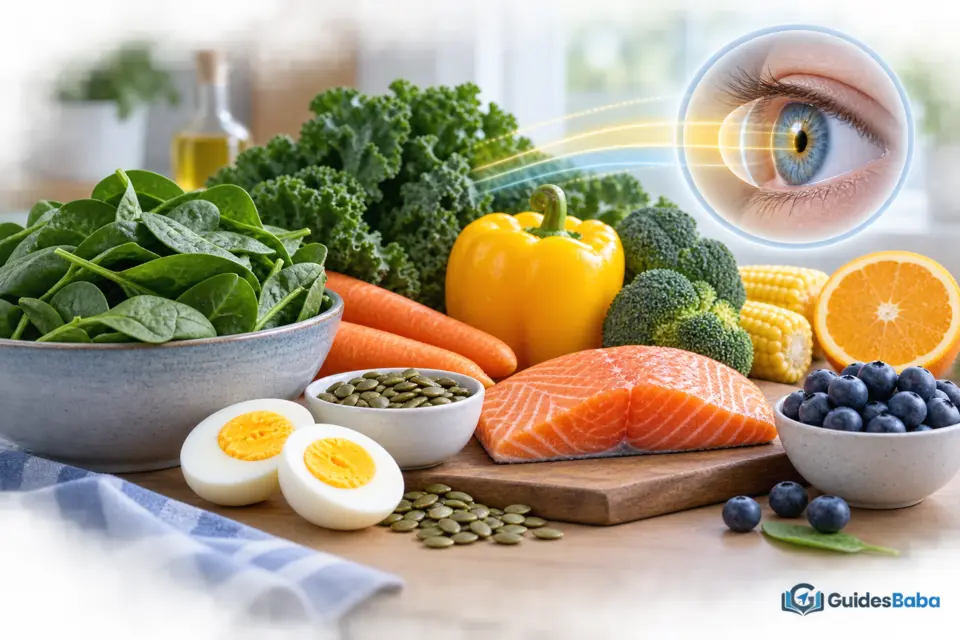
These pigments gather in the macula. That is the central part of the retina. They help filter some blue light. This role interests eye researchers.
The macula supports sharp central vision. Lutein and zeaxanthin concentrate there. They may guard against light stress. Research explores this role broadly. This is a general overview only. Individual outcomes always vary.
You should not expect miracle results. These nutrients support, not cure. See which nutrients are important for healthy vision. A professional can advise you.
Building a daily eye-friendly plate
A simple plate can deliver plenty. It needs colour and a little fat. Greens form the reliable base. Small tweaks lift the benefit.
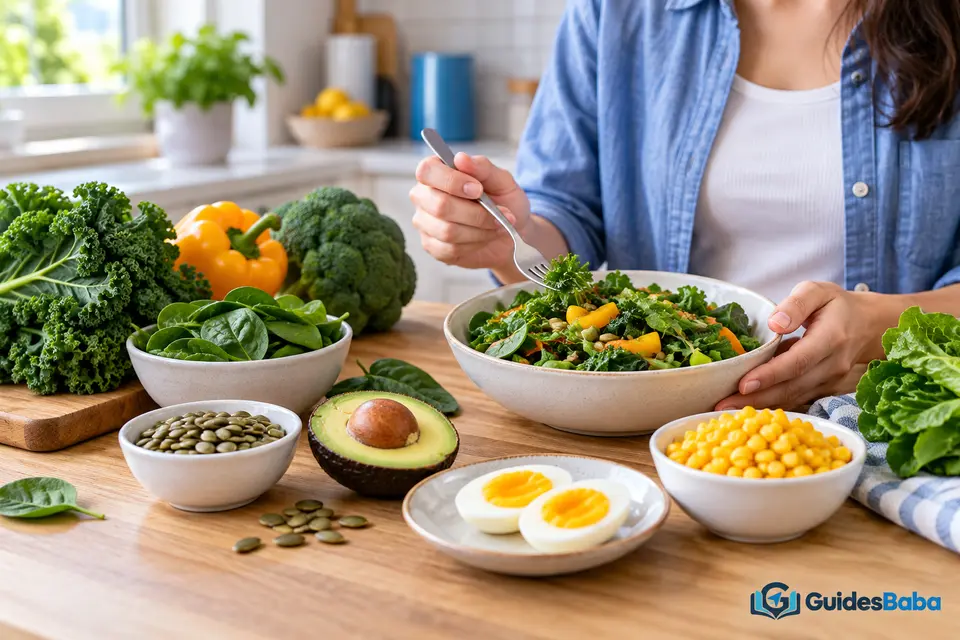
Start with a generous serving of greens. Add eggs or colourful vegetables. Drizzle a little healthy oil on top. Include a fruit for variety. This keeps things easy and gentle. Everyday plates work best.
You should build colour into most meals. Keep it simple and repeatable. Balance beats any single food. A professional can guide you.
Fresh, frozen, or cooked
You do not always need fresh produce. Frozen greens keep their nutrients well. Cooked greens can be convenient. Each option has real value.
Frozen spinach is picked and frozen quickly. That locks in useful nutrients. Cooked greens shrink and pack tightly. Fresh greens shine in salads. All three fit a busy life. Convenience supports steady habits.
You should choose what suits your week. Mix fresh, frozen, and cooked freely. Steady variety beats perfection. A professional can guide you.
Who benefits most
Everyone can enjoy these nutrients. Needs still vary by person. Age and diet shape the picture. Personal advice fits best.
People eating few greens may benefit most. A colourful diet helps broadly. Older adults may take special interest. Eye conditions need tailored care. This is a general overview only. Your history shapes the details.
You should not self-diagnose from an article. Get personal advice before big changes. A professional can guide you safely.

Common mistakes people make
One mistake is skipping greens entirely. Another is eating too little variety. Some chase a single miracle food. Balance matters more than any one item.
People also overcook greens harshly. That can waste some nutrients. Others forget the helpful fat pairing. Some rush to high-dose pills. A whole-diet view helps here. Your eye team fills the gaps.
You should avoid extreme supplement habits. Base choices on real advice. If vision shifts, ask for help. A professional can correct myths.
Who should get tailored advice
Eye and nutrition needs are personal. They depend on your health history. They depend on your diet too. One plan cannot fit everyone.
Some conditions change nutrient needs. Certain medicines affect absorption too. Ongoing eye issues need proper support. Food alone cannot answer everything. Only your team sees it fully.
You should never self-prescribe high doses. Get personal advice before big changes. A professional can guide you safely.
When to see an eye doctor
General tips suit many people well. Still, every person is unique. Personal advice always matters most. Your eyesight comes first here.
See an eye doctor about vision changes. Reach out for ongoing eye trouble. A dietitian can tailor your diet. You deserve proper care and support.
This is not medical advice. See a professional for your own care. Food supports eye health but never replaces care. Then follow your trusted team.
Everyday habits for healthy eyes
Daily habits support your eyes greatly. Diet is just one helpful piece. Rest and protection matter too. Small routines add up over time.
Eat a colourful, balanced diet often. Take breaks from long screens. Sleep well to rest tired eyes. Protect your eyes from harsh sun. Steady routines help your eyes over years. Gentle habits pay off slowly.
You should build gentle eye habits early. Pair good food with good rest. Small steps protect long-term vision. A professional can guide you.
Frequently asked questions
What foods contain lutein and zeaxanthin?
Leafy greens lead the way. Egg yolks and colourful produce help too.
Which food has the most lutein?
Dark leafy greens rank near the top. Spinach and kale are strong choices.
Do eggs contain lutein?
Yes, egg yolks carry a well-absorbed form. The natural fat aids uptake.
Can my body make these nutrients?
No, you must get them from food. Plants and eggs are the main sources.
Does cooking destroy lutein?
Gentle cooking preserves most of it. A little fat aids absorption.
Do I need a supplement?
Most healthy eaters get enough from food. Ask a professional before supplementing.
Are frozen greens still good?
Yes, frozen greens keep their nutrients well. They suit a busy week.
How much should I eat daily?
There is no single magic number. Aim for regular greens and variety.
Do these nutrients help the eyes?
They gather in the macula and support it. They aid, not cure.
When should I see an eye doctor?
Reach out for any vision changes. Ongoing eye trouble deserves a check.
The bottom line
So what foods contain lutein and zeaxanthin? Leafy greens lead by a mile. Egg yolks offer a well-absorbed form. Colourful vegetables and corn add more. A varied, colourful plate delivers plenty.
You do not need risky megadoses. Aim for greens most days. Add a little healthy fat too. Lean on an eye doctor throughout.
For general background, read this overview of lutein. You can also learn about zeaxanthin. Trusted sources support professional advice.
This is not medical advice. See a professional for your own care. Food supports eye health but never replaces it. Then let your trusted team guide you.