
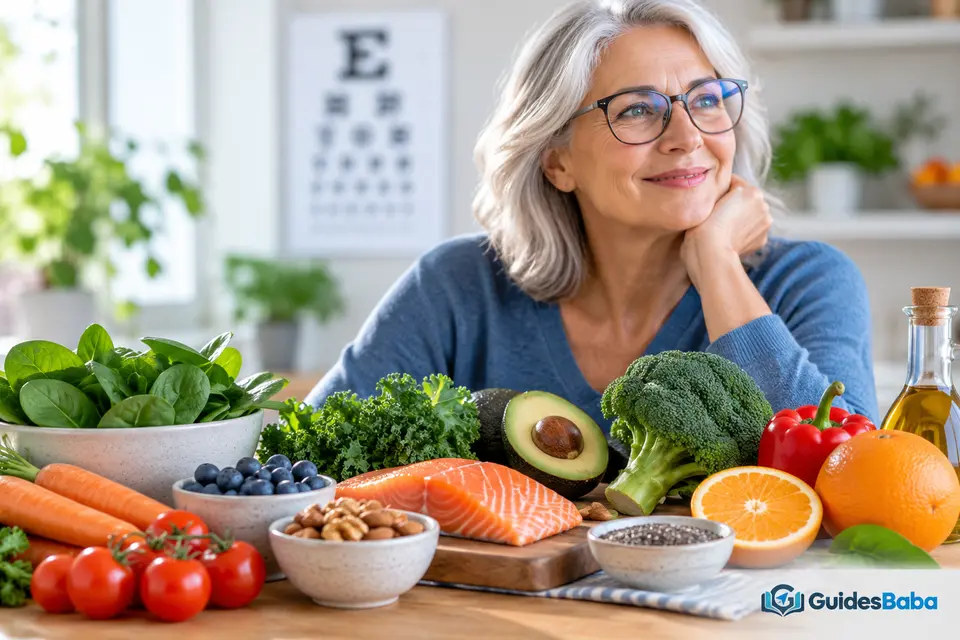
Good eyesight is worth its weight in gold. So what foods support healthy vision as you age? Can your plate really help your eyes later? In general terms, yes it can. Diet supports the eyes over time.
Rather than chasing pills, think whole foods and variety. Many everyday foods support the eyes. A steady, colourful diet usually delivers plenty. Whole foods bring extra benefits too. An eye doctor can tailor the details.
Here is the honest answer. Leafy greens and colourful produce help most. Oily fish adds useful healthy fats. Antioxidant-rich foods support ageing eyes. Variety matters more than any one food. This is general information only. A professional guides your real care.
This guide covers eye-friendly foods in plain terms. You will learn what to eat and why. We favour food first over high-dose pills. This is not medical advice. See a professional.
What foods support healthy vision as you age?
The honest answer is refreshingly simple. Colourful, varied whole foods help most. Greens, fish, and bright produce lead. Balance brings the widest benefit.
Think of your diet like a long game. Small daily choices add up. A colourful plate supports ageing eyes. Does one meal matter? No, the steady pattern matters far more.
Are supplements the only route? Not at all, food comes first. Whole foods support the eyes gently. An eye doctor can guide you.
Why vision changes with age
Eyes change slowly over the years. This is a natural part of ageing. Some changes are mild and common. Diet may support the journey.
Ageing eyes can grow drier over time. Focusing up close often gets harder. Some age-related eye conditions become more likely. A healthy diet may support the eyes. This is a general overview only. Regular eye checks still matter.
You should book regular eye tests. Early checks catch problems sooner. See which nutrients are important for healthy vision. A professional can advise you.
Did you know?
A colourful plate covers many eye nutrients at once. Variety beats chasing one single food.
Leafy greens and eye pigments
Leafy greens are a strong start. They carry lutein and zeaxanthin. These pigments gather in the retina. Ageing eyes may value this support.
Spinach and kale hold rich pigments. These gather in the macula. They help filter some harsh light. A daily handful goes far. This is a general, food-focused point. Greens fit almost any meal. They also add gentle colour and texture.
You should add greens most days. Toss them into salads or soups. Choose the most nutrient dense leafy greens. A professional can advise you.
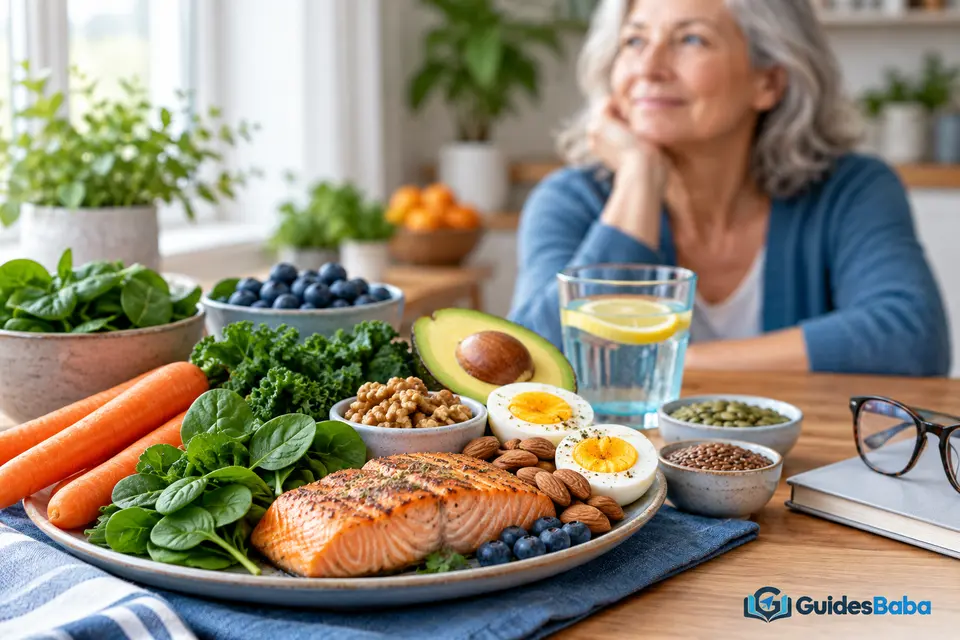
Colourful fruits and vegetables
Colour on your plate signals nutrients. Bright fruits and vegetables help here. Orange, red, and green all count. Variety widens the benefit.
Carrots and peppers carry carotenoids. Berries add helpful antioxidants. Citrus fruits bring vitamin C. A rainbow plate covers more ground. This is a broad, general point. Different colours bring different nutrients.
You should mix many colours each week. Explore the helpful carotenoids in food. Balance beats any single food. A professional can advise you.
Oily fish and healthy fats
Oily fish adds useful omega-3 fats. These feature in the retina itself. They may support eye comfort too. A couple of servings weekly go far.
Salmon and sardines carry omega-3. These fats support the retina structure. They may ease dry, gritty eyes. Plant seeds offer a different form. This is a general, cautious point. Balance the fats sensibly.
You should include oily fish regularly. Add seeds and nuts for variety. Learn which foods are good for eye health. A professional can advise you.
Antioxidant-rich foods
Antioxidants interest eye researchers greatly. They may help defend against everyday stress. Colourful foods carry many of them. Variety brings the widest mix.
Berries and citrus hold vitamin C. Nuts and seeds add vitamin E. Colourful vegetables bring more antioxidants. A varied plate covers the range. This is a general overview only. No single food does it all.
You should eat antioxidants from whole foods. See which foods contain the most antioxidants. Balance beats big supplement doses. A professional can advise you.

Vitamin A foods
Vitamin A supports the eyes broadly. It helps the retina sense light. It also protects the eye surface. Everyday foods deliver plenty.
Eggs and dairy carry ready-made vitamin A. Colourful vegetables offer carotenoids. Your body converts these gently. Megadoses of vitamin A can harm you. This is a general, cautious point. Food first stays the safer path.
You should favour food over high-dose pills. More vitamin A is not always better. Balance across foods works best. A professional can advise you.

Zinc and eye health
Zinc plays a role in the eyes. It helps move vitamin A along. Many everyday foods carry it. Balance still matters here.
Meat and shellfish carry zinc well. Beans and seeds add some too. Whole grains contribute a share. A varied diet delivers enough. This is a general overview only. Individual needs still vary.
You should get zinc from whole foods. Avoid high-dose pills without advice. Balance beats any single nutrient. A professional can advise you.
Whole grains and steady energy
Whole grains support the whole body. They release energy slowly. Steady energy supports overall health. Eyes benefit from good general health.
Whole grains carry fibre and minerals. They help steady your blood sugar. Steady levels support long-term health. Good health supports the eyes too. This is a general, indirect point. Balance across the plate matters.
You should choose whole grains often. Pair them with vegetables and protein. See what a balanced diet looks like. A professional can advise you.
Whole diet versus single supplement
People often weigh two approaches here. The clear comparison is a whole diet versus a single supplement. Each carries different value.
| Whole-diet approach | Single-supplement approach |
|---|---|
| Delivers many nutrients together. | Targets one nutrient alone. |
| Gentle, balanced amounts. | Concentrated single doses. |
| Suits most healthy people. | Needs professional guidance. |
| Enjoyable and everyday. | A targeted, extra step. |
A whole diet suits most eaters. Supplements need proper guidance first. Balance beats big doses here. A professional can help you decide.
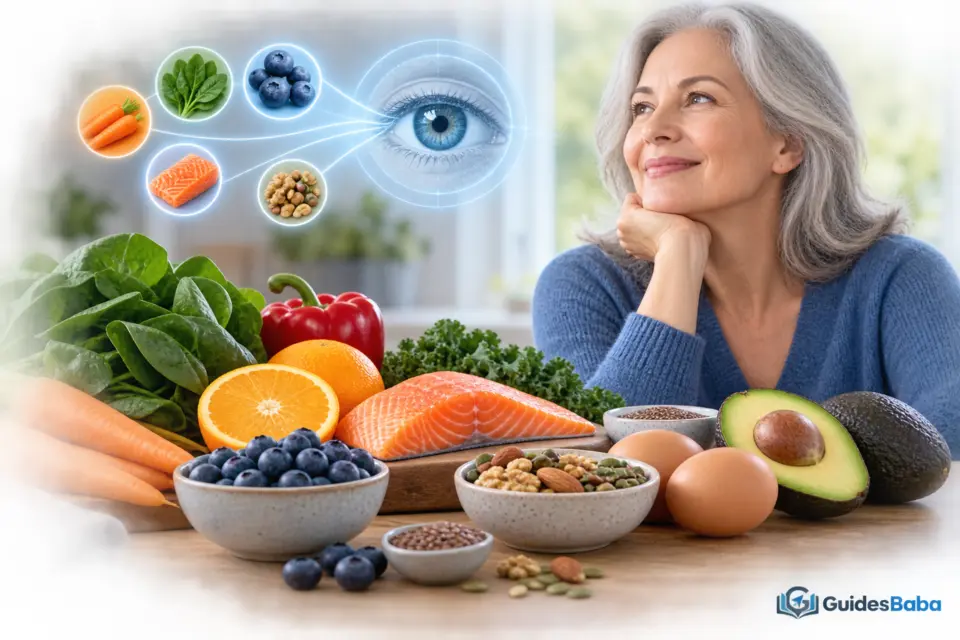
Hydration and eye comfort
Water supports the whole body. It helps your eyes stay comfortable. Mild dryness can affect the eyes. Plain water is the best choice.
Good hydration supports the tear film. Dry days can leave eyes gritty. Water beats sugary drinks by far. Steady sips help through the day. This is a general, simple point. Screens can worsen dryness too.
You should keep water within reach. Sip steadily through busy days. Rest your eyes from long screens. A professional can advise you.
Building an eye-friendly plate
A simple plate can support your eyes. It leans on colour and variety. Greens and fish form a strong base. Small tweaks lift the benefit.
Start with a generous serving of greens. Add colourful vegetables and fruit. Include oily fish or seeds often. Choose whole grains for energy. This keeps things easy and gentle. Everyday plates work best.
You should build colour into most meals. Keep it simple and repeatable. Balance beats any single food. A professional can guide you.
Foods to enjoy less often
Some foods add little for the eyes. Heavy sugar and refined snacks lead here. They crowd out better choices. Moderation is the gentle goal.
Sugary drinks add empty energy. Highly processed snacks bring little value. Too much of these crowds out produce. Balance still leaves room for treats. This is a general, kind point. No food is truly forbidden.
You should enjoy treats in moderation. Fill most meals with whole foods. Choose foods that suit your eyes. A professional can advise you.
Lifestyle beyond food
Food is only one piece here. Ageing eyes need a broader toolkit. Rest and protection matter too. Habits support your diet gently.
Protect your eyes from harsh sun. Take breaks from long screens. Sleep well to rest tired eyes. Do not smoke, for many reasons. These habits support the eyes. They never replace real care.
You should build calming eye habits daily. Pair good food with good rest. Small steps protect long-term vision. A professional can guide you.

Common mistakes people make
One mistake is trusting megadose pills. More nutrients are not always better. Another is skipping variety in the diet. Balance matters more than any one food.
People also skip regular eye tests. Some chase a single miracle food. Others ignore slow vision changes. A whole-life view helps here. Your eye team fills the gaps.
You should avoid extreme supplement habits. Base choices on real advice. If vision shifts, ask for help. A professional can correct myths.
Who should get tailored advice
Eye and nutrition needs are personal. They depend on your health history. They depend on your age too. One plan cannot fit everyone.
Some conditions change nutrient needs. Certain medicines affect absorption too. Ongoing eye issues need proper support. Food alone cannot answer everything. Only your team sees it fully.
You should never self-prescribe high doses. Get personal advice before big changes. A professional can guide you safely.
When to see an eye doctor
General tips suit many people well. Still, every person is unique. Personal advice always matters most. Your eyesight comes first here.
See an eye doctor about vision changes. Book regular checks as you age. A dietitian can tailor your diet. You deserve proper care and support.
This is not medical advice. See a professional for your own care. Food supports eye health but never replaces care. Then follow your trusted team.
Everyday habits for healthy eyes
Daily habits support your eyes greatly. Diet is just one helpful piece. Rest and protection matter too. Small routines add up over time.
Eat a colourful, balanced diet often. Take breaks from long screens. Sleep well to rest tired eyes. Protect your eyes from harsh sun. Steady routines help your eyes over years. Gentle habits pay off slowly.
You should build gentle eye habits early. Pair good food with good rest. Small steps protect long-term vision. A professional can guide you.
Frequently asked questions
What foods support healthy vision as you age?
Leafy greens, colourful produce, and oily fish help most. Variety matters more than any one food.
Are carrots good for the eyes?
They carry carotenoids that support the eyes. Many other vegetables help too.
Do leafy greens help ageing eyes?
Yes, they carry lutein and zeaxanthin. These pigments gather in the retina.
Does oily fish help vision?
It adds omega-3 fats that support the retina. It may ease dry eyes.
Do I need eye supplements as I age?
Many people get enough from food. Ask a professional before supplementing.
Can food prevent all eye disease?
No, food supports but does not guarantee. Regular eye checks still matter.
Is too much vitamin A risky?
Yes, high-dose supplements can cause harm. Food carotenoids are far safer.
Does hydration affect the eyes?
Good hydration supports the tear film. Mild dryness can leave eyes gritty.
Which foods should I limit?
Enjoy sugary drinks and refined snacks less often. Fill most meals with whole foods.
When should I see an eye doctor?
Reach out for any vision changes. Book regular checks as you age.
The bottom line
So what foods support healthy vision as you age? Leafy greens and colourful produce lead. Oily fish adds useful healthy fats. Antioxidant-rich foods round things out. A varied, colourful plate delivers plenty.
You do not need risky megadoses. Aim for greens and fish often. Add colour and whole grains too. Lean on an eye doctor throughout.
For general background, read this overview of visual perception. You can also learn about human nutrition. Trusted sources support professional advice.
This is not medical advice. See a professional for your own care. Food supports eye health but never replaces it. Then let your trusted team guide you.